
Circle’s Jeremy Allaire: We’re Building an ‘Economic OS’ for the AI Era
The global economy stands on the precipice of a monumental transformation, one that Jeremy Allaire, cofounder and CEO of Circle, a leading software company behind one of the world’s most prominent stablecoins, asserts will be profoundly shaped by cryptocurrency. To navigate and catalyze this impending shift, Circle is meticulously crafting what Allaire describes as an "economic operating system for the internet," a foundational layer designed to underpin a new era of digital commerce and finance, particularly optimized for the burgeoning age of artificial intelligence.
Speaking at WIRED’s Big Interview event in San Francisco, Allaire articulated his vision to editor at large Steven Levy, drawing parallels to previous technological revolutions. "Basically, there are new operating system paradigms that emerge all the time. The web is one, mobile is one, cloud is another, AI is another OS paradigm," Allaire explained. He posited that blockchain networks, particularly in the way Circle is developing them, represent a similar evolutionary leap, serving as "economic OS paradigms." Just as Windows provided a platform for software, iOS for mobile apps, and AWS for cloud services, Circle envisions an economic OS that will manage and facilitate the flow of value in a hyper-connected, AI-driven world. This isn’t merely about faster payments; it’s about creating the underlying infrastructure for autonomous economic agents, intelligent contracts, and a programmable financial future.
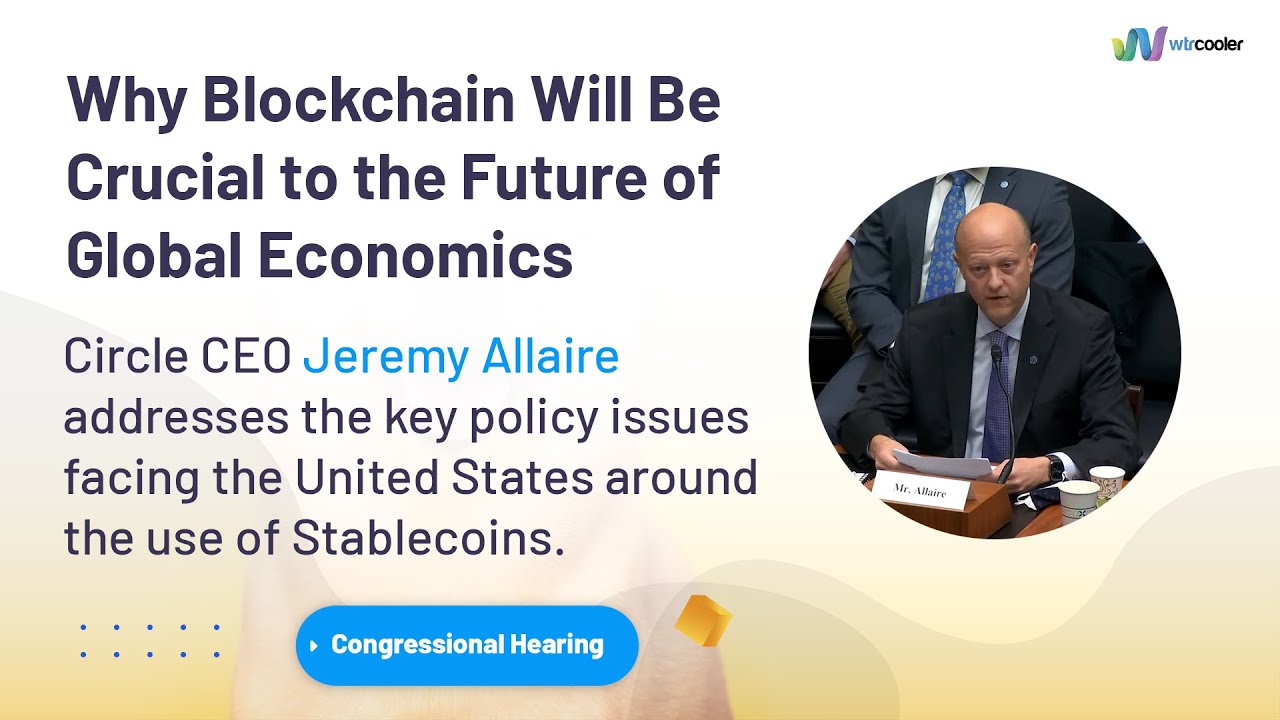
Central to Circle’s current operations and reputation is USDC, the second-largest stablecoin by market capitalization, boasting a valuation currently around $78 billion. Unlike the volatile nature of many cryptocurrencies such as Bitcoin, stablecoins like USDC are engineered for price stability. USDC achieves this by being fully backed by the US dollar, meaning each USDC in circulation can be redeemed for $1. This inherent stability makes USDC an attractive proposition for a multitude of applications. Allaire highlighted its efficacy as a superior and more rapid method for cross-border money transfers, offering a compelling alternative to traditional banking rails which are often burdened by high fees, slow settlement times, and opaque processes. Furthermore, USDC provides a crucial lifeline for individuals residing in countries grappling with less stable national currencies, offering them a reliable store of value and a medium of exchange insulated from local inflationary pressures or currency devaluations. The transparency and auditability of USDC’s reserves further reinforce its trustworthiness, distinguishing it in a market often plagued by skepticism.
However, Allaire emphasized that stablecoins, while transformative, are merely the initial phase of a much grander evolution. The next frontier in the cryptocurrency landscape, he believes, will manifest as "money as an app platform." This concept suggests a future where money is not just a static asset but a dynamic, programmable component embedded within applications, enabling entirely new forms of digital-only economies. Imagine smart contracts that automatically release payments upon predefined conditions met by AI agents, or micro-transactions seamlessly flowing between interconnected devices and services. This vision moves beyond simple digital currency to an ecosystem where value transfer is an integral, automated function of digital life.
Circle’s ambitious blueprint for this "economic OS" is embodied in Arc, a platform the company describes as "trusted, neutral." Arc aims to serve as a comprehensive platform for the entire spectrum of blockchain-based technologies, positioning itself as the very "foundation" of a "new internet financial system." This isn’t just about moving money; it’s about building the protocols, standards, and infrastructure that will allow different blockchain networks, applications, and digital assets to interoperate seamlessly. Allaire predicts that the transition to this novel economic system will be a "huge part of what unfolds for the internet over the next five to 10 years," signifying a profound shift comparable to the advent of the World Wide Web itself. Arc’s neutrality is crucial; it seeks to avoid becoming a gatekeeper, instead fostering an open and inclusive environment where innovation can flourish, much like the internet’s foundational protocols. It implies a platform designed to serve diverse use cases, from decentralized finance (DeFi) to tokenized real-world assets, digital identity, and beyond, all leveraging the transparency, security, and efficiency of blockchain technology.
A cornerstone of Circle’s strategy and Allaire’s vision is the embrace of functional government regulation. During the event, Allaire subtly, yet pointedly, described Circle as "the largest stable network by far," a thinly veiled reference to Tether (USDT), which, despite having a larger market capitalization, has historically operated with less regulatory oversight than Circle. Tether, the most widely used stablecoin, has faced scrutiny over the composition and auditing of its reserves, often choosing to avoid direct US government regulation. Circle, in stark contrast, has been a vocal and proactive advocate for robust regulatory frameworks. This stance was exemplified by their strong support for the Guiding and Establishing National Innovation for US Stablecoins (GENIUS) Act, a landmark piece of legislation that Congress passed into law in mid-July.
The GENIUS Act established clear regulatory guidelines for the issuance and operation of stablecoins within the United States. This legislation, championed by Circle, was widely hailed as a significant boon for the US crypto economy, providing much-needed clarity and fostering investor confidence. The impact of this regulatory clarity is already evident: Tether, previously resistant to US regulation, has now announced plans to launch a GENIUS Act-compliant stablecoin, USAT, in the US market. This move by a major competitor validates Circle’s long-standing position that clear regulatory "rules of the road" are essential for the maturation and mainstream adoption of digital assets.
For Allaire, this increased competition, catalyzed by the GENIUS Act, is not a threat but a welcome development and an indispensable step in the digital economy revolution he envisions. He articulated this perspective on Thursday, stating, "I think when you have a clear set of rules of the road, it’s going to invite a ton of companies. And in fact, we’ve seen lots of big public companies, big private companies, banks, consortiums, others entering this market." Allaire views this influx of diverse participants—from established financial institutions to new tech innovators—as a testament to the effectiveness of thoughtful regulation. "It’s exactly what good regulation that is designed to create clear roads will do. That’s excellent, but at the same time, it also validates those who have built infrastructure in this space," he concluded. This perspective underscores Circle’s strategic foresight: by actively shaping the regulatory landscape, they are not just ensuring their own compliance but also paving the way for a broader ecosystem where their foundational infrastructure, like USDC and Arc, can thrive.
The implications of an "economic OS" for the AI era are far-reaching. Imagine a world where AI algorithms can seamlessly execute complex financial transactions, manage supply chains with programmable money, and facilitate global trade without the friction of traditional banking. This OS would enable micro-payments for data and services between AI agents, automate remittances to developing countries with unprecedented efficiency, and unlock new forms of decentralized finance that are more accessible and equitable. It’s about building a digital substrate where value can flow as freely and efficiently as information does today on the internet. Circle’s strategic focus on regulatory compliance, coupled with its technical innovation, positions it as a key player in shaping this future. By providing a stable, regulated, and programmable form of money, and an open platform for its utilization, Circle is not just participating in the digital economy; it is actively constructing its very operating system. In essence, Allaire’s vision signifies that the future of finance is not just digital, but also intelligent, integrated, and inherently programmable, with Circle striving to provide the fundamental framework.