6 Scary Predictions for AI in 2026
The rapid acceleration of Artificial Intelligence, epitomized by OpenAI’s recent "code red" to outmaneuver Google, casts a long shadow over the coming years. This intense rivalry, reminiscent of Google’s own scramble three years prior following ChatGPT’s debut and subsequent historic layoffs, hints at a turbulent future. As the AI landscape shifts at breakneck speed, 2026 promises a blend of breathtaking advancements and unsettling realities. Here are six predictions, refined with expert insights, that paint a stark picture of what might lie ahead.
1. The Great AI Company Reset: Layoffs and the Bubble’s First Tremors
The AI industry’s meteoric growth, particularly in talent acquisition, is heading for a significant correction. OpenAI, having quintupled its workforce to approximately 4,500 employees in just two years, mirrors the broader trend of aggressive expansion fueled by venture capital and intense competition. However, this unchecked growth is unsustainable. 2026 could see OpenAI, and other leading AI labs, initiating their first major workforce reductions. This wouldn’t necessarily signal failure, but rather a strategic "reset" – a difficult decision to prune struggling ventures, consolidate successful investments, and optimize for long-term efficiency amidst evolving market demands. The initial "code red" mentality of hiring at all costs will likely transition to a "lean and mean" approach. Newly appointed management, such as OpenAI’s Chief Revenue Officer Denise Dresser and "other CEO" Fidji Simo, will be tasked with steering the company towards profitability and sustainable growth, which often necessitates difficult personnel decisions.
This internal restructuring could trigger a broader, albeit ephemeral, dip in the AI-fueled stock market. Analysts may interpret these layoffs as a sign of previous overspending on AI data centers and research talent, leading to a temporary "bubble deflating" narrative. While earlier fears of a chip sales tank (like when China’s DeepSeek demonstrated powerful AI with fewer cutting-edge GPUs) didn’t materialize, a more significant, albeit short-lived, market tremor is plausible. Companies caught in this re-evaluation will scramble to launch initial public offerings (IPOs) to capitalize on peak valuations before the market sentiment sours further. A brimming pipeline of highly anticipated IPOs, including perennial rumors like Discord, Stripe, and Databricks, is expected to gush in 2026. However, the challenging task of preparing for an IPO and timing it perfectly to Wall Street’s fickle mood means many will miss the coveted window, further contributing to a wave of workforce cuts across the sector as companies are forced to conserve capital and demonstrate fiscal prudence. The human cost of this "right-sizing" will be significant, leaving many talented individuals searching for new roles in a newly cautious industry.
2. Data Center Disinformation: A Geopolitical Weapon
The global resistance against data center construction, driven by local communities concerned about environmental impact, energy consumption, and noise pollution, will become a fertile ground for geopolitical manipulation in 2026. While currently, genuine US citizens largely control anti-data center social media groups, the fervor will attract malicious state actors. China and Russia, both openly aiming to surpass the US in industrial and military AI capabilities, stand to gain significantly from any slowdown in American data center development – the very infrastructure crucial for AI advancement.
The "scary" prediction here is the weaponization of advanced AI by these foreign governments. AI’s ability to quickly generate hyper-realistic images, videos, and persuasive text content means that disinformation campaigns will become frighteningly effective and difficult to detect. AI-powered propaganda farms, which Austin Wang of the RAND Corporation has studied in the context of China, will leverage these tools to create compelling, localized content that mimics authentic grassroots concerns. They will amplify existing anxieties, spread false narratives about the dangers of data centers, and sow discord within communities. This sophisticated manipulation, designed to appear as genuine local outrage, will not only impede critical infrastructure projects but also further erode public trust in online information, creating a deeply fractured informational landscape where it becomes nearly impossible to distinguish between genuine activism and state-sponsored sabotage. The implications for national security and technological dominance are profound.
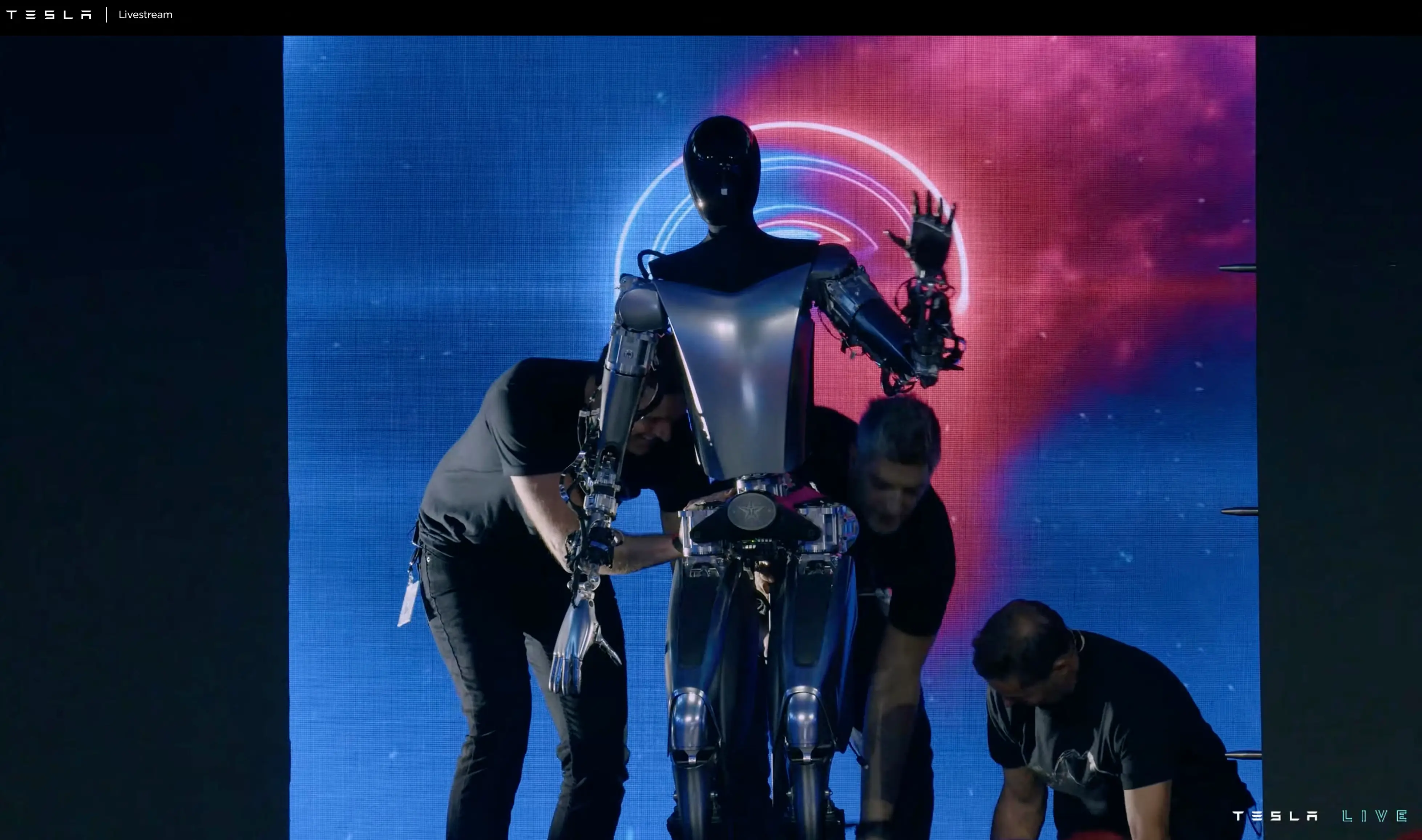
3. Robot Demos Everywhere, But Real-World Integration Remains Elusive
In 2026, tech conferences from CES to Amazon’s hardware events will be awash with dazzling demonstrations of AI-powered robots. The promise of robots seamlessly handling household chores, from folding clothes to preparing meals, will dominate headlines. The integration of large language models (LLMs), similar to those powering ChatGPT and Gemini, into robotics has fueled a fresh wave of hype. Google, for instance, has already showcased robots sorting trash with voice commands and is expected to demo more complex tasks like operating unfamiliar ovens or retrieving specific items from a crowded fridge at its I/O conference.
Barak Turovsky, former chief AI officer at General Motors, highlights the breakthrough: LLMs can now "understand" instruction manuals, learn from videos, and decipher technical drawings, opening up new frontiers for physical world interaction. However, the "scary" aspect isn’t a robot uprising, but rather the vast chasm between these polished, controlled demonstrations and the messy, unpredictable reality of a human home. These showcases are precisely that – demonstrations. Selling technology that could physically damage property or harm individuals if it errs requires an exponentially higher level of reliability, safety, and robustness. The gap between a robot successfully performing a task in a controlled lab environment and safely navigating a child-filled, pet-strewn, ever-changing home environment with varying lighting, unexpected obstacles, and human interaction remains enormous. The danger lies in the public’s perception being swayed by these impressive demos, creating unrealistic expectations and potentially pushing for premature deployment before the technology is truly ready, leading to widespread disappointment, safety concerns, and a backlash against the technology. The persistent gap between hype and practical, safe, widespread adoption will be a source of frustration and potential danger.
4. Training Work Agents: The Era of Digital Surveillance for Automation
For years, "bossware" has silently monitored employees’ computers, but 2026 will usher in a far more insidious evolution: surveillance software designed explicitly to record every click, scroll, and keystroke to train AI agents to automate those very jobs. Agentic AI, capable of reducing manual labor by responding to customer service queries or automating multi-step tasks, is already spreading. While current training often relies on synthetically generated data or low-paid "click workers," businesses will increasingly demand training data specific to their unique operational environments.
This means companies will deploy sophisticated software to slurp up user activity directly from their employees. As Wilneida Negrón, a workers’ rights activist, notes, "The capabilities are there and emerging where one can see this happening." The "scary" implication is not just the erosion of privacy – the software inadvertently capturing personal information and making it accessible to colleagues – but the direct threat to livelihoods. Employees will effectively be training the AI that will eventually replace them, creating a deeply unsettling and morally ambiguous workplace. This constant monitoring, coupled with the knowledge that one’s digital footprint is being analyzed for automation potential, will foster an environment of intense anxiety, distrust, and job insecurity. It represents a new frontier of worker exploitation, where human labor is harvested not for its immediate output, but for its data, to build the very systems that will render that labor obsolete. The legal and ethical frameworks around this kind of data collection and use are nascent, leaving employees vulnerable to unprecedented levels of digital scrutiny and potential displacement.
5. Always On, Always Danger: The Privacy Meltdown of Ambient AI
While always-on AI gadgets like necklaces with microphones proved to be duds in 2025, the quiet success of AI software that listens to video calls and other audio interactions on computers will escalate into a major privacy crisis in 2026. Tools like Granola, which generate meeting notes without storing permanent audio, demonstrate the utility. Javier Soltero, former head of Google Workspace, praises their ability to create "relevant, well-organized and truly useful outlines." However, the profound "scary" rub is that these tools can operate without the explicit knowledge or consent of all participants. Granola "advises seeking consent," but the very existence of such a recommendation highlights the ease with which it can be bypassed. Soltero points to the problematic argument: "‘Well, you could be taking notes and not feel compelled to tell people about it.’"
This proliferation of ambient AI listening devices and software will trigger new, urgent questions about digital etiquette, consent, accessibility, and the law. Alicia Solow-Niederman, a law professor, emphasizes the critical issue of "how AI systems affect third parties, other than the user who’s actually engaging with the system." I am betting that 2026 will see at least one major data breach or privacy lawsuit directly stemming from the misuse or accidental exposure of sensitive information captured by these always-on AI systems. The constant, unacknowledged recording of conversations – be it in a professional meeting or a personal call – will lead to a societal breakdown of trust in digital interactions. Silicon Valley investors like Talia Goldberg admit, "I’ve taken the view personally that there’s a lot of instances in which I’m not aware things are being recorded, and that’s scary." While these tools offer undeniable benefits, particularly for accessibility for individuals who are deaf or hard of hearing, the lack of robust guardrails, transparency, and clear consent mechanisms will make 2026 the year ambient AI’s privacy nightmare truly begins.
6. Robotaxi Takeover: Massive Expansion, Unseen Risks
2026 is poised for an unprecedented expansion of US robotaxi services. Waymo, Google’s sibling company, expects to provide over 1 million rides per week by the end of the year, a staggering increase from hundreds of thousands. With plans to expand from five to approximately 25 cities, including international forays into London and Tokyo, and a reported $15 billion fundraising round, Waymo is leading the charge. Tesla and Amazon-owned Zoox are also set to significantly increase their offerings.
A popular, almost conventional, prediction would be the industry’s first fatal accident caused solely by a computer error. However, the truly "scary" prediction for 2026 is the opposite: a massive, largely incident-free expansion of robotaxi services, which paradoxically masks deeper, more insidious societal shifts and risks. While self-driving cars are involved in dozens of accidents monthly, federal, state, and industry data consistently show that robotaxis are rarely at fault, and fatal incidents involving "living beings" remain exceedingly rare. This safety record, combined with the industry’s incentive to "play it safe" to avoid public backlash, means a catastrophic, computer-faulted incident is less likely than many predict.
Instead, the horror lies in the sheer volume and ubiquity of robotaxis becoming a commonplace feature of urban landscapes before society has fully grappled with the implications. The rapid normalization of driverless vehicles will usher in an era where human control over transportation recedes, raising profound questions about accountability, liability, and the future of urban design and employment. While human-caused accidents will continue to pile up, and "pseudo-autopilot systems" (which lull human drivers into a false sense of security) will contribute to their own share of incidents, the robotaxis will largely avoid major computer-faulted catastrophes. This quiet, steady, and statistically safer takeover will be scary not for its immediate, dramatic failures, but for the subtle, yet irreversible, handing over of fundamental control to algorithms, and the profound, largely unaddressed, long-term societal changes it will initiate. The "unseen risks" involve the potential for new types of cyber-attacks, algorithmic bias embedded in routing and passenger selection, and the eventual impact on millions of human driving jobs, all unfolding quietly beneath a veneer of efficiency and safety.