Mark Zuckerberg Opened an Illegal School at His Palo Alto Compound. His Neighbors Revolted
The affluent Crescent Park neighborhood in Palo Alto, California, a picturesque enclave renowned for its diverse architectural styles ranging from stately Tudor revivals to sleek modern farmhouses and elegant contemporary Mediterranean designs, has become the unwitting backdrop for a protracted dispute involving one of the world’s wealthiest families. At its heart lies the sprawling compound belonging to Mark Zuckerberg, his wife Priscilla Chan, and their daughters Maxima, August, and Aurelia. This immense estate, which has expanded to encompass no fewer than 11 previously separate properties—five of which are directly interconnected—has been a source of escalating tension for nearly a decade, culminating in the revelation that an unauthorized private school was operating illegally within its bounds.
The initial tremors of discontent among Crescent Park residents began to surface as early as 2013, solidifying into serious concerns by 2016. Neighbors watched with growing apprehension as the Zuckerberg family’s real estate footprint swelled, acquiring multiple adjacent properties. This aggressive expansion, transforming a charming residential area into a fortress-like compound, ignited fears of market distortion, irrevocably altering the delicate balance of property values and neighborhood character. However, these anxieties paled in comparison to the outrage that erupted approximately five years later, when residents noticed what appeared to be a full-fledged school operating from within the Zuckerberg compound. Such an establishment, operating without the requisite permits in a strictly residential zone, was a clear violation of local zoning codes. What followed was a determined crusade by the exasperated neighbors, a battle that would not conclude until the summer of 2025.
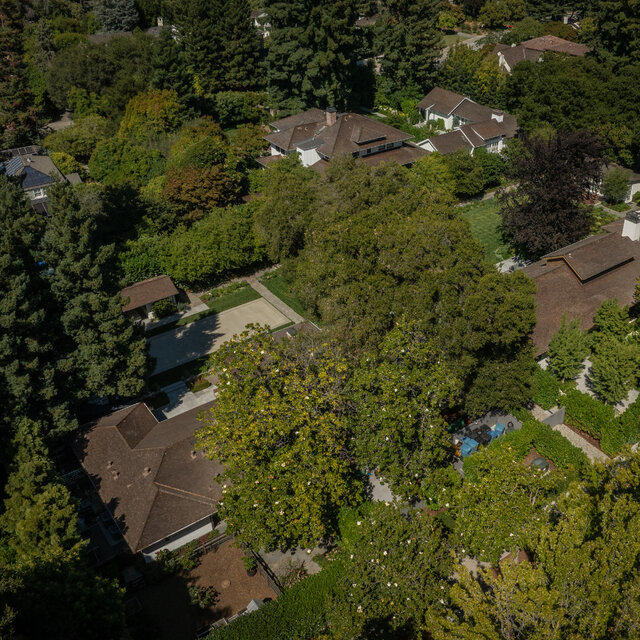
The full scope of this neighborhood dispute, and the alleged defiance of local ordinances, was brought to light through an extensive investigation by WIRED. The publication obtained a staggering 1,665 pages of documents via a public record request filed with the Palo Alto Department of Planning and Development Services. This trove of evidence included 311 records of complaints, legal filings, detailed construction plans, and internal emails. While mentions of "Zuckerberg" or "the Zuckerbergs" were notably redacted in many of these documents, independent verification from neighbors and other public records unequivocally confirmed the property in question belonged to the tech mogul’s family. The identities of the concerned neighbors who engaged with the city were also shielded through redaction, underscoring the high-profile and sensitive nature of the controversy.
These documents paint a picture of a school potentially operating clandestinely since 2021, entirely without the necessary permit from the city of Palo Alto. Neighbor observations suggested an enrollment as high as 30 students, a number far exceeding the typical scale of a family residence. The revelations about the school, however, were merely the latest in a litany of grievances. For almost a decade, residents had lodged persistent complaints with the city regarding the relentless and often noisy construction work emanating from the compound, the intrusive and omnipresent private security detail that cast a shadow over their quiet streets, and the constant influx of staffers, contractors, and business associates who contributed to significant traffic congestion and monopolized precious street parking.
Over time, a deep sense of frustration festered among the neighbors, who increasingly felt that the city was exhibiting a troubling lack of action, particularly concerning the unauthorized school. A pervasive belief took root that the delays and perceived leniency were a direct result of preferential treatment afforded to the immensely influential Zuckerberg family. One particularly poignant email, sent to the city’s Planning and Development Services Department in February, captured this sentiment: “We find it quite remarkable that you are working so hard to meet the needs of a single billionaire family while keeping the rest of the neighborhood in the dark,” it read. “Just as you have not earned our trust, this property owner has broken many promises over the years, and any solution which depends on good faith behavioral changes from them is a failure from the beginning.”
In response to WIRED’s inquiries, Palo Alto spokesperson Meghan Horrigan-Taylor steadfastly denied any allegations of favoritism. She asserted that the city “enforces zoning, building, and life safety rules consistently, without regard to who owns a property.” Horrigan-Taylor also refuted the claim that neighbors were deliberately kept in the dark, maintaining that the approval process for construction projects at the Zuckerberg properties “were processed the same way they are for any property owner.” While acknowledging that some neighbors believed the Zuckerbergs received “special treatment,” she firmly stated that such claims were inaccurate. “Staff met with residents, conducted site visits, and provided updates by phone and email while engaging the owner’s representative to address concerns,” Horrigan-Taylor added. “These actions were measured and appropriate to abate the unpermitted use and responsive to neighborhood issues within the limits of local and state law.”
The school, first reported by The New York Times, was known as “Bicken Ben School” (BBS for short), a peculiar name reportedly inspired by one of the Zuckerbergs’ chickens. A listing for BBS in the California Department of Education directory claims the school officially opened on October 5, 2022. This date, however, directly contradicts the observations of neighbors, who assert they witnessed the school operating as early as 2021. Furthermore, it is two and a half years after Sara Berge, identified as the school’s point of contact in documents obtained by WIRED, claimed on her LinkedIn profile to have commenced her role as “head of school” for a “Montessori pod” at a “private family office.” Berge did not respond to requests for comment.
Between 2022 and 2025, according to documents Bicken Ben filed with the state, the school reported a modest growth from nine to 14 students, ranging in age from 5 to 10 years old. Yet, these figures were sharply contrasted by neighbor estimates, who consistently observed between 15 and 30 children. Berge’s LinkedIn profile similarly boasted oversight of “25 children.” A job listing for “BBS” posted in June 2025, seeking an “operations coordinator,” painted an even more ambitious picture, citing a “current enrollment of 35–40 students and plans for continued growth,” including the establishment of a middle school.
Crucially, for the Zuckerbergs to legally operate a private school on their residential property, a “conditional use” permit from the city is an absolute requirement. However, a meticulous review of the documents obtained by WIRED and Palo Alto’s public database of planning applications reveals a glaring omission: the Zuckerbergs never appear to have applied for, nor received, this essential permit.
Emails obtained by WIRED confirm that Palo Alto authorities informed a lawyer representing the Zuckerbergs in March 2025 that the family was required to shut down the school at their compound by June 30. While a state directory listing indicates BBS operated until August 18, three anonymous neighbors, wary of the family’s high profile, confirmed to WIRED in late September that the daily ebb and flow of students being dropped off and picked up on weekdays had ceased in recent weeks.
However, Brian Baker, a spokesperson for the Zuckerberg family, offered a nuanced clarification to WIRED: the school, he claimed, didn’t close outright; it simply moved. The new location, or whether the school is now operating under a different name, remains undisclosed. In response to a detailed request for comment, Baker provided an emailed statement on behalf of the Zuckerbergs: “Mark, Priscilla and their children have made Palo Alto their home for more than a decade,” he stated. “They value being members of the community and have taken a number of steps above and beyond any local requirements to avoid disruption in the neighborhood.”
“Serious and Untenable”
By the fall of 2024, the situation had reached a critical juncture, with Zuckerberg’s neighbors pushed to their breaking point. Sometime in mid-2024, a group of residents, according to an email from then-Mayor Greer Stone, met directly with the Mayor to express their profound grievances regarding the Zuckerberg compound and the illegal school they alleged was operating there. The meeting, however, did not yield an immediate resolution.
In the years leading up to this point, the city had been inundated with multiple rounds of complaints concerning the Zuckerberg compound. Official complaints for the school’s address were filed with 311, the nationwide non-emergency service, in February 2019, September 2021, January 2022, and April 2023. All of these alleged that the property was operating in direct violation of city code. Each time, these complaints were closed by the planning department, which consistently reported finding no rule violations. An unquantified number of additional complaints, alluded to in emails among city workers, were also made between 2020 and 2024, presumably through phone calls, in-person visits, or to city departments not included in WIRED’s public record request.
A particularly telling incident occurred in December 2020, when building inspection manager Korwyn Peck wrote to code enforcement officer Brian Reynolds about an attempted inspection near the Zuckerberg compound. Peck, responding to several noise and traffic complaints, described being observed by “several men in SUVs” and recounted a tense conversation with one of them. “This appears to be a site that we will need to pay attention to,” Peck advised Reynolds, adding, “We have all been accused of ‘not caring,’ which of course is not true. It does appear, however, with the activity I observed tonight, that we are dealing with more than four simple dwellings. This appears to be more than a homeowner with a security fetish.”
On September 11, 2024, a frustrated neighbor sent a detailed email to Jonathan Lait, Palo Alto’s director of planning and development services, and Palo Alto city attorney Molly Stump. The email alleged that since 2021, "despite numerous neighborhood complaints" to the city, including "multiple code violation reports," the school had continued to expand. They specifically claimed that a garage on the property had been converted into an additional classroom, and that an increasing number of children were arriving daily. Lait and Stump did not respond to WIRED’s requests for comment.
“The addition of daily traffic from the teachers and parents at the school has only exacerbated an already difficult situation,” the neighbor’s email stated, emphasizing that the neighborhood had been grappling with an “untenable traffic” situation for over eight years. They formally requested that the city conduct a thorough investigation into the school, noting that other neighbors were also “extremely concerned” and “are willing to provide eyewitness accounts in support of this complaint.” Over the subsequent week, another neighbor forwarded this compelling note to all six Palo Alto city council members, as well as then-Mayor Stone, with one email describing the situation as “serious” and “untenable.”
“We believe the investigation should be swift and should yield a cease and desist order,” the neighbor urgently wrote.
Lait eventually responded to the originating neighbor on October 15, stating that he had conducted an “initial call” with a “representative” of the property owners and was directing the city’s code enforcement staff to reexamine the property.
By December 11, 2024, the situation appeared to be simplifying. The neighbor claimed that one of their fellow residents had spoken directly with a Zuckerberg representative, who had allegedly admitted to the existence of a school on the property. “It seems like an open and shut case,” the neighbor wrote, appealing to principles of fairness. “Our hope is that there is an equal process in place for all residents of Palo Alto regardless of wealth or stature. It is hard to imagine that this kind of behavior would be ignored in any other circumstance.”
On that very same day, Lait communicated directly with Christine Wade, a partner at SSL Law Firm, who, in an August 2024 email thread, had confirmed she was “still working with” the Zuckerberg family. Lait unequivocally informed Wade that the Zuckerbergs lacked the required permit to operate a school in a residential zone. “Based on our review of local and state law, we believe this use constitutes a private school use in a residential zone requiring a conditional use permit,” Lait wrote in his email to Wade. “We also have not found any state preemptions that would exclude a use like this from local zoning requirements.” Lait further added that the “next step,” if a permit was not obtained, would be the issuance of a cease and desist order to the property owner.
According to several emails, Wade, Lait, and Mark Legaspi, CEO of the Zuckerberg family office known as West 10, subsequently arranged an in-person meeting at City Hall on January 9. This meeting marked the first public disclosure of the current name of the Zuckerberg family office, West 10, which had previously operated under the name West Street. Although WIRED did not obtain notes from this pivotal meeting, Lait informed the complaining neighbor on January 10 that he had explicitly told the Zuckerbergs’ “representative” that the school would need to shut down if it did not secure a conditional use permit or at least apply for one. Lait also noted that the representative would clarify the family’s plans within about a week, adding that if the school were to close, the city might grant a “transition period” to facilitate its winding down. Wade did not respond to a request for comment.
“At a Minimum, Give Us Extended Breaks”
Concurrently, another increasingly heated dialogue was unfolding behind the scenes between the Zuckerberg family’s representatives and the neighborhood. On February 3 of this year, at least one neighbor met with Jordan Fox, an employee of West 10. The precise details of this meeting, or whether the neighbor who initiated the September 11 complaint was present, remain unclear. However, just a day after the meeting with Fox, two additional neighbors added their names to the September 11 complaint, as indicated in an email to Lait.
On February 12, a neighbor initiated an email chain with Fox, which was later forwarded to Planning Department officials two months later. The neighbor, presumably an attendee of the meeting, stated that they had “connected” with fellow residents “to review and revise” an earlier list of 14 requests that had reportedly been submitted to the Zuckerbergs at some prior point. While the contents of the original list were not specified, the email highlighted that of the 19 neighbors who had initially contributed, 15 had actively participated in refining the revised list.
The email began with a hopeful tone, acknowledging that the Zuckerbergs had been “a part of our neighborhood for many years” and expressing a desire for “an open and respectful dialogue,” built upon the “premise of how we all wish to be treated as neighbors.” However, the requests that followed underscored the depth of their frustration. “Our top requests are to minimize future disruption to the neighborhood and proactively manage the impact of the many people who are affiliated with you,” the email stated. This included specific demands to restrict parking by “security guards, contractors, staff, teachers, landscapers, visitors, etc.” For major events such as demolitions, concrete pours, or large parties, the neighbors requested advance notice and dedicated efforts to “monitor and mitigate noise.”
Perhaps most poignantly, the email implored the Zuckerbergs to “ideally stop—but at a minimum give us extended breaks from—the acquisition, demolition and construction cycle to let the neighborhood recover from the last eight years of disruption.” The neighbors then explicitly asked the family to “abide by both the letter and the spirit of Palo Alto” by complying with city code regarding residential buildings. Specifically, it demanded that the Zuckerbergs obtain a use permit for the compound’s school and hold “a public hearing for transparency.” They also sought a commitment from the family not to expand their compound any further. “We hope this will help us get back the quiet, attractive residential neighborhood that we all loved so much when we chose to move here,” the email concluded.
In a follow-up email on March 4, Jordan Fox acknowledged the “unusual” effects of residing near Mark Zuckerberg and his family. “I recognize and understand that the nature of our residence is unique given the profile and visibility of the family,” she wrote. Intriguingly, she added, “I hope that as we continue to grow our relationship with you over time, you will increasingly enjoy the benefits of our proximity—e.g., enhanced safety and security, shared improvements, and increased property values.” Fox stated that the Zuckerbergs had implemented “a revised parking policy late last year” to address concerns and pledged to intensify efforts to provide advance notice about construction, parties, and other potential disruptions.
However, Fox conspicuously avoided directly addressing the unauthorized school and other clearly non-residential activities taking place at the compound. She acknowledged the presence of “residential support staff” including “childcare, culinary, personal assistants, property management, and security,” but maintained that they had “policies in place to minimize their impact on the neighborhood.” It remains unclear whether the neighbor who initiated the email chain responded to Fox.
“You Have Not Earned Our Trust”
While these exchanges between Fox and the neighbors unfolded, Lait and other officials at the city Planning Department were actively working to devise a solution for the lead complainant and the other neighbors who had endorsed the grievance. Starting in February, one of these neighbors took the initiative to follow up with Lait, requesting an update on February 11. Lait responded a few days later, indicating no major breakthroughs but stating that, following “conversations with the family’s representatives,” he was exploring whether a “subset of children” could continue to attend the school occasionally for “ancillary” uses. “I also believe a more nuanced solution is warranted in this case,” Lait added, expressing a desire for a solution that would address neighbor complaints while remaining “reasonably authorized by the zoning code.”
The neighbor was far from appeased. The very next day, they replied, unequivocally labeling the city’s proposed plan as “unsatisfactory.” “The city’s ‘nuanced solution’ in dealing with this serial violator has led to the current predicament,” they argued, referring to the strategy Lait had mentioned. Horrigan-Taylor, the Palo Alto spokesperson, later clarified to WIRED that Lait’s reference to a “nuanced” solution pertained to “resolving, to the extent permissible by law, neighborhood impacts and otherwise permitted use established by state law and local zoning.”
The neighbor’s email continued with palpable frustration: “Would I, or any other homeowner, be given the courtesy of a ‘nuanced solution’ if we were in violation of city code for over four years?” They concluded with a scathing indictment of the city’s credibility: “Please know that you have not earned our trust and that we will take every opportunity to hold the city accountable if your solution satisfies a single [redacted] property owner over the interests of an entire neighborhood.” The neighbor warned, “If you somehow craft a ‘nuanced solution’ based on promises, the city will no doubt once again simply disappear and the damage to the neighborhood will continue.”
Lait did not immediately respond. The neighbor followed up on March 13, inquiring if he had “reconsidered” his plan to offer a “’nuanced solution’ for resolution of these ongoing issues by a serial code violator.” They pressed for a timeline, asking when the neighborhood could “expect relief from the almost decade long disruptions.”
Behind the scenes, Zuckerberg’s lawyers were mounting a vigorous defense to ensure the school’s continued operation. In a document dated March 14, Wade argued that she believed the activities at “the Property” “represent an appropriate residential use based on established state law as well as constitutional principles.” Wade also stated that “the Family” was in the process of obtaining a “Large Family Daycare” license for the property, which is legally permissible for a cohort of 14 or fewer children, all under the age of 10. “We consistently remind our vendors, guests, etc. to minimize noise, not loiter anywhere other than within the Family properties, and to keep areas clean,” Wade added in the letter, attaching an adjusted lease corresponding to the illicit school’s address, which vaguely promised that the property would be used for only one purpose—the exact purpose remaining redacted.
On March 25, Lait informed the neighbor that the city’s June 30 deadline for the Zuckerbergs to shut down the school had not changed. However, he also revealed that the family’s representative was pursuing a daycare license. These licenses, crucially, are granted by the state, not the city of Palo Alto. The underlying message was clear: if the state issued a daycare license, the city’s ability to intervene would be significantly curtailed. Horrigan-Taylor confirmed to WIRED that “state licensed large family day care homes” do not require city approval, adding that the city also “does not regulate homeschooling.”
“Thanks for this rather surprising information,” the neighbor replied about a week later, expressing their exasperation. “We have repeatedly presented ideas to the family over the past 8 years with very little to show for it, so from our perspective, we need to understand the city’s willingness to act or not to act.”
Brian Baker, the Zuckerberg spokesperson, subsequently told WIRED that the Zuckerbergs never actually applied for a daycare license. This claim aligns with California’s public registry of daycare centers, which lists only two registered daycare centers in Palo Alto, neither belonging to the Zuckerbergs. Furthermore, the Zuckerbergs’ oldest child, Maxima, is set to turn 10 in December, which would age her out of any daycare legally operating under California’s large family daycare regulations.
Horrigan-Taylor confirmed that a representative for the Zuckerbergs informed the city that the family intended to move the school to “another location where private schools are permitted by right.” Intriguingly, a school administrator job listing posted in July 2022 to the Association Montessori International website for “BBS” (Bicken Ben School) by Sara Berge, the head of school, claimed that the institution had four distinct locations and that applicants must be prepared to travel six to eight weeks per year. The June 2025 job listing for an operations coordinator similarly stated that the “year-round” school spanned “across multiple campuses,” though the main location was listed as Palo Alto. The precise whereabouts of these other sites remain unclear.
Most of the Zuckerbergs’ neighbors did not respond to WIRED’s requests for comment, perhaps wary of further involvement in a protracted