Meet the Woman Behind Chart-Topping AI Artist Xania Monet: "I Look at Her as a Real Person"
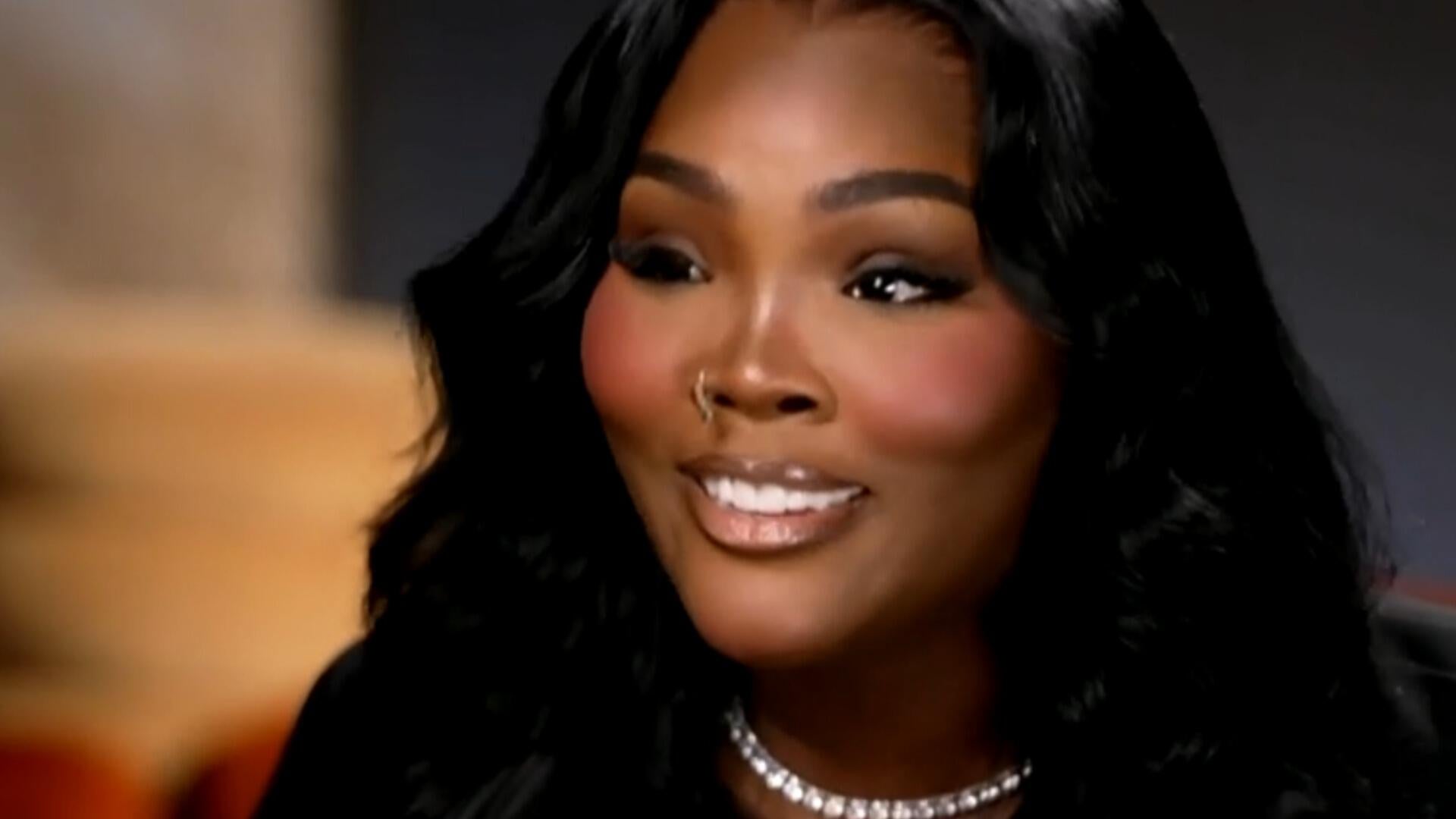
The music world is no stranger to groundbreaking artists, but few have ignited conversations and sparked debate quite like Xania Monet. Her soulful voice has captivated millions, her meticulously crafted tracks climbing the charts with an almost uncanny allure. Yet, a recent revelation sent ripples of astonishment through her burgeoning fanbase and the wider industry: Xania Monet is not a flesh-and-blood singer, but an avatar, a sophisticated product of artificial intelligence. Behind this digital phenomenon, however, stands a profoundly human force: Telisha "Nikki" Jones, a 31-year-old visionary from Mississippi, who not only breathed digital life into Xania but also infused her with an intensely personal narrative. For Jones, this isn’t merely a technological project; she doesn’t just manage Xania, she sees her as an extension of herself, a real person in every meaningful sense.
For Jones, the remarkable journey to creating Xania Monet began a mere four months prior, a testament to her rapid immersion and self-taught mastery in the burgeoning field of AI. With no prior professional singing experience herself, Jones embarked on a courageous quest to understand and harness the intricate capabilities of AI music generation. Her motivation was far deeper than mere technological curiosity; it was a profound, almost primal, desire to express an inner world. "Xania is an extension of me," Jones shared with "CBS Mornings," articulating the intimate, almost symbiotic, bond she shares with her digital creation. "So I look at her as a real person." This heartfelt sentiment underscores the core philosophy driving Xania Monet’s existence: she is a powerful, innovative vessel for Jones’ authentic human experience, bridging the gap between cutting-edge technology and raw emotion.

The lyrics that form the backbone of Xania Monet’s chart-topping tracks are not algorithmically generated emotional mimicry; they are, as Jones emphatically asserts, "100% me." These poignant and powerful words are drawn directly from an extensive trove of poems Jones has penned throughout her life, each verse a raw, unfiltered reflection of personal triumphs, heartaches, and astute observations. Whether grappling with her own struggles, witnessing the profound challenges faced by close family members, or empathizing with the intimate experiences of friends, Jones has meticulously poured these lived realities into her poetry. A particularly poignant example is "How Was I Supposed to Know?", Xania Monet’s breakthrough hit. This song, which has resonated deeply with countless listeners, was directly inspired by the profound grief Jones experienced losing her father at the tender age of eight. This deeply personal tragedy, processed and eloquently expressed through her art, highlights the compelling paradox of Xania Monet: a digital voice capable of conveying intensely human pain, resilience, and hope.
Xania Monet’s rapid ascent has been nothing short of meteoric, acting as a disruptive force that challenges established norms and boldly rewrites the playbook for musical success. Billboard, the definitive authority on music charts, has officially recognized Monet as the "first known AI artist to earn enough radio airplay to debut on a Billboard radio chart." This landmark achievement is not an isolated incident; since her initial song release, Xania Monet has made appearances on at least five distinct Billboard charts, a feat that would be impressive for any emerging artist, let alone one meticulously crafted by artificial intelligence. This unprecedented success heralds a significant shift in how talent is perceived and celebrated within the music industry.
Jones views this groundbreaking success not as a mere technological novelty, but as a natural and inevitable evolution of her passions. "I’m just taking what I love doing and mixing it with tech," she explained, encapsulating her innovative approach with elegant simplicity. While readily acknowledging that her method "challenges the norm" and inevitably "sparks strong reactions" from various corners of the industry and public, Jones remains steadfast in her conviction. She firmly believes that "AI… it’s the new era that we’re in," positioning it not as a looming threat but as a potent "tool" or "instrument" to be embraced, utilized, and integrated into the creative process. This forward-thinking perspective compels a profound reconsideration of what constitutes artistic creation in the digital age, suggesting that the human orchestrator of the technology can be as much an artist as a traditional musician.
Jones’ meticulous creative process seamlessly marries her poetic soul with cutting-edge AI capabilities. It commences with a deep, reflective dive into her extensive collection of personal poems, a rich reservoir of raw emotion, intricate narratives, and profound insights. Once a particular poem resonates and feels ripe for musical interpretation, Jones meticulously transcribes its lyrics into an advanced AI music-generator application. This is precisely where the magic of artificial intelligence truly begins to intertwine with her singular artistic vision. Beyond merely inputting text, Jones acts as a sophisticated digital sculptor, a meticulous conductor guiding the AI with a series of precise and nuanced prompts. She specifies the desired genre and mood, for instance, requesting "slow tempo R&B" to establish the foundational emotional landscape. She then meticulously details the desired vocal characteristics: "female soulful vocals," ensuring Xania’s voice embodies the exact emotional depth and texture she intends. Further refining the intricate soundscape, Jones adds specific instrumental cues such as "light guitar" for melodic texture and "heavy drums" to establish a compelling rhythm and powerful beat. With these carefully curated instructions in place, a simple click of the "create" button sets the AI in motion, transforming her poetic verses and detailed sonic vision into a fully realized musical composition. This iterative process, where human intuition, artistic direction, and technological prowess converge, is central to Xania Monet’s distinctive and emotionally resonant sound.
The undeniable success of Xania Monet’s AI-generated music quickly captured the discerning attention of the industry’s most influential power players. The culmination of her innovative approach and extraordinary chart performance was a multi-million dollar exclusive recording deal with Hallwood Media, a significant and groundbreaking validation of her pioneering work. This landmark deal not only cemented Xania Monet’s place as a formidable new presence in the music landscape but also signaled a monumental, perhaps irreversible, shift in how talent and artistic potential are identified, cultivated, and monetized in the rapidly evolving era of artificial intelligence.
However, Xania Monet’s meteoric rise has not been without its vocal detractors. The increasing, almost omnipresent, presence of AI in creative fields has sparked a fierce and often passionate debate within the artistic community, raising fundamental questions about authenticity, originality, and the very definition of artistry itself. Prominent voices have emerged in staunch opposition, with Grammy-nominated artist Kehlani being one of the most visible and vocal critics. In a widely discussed TikTok video, Kehlani passionately railed against the perceived encroachment of AI into creative spaces, declaring unequivocally, "nobody will be able to justify AI to me" and emphasizing with conviction, "I don’t respect it." This sentiment reflects a broader and deeply felt anxiety among many traditional artists who fear that AI could devalue human creativity, lead to widespread job displacement, or dilute the unique, irreplaceable essence that human experience brings to the creation of art.
Despite these pointed criticisms, Telisha "Nikki" Jones remains unfazed and remarkably resolute in her artistic pursuit. Her response is characterized by grace, thoughtful consideration, and a pragmatic understanding of evolving technological and cultural landscapes. "Everyone is entitled to their own opinion," she calmly stated, acknowledging the diverse and often conflicting perspectives within the industry. Far from being deterred or defensive, Jones sees a bigger, more expansive picture: "Technology’s evolving. Everybody has different ways of putting in work to get to where they’re at." She firmly believes that her innovative use of AI is simply another legitimate, powerful path to creative expression, not a lesser or inauthentic one. Demonstrating her respect for fellow artists, she added, "I still love Kehlani’s music. I still listen to her every day," highlighting her ability to separate artistic disagreement from personal appreciation and admiration.
Hallwood Media, Xania Monet’s new label, has also stepped forward to staunchly defend their artist and the innovative model she represents. Danny Jacobson, the astute head of A&R at Hallwood Media, articulated a powerful and forward-looking vision for the future: "What Nikki has done with Xania Monet really represents the future of music." Jacobson underscored the shifting paradigm, asserting with conviction that "taste and instinct have always mattered more than technical dexterity, and we’re now seeing that play out in real time." This insightful statement challenges the long-held notion that only those with inherent vocal or instrumental prowess can be successful artists, suggesting that curatorial vision, emotional intelligence, and strategic guidance of AI can be equally, if not more, potent and impactful.
Hallwood Media further elaborated on the transformative potential of AI, stating, "AI is breaking down barriers around age, image, and access, giving creators who might not have had a traditional path into the industry the chance to bring their stories and ideas to life while connecting directly with listeners." This compelling perspective frames AI as an inherently empowering force, democratizing access to music creation and allowing a broader, more diverse range of voices and narratives to reach global audiences, independent of conventional industry gatekeepers, physical limitations, or personal circumstances.
One of the most sensitive and frequently raised concerns surrounding the application of AI in creative fields, particularly in music, is the profound potential for cultural appropriation. Critics legitimately fear that AI could enable individuals to generate music that mimics or profits from racial or cultural backgrounds to which they do not belong, thereby divorcing the art from its authentic roots and lived experiences. Telisha "Nikki" Jones, acutely aware of these vital and complex discussions, offers a direct, powerful, and deeply personal counter-narrative. Her response is a defiant assertion of identity and ownership, cutting through abstract debates with concrete, undeniable reality. "That’s what I’m here to let them know," Jones declared, addressing those concerns head-on with unwavering conviction. "I’m Telisha. I’m a part of your culture; I’m a Black woman; I’m a creator; I’m an entrepreneur; I created Xania." This statement is not merely a defense but a profound reclaiming of the narrative. It firmly establishes that Xania Monet’s voice, though digitally rendered, originates from a deeply authentic place—the lived experience, the creative spirit, and the cultural heritage of a Black woman. Jones emphasizes that Xania is not a disembodied algorithm plundering culture, but a direct extension of her identity, her heritage, and her artistic vision. She is the architect, the storyteller, and the cultural anchor for her AI creation, ensuring its integrity and grounding it firmly in genuine, lived experience.
Telisha "Nikki" Jones’s groundbreaking work with Xania Monet marks a pivotal and transformative moment in the ongoing evolution of music and artistry. It vividly illustrates that the future of creativity may not be a binary choice between human and machine, but rather a powerful, synergistic collaboration where human ingenuity, profound emotion, and compelling storytelling deftly guide and amplify sophisticated AI tools. Xania Monet is far more than just a chart-topping AI artist; she is a testament to Jones’s indomitable entrepreneurial spirit, her remarkable resilience in the face of personal tragedy, and her visionary embrace of cutting-edge technology. As the music industry navigates this new, uncharted era, Xania Monet stands as a potent symbol of innovation, challenging us all to fundamentally redefine our understanding of authenticity, authorship, and the very essence of artistic expression. Jones’s extraordinary ability to imbue a digital avatar with such profound personal narratives, and to defend her creation with such unwavering conviction, underscores a crucial, enduring point: while the voice may be synthetic, the heart and soul behind it are undeniably, powerfully, and authentically human. The captivating journey of Xania Monet and Telisha "Nikki" Jones is not merely a story of technological advancement; it is a compelling narrative about the enduring power of human creativity finding new and unexpected avenues for expression in an ever-evolving world, inviting a paradigm shift where the human element is not replaced, but magnificently amplified.