
"I Sweated So Much I Never Needed to Pee": Life in China’s Relentless Gig Economy
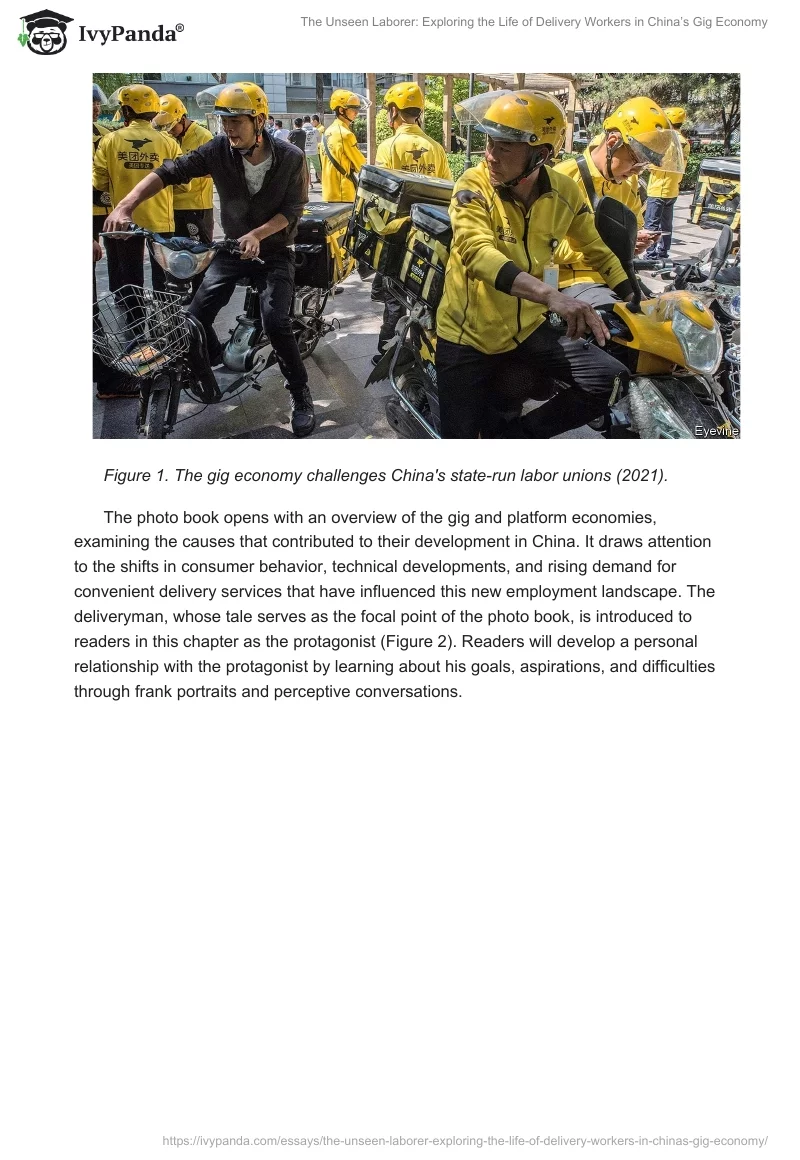
"Often, sweat was dripping down my back within the first two hours of a shift and would not stop dripping until the next morning," writes Hu Anyan in the new English translation of his bestselling book I Deliver Parcels in Beijing. "I sweated so much I never once needed to pee." This stark passage resonates deeply, painting a vivid picture of the grueling reality faced by countless workers in China’s burgeoning gig economy. It was a sentiment that remained particularly poignant for one reader in Tianjin during a scorching summer, amidst yet another unprecedented annual heatwave that drove most indoors—except for the tireless couriers and delivery workers, whose services paradoxically soar in demand when temperatures reach their most extreme.
Hu Anyan’s powerful narrative first captured widespread attention in China five years ago, propelling him to become a prolific and established author in his homeland. While his other works, such as Living in Low Places, delve more into his internal world and philosophical reflections, I Deliver Parcels in Beijing offers a uniquely focused, refreshing, and profoundly on-the-ground account of nearly two decades spent navigating various precarious jobs. The book meticulously chronicles his journey against the backdrop of China’s dramatic economic ascent, from his demanding stint as a courier in Beijing to his entrepreneurial venture of opening a small snack shop, his time as a bicycle store clerk, and even a brief foray as a Taobao seller during the platform’s "golden age." Hu’s distinctive minimal yet hypnotic prose masterfully unveils the often-overlooked, perverse beauty inherent in relentless endurance within an increasingly precarious and demanding economic landscape.
The experiences detailed in Hu’s book, while deeply rooted in the Chinese context, possess a universal resonance that transcends geographical boundaries. It is tempting for those outside China to imbue the place with a sense of "foreign otherness," mistakenly believing that only Chinese individuals are capable of working around the clock under such mind-numbing conditions. Indeed, some of Hu’s earlier roles, like running an e-commerce shop during Taobao’s explosive growth or the frantic energy of parcel sorting, undeniably speak to the specificities of a rapidly developing Chinese economy. However, many other elements described—the punishing precarity of gig work, the insidious ways profit pressures distort employer-employee relationships, and the mundane angst that permeates modern labor—are strikingly familiar to workers across the globe, including American readers. Hu’s direct and unvarnished writing style strips away cultural veneers, laying bare the stark similarities in toiling within a logistics warehouse, whether it be in Luoheng or Emeryville: the endless night shifts, the ritualistic post-work drink, the petty arguments and internal factions, and the repetitive act of stuffing items into polypropylene bags. His story becomes a mirror reflecting the globalized challenges of contemporary labor.
Recently, Hu Anyan offered further insights into his extraordinary journey during an interview with WIRED, discussing his evolution into an internationally acclaimed writer, the burgeoning Gen-Z "tangping" (lying flat) culture, and his profound vision of work and freedom.
When asked whether working as a courier provided the flexibility necessary to earn money while pursuing his writing, Hu clarified, "My writing and logistics work didn’t happen simultaneously. For example, when I was delivering packages in Beijing or doing the night shift sorting parcels in Guangdong, I wasn’t writing. I wasn’t even reading, and after work, I had to decompress." He recounted a specific, almost miraculous exception mentioned in his book, where he found time to read James Joyce’s Ulysses and Robert Musil’s The Man Without Qualities. This rare opportunity arose under unusual circumstances: "At that time, our company was already in the final preparations for ceasing operations, so every day, by one or two in the afternoon, we’d already finished delivering all the goods." He further elaborated on the typical demands of courier work: "For courier work, you have to clock in at 7 am. Then at night, you have to finish delivering all the packages, returning to the station to hand in remaining goods before you leave." He also noted a distinction with food delivery, where "Between 70 and 80 percent of food delivery workers in China are part-time. They don’t have attendance requirements and don’t need to clock in every day."
The topic of technological displacement is ever-present in discussions about the future of work. When queried about the anxiety surrounding robot delivery replacing human couriers, Hu offered a surprising perspective: "In reality, there isn’t much anxiety about robots replacing delivery people. My colleagues at the time didn’t worry their work would be replaced by robots." He posited that other fields, such as "video editing, advertising, and design," might face greater automation threats, but for physical labor, the concern is notably lower. He also shared an interesting observation regarding the Chinese government’s stance: "From what I observed, I think that the Chinese government will have more regulation than the US government to make sure automation serves people. Only if technology makes people’s lives better is it useful technology. If its development makes more people live unhappily or only makes 10 percent of people live better, it actually has no value for advancement."
Hu Anyan’s educational background, a college degree, stands out as an interesting and unexpected detail for someone engaged in courier work. He shared insights into the diverse backgrounds of his colleagues: "For night-shift logistics sorting, probably no one had attended university, and probably only people who don’t have better choices would take a job like that under those circumstances." However, among couriers, the demographic was slightly different: "As for couriers, there are actually people who received higher education. At my last job, our station had eight people. Besides me, one other colleague had a junior college degree, and the person who I replaced also had a junior college degree." His personal experience illuminated a broader societal trend in China: "I’ve seen that many college students in China can’t find good jobs. In my last courier job, the other college graduate was actually our station manager’s high school classmate. Our station manager graduated from high school, didn’t attend college, and eventually found a courier job in Beijing and became the station manager. His high school classmate, who attended junior college, was recruited by our manager and worked as the manager’s employee." This anecdote underscores a critical issue: "This might not be an isolated case—many college students after graduation can’t directly go into professional positions. If they look for a basic entry-level position, their income is very low, definitely lower than couriers and delivery workers."
Perhaps one of the most compelling aspects of Hu Anyan’s story is its contrast with China’s increasingly popular "tangping," or "lying flat" culture—a social trend where young people reject the relentless pursuit of overwork in favor of more minimalist lifestyles. His book, deeply imbued with a diligent work ethic and a commitment to ensuring every package reached its destination, seems at odds with this modern phenomenon. Hu reflected on this generational divide: "I was born in the 1970s, so maybe my seriousness is mostly because of my generation’s education at the time, which made us afraid to be criticized or reprimanded by company leadership or bosses." He described a deep-seated feeling of obligation: "There’s a feeling that people must complete their duties, not cause trouble for others, not drag others down." His generation grew up in a different China: "During my generation, China was still a planned economy, all state-owned, no private sector, so many people didn’t need to do career planning. Once you graduated, the school would arrange and assign your work, and you’d just do it for a lifetime. People from that time were relatively conservative, with a closed, traditional mindset."
The emergence of "lying flat" culture, he explained, is a recent development rooted in profound economic and social shifts. "Previously China wasn’t a market economy. From the 1990s to the 2000s, after China’s opening up, many people viewed making money as a main—even the only—purpose in life. From a Western perspective, Chinese people at that time probably seemed strange, they were working close to 30 days a month." The post-2000s generation, however, has a different upbringing. "This younger generation born after the 2000s, their parents are actually all born post-’70s, even post-’80s. So from childhood, maybe they haven’t experienced too much material scarcity, and don’t have as much of an impulse to get what you couldn’t before." For many young people today, the relentless "neijuan" (intense competition) for wealth feels like "a waste of life, and that you end up just living meaninglessly. The rewards you end up obtaining aren’t that big."
In various Chinese-language interviews, Hu Anyan’s simple lifestyle is often highlighted. He firmly believes that living simply is intrinsically linked to the kind of "freedom" he champions in his book. He elaborated on his past experiences: "In my thirties and after, the jobs I took occupied relatively large amounts of my time. For example, at the bicycle store in Shanghai, I worked at least 80 hours a week. You basically have no leisure time left. During this time, I only worked, and after work, I had nothing else belonging to myself." Under such conditions, the lack of autonomy becomes acute: "If you can’t feel a sense of autonomy, sense of value in work, you easily feel a lack of existence."
He used the stark example of factory work to illustrate the dehumanizing nature of highly specialized, uncreative labor: "For example, if you work at Foxconn, you don’t assemble an entire iPhone to completion. You just screw on this one part, and only in this way is your efficiency maximized. One day, when you stop screwing on this one part, they can replace you with another person. You’re just a tool, a saw blade, a hammer, a screwdriver. You’re not a person with a soul, emotions, judgment, a living person." The despair deepens if this is the only viable path to support one’s family for decades. Therefore, the freedom Hu discusses is highly specific: "pursuing this kind of personal value you can’t pursue in work. A unique thing. For example, creative pursuits are so bound to your personal uniqueness. Even if two people jointly experienced the exact same event, if you let them reflect or retell it in writing, their retelling won’t be completely the same." His freedom is "not being bound by work that is uncreative or makes you just a tool."
Ultimately, the connection between a simple life and this unique freedom is direct and profound. "If you pursue more economic rewards, material conditions, then the time and energy you invest in work will be more." He recalled a pivotal moment: "At the end of 2019, when I was laid off from the courier company, my savings were about 100,000 yuan. Not much. But I dared not work anymore and decided to write for a while." His conclusion is clear: "If you have higher material pursuits, it’s harder to be free, because you’ll constantly invest more energy and time into making money."
Hu Anyan’s I Deliver Parcels in Beijing is far more than a memoir; it is a vital sociological document and a profound philosophical inquiry into the nature of work, value, and human dignity in the 21st century. His unflinching account of physical exhaustion and relentless labor, encapsulated by the unforgettable image of sweating so profusely as to negate the need to urinate, offers a rare glimpse into the often-invisible lives sustaining the global gig economy. Through his eyes, readers witness the universal struggle for meaning and autonomy against the backdrop of systemic pressures, making his story a powerful and enduring testament to the human spirit’s quest for freedom, even in the most unforgiving of circumstances.