Meta, Google, and Microsoft Triple Down on AI Spending
In a stark declaration to investors following their quarterly earnings reports, three of the United States’ most influential technology behemoths—Microsoft, Meta, and Google—have unequivocally signaled that their already substantial investments in artificial intelligence infrastructure are merely the beginning of an even more aggressive spending spree. This strategic pivot underscores a collective belief in the transformative power of AI, despite growing concerns from some analysts about the sustainability of the current market trajectory. The message is clear: the race for AI supremacy is accelerating, and these industry giants are prepared to commit unprecedented capital to secure their positions at the forefront.
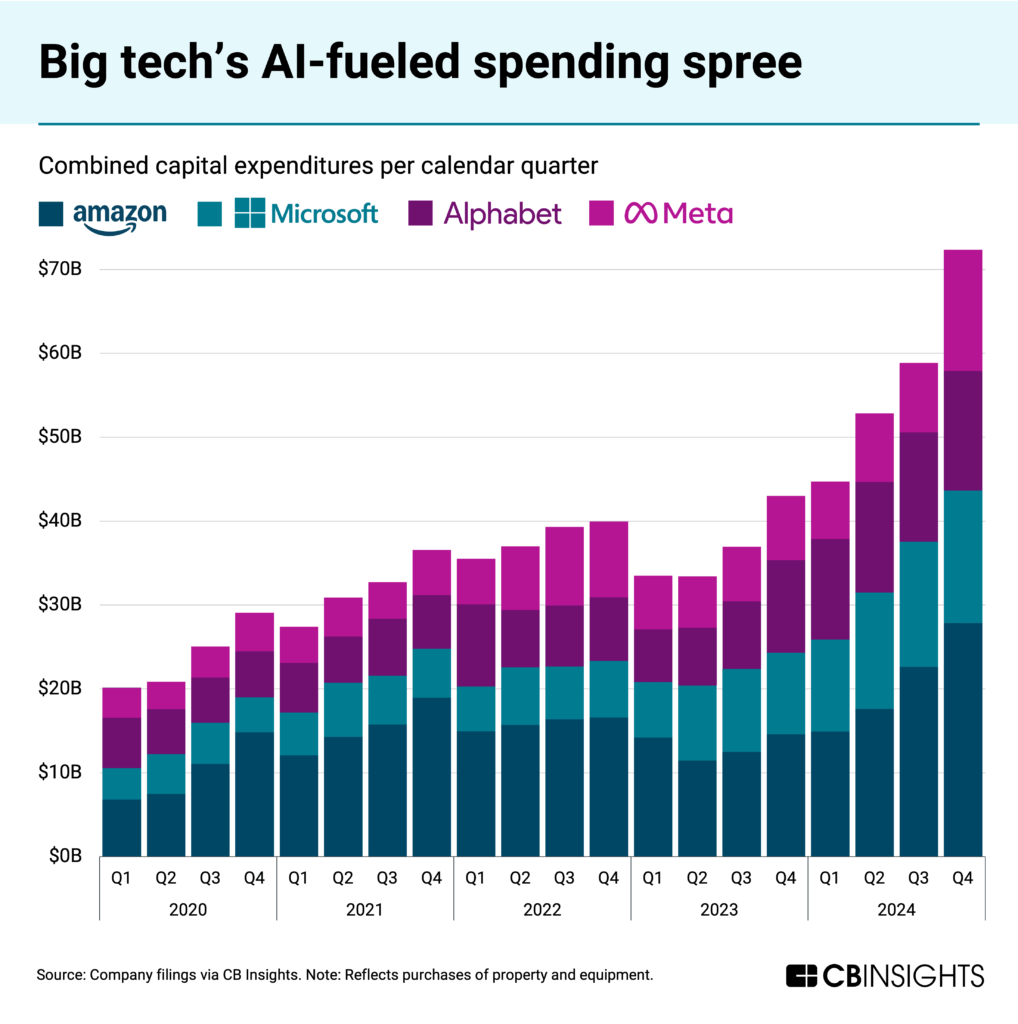
Meta, the social media giant, announced a significant upward revision to its capital expenditure forecast for the current year. The company now anticipates spending between $70 billion and $72 billion, a notable increase from its earlier projection of $66 billion to $72 billion. Meta’s chief financial officer, Susan Li, further indicated that this upward trend is expected to continue, with capital expenditure next year projected to be "notably larger." This soaring investment aligns seamlessly with Meta’s robust financial performance, as the company reported a staggering $51.24 billion in revenue last quarter, marking an impressive 26 percent year-over-year growth.
At the heart of Meta’s aggressive investment strategy is CEO Mark Zuckerberg’s conviction that the company must front-load its capacity building to meet burgeoning demand for AI technologies and to proactively prepare for potential monumental breakthroughs in the field. During a conference call with analysts, Zuckerberg articulated a long-term vision, stating, "There’s a range of timelines for when people think that we’re going to get superintelligence. I think that it’s the right strategy to aggressively front-load building capacity, so that way we’re prepared for the most optimistic cases." This foresight suggests Meta is not merely responding to current market trends but is actively positioning itself for a future where AI plays an even more central role.
Meta’s commitment to AI extends beyond mere financial allocation; it includes a fervent pursuit of top-tier talent. In recent months, the company has aggressively moved to recruit leading AI researchers, reportedly offering some compensation packages worth hundreds of millions of dollars, highlighting the intense competition for expertise in this nascent field. Concurrently, to ensure optimal operational efficiency within its AI divisions, Meta executed approximately 600 job cuts last week. This seemingly contradictory move, combining aggressive hiring with targeted reductions, reflects a strategic effort to streamline and optimize its AI teams, which have undergone numerous reorganizations over the past eight months.
While Meta has assured investors that its substantial AI investments are already yielding tangible benefits, the company has largely refrained from providing granular specifics. However, it did confirm that AI is positively impacting its lucrative advertising business and its virtual reality product lines, expressing confidence that AI will propel these divisions to unprecedented heights in the foreseeable future. The implication is that AI is enhancing everything from ad personalization and targeting to the immersive capabilities of its metaverse ventures.
Google’s parent company, Alphabet, echoed Meta’s sentiment of amplified AI spending, projecting its 2025 capital expenditures to fall between $91 billion and $93 billion. This represents a significant escalation from its earlier 2025 estimate of just $75 billion. Mirroring Meta’s experience, this substantial increase in spending was accompanied by an impressive surge in revenue, with Alphabet reporting a record $102.3 billion in the third quarter, a remarkable 33 percent increase from the previous year. The vast majority of Alphabet’s capital outlay is earmarked for the expansion of its data centers and a broad spectrum of other artificial intelligence initiatives, underpinning the sheer scale required to power advanced AI models and services.
Google’s cloud business, a critical component of its AI strategy, continued its impressive growth trajectory, generating $15.15 billion in the third quarter—a robust 35 percent increase compared to the same period in 2024. This growth is a testament to the increasing reliance of businesses worldwide on Google’s AI-powered cloud infrastructure. Furthermore, Gemini, Google’s advanced general-purpose AI application, has witnessed explosive user adoption, now boasting 650 million monthly active users, a substantial leap from 450 million just last quarter. While impressive, it still trails OpenAI’s ChatGPT, which CEO Sam Altman recently stated has 800 million weekly users, underscoring the fierce competition in the AI chatbot space.
Microsoft, another titan in the tech industry, also reported strong financial results for the quarter ending September 30, with revenues reaching $77 billion, an 18 percent increase year-over-year. Its highly profitable cloud business demonstrated continued strength, with revenue climbing 26 percent from a year ago. The company’s capital expenditures for the quarter stood at $34.9 billion, with a significant portion dedicated to AI infrastructure. This figure alone is nearly $5 billion higher than previously forecasted and represents a colossal 74 percent jump from the same quarter in the prior year, signaling an unprecedented pace of investment.
While Microsoft refrained from offering a precise forecast for its AI capital expenditures for the upcoming quarter or year, chief financial officer Amy Hood indicated that the company’s total spend would "increase sequentially" and projected that the fiscal year 2026 growth rate would surpass that of fiscal year 2025. This forward-looking statement reinforces the long-term, escalating commitment to AI infrastructure development across the board.
These ambitious capital expenditure plans across Microsoft, Meta, and Google are predicated on the unwavering assumption that the demand for AI technologies will not only persist but will continue its exponential growth. However, this aggressive pursuit of AI dominance is not without its skeptics. A growing chorus of analysts is raising concerns that the current AI market may be an unsustainable bubble, poised for an eventual burst.
These worries are intensified by recent announcements of extraordinarily expensive, multi-year data center projects and staggered, colossal investments across the industry. Just last month, Nvidia, the leading designer of AI chips, revealed its intention to invest "up to $100 billion" in OpenAI, contingent upon the ChatGPT maker constructing and deploying at least 10 gigawatts of AI data centers powered by Nvidia’s chips. In an even more astonishing revelation, OpenAI itself declared plans to develop 30 gigawatts of computing resources, an undertaking estimated to be worth an astounding $1.4 trillion. Such figures dwarf conventional tech investments and fuel the debate about market rationality.
Microsoft, a key partner and investor in OpenAI, has committed a total of $13 billion to the company and continues to leverage its frontier AI models across its product ecosystem. However, this strategic partnership came with a financial cost, as Microsoft absorbed a $3.1 billion hit in net income this quarter due to losses stemming from that investment. Recognizing the inherent volatility associated with its ongoing partnership with OpenAI, Microsoft’s Amy Hood stated that the company would, going forward, exclude any impacts from its OpenAI investment in its financial outlooks, seeking to provide a clearer picture of its core operational performance.
Microsoft CEO Satya Nadella offered critical insights into the company’s philosophy behind its capital expenditures, emphasizing two fundamental considerations. Firstly, Microsoft is focused on making its vast fleet of data centers "fungible," meaning they are designed to be interchangeable and easily modifiable to adapt to evolving customer demands and technological shifts in the future. This strategic flexibility aims to mitigate risks associated with rapid technological advancements. Secondly, Nadella highlighted the company’s commitment to continuous infrastructure modernization. "It’s not like we buy one version of Nvidia and load up for all the gigawatts we have. Each year, you buy, you ride Moore’s law, you continually modernize and depreciate it, and you use software to grow efficiency," Nadella explained, underscoring a dynamic, iterative approach to infrastructure development that leverages technological progress.
Mark Moerdler, a senior research analyst covering global software at Bernstein, supports Microsoft’s approach, noting that the company is "building capacity in tranches over time and can shift resources, which gives them a lot of protection." However, Moerdler also candidly acknowledged the elephant in the room, adding, "Is there an overall AI bubble? It’s possible, and that they did not answer." This sentiment encapsulates the current paradoxical state of the AI market: an undeniable wave of innovation and demand met with an equally undeniable surge in capital commitments, leaving many to ponder the long-term stability and ultimate returns on these colossal investments. The aggressive spending by Meta, Google, and Microsoft unequivocally signals their unwavering belief in AI’s future, but the scale of their commitment simultaneously amplifies the stakes for the entire tech industry.