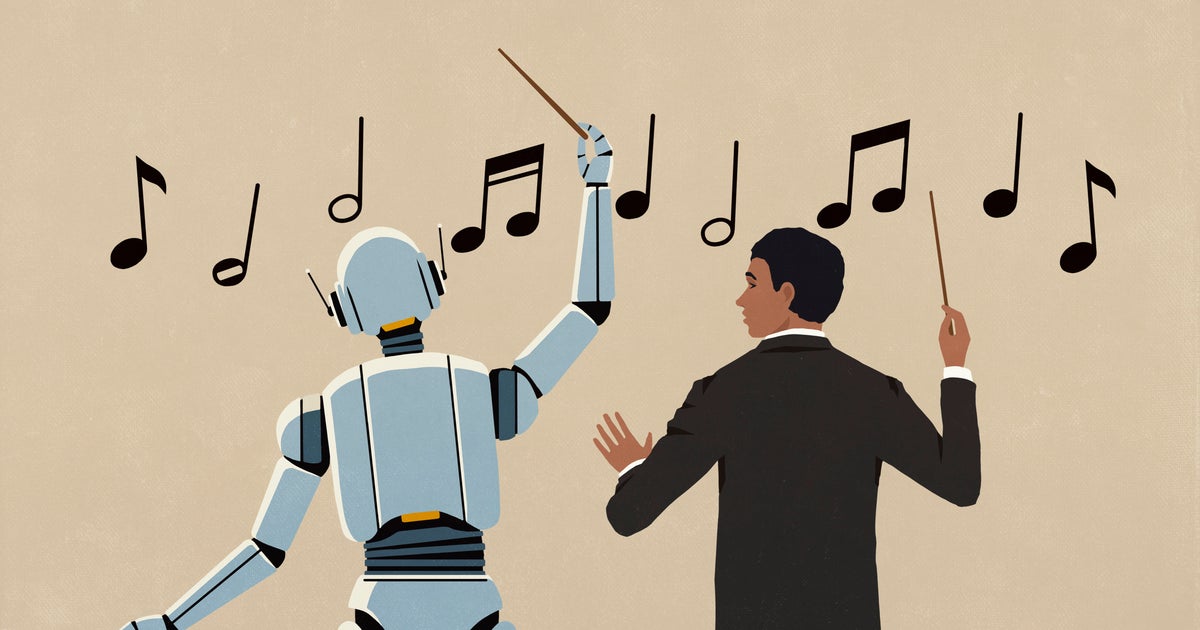
People can’t tell AI-generated music from real thing anymore, survey shows. A groundbreaking survey released on Wednesday has revealed a stark and unsettling reality: it has become nearly impossible for the average person to differentiate between music crafted by artificial intelligence and compositions created by human artists. This seismic shift in auditory perception carries profound implications for the music industry, artists, and listeners alike, signaling an irreversible transformation in how we create, consume, and value music.
The comprehensive study, commissioned by France-based streaming platform Deezer and conducted by the polling firm Ipsos, involved a substantial sample of 9,000 individuals across eight diverse countries. Participants in Brazil, Britain, Canada, France, Germany, Japan, the Netherlands, and the United States were presented with three audio clips: two generated entirely by AI and one composed by a human. The results were astonishingly uniform across the board. "Ninety-seven percent could not distinguish between music entirely generated by AI and human-created music," Deezer stated in its official announcement, underscoring the near-universal inability to detect the algorithmic hand at play.
Conducted between October 6 and 10, the survey’s findings paint a vivid picture of a world grappling with the rapid advancements in AI technology. While the technological prowess is undeniable, the emotional and philosophical implications are far less straightforward. Deezer reported that more than half of the respondents expressed significant discomfort upon realizing they couldn’t tell the difference. This discomfort speaks to a deeper unease about authenticity, the erosion of artistic integrity, and the potential devaluation of human creativity in an increasingly automated landscape. It suggests that while the sound may be indistinguishable, the source of that sound holds significant meaning for listeners.

Beyond the immediate perceptual challenge, pollsters delved into broader questions concerning AI’s impact on the music ecosystem. The responses highlighted widespread apprehension: 51 percent of respondents feared that the technology would inevitably lead to a deluge of low-quality music flooding streaming platforms. Even more concerning, almost two-thirds believed that the proliferation of AI in music production would ultimately result in a significant loss of creativity. These concerns are not merely speculative; they reflect a tangible anxiety about the future of an art form long celebrated for its human touch, emotional depth, and unique expression. The fear is that while AI can replicate, it may struggle to innovate with the same spark of human genius, or that the sheer volume of AI-generated content could drown out truly original human works.
Alexis Lanternier, CEO of Deezer, articulated the core sentiment emerging from the survey. "The survey results clearly show that people care about music and want to know if they’re listening to AI or human made tracks or not," he stated. His comments emphasize that for many, the provenance of music is not a trivial detail but a crucial piece of information that informs their listening experience and emotional connection to the art. This desire for transparency becomes paramount in an era where the lines between human and machine are increasingly blurred.
Deezer’s own internal data further illustrates the dramatic surge in AI-generated content. The platform has observed a significant uptick not only in the quantity of AI tracks being uploaded but also in their consumption. In January, AI-generated content accounted for approximately one in ten of the tracks streamed daily on Deezer. A mere ten months later, that percentage has skyrocketed to over one in three, translating to nearly 40,000 AI-generated tracks being streamed every single day. This exponential growth underscores the urgency of addressing the issues of transparency and ethical content management. The rapid saturation of platforms with AI-generated material presents a formidable challenge to maintaining quality, originality, and fair compensation for human artists.
In light of these findings, a resounding call for clarity emerged from the survey: eighty percent of respondents strongly advocated for fully AI-generated music to be clearly labelled for listeners. This overwhelming consensus highlights a collective desire for informed choice and transparency. In response to this growing demand and its own observations, Deezer has taken a proactive stance, standing as the only major music-streaming platform that systematically labels completely AI-generated content for its users. This policy sets a precedent for industry responsibility, acknowledging the listener’s right to know and empowering them to make conscious decisions about their consumption.
The debate surrounding AI in music gained significant prominence earlier this year with the curious case of The Velvet Sundown. This band suddenly went viral on Spotify in June, captivating millions of listeners with its catchy tunes. It was only the following month that the creators confirmed what many had begun to suspect: The Velvet Sundown was, in fact, an entirely AI-generated entity. Its most popular song had amassed over three million streams, demonstrating the immense appeal and deceptive capabilities of AI music. The revelation sparked widespread discussion about authenticity, the ethics of artistic creation, and the responsibilities of streaming platforms.
The Velvet Sundown incident served as a powerful wake-up call for the entire industry. In response, Spotify, while not adopting mandatory labeling, stated its intention to "encourage artists and publishers to sign up to a voluntary industry code to disclose AI use in music production." This approach, relying on voluntary compliance, contrasts sharply with Deezer’s systematic labeling. Critics argue that a voluntary code may not be sufficient to ensure transparency, as it places the onus on creators to disclose, potentially leading to inconsistent application and continued listener confusion. The incident underscored the immediate need for comprehensive policies that address both the ethical implications and the practical challenges posed by AI-driven creativity.
The implications extend far beyond mere listening preferences. The rise of AI music introduces complex legal and ethical dilemmas, particularly concerning copyright and fair compensation. Who owns the copyright to music generated by an algorithm? What happens when AI models are trained on vast datasets of copyrighted human-made music without explicit permission or compensation to the original creators? These questions are at the forefront of ongoing legal battles and industry discussions, with artists and record labels pushing for clearer guidelines and robust protections. The potential for AI to devalue human artistic labor and disrupt traditional revenue streams is a significant concern that requires urgent attention from policymakers and industry leaders.
For human artists, the advent of sophisticated AI music presents a dual challenge and opportunity. While AI tools can assist in composition, arrangement, and production, potentially democratizing music creation, they also pose an existential threat. The prospect of competing with algorithms that can generate endless variations of music, mimic any style, and operate without the need for traditional compensation models, raises serious questions about the sustainability of a career in music. Artists are increasingly finding themselves in a new frontier, needing to adapt, innovate, and emphasize the unique, irreplaceable human elements of their craft – emotional depth, lived experience, and intentional storytelling – that AI, for now, struggles to replicate.
As AI technology continues its relentless march forward, the current inability of people to distinguish AI-generated music from human creations is likely to become even more pronounced. This survey serves as a critical barometer, measuring not just technological capability but also public sentiment and ethical demands. The call for mandatory labeling, as championed by Deezer and echoed by a vast majority of listeners, represents a crucial step towards fostering transparency and maintaining trust in the digital music landscape. Without clear regulations and industry-wide commitment to disclosure, the music world risks descending into a chaotic realm where authenticity is compromised, creativity is stifled, and the profound connection between artist and listener is irrevocably fractured. The future of music, whether composed by humans or algorithms, hinges on our collective ability to navigate these complex waters with foresight, ethics, and a deep respect for the art itself.