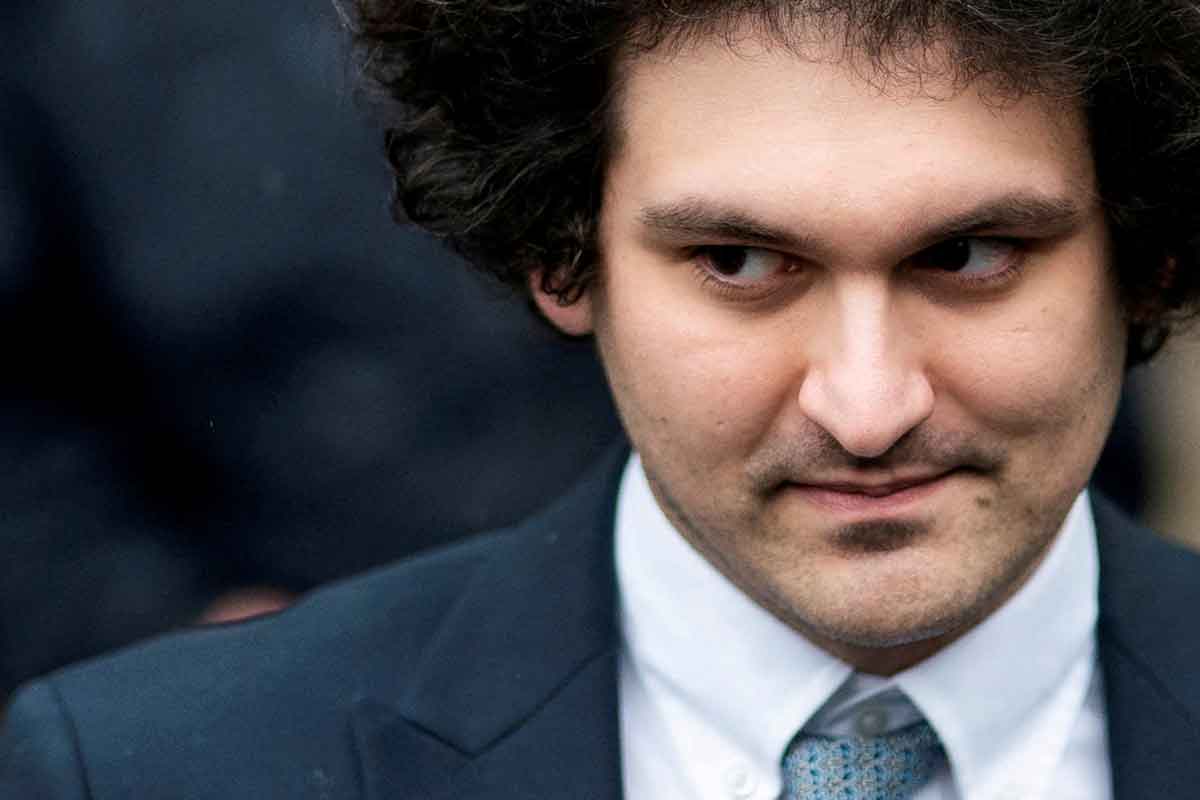
Sam Bankman-Fried Goes on the Offensive
On September 23, after more than six months of silence, an X account associated with the disgraced FTX founder, Sam Bankman-Fried, published a cryptic yet attention-grabbing post: "gm"—internet slang for "good morning." This seemingly innocuous message marked the end of a long public dormancy and signaled the beginning of a concerted effort to re-engage with the narrative surrounding his downfall. Since that initial post, the account has been consistently active, stirring debate and reigniting discussions about the man once hailed as a crypto wunderkind.
Sam Bankman-Fried, widely known by his initials SBF, is currently incarcerated, serving a 25-year prison sentence in California. His conviction in November 2023 saw him found guilty by a jury in the Southern District of New York on seven counts of fraud and conspiracy, all stemming from his pivotal role in the spectacular collapse of the cryptocurrency exchange FTX. The severity of the sentence underscored the profound impact of his actions on countless investors and the broader crypto market.
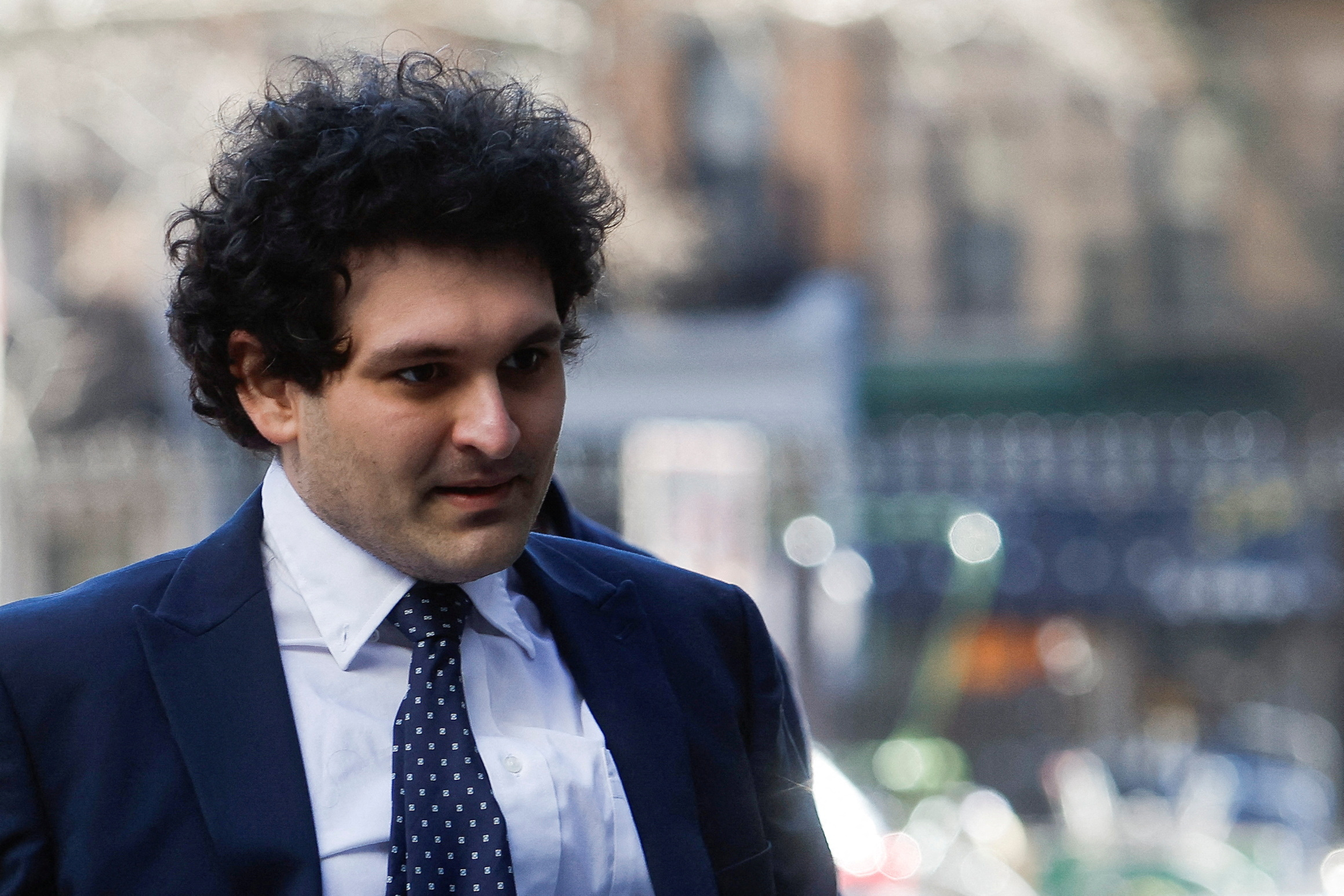
Immediately following his sentencing, SBF signaled his clear intention to appeal the verdict, initiating the formal legal challenge that now unfolds. While he did grant a handful of interviews to reporters from behind prison walls in the spring, his presence had largely receded from the public eye. The dynamic and ever-evolving crypto industry, ever eager for the next big thing, had seemingly moved on. Distracted by the monumental arrival of US Bitcoin exchange-traded funds (ETFs), a frenetic memecoin gold rush, burgeoning discussions about national Bitcoin reserves, and the tantalizing prospect of a more favorable regulatory environment under a potential second Donald Trump presidency, the industry’s focus had shifted.
However, SBF’s X account’s renewed activity since September has undeniably caused a significant stir. It’s important to note that Bankman-Fried himself does not have direct internet access in prison. Instead, a close friend is reportedly posting on his behalf, maintaining a digital presence that allows SBF to communicate his perspective to the world. These recent posts are far from mere pleasantries; they have become a platform for SBF to launch pointed criticisms at the administrators overseeing the FTX bankruptcy estate. Furthermore, they vigorously attempt to reframe alleged misconceptions surrounding the true financial health of FTX at the time of its collapse. The core of his argument, as presented through these posts, is that the vast sums of money were never truly "missing" but rather were tied up in illiquid assets, implying a mischaracterization of the situation by those who took over the company.
This digital campaign is not an isolated incident. From prison, Bankman-Fried has also participated in interviews with the media outlet Mother Jones, which published its findings in October. During these interviews, he largely echoed the same narrative, promoting his perspective that FTX’s financial woes were misdiagnosed and mishandled.
Adding another powerful voice to this burgeoning public relations offensive is his mother, Barbara Fried. A respected legal professor, she recently launched a Substack account. Her inaugural and, to date, sole post, published in late October, is an extensive 65-page treatise titled “The Trial of Sam Bankman-Fried.” In this detailed document, she meticulously argues that her son neither committed fraud nor received a fair trial, effectively constructing a comprehensive legal and ethical defense for him. Bankman-Fried’s representatives have confirmed Barbara Fried’s authorship of the Substack paper, though they remained non-committal regarding the X posts, stating they had no information about them.
SBF’s re-emergence, therefore, clearly reflects a sophisticated, two-pronged strategy aimed at securing his eventual release from prison. On one front, he is pursuing a formal legal appeal through the established court system, challenging the verdict and sentence. Simultaneously, on another front, he is engaging in a deliberate campaign to appeal to public sympathy and influence public opinion, potentially paving the way for a political intervention.
Former prosecutors are quick to point out that prevailing public sentiment toward Bankman-Fried will have no direct bearing on the legal appeal case itself. The judicial process operates on legal arguments and evidence, not popularity. However, this public relations push could be instrumental in influencing a separate, yet equally critical, objective: his reported campaign to secure a presidential pardon from Donald Trump. Trump, since his return to the White House in January, has notably pardoned several high-profile crypto figures convicted of white-collar offenses, including Changpeng Zhao, the billionaire founder of Binance, and Ross Ulbricht, the creator of Silk Road. This precedent offers a glimmer of hope for SBF’s camp.
Joshua Naftalis, a former prosecutor now a partner at the law firm Pallas Partners, unequivocally states, “It’s a PR campaign, obviously. It’s a no-stone-left-unturned strategy.” This holistic approach suggests a calculated effort to explore every possible avenue for redress.
To date, Bankman-Fried has not filed a formal pardon application, a White House spokesperson confirmed to WIRED, adding, “We do not discuss speculation about sensitive issues, such as pardons, on-record.” This diplomatic response leaves the door open while confirming no formal action has yet been taken.
Bankman-Fried’s legal appeal case fundamentally hinges on the assertion that the trial jury “was only allowed to see half the picture” due to specific rulings by Judge Lewis Kaplan. These rulings, the defense claims, blocked crucial evidence that would have otherwise undercut the prosecution’s case. In their appellate brief filed in January, Bankman-Fried’s counsel asserted, “At every turn, the judge put his thumb on the scale. The result was a one-sided trial, where the district court allowed the government to present damning false information, concealing contrary information from the jury, erroneously instructed the jury about the law, and effectively directed a guilty verdict.” These are grave accusations, suggesting a fundamental flaw in the judicial process that led to his conviction.
On November 4, one of Bankman-Fried’s lawyers, Alexandra Shapiro—a prominent attorney who is simultaneously handling the appeal cases for figures such as Sean ‘Diddy’ Combs and entrepreneur Charlie Javice—presented these arguments to a panel of judges at the Second Circuit Court of Appeals. Reports from the proceedings indicated that the judges appeared skeptical of the defense’s premise that Bankman-Fried did not receive a fair trial. One judge reportedly remarked to Shapiro, “It almost seems like you’re spending more ink on Judge Kaplan than on the merits.”
Daniel Richman, a law professor at Columbia University and a former federal prosecutor, commented on the defense’s strategy: “I’m sure they didn’t take lightly the prospect of criticizing Kaplan’s exercise of discretion. But I think they made the professional judgment that that was one of the few roads worth taking.” However, both Naftalis and Richman caution against attempting to predict the outcome of an appeal based solely on comments made by judges during oral arguments. The odds of a criminal appeal succeeding are generally low, typically ranging between 5 and 10 percent. Furthermore, Bankman-Fried’s specific arguments, which challenge matters of judicial discretion, are notoriously difficult to win. Christopher LaVigne, a partner at the law firm Withers, concisely stated, “I’d be surprised if it was overturned.” The court could issue its decision at any moment, with former prosecutors noting that judges can take anywhere from a month to several years to return a verdict after oral arguments.
A chilling testimony during his trial revealed Bankman-Fried once stated he would risk the destruction of the world on a coin flip if the alternative was humanity becoming twice as well off. This insight into his utilitarian, high-stakes mindset perhaps explains his current strategy of hedging all bets.
Since his return to the White House in January, Donald Trump has indeed pardoned a number of crypto figures convicted of white-collar offenses, including Changpeng Zhao. Trump reportedly told journalists that he cleared Zhao’s criminal record based on advice from “very good people” who suggested the Binance founder was a victim of a crypto-hostile Biden administration and had not committed a crime—despite Zhao having pleaded guilty to failing to maintain effective money-laundering safeguards.
According to The New York Times, Bankman-Fried’s family intensified their lobbying efforts for a pardon in the spring. His camp reportedly believes that Trump, who has frequently described himself as a “victim of lawfare,” might empathize with the idea that Bankman-Fried has been unfairly portrayed as an arch-criminal by prosecutors.
The recent posts on Bankman-Fried’s X account, his interviews with Mother Jones, and Barbara Fried’s Substack post all align perfectly with this narrative. They consistently maintain Bankman-Fried’s innocence and attempt to deflect blame for FTX’s catastrophic collapse and the immense customer losses onto allegedly avaricious legal professionals. The argument posits that these professionals stood to benefit financially from a premature bankruptcy filing, implying that FTX could have been salvaged had it not been for their intervention.
Maggie Carangelo, a spokesperson for the FTX estate, refuted these claims, stating, “The professional fees were reviewed by an independent examiner and approved by the court.” She further emphasized, “The FTX estate managed its Chapter 11 case in a transparent, public process that was supervised by the US bankruptcy court, reviewed by an independent examiner, and had the full support of the official creditors committee. Its plan of reorganization received the approval of more than 95 percent of creditors who submitted votes, representing 99 percent of voted claims by value.”
In a surprising twist, Bankman-Fried’s publicity blitz finds him inadvertently aligned with a segment of former FTX customers—the very victims of the crimes he was convicted of—who have also vehemently criticized the strategy pursued by the administrators of the FTX estate. These creditors claim that the estate’s approach has resulted in a lesser return for them. However, not all creditors are swayed. Sunil Kavuri, who lost $2 million in the FTX collapse and delivered a scathing statement at SBF’s sentencing, remains unconvinced: “He’s still a criminal. It’s very easy to push blame onto someone else, but he got us into this mess.”
While the argument that FTX was solvent and control was forcibly taken from Bankman-Fried by bankruptcy lawyers is largely irrelevant to his legal appeal, as Richman notes, its resonance within the White House could be a different matter entirely. Richman observes, “It depends on the extent to which one thinks Trump’s pardoning process has any connection to the merits of cases.”
Bankman-Fried’s current maneuvering was, in fact, foreshadowed in a court filing from March 2024, where prosecutors advocated for a lengthy prison sentence. The filing referenced a document Bankman-Fried himself compiled immediately after FTX declared bankruptcy, outlining various strategies to repair his public image. Among these options, the third explicitly stated: “go on Tucker Carlsen, come out as republican [sic].” In early 2025, from prison, Bankman-Fried indeed sat for that very interview with Carlson, a long-time Trump ally. In that interview, he maintained, “I don’t think I was a criminal.” This calculated move underscores the depth of his strategic planning and his relentless pursuit of vindication, both through the legal system and the court of public opinion.