Crypto Magnate Do Kwon Sentenced to 15 Years in Prison
In a pivotal moment for the cryptocurrency world, South Korean entrepreneur Do Kwon, the architect behind the colossal collapse of the Terra-Luna ecosystem, was sentenced to 15 years in prison by a US federal judge in the Southern District of New York on Thursday. The ruling brings a measure of judicial closure to a saga that wiped out an estimated $40 billion from the crypto market and triggered a devastating ripple effect across the industry.
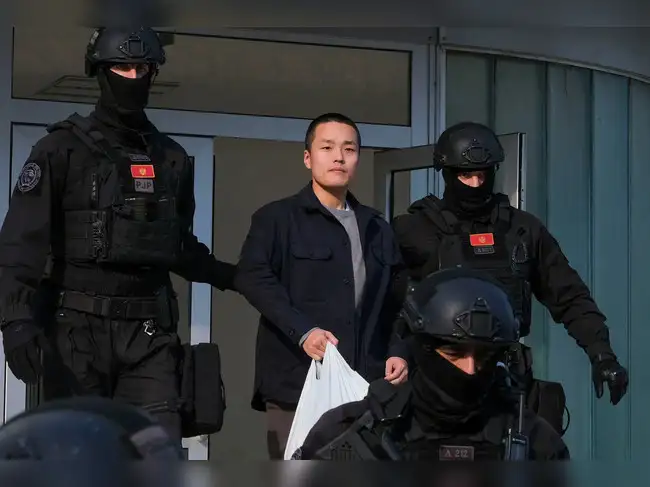
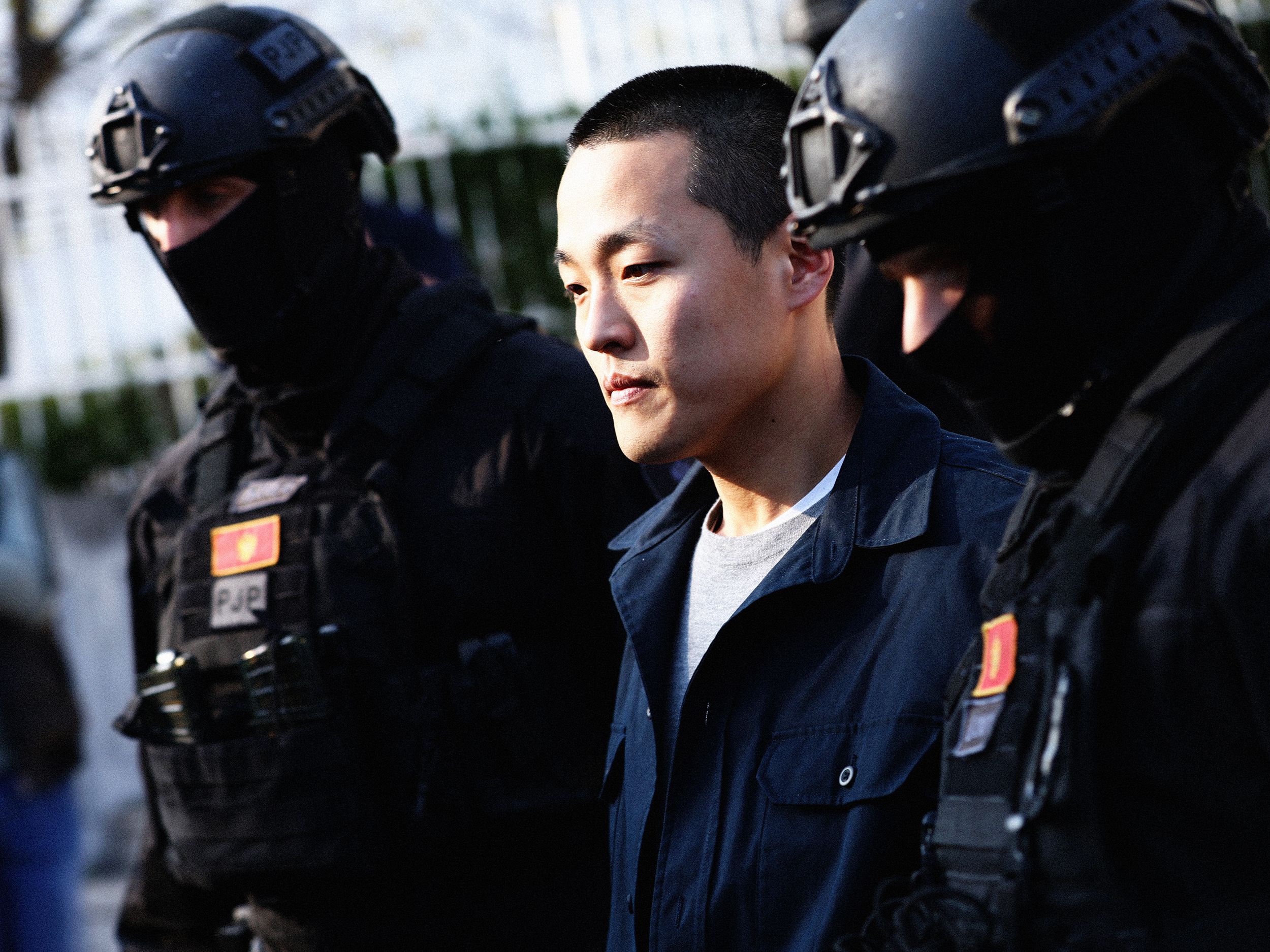
Kwon, once lauded as a visionary, presented a starkly different image as he was escorted into the courtroom by US Marshals. His head was bowed, and his cheeks appeared sunken, suggesting a significant loss of weight that underscored the gravity of his predicament. Dressed in a bright lemon-colored prison jumpsuit worn over a long-sleeve shirt, with cuffs restraining his waist and hands, he cut a solemn and defeated figure, a stark contrast to the confident "crypto wunderkind" persona he once projected.
The sentencing followed Kwon’s August guilty plea to charges of defrauding investors who had poured their capital into crypto coins issued by his company, Terraform Labs. The dramatic implosion of these coins in May 2022 was not merely a market correction; it was, as US prosecutors emphatically stated in a recent court filing, a fraud "colossal in scope, permeating virtually every facet of Terraform’s purported business." They minced no words, adding that Kwon’s "rampant lies left a trail of financial destruction in their wake." The catastrophic event not only obliterated $40 billion in investor wealth but also sent the nascent crypto economy into a tailspin, precipitating the bankruptcies of numerous other high-profile companies.
Given the opportunity to address the court on Thursday, Kwon articulated a rare moment of personal accountability, stating that he took sole responsibility for the fraud. As he thanked his former coworkers and supporters, some of whom had gathered in the public gallery, emotion welled up within him, visibly shaking his composure. His lawyers, positioned to his left and right, offered a gesture of quiet support, gently rubbing his back in a poignant display of human empathy amidst the sternness of the judicial process.
The offenses to which Kwon pleaded guilty carried a maximum sentence of 25 years in federal prison. Ahead of the hearing, prosecutors had advocated for a 12-year term, arguing for a significant but tempered punishment. However, the presiding judge, Paul Engelmayer, determined that a more punitive 15-year sentence was imperative. His rationale was clear: such a severe penalty was necessary to send an unequivocal message and deter future crypto fraudsters from engaging in similar deceptive practices. "This case will be there as a reminder of breaking bad and what happens," Engelmayer declared to the courtroom, issuing a direct warning: "To the next Do Kwon, if you commit fraud, you will lose your liberty for a long time." As Kwon was subsequently bundled into an elevator outside the courtroom, his face revealed an effort to suppress tears, the chain hanging between his feet rattling audibly against the floor, a stark auditory symbol of his new reality.
The origins of this downfall trace back to 2018 when Do Kwon co-founded Terraform Labs with Daniel Shin. Two years later, the company unveiled its ambitious plan to launch TerraUSD (UST), a stablecoin designed to maintain a stable value pegged to the US dollar through an intricate algorithmic mechanism. This algorithm was intended to effectively link UST to a second coin issued by the firm, LUNA. The theoretical premise was elegant: a dollar’s worth of LUNA could be exchanged for a dollar’s worth of UST, and vice versa. If UST’s value ever dipped below $1, traders would be incentivized to buy LUNA, theoretically driving demand and restoring UST to its target value. "It was an intriguing and very novel mechanism," explained Noelle Acheson, a former analyst at the crypto brokerage Genesis, to WIRED last year. "Many smart people believed it would work."
However, in May 2022, this seemingly ingenious price-balancing system failed catastrophically. A series of large-scale sales of UST by traders caused the stablecoin to slip from its dollar peg. This initial de-pegging triggered a widespread panic sell-off, leading to a death spiral that drove the price of UST practically to zero. In a now-infamous tweet, Kwon attempted to stem the tide, urging calm with the words, "deploying more capital—steady lads." But his efforts were futile. The values of both UST and LUNA plummeted, collectively wiping out $40 billion from the market in a matter of days.
The fallout from this incident was far-reaching, triggering a contagion that destabilized the entire crypto ecosystem. It contributed directly to the collapse of prominent crypto hedge fund Three Arrows Capital, followed by a cascade of bankruptcies among crypto lenders such as Voyager Digital, BlockFi, and Genesis. In a more roundabout but equally impactful way, Kwon’s actions created the conditions that led to the eventual destruction of crypto exchange FTX. The crisis caused lenders to recall hundreds of millions of dollars in loans to FTX’s sister company, Alameda Research. To repay these loans, Alameda illicitly used FTX customer funds, deepening the gaping hole in the exchange’s balance sheet and setting the stage for its dramatic downfall.
Following the crash, Kwon, facing mounting legal pressure, fled his penthouse in Singapore, embarking on an international fugitive journey that eventually led him to the Balkans. His flight came to an end in March 2023 when Montenegrin authorities arrested him as he attempted to use a fake passport to board a plane bound for the UAE, a country notably lacking an extradition treaty with the US. His capture ignited a protracted legal battle between the US and Kwon’s native South Korea, both vying for the right to extradite him to face justice.
While this extradition battle unfolded, Kwon was tried in absentia in the US in April 2024 on civil charges brought by the US Securities and Exchange Commission (SEC). The SEC alleged that he had systematically misled investors about the prospects and stability of Terraform’s coins. The civil jury ultimately found Kwon liable, further solidifying the legal case against him. Finally, in December 2024, Kwon was extradited to the US to confront a criminal trial, where he eventually signed a plea agreement with the US Department of Justice, setting the stage for Thursday’s sentencing.
Under the terms of his plea agreement, Kwon was not required to admit to every single allegation outlined in the DOJ’s comprehensive indictment. However, he did concede to a critical deception: lying about UST’s capacity to automatically "self-heal." Publicly, Kwon had consistently assured coin holders that they could rely on Terraform’s sophisticated algorithm to unfailingly return UST to its $1 price point, even in the face of significant market volatility. The stark reality, however, was far more cynical. He had secretly established a "gentlemen’s agreement" with a trading firm, whose clandestine role was to artificially prop up UST’s price by engaging in large-scale trading of the coins, effectively masking the inherent instability of the algorithmic peg.
In a poignant letter submitted to the judge prior to his sentencing, Kwon expressed profound regret. "I misled many investors into believing UST was a lot less experimental than it was," he wrote, acknowledging the significant trust he had betrayed. Reflecting on his past actions, he added, "Looking back, I cannot comprehend my own hubris."
When determining Kwon’s sentence, Judge Engelmayer was mandated to consider not only the intricate details of Kwon’s crimes but also a range of extraneous factors that provided critical context to his offense. These included his personal character and history, the extent to which he had genuinely taken responsibility for his actions, and the likelihood of him re-offending. Rachel Maimin, a partner specializing in white-collar defense at Lowenstein Sandler and a former US prosecutor, elucidated this holistic approach, stating, "The judge can take really everything about a person’s personal life and crime into account in a holistic way. Because nobody is entirely defined by their one crime."
In his final written plea to the judge, Kwon navigated a delicate balance, attempting to convey appropriate contrition while subtly minimizing the full extent of his fraudulent conduct. "There’s a really thin line that has to be navigated," observed Jarrett Wolf, a former US prosecutor who now runs Wolf Global, a law firm specializing in crisis management. "He’s trying to attribute the losses to mistakes in an effort to minimize culpability. But the fact of the matter is—as the government points out in its indictment—this case is not about mistakes, it’s about lies." Ultimately, Kwon’s attempts to downplay his culpability were overshadowed by the sheer magnitude of the losses inflicted upon investors. "You really can’t get away from the seriousness of the crime," Maimin emphasized. "The government doesn’t describe every crime as being colossal."
The human cost of Kwon’s deception was powerfully brought to light on Thursday as some of his victims addressed the court, sharing their harrowing experiences. Tatiana Dontsova, one investor, recounted falling into a "state of deep depression" after a substantial investment in LUNA dwindled to a mere $13. She is now homeless, struggling to survive on the streets of Tbilisi, Georgia. Another individual, who had invested his family’s entire $190,000 life savings into UST, shared the devastating consequence of the collapse: his wife filed for divorce shortly thereafter. His raw anguish was palpable as he stated, "I could not imagine that a person I’d never met could destroy my life so completely."
With his prison sentence now definitively confirmed, Kwon will initially be held in a temporary facility before the Bureau of Prisons determines his long-term placement. Under the terms of his plea agreement, Kwon retains the right to submit a request to be transferred to South Korea after serving half of his sentence. However, his return to his native country would likely not signify freedom. Prosecutors in South Korea have previously indicated their intent to re-try him on similar charges, and have publicly stated they would seek an even more severe 40-year prison term.
A recent submission by his defense team offered a melancholic glimpse into what an extended future behind bars might entail for Kwon, the one-time crypto wunderkind. "He spends much of his time in a loop of regret, replaying what might have been," the filing states, painting a vivid picture of his confinement, adding that he is "still jotting code by hand in his jail cell when he wakes in the night." This image of a fallen titan, confined and haunted by his past, marks a somber chapter in the history of cryptocurrency and serves as a stark reminder of the consequences of unchecked ambition and fraud.