Venezuela Says U.S. Unilaterally Suspended Migrant Repatriation Flights After Trump Called for Airspace to Be Viewed as Closed
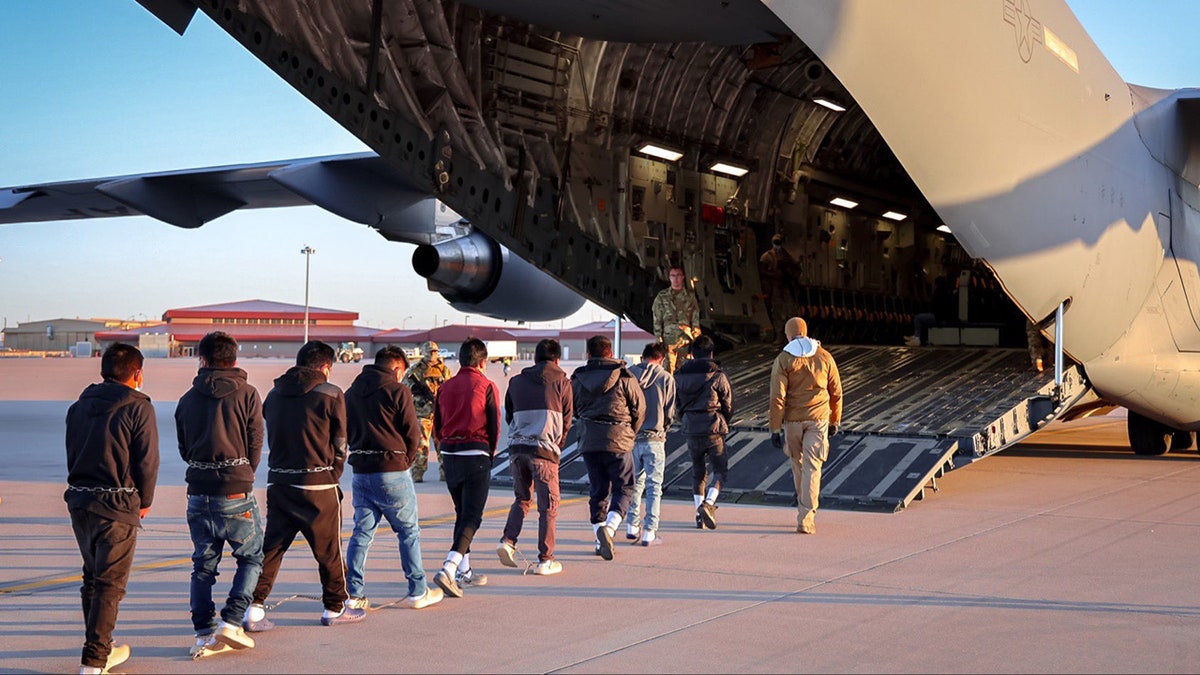
Caracas, Venezuela – In a sharp escalation of tensions, Venezuela announced Saturday that the United States has unilaterally suspended crucial migrant repatriation flights, a move it directly links to a social media post by President Donald Trump declaring the South American nation’s airspace "closed in its entirety." The Venezuelan government vehemently condemned Trump’s assertion as a hostile act undermining its sovereignty, demanding "unrestricted respect" for its national territory and international law.
The diplomatic fallout began after President Trump posted on Truth Social, instructing all airlines, pilots, drug dealers, and human traffickers to consider the airspace "above and surrounding" Venezuela as "closed in its entirety." This audacious declaration, delivered through a personal social media platform rather than official diplomatic channels, ignited immediate outrage in Caracas and cast a shadow of uncertainty over an already fraught relationship. Venezuela’s government responded swiftly with a statement, asserting that "Such statements constitute a hostile, unilateral, and arbitrary act, incompatible with the most basic principles of international law, and are part of a permanent policy of aggression against our country." The statement emphasized that no authority outside Venezuelan institutionality possesses the power to interfere with or block the use of its national airspace, citing International Civil Aviation Organization (ICAO) rules.
The suspension of migrant repatriation flights represents a significant humanitarian and political repercussion. For a nation grappling with one of the largest displacement crises in recent history, these flights are a vital, albeit limited, mechanism for citizens wishing to return home. Millions of Venezuelans have fled the country’s profound economic and political turmoil in recent years, seeking refuge across Latin America and beyond. The unilateral cessation of these flights by the U.S. not only complicates the already arduous journey for these individuals but also serves as a potent political tool, further isolating the Maduro regime and potentially exacerbating the humanitarian challenges faced by Venezuelan migrants. Caracas accused the U.S. of deliberately disrupting these efforts, framing it as another facet of Washington’s "permanent policy of aggression."
The White House, notably, has remained silent regarding President Trump’s Truth Social post, offering no official clarification on whether the declaration signaled a new policy directive or was merely a reinforcement of the administration’s aggressive posture towards Venezuelan leader Nicolás Maduro. This ambiguity itself is a potent element of the U.S. strategy, creating uncertainty and maintaining pressure without committing to a legally binding or internationally recognized airspace closure. The lack of a formal policy announcement through traditional diplomatic or aviation channels leaves the international community to interpret the President’s social media statements as indicative of U.S. intent, regardless of their legal standing.
This latest development comes against a backdrop of intensifying U.S. pressure on the Maduro government, which Washington does not recognize as legitimate. President Trump’s administration has consistently accused Maduro of widespread corruption, human rights abuses, and, significantly, narcoterrorism – charges for which Maduro faces an indictment in the U.S. The campaign against Maduro has manifested in various forms, including economic sanctions, diplomatic isolation, and a robust military presence in the Caribbean Sea and eastern Pacific Ocean.
In recent months, this military campaign has seen multiple strikes on small boats accused of ferrying drugs, leading to over 80 fatalities since early September. These interdiction efforts are part of a broader "Operation Southern Spear," which has witnessed the largest buildup of U.S. firepower in the region in generations. Central to this show of force is the USS Gerald R. Ford, America’s most advanced aircraft carrier, which has been deployed to the area alongside nearly a dozen Navy ships and approximately 12,000 sailors and Marines. The presence of such significant military assets sends an unequivocal message of Washington’s resolve, underscoring the potential for direct intervention, even as the official policy remains one of pressure and containment.
The Federal Aviation Administration (FAA), the U.S. agency responsible for regulating civil aviation, has also played a role in the escalating tensions, albeit within its established jurisdiction. While the FAA’s authority is generally limited to U.S. airspace and territories, it routinely issues advisories to pilots flying over areas with ongoing conflicts or heightened military activity globally. Earlier this month, the FAA advised civilian aircraft in Venezuelan airspace to "exercise caution" due to a "worsening security situation and heightened military activity in or around Venezuela." This advisory, though a standard safety precaution, significantly impacts international air travel, prompting international airlines to cancel flights to Venezuela. Three major U.S. airlines had already confirmed to CBS News earlier in the month that they had ceased using Venezuelan airspace, indicating a pre-existing awareness of potential dangers. However, the FAA’s warnings, based on safety concerns, are distinct from an outright declaration of "closed airspace" by a head of state, which carries far more profound implications for national sovereignty and international law.
The Venezuelan government’s appeal to ICAO rules highlights the international legal framework governing airspace. Under international law, each sovereign nation has complete and exclusive sovereignty over the airspace above its territory. Any unilateral declaration by an external power to close another nation’s airspace is a direct challenge to this fundamental principle and would typically be considered an act of aggression or war unless sanctioned by the United Nations Security Council or agreed upon by the sovereign state itself. Venezuela views Trump’s statement not merely as a suggestion but as an attempt to unlawfully dictate terms over its sovereign territory, a stance supported by established international norms.
Further complicating the narrative are serious allegations surrounding the conduct of U.S. military operations in the region. The Washington Post reported that Defense Secretary Pete Hegseth allegedly issued a verbal order for all crew members to be killed as part of the September 2 attack on suspected drug smugglers. These claims have triggered bipartisan calls for greater oversight from Capitol Hill. Republican Senator Roger Wicker of Mississippi, chairman of the Senate Armed Services Committee, and his Democratic counterpart, Rhode Island Senator Jack Reed, issued a joint statement late Friday, affirming that the committee "will be conducting vigorous oversight to determine the facts related to these circumstances." Such allegations, if substantiated, raise serious questions about rules of engagement, human rights, and adherence to international law in U.S. counter-narcotics operations.
The Trump administration’s deliberations regarding Venezuela have explored a range of options, both military and nonmilitary, including covert actions. President Trump confirmed last month that he had authorized CIA covert operations in Venezuela, signaling a willingness to employ clandestine tactics to destabilize the Maduro regime or gather intelligence. This multi-pronged approach – from overt military displays to covert intelligence operations and economic sanctions – illustrates the depth of Washington’s commitment to effecting change in Venezuela.
Amidst this backdrop of intense pressure and military posturing, an intriguing diplomatic undercurrent has emerged. President Trump has publicly entertained the idea of engaging in direct dialogue with Nicolás Maduro, a stark contrast to his administration’s official policy of non-recognition. Adding to the intrigue, The New York Times reported on Friday that Trump and Maduro had indeed spoken. The White House, however, declined to comment on the alleged conversation, maintaining a veil of secrecy around potential backchannel communications. Such a dialogue, if it occurred, would represent a significant departure from established U.S. policy and could signal a complex, multi-layered approach to Venezuela, where public aggression coexists with private overtures.
The unilateral suspension of migrant repatriation flights, triggered by President Trump’s audacious airspace declaration, marks another perilous turn in the already volatile relationship between the U.S. and Venezuela. It underscores the multifaceted nature of the conflict, intertwining issues of national sovereignty, international law, humanitarian concerns, and military strategy. As the USS Gerald R. Ford patrols the Caribbean and bipartisan calls for oversight echo in Washington, the future of U.S.-Venezuela relations remains precariously balanced, with the potential for further escalation and profound consequences for the region and its people.
Kris Van Cleave contributed to this report.