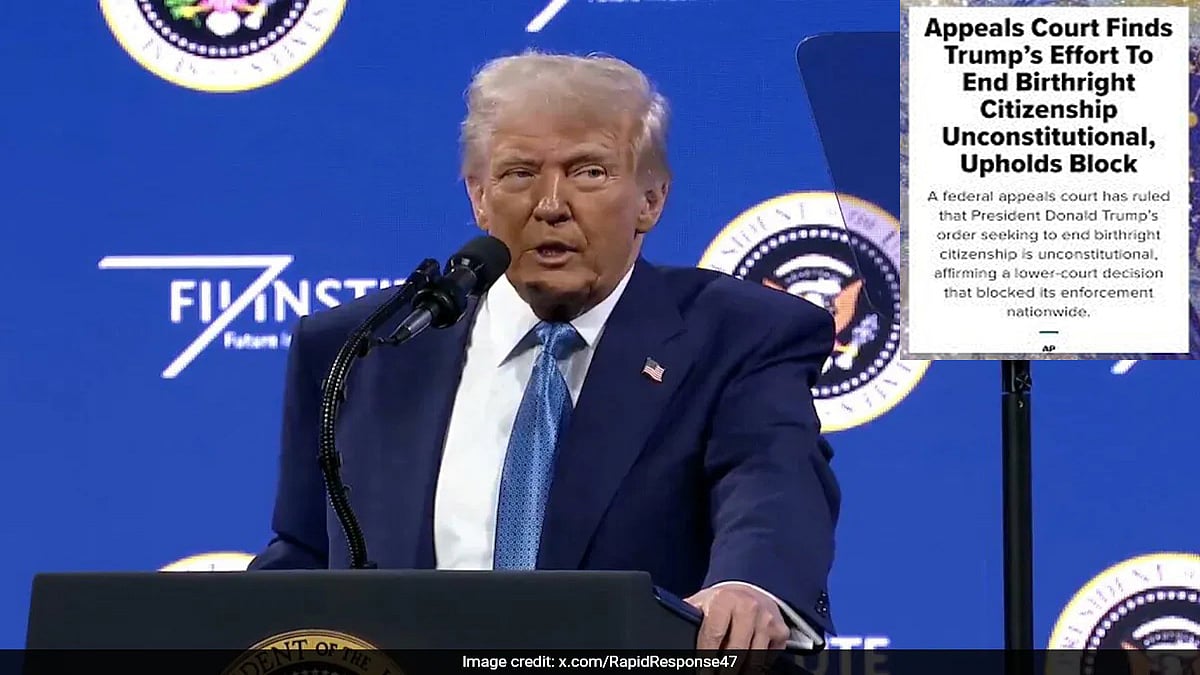
Supreme Court agrees to decide constitutionality of Trump’s plan to end birthright citizenship
Washington — The Supreme Court announced Friday its decision to intervene and adjudicate the legality of former President Trump’s controversial executive order, which seeks to terminate birthright citizenship. This policy, a cornerstone of his second-term immigration agenda, aims to alter the long-standing understanding that automatically grants U.S. citizenship to individuals born within the nation’s borders. This marks the first instance where the Supreme Court will directly examine the core legal merits of one of Mr. Trump’s immigration directives, contrasting with prior engagements that focused on procedural aspects rather than substantive constitutional questions.
Issued at the very outset of his return to the White House for a second term, the executive order immediately ignited a firestorm of legal and political debate. It represents a direct challenge to a principle embedded in American law for over a century, rooted in the Citizenship Clause of the 14th Amendment to the Constitution. The directive posits that children born in the U.S. to parents who are either present illegally or on a temporary, non-immigrant basis should not be recognized as U.S. citizens. This interpretation starkly departs from the prevailing legal consensus that citizenship is primarily determined by place of birth, or jus soli.
Historically, the concept of birthright citizenship in the United States traces its origins to the post-Civil War era. The 14th Amendment, ratified in 1868, declares, "All persons born or naturalized in the United States and subject to the jurisdiction thereof, are citizens of the United States and of the State wherein they reside." This clause was primarily intended to secure citizenship for newly freed slaves and their descendants, overturning the Dred Scott v. Sandford decision which had denied citizenship to African Americans. The scope of "subject to the jurisdiction thereof" has been the subject of intermittent debate, but a landmark Supreme Court ruling in 1898 largely settled the matter. In United States v. Wong Kim Ark, the Court held that a child born in the United States to Chinese immigrant parents who were not citizens, but were permanent residents and domiciled in the U.S., was a U.S. citizen by virtue of the 14th Amendment. This ruling solidified the jus soli principle, establishing that virtually anyone born on U.S. soil is a citizen, with limited exceptions primarily for children of foreign diplomats and invading forces, who are not considered "subject to the jurisdiction" of the U.S. in the same manner as others.
Despite this extensive legal precedent, the Trump administration, through the Justice Department, has consistently argued that the prevailing interpretation of the 14th Amendment is flawed. Their contention centers on the phrase "subject to the jurisdiction thereof," asserting that it was never intended to apply to the children of individuals who have no legal right to reside permanently in the country, such as "temporary visitors or illegal aliens." This perspective argues that the original intent of the framers of the 14th Amendment was more limited, focusing on ensuring the citizenship of former slaves and not extending to the offspring of those who might owe allegiance to another sovereign or whose parents are not fully subject to U.S. law in a permanent sense. This argument, while historically a minority view among constitutional scholars, has gained traction in certain political circles advocating for stricter immigration controls.
The legal journey of Mr. Trump’s executive order has been fraught with immediate and uniform opposition in the lower courts. Soon after its issuance, a slew of legal challenges emerged from civil rights organizations, immigrant advocacy groups, and affected individuals. These lawsuits contended that an executive order cannot unilaterally alter a constitutional provision, arguing that changing birthright citizenship would require a constitutional amendment, not a presidential directive. Federal district courts across the nation consistently sided with the challengers, issuing injunctions that blocked the implementation of the policy. These lower court judges, without exception, found the Trump administration’s interpretation of the 14th Amendment to be unconstitutional and contrary to established legal precedent.
This is not the Supreme Court’s first encounter with legal disputes surrounding Trump’s birthright citizenship plan. Earlier in its term, the justices were asked to intervene in three separate cases related to the executive order. However, their previous involvement was procedural, focusing on the appropriate scope of judicial relief rather than the fundamental constitutionality of the policy itself. In a significant 6-3 decision, the Supreme Court curtailed the ability of district court judges to issue "universal injunctions" – nationwide orders that prevent an administration from enforcing a policy against anyone, regardless of whether they were a party to the specific lawsuit. The Court acknowledged that such broad injunctions could lead to judicial overreach and procedural complexities. While limiting these universal orders, the Court clarified that plaintiffs could still seek broad relief through class-action lawsuits, which represent a defined group of individuals, and also left open the possibility for individual states to secure nationwide relief under specific circumstances.
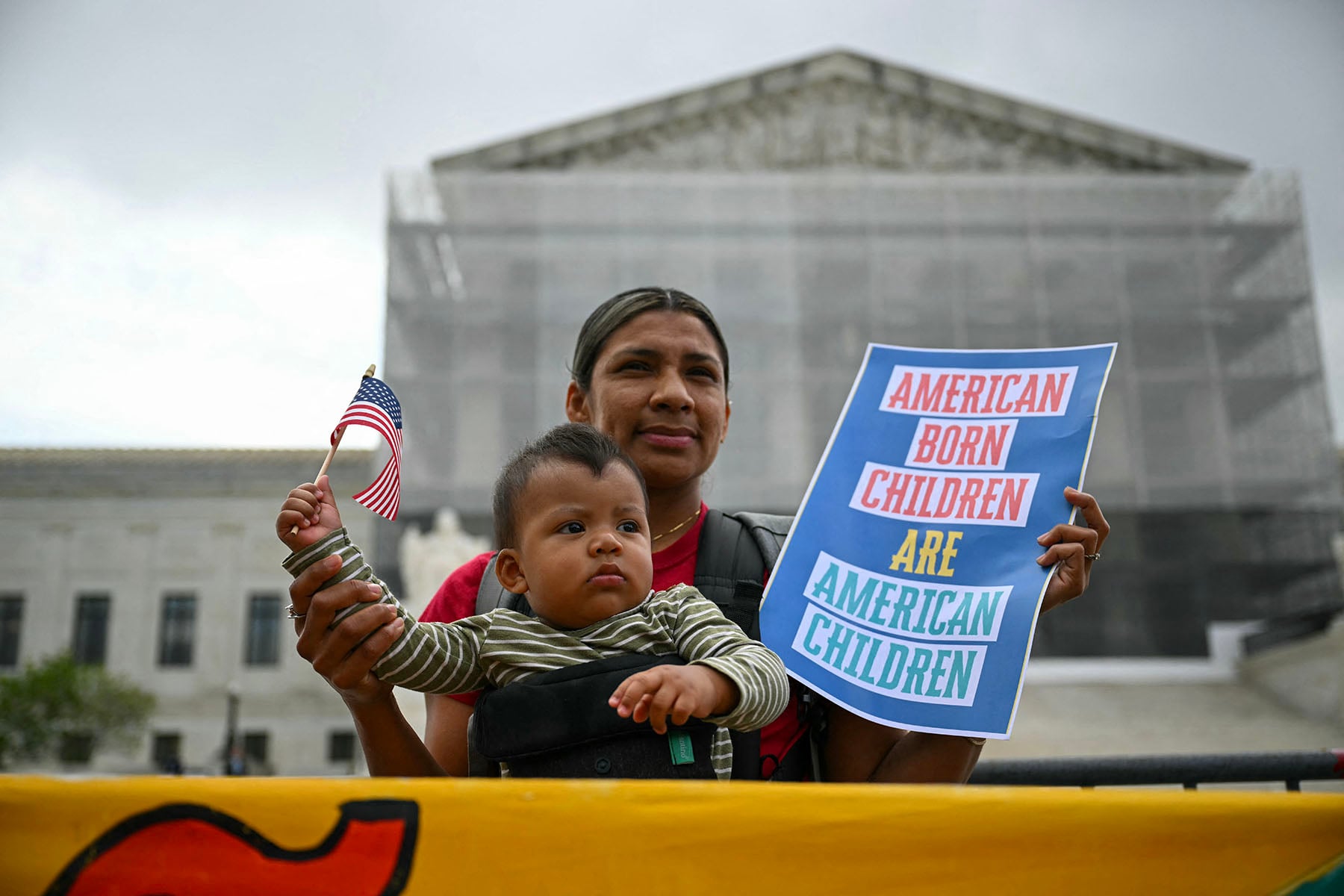
On the heels of that ruling, a new legal challenge emerged, setting the stage for the current Supreme Court review. A lawsuit was filed by two babies whose citizenship would be denied under Mr. Trump’s order, along with their parents, and a pregnant woman, on behalf of a putative nationwide class. This case, originating in a federal district court in New Hampshire, strategically leveraged the Supreme Court’s prior guidance on class-action lawsuits. The district court certified a provisional class encompassing all babies who would be affected by the president’s plan and subsequently found that the executive order likely violated the Constitution. Crucially, the district court then issued an injunction barring the Trump administration from enforcing the plan against all individuals impacted by the provisional class, effectively reinstating a broad, albeit class-specific, block on the policy.
The Supreme Court’s decision to take up this particular case is notable because it has chosen to do so before the U.S. Court of Appeals for the 1st Circuit has had an opportunity to weigh in. This procedural move, known as "certiorari before judgment," is relatively rare and typically reserved for cases of extreme national importance or urgency, where immediate resolution by the highest court is deemed necessary. By bypassing the appellate court, the Supreme Court signals the profound constitutional implications and the pressing need for a definitive ruling on an issue that has deeply divided the nation and challenged a fundamental aspect of American citizenship.
The stakes in this case are extraordinarily high. A ruling upholding Mr. Trump’s executive order would fundamentally reshape American citizenship, creating a two-tiered system where birth on U.S. soil no longer guarantees citizenship for all. Such a decision would have profound implications for millions of individuals, particularly children of undocumented immigrants and temporary visa holders, potentially rendering them stateless or in a perpetual state of legal limbo. It would also represent a dramatic expansion of presidential power, allowing an executive order to unilaterally redefine a constitutional provision without the need for congressional action or constitutional amendment.
Conversely, a ruling striking down the executive order would reaffirm over a century of legal precedent and the traditional understanding of the 14th Amendment. It would reinforce the principle that the Constitution, rather than executive fiat, governs the definition of citizenship. Such a decision would also underscore the limitations of presidential authority in areas touching upon fundamental constitutional rights and structures.
Legal scholars on both sides of the political spectrum have been closely watching this issue. A broad consensus among constitutional experts maintains that birthright citizenship is firmly established by the 14th Amendment and the Wong Kim Ark precedent. However, a minority of scholars supports the administration’s view, arguing for a more restrictive interpretation of "subject to the jurisdiction thereof." The Supreme Court’s decision will not only settle this specific dispute but will also provide crucial guidance on the balance of power between the executive branch and the judiciary, and the enduring meaning of one of the Constitution’s most vital clauses. The upcoming oral arguments and eventual decision will undoubtedly be among the most closely watched legal developments of the year, with consequences that will resonate for generations.