Anthropic’s Daniela Amodei Believes the Market Will Reward Safe AI
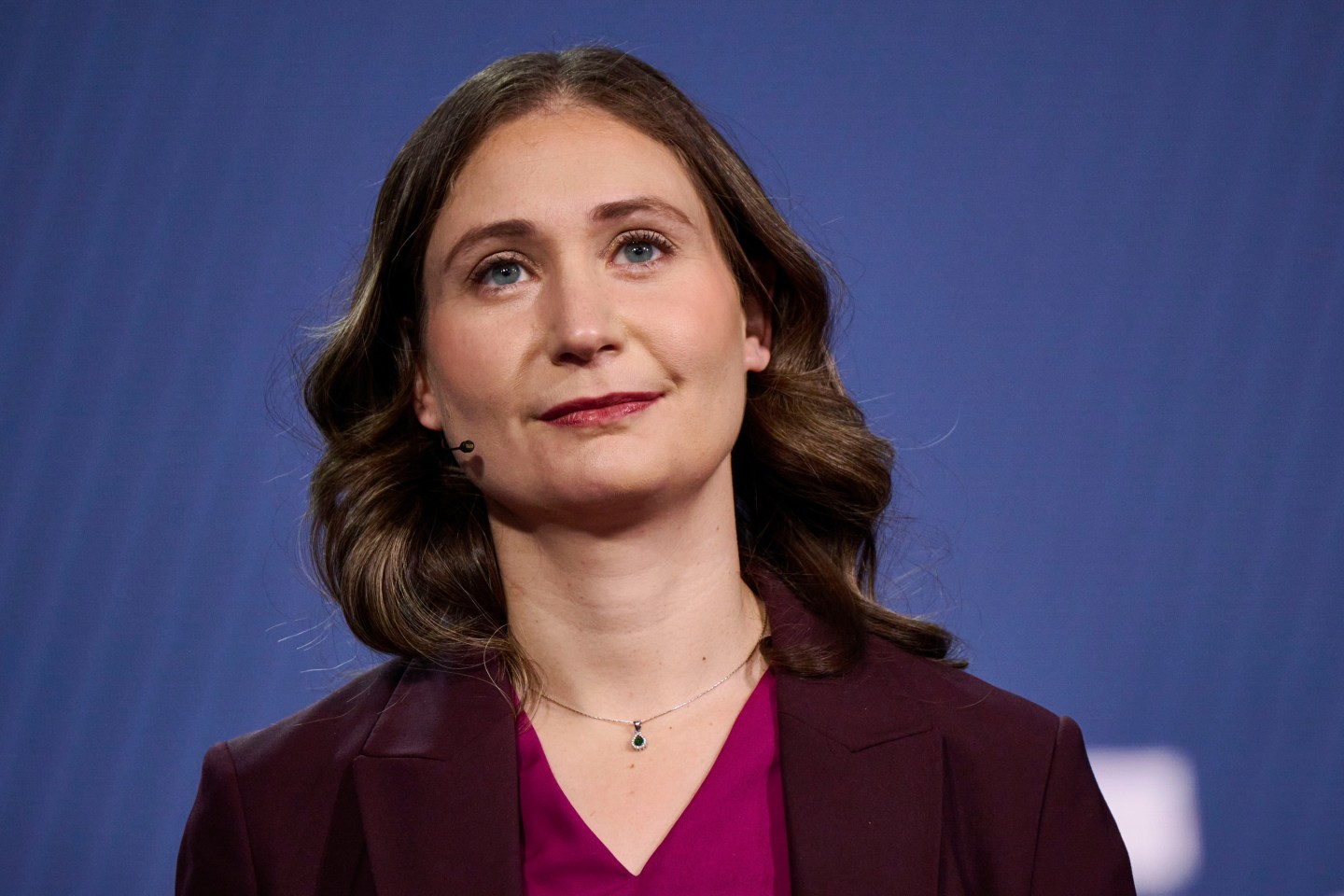
While the prevailing sentiment within some political circles, notably the Trump administration, often frames regulation as a potential straitjacket for the burgeoning artificial intelligence industry, a leading voice from one of AI’s most influential companies presents a starkly different perspective. Daniela Amodei, President and co-founder of Anthropic, firmly asserts that prioritizing safety, ethical development, and transparency regarding AI’s limitations will not only strengthen the industry but also be actively rewarded by the market. This conviction, articulated during WIRED’s Big Interview event, positions Anthropic’s approach as a pioneering model for responsible innovation in a rapidly evolving technological landscape.
Amodei’s stance directly counters criticisms from figures like David Sacks, who, as Trump’s presumptive AI and crypto czar, publicly accused Anthropic of employing a "sophisticated regulatory capture strategy based on fear-mongering." This accusation highlights a fundamental ideological divide: one side views caution and regulatory engagement as a hindrance, perhaps even a cynical tactic, while the other sees it as an essential foundation for sustainable growth and public trust. Amodei, however, remains undeterred, confident that her company’s consistent efforts to highlight both the immense potential and the inherent dangers of AI are ultimately contributing to a more robust and resilient industry.
From its inception, Anthropic has been vocally committed to a balanced narrative surrounding AI. "We were very vocal from day one that we felt there was this incredible potential" for AI, Amodei emphasized. This initial recognition of AI’s transformative power is crucial; it underscores that Anthropic’s focus on safety is not born of skepticism toward the technology itself, but rather a profound understanding of its dual nature. The company’s ambition is grand: to empower the entire world to harness the positive benefits and realize the upside that AI offers. Yet, Amodei cautions, this grand vision can only be achieved if the "tough things are got right." This involves making the risks manageable, a challenge that Anthropic actively embraces and openly discusses. Their frequent discourse on potential pitfalls is not to instill fear, but to foster awareness and drive solutions.
The practical implications of this philosophy are evident in Anthropic’s engagement with its vast user base. With over 300,000 startups, developers, and established companies leveraging some iteration of Anthropic’s Claude model, the company has gained invaluable insights into market demands. Amodei has observed a clear pattern: while customers undeniably seek AI models capable of performing remarkable feats and driving innovation, their equally fervent desire is for products that are reliable, trustworthy, and above all, safe. The market, it appears, is not clamoring for unchecked power but for dependable utility.
"No one says, ‘We want a less safe product,’" Amodei stated, drawing a compelling analogy to the automotive industry. She likened Anthropic’s transparent reporting of its model’s limitations, potential "jailbreaks," and safety protocols to a car manufacturer publishing crash-test studies. Initially, witnessing a crash-test dummy flying through a car window might seem alarming or even counterproductive. However, the true value lies in the subsequent revelation: that the automaker has used these rigorous tests to identify weaknesses and implement crucial safety enhancements. This transparency, far from deterring buyers, actually instills confidence, making the vehicle a more attractive and trusted choice.
The same principle, Amodei argues, applies to companies evaluating AI products. When a company like Anthropic openly addresses vulnerabilities, details how it mitigates risks, and consistently strives for safer models, it builds a foundation of trust that becomes a significant competitive advantage. This dynamic fosters a market that is, in a sense, self-regulating. By rigorously developing and deploying AI systems that prioritize safety, Anthropic is, according to Amodei, "setting what you can almost think of as minimum safety standards just by what we’re putting into the economy." As businesses increasingly integrate AI into their core workflows and daily tooling tasks, they naturally gravitate towards solutions that offer superior reliability. Why, she posits, would a company opt for a competitor whose product "doesn’t hallucinate as much, it doesn’t produce harmful content, and it doesn’t do all of these bad things" when a safer alternative is available? The market, driven by practical business needs and a growing awareness of AI’s potential downsides, inherently rewards products that score higher on safety metrics.
A cornerstone of Anthropic’s distinctive approach is its commitment to "constitutional AI." This innovative methodology involves training AI models not merely on vast datasets, but on a baseline set of ethical principles and foundational documents that encapsulate human values. By incorporating texts such as the United Nations Universal Declaration of Human Rights into the training regimen, Anthropic aims to imbue its large language models (LLMs) with a robust ethical framework. This enables the AI to respond to queries and navigate complex scenarios based not solely on empirical correctness or factual accuracy, but on an overarching ethical understanding of what is right or wrong. This philosophical grounding provides a crucial layer of discernment, guiding the AI towards beneficial and harmless outputs, even when faced with ambiguous or potentially problematic prompts.
Beyond market differentiation and product quality, Anthropic’s unwavering commitment to creating a more ethical and responsible AI model has also proven instrumental in attracting and retaining top talent. Amodei notes that a recurring theme among new hires is the profound appeal of the company’s mission and values. There is a palpable sense of authenticity in Anthropic’s desire "to be honest about both the good and the bad, and the desire to help to make the bad things better." This genuine commitment resonates deeply with individuals who are not only technically brilliant but also ethically driven, seeking to contribute to technology that serves humanity responsibly. In an industry where competition for skilled professionals is fierce, a compelling ethical mission acts as a powerful magnet.
The success of this approach is reflected in Anthropic’s remarkable growth trajectory. In just a few years, the company has expanded its workforce from a lean 200 staffers to a substantial team of over 2,000. While such rapid expansion might, in some contexts, fuel concerns about an "AI bubble" – a common topic of speculation on Wall Street and in Silicon Valley – Amodei sees no signs of her company or the broader industry slowing down. Her confidence is rooted in observable trends. "Based on what we’re seeing, the models are continuing to get smarter at the exact sort of curve that the scaling laws talk about, and the revenue is continuing on that same curve," she explained.
Scaling laws in AI refer to the predictable relationship between model performance, computational power, data size, and the number of parameters. As these factors increase, model capabilities tend to improve along a consistent curve. Amodei’s observation suggests that the fundamental drivers of AI progress remain robust and that Anthropic’s business model is effectively leveraging these advancements. However, she tempers this optimism with a healthy dose of humility, a trait characteristic of Anthropic’s overall philosophy. "As any of the scientists that work at Anthropic would tell you, everything continues going on the curve until it doesn’t, and so we really try to be self-aware and humble about that." This acknowledgement of potential unforeseen shifts ensures that while the company pursues aggressive growth and innovation, it does so with an adaptive and cautious mindset, always ready to respond to new challenges or changes in the technological landscape.
In conclusion, Daniela Amodei’s vision for Anthropic and the AI industry at large challenges conventional wisdom. She masterfully reframes the narrative around AI safety and regulation, transforming what some perceive as constraints into powerful drivers of innovation and market advantage. By openly addressing risks, setting high ethical standards through "constitutional AI," and fostering a culture of transparency, Anthropic is not only building safer and more reliable AI products but also demonstrating that the market, driven by practical demands for trust and efficacy, will ultimately reward those who prioritize responsible development. In a world grappling with the profound implications of AI, Amodei’s conviction offers a compelling blueprint for how ethical leadership can pave the way for sustainable success and societal benefit.