Government shutdown live updates as Senate moves forward with deal to end impasse
The United States Senate has taken a critical step towards ending a protracted 40-day government shutdown, voting late Sunday evening to advance a House-passed measure that could pave the way for federal agencies to reopen later this week. In a significant political maneuver, eight Democratic senators joined their Republican colleagues in a 60-40 vote, breaking a stalemate that had seen the funding measure fail 14 previous times. This breakthrough, while offering a glimmer of hope for an end to the fiscal crisis, has simultaneously exposed deep fault lines within the Democratic party, leaving many furious over what they perceive as a capitulation on key healthcare demands.
The agreement reached by Senate leaders aims to end the shutdown by passing a continuing resolution (CR) that would fund the government until January 30, coupled with three bipartisan, full-year appropriations bills. Crucially, the deal includes a commitment to hold a vote next month on health insurance tax credits, a central demand of Democrats throughout the funding fight. This concession, however, has been deemed insufficient by a vocal faction of the party.
One of the more intriguing details to emerge from the negotiations was the White House’s direct involvement in crafting specific language within the new continuing resolution. GOP Senator Markwayne Mullin of Oklahoma revealed that the provision reversing layoffs implemented by the Trump administration during the shutdown, known as "reductions in force" (RIF), originated from the White House itself. Mullin stated that the administration offered this language, believing it could help secure the support of moderate Democrats, particularly Senator Tim Kaine, who had cited the layoff issue as his primary concern. "They’re the ones that offered the RIF language," Mullin told reporters, adding, "It was the right provision which brought him over, which brought a couple other people over, too. That’s what got it over the finish line." This suggests a strategic move by the White House to facilitate bipartisan agreement and bring an end to the costly shutdown.
Despite the procedural victory, the deal has ignited a firestorm of criticism among Democrats, particularly progressives, who feel their party abandoned a prolonged fight without extracting meaningful concessions on healthcare. The 40-day shutdown had been framed by many Democrats as an opportunity to press for vital health care tax credits, aimed at making insurance more affordable, especially in the wake of last week’s elections which saw a strong Democratic performance. The outcome, however, has been met with anger and disillusionment.
"Pathetic," declared California Gov. Gavin Newsom, expressing the sentiment of many. Senator Chris Murphy of Connecticut echoed the frustration, arguing, "There’s no way to defend this." Independent Senator Bernie Sanders, who caucuses with Democrats, warned that "it would be a policy and political disaster for the Democrats to cave." This intense reaction underscores the deep ideological divide within the party and the high stakes associated with the healthcare debate. The perceived failure to secure substantial gains has led some congressional Democrats and progressive groups to call for Senate Minority Leader Chuck Schumer to step down, despite his reported personal opposition to the final agreement.
However, some of the Democrats who crossed the aisle defended their decision, highlighting the increasing toll of the shutdown on federal employees and vulnerable populations. Senator Dick Durbin of Illinois, the No. 2 Senate Democrat, shared his conversation with Majority Leader John Thune during the vote, stating, "Eight of us are sticking our necks out that you’re going to keep your word. I hope you will." Durbin was referring to Thune’s assurance that a vote on health insurance tax credits would indeed be held next month. Acknowledging the backlash, Durbin added, "I didn’t expect that my vote would be popular, but I think it was the right vote," emphasizing the gravity of the situation and the emotional intensity surrounding the debate.
Senator Jeanne Shaheen of New Hampshire, a key Democratic negotiator, further elaborated on the rationale for supporting the deal. Appearing on "CBS Mornings," Shaheen argued that prolonging the shutdown would not have altered the outcome. "We stood up to President Trump for 40 days, and let’s remember why we’re in this position: It’s because President Trump and Republicans in the Senate and House refused to fund health care to keep costs affordable," Shaheen stated. She cited the hardships faced by federal employees going without paychecks and SNAP recipients whose benefits were in jeopardy as compelling reasons to end the impasse. Shaheen also suggested that the agreement would force House Speaker Mike Johnson to bring the House back into session, addressing the prolonged absence of the lower chamber since September 19.
From the Republican side, Majority Leader John Thune expressed optimism for a swift resolution. On the Senate floor, Thune urged his colleagues to expedite the process, hoping for final passage in "hours, and not days." He outlined the path forward, which involves several procedural hurdles to incorporate the new continuing resolution and the three full-year funding bills. While any single senator could technically slow down the process, Thune anticipated consensus to move quickly. Regarding the future of healthcare talks, Thune saw a "path forward" for negotiations once the government reopens. He emphasized that any solution must include reforms, and expressed belief that the president would be "very inclined to want to do something to make health care more affordable." Thune also confirmed that the White House was involved in discussions surrounding the RIF language, and he expected President Trump to sign the funding package once it clears both chambers.
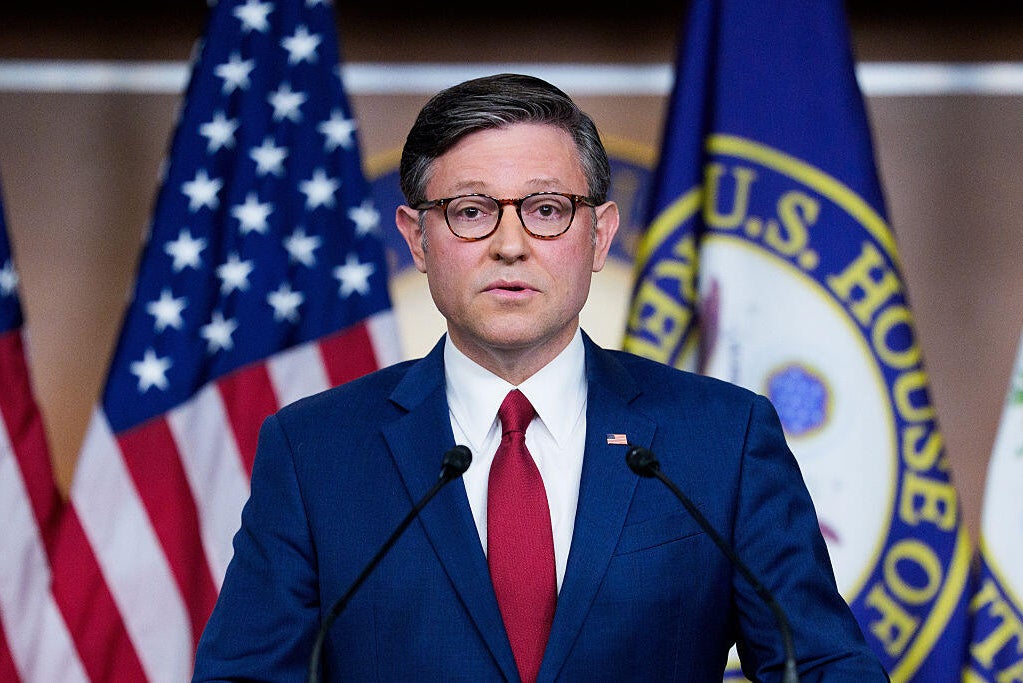
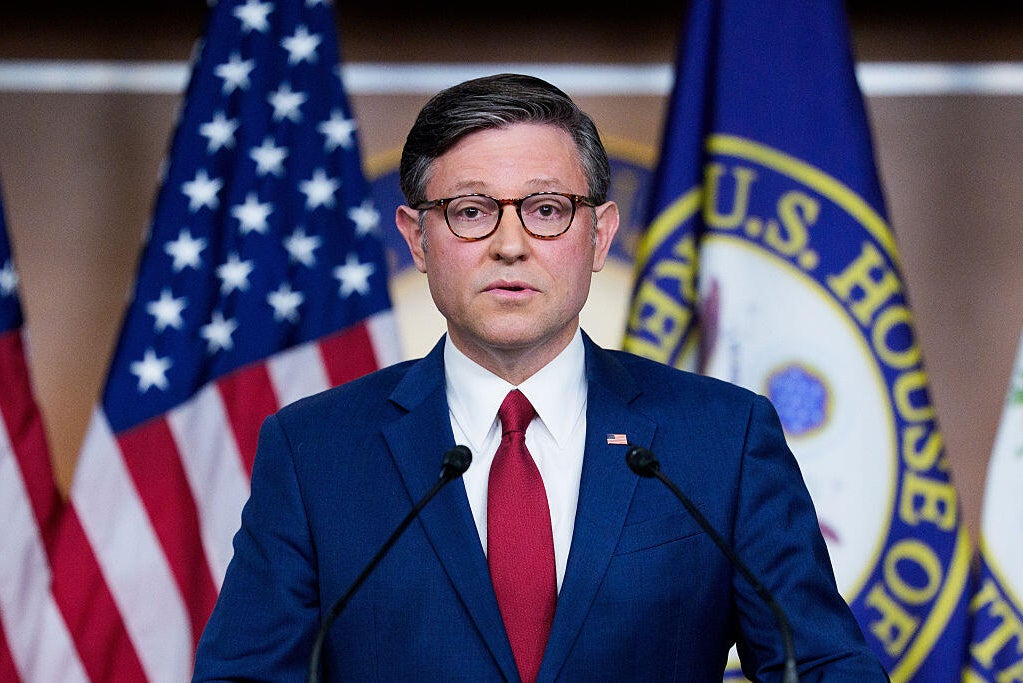
House Speaker Mike Johnson, speaking at a press conference at the Capitol, welcomed the Senate’s progress with a sense of relief. "It’s after 40 days of wandering in the wilderness and making the American people suffer needlessly, some Senate Democrats finally have stepped forward to end the pain. It appears to us this morning that our long national nightmare is finally coming to an end, and we’re grateful for that," Johnson declared. He criticized the previous deadlock, asserting that "the people’s government cannot be held hostage to further anyone’s political agenda." Johnson also urged House members to begin returning to Washington "right now" in anticipation of votes this week, citing ongoing flight disruptions largely attributed to staffing shortages during the shutdown. He vowed that Congress would work "long days and long nights" to make up for lost time, promising that the fight over healthcare would now shift back to the House, where Republicans "can no longer hide." House Minority Leader Hakeem Jeffries, while critical of the deal, defended Senate Minority Leader Chuck Schumer, stating, "Yes and yes" when asked if Schumer was effective and should keep his job.
Adding another layer of complexity to the situation, President Trump weighed in on Truth Social, specifically addressing air traffic controllers. Citing ongoing flight cancellations and delays – which, as of early Monday, stood at over 1,500 cancellations and 1,400 delays according to FlightAware – Trump demanded that "All Air Traffic Controllers must get back to work, NOW!!!" He threatened to "substantially ‘dock’" the pay of those who did not return and promised a "$10,000 bonus per person for distinguished service to our Country" for "GREAT PATRIOTS" who continued to work. He further warned that those who took time off would receive a "negative mark" against their record and would not receive payment or severance if they chose to leave service.
With the Senate having advanced the measure, the next steps involve a series of procedural votes to fully incorporate the deal’s elements. While Senate leaders hope for quick action, any single senator could still delay final passage. Once approved by the Senate, the legislation would then need to pass the House, where members have been notified to expect votes this week with 36 hours’ notice. Finally, the package would head to the president’s desk for his signature, officially ending the 40-day government shutdown. The political fallout from this prolonged impasse and the contentious deal is expected to reverberate for months, shaping internal party debates and potentially influencing the upcoming midterm elections.