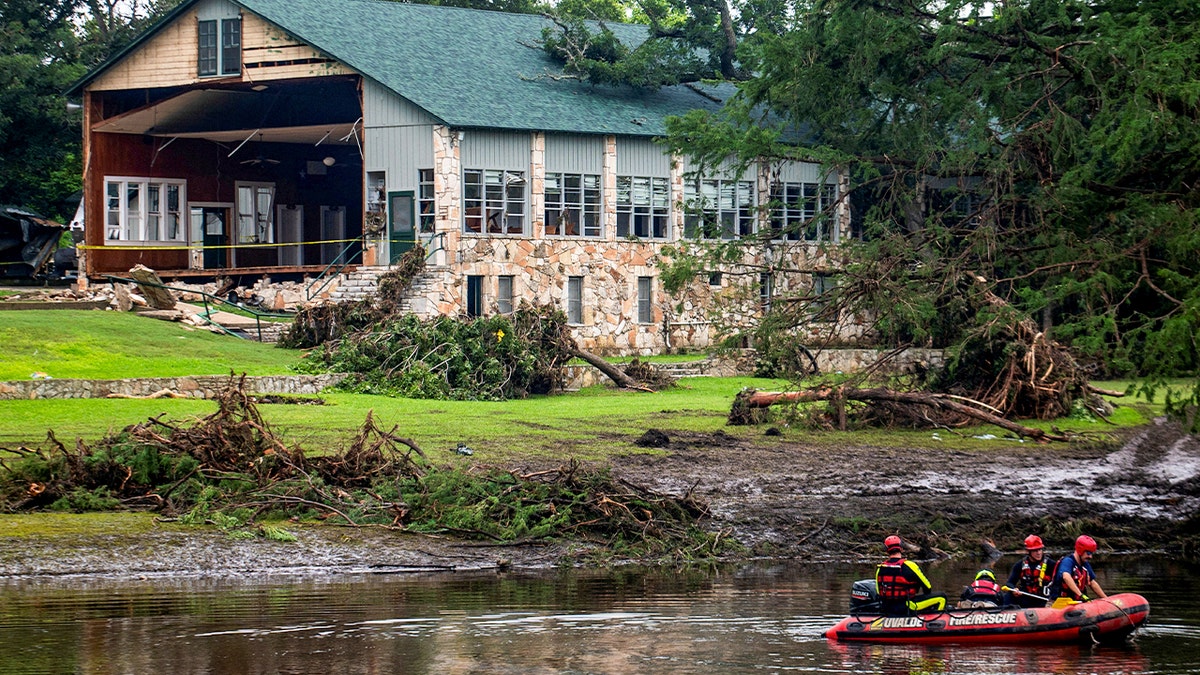
Families sue Camp Mystic over deadly July Fourth flash flood, allege gross negligence.
The tranquil setting of Camp Mystic, a long-revered institution nestled along the scenic Guadalupe River in Hunt, Texas, was shattered on a devastating July Fourth, when a catastrophic flash flood claimed the lives of 27 young campers and dedicated counselors. Now, the bereaved families of these victims have collectively stepped forward, filing a scathing lawsuit in Travis County District Court that accuses the esteemed Hill Country camp and its owners of "gross negligence and reckless disregard for safety," asserting that the tragedy was "entirely preventable."
This horrific incident, which unfolded amidst a broader wave of destructive flooding across Texas that ultimately resulted in 136 fatalities and widespread devastation of homes and vehicles, has ignited a fervent demand for accountability. The lawsuit posits that the camp’s leadership, despite operating in an area infamously dubbed "Flash Flood Alley" due to its susceptibility to rapid water surges, failed egregiously in its fundamental duty to protect those entrusted to its care.

Central to the families’ allegations is the claim that Camp Mystic conspicuously neglected to implement state-mandated evacuation protocols. Furthermore, the legal filing contends that the camp deliberately ignored critical weather warnings issued in the lead-up to the disaster. Perhaps most damningly, the petition details how camp leaders allegedly instructed campers to remain within their cabins as floodwaters rapidly rose, a decision that the plaintiffs argue prioritized the preservation of property over the sanctity of human life. "These young girls died because a for-profit camp put profit over safety," the lawsuit emphatically states, painting a stark picture of a tragedy born from systemic failures rather than an unavoidable act of nature.
The human cost of this alleged negligence is immeasurable. The families bringing forth this lawsuit include Warren and Patricia Bellows, Blake and Caitlin Bonner, Matthew and Wendie Childress, Ryan and Elizabeth DeWitt, John and Andrea Ferruzzo, Ben and Natalie Landry, and Lindsey McCrory. Separately, the grieving parents of 8-year-old Eloise "Lulu" Peck have also initiated legal proceedings against the camp. These individual lawsuits are collectively, and poignantly, referred to as "Heaven’s 27," a testament to the lives lost and the enduring bond of grief and purpose shared by their families.
Ryan DeWitt, whose daughter Molly was among the 27 victims, articulated the profound motivation behind their legal action: "We carry the memory of our daughter in everything we do. This legal step is about honoring her and ensuring truth and justice for all the families affected. We hope this case brings accountability and leads to better safety protections at youth camps." His words resonate with the collective sentiment of parents grappling with unimaginable loss, channeling their sorrow into a determined pursuit of change.
Legal representatives for the families have underscored the gravity of the alleged failures. Attorney Yetter, in a statement, declared, "Camp Mystic failed in its most basic duty — to keep children safe. This lawsuit is about transparency, responsibility, and preventing future tragedies." Randy Howry, one of the lawyers representing the Peck family, echoed this sentiment, emphasizing the preventable nature of the disaster: "This was not an unforeseeable act of nature. What happened at Camp Mystic was preventable, and no parent should ever endure the pain of sending their child to a place of safety only to face tragedy. This lawsuit is about transparency, responsibility and ensuring no other family experiences what these parents have suffered."
The plaintiffs are seeking both actual and exemplary damages, aiming not only to secure financial restitution for their profound losses but also to send a powerful message that will, they hope, compel a radical overhaul of safety standards across all youth camps in Texas and beyond. The pursuit of exemplary damages, specifically, seeks to punish the defendants for their alleged egregious conduct and deter similar negligence in the future.
In the wake of these grave accusations, CBS News Texas reached out to the owners of Camp Mystic for their perspective. While an initial response was not immediately available, Jeff Ray, legal counsel for Camp Mystic, subsequently released a statement addressing the lawsuits. Ray expressed profound empathy for "the families of the campers and counselors and all families in the Hill Country who lost loved ones in the horrific and unprecedented flood of July 4." However, he vehemently contested the allegations of negligence, asserting, "We intend to demonstrate and prove that this sudden surge of floodwaters far exceeded any previous flood in the area by several magnitudes, that it was unexpected and that no adequate warning systems existed in the area. We disagree with several accusations and misinformation in the legal filings regarding the actions of Camp Mystic and Dick Eastland, who lost his life as well. We will thoroughly respond to these accusations in due course." This statement from the camp’s legal team signals a robust defense, framing the event as an act of God—an unforeseen and overwhelming natural disaster—rather than a consequence of human oversight. The mention of Dick Eastland, one of the camp’s owners, also losing his life in the flood adds a layer of shared tragedy to the camp’s narrative, complicating the purely adversarial dynamic of the lawsuit.
Beyond the courtroom, the tireless advocacy of the Camp Mystic parents has already yielded significant legislative victories. These grieving families successfully lobbied for the passage of new bills in Texas, directly aimed at preventing similar catastrophes. The measures, now enshrined in law, are designed to substantially improve the safety protocols for children’s camps statewide. Key provisions include prohibiting the construction or operation of cabins in particularly dangerous sections of flood zones, mandating that camp operators develop comprehensive and detailed emergency plans, requiring thorough training for all staff members on these plans, and necessitating the installation and meticulous maintenance of emergency warning systems. Furthermore, one of the newly passed bills strategically allocates a substantial $240 million from the state’s rainy day fund, earmarking these crucial resources for disaster relief initiatives, the deployment of warning sirens, and the enhancement of weather forecasting capabilities across Texas. This legislative triumph stands as a poignant legacy of the "Heaven’s 27," transforming personal sorrow into a broader societal safeguard.
Despite the ongoing legal battles and the profound grief that still envelops the community, Camp Mystic announced in September, less than three months after the deadly flood, its intentions to reopen. The camp clarified that it plans to resume operations at its Cypress Lake location, which is distinct from the area that was submerged and claimed the lives of the 27 girls and counselors in July. In a gesture of remembrance and respect, the camp also revealed plans to construct a permanent memorial dedicated to the young lives lost in the devastating flood. This decision to rebuild and reopen, while offering a sense of continuity for some, undoubtedly presents a complex emotional landscape for the families of the victims and the wider community, balancing the desire for healing with the imperative for justice and accountability. The legal proceedings will undoubtedly delve deeper into the specific sequence of events on that fateful July Fourth, seeking to unravel the precise moments when alleged negligence may have sealed the fate of the 27.