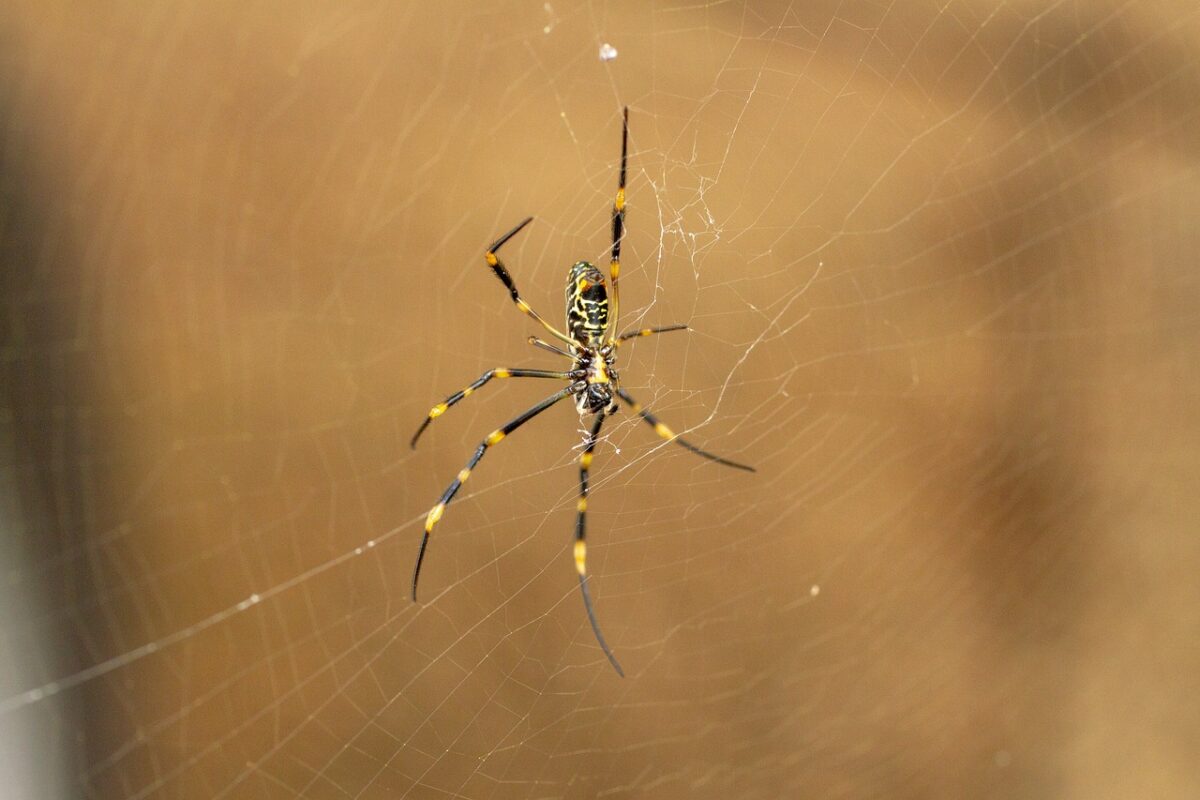
World’s largest-known spider’s web reveals different species "having a party" instead of preying on each other
A breathtaking discovery on the Albanian-Greek border has unveiled what is believed to be the world’s largest-known spider’s web, an astonishing ecological marvel housing tens of thousands of arachnids. This colossal silken structure, sprawling across an estimated 1,140 square feet within the depths of Sulfur Cave, challenges conventional understanding of spider behavior, revealing a rare instance of interspecies coexistence rather than the expected predatory conflict. Far from a battleground, scientists describe this dense arachnid metropolis as a vibrant, bustling "party" where diverse species thrive side-by-side.
The groundbreaking findings, recently published in the journal Subterranean Biology, immediately captured global attention, not only for the sheer scale of the web but for the unprecedented social dynamics observed within. Researchers documented two distinct spider species – the common house spider, Tegenaria domestica, and the lesser-known Prinerigone vagans – cohabiting peacefully in a massive, interwoven colony. This "extremely rare" phenomenon has left evolutionary biologists both surprised and intrigued, as Lena Grinsted, a senior lecturer at the U.K.’s University of Portsmouth, articulated her excitement, likening the intricate cohabitation to humans sharing an apartment complex. "Group living is really rare in spiders," Grinsted noted, emphasizing the significance of finding such a vast, unnoticed colony thriving in harmony.
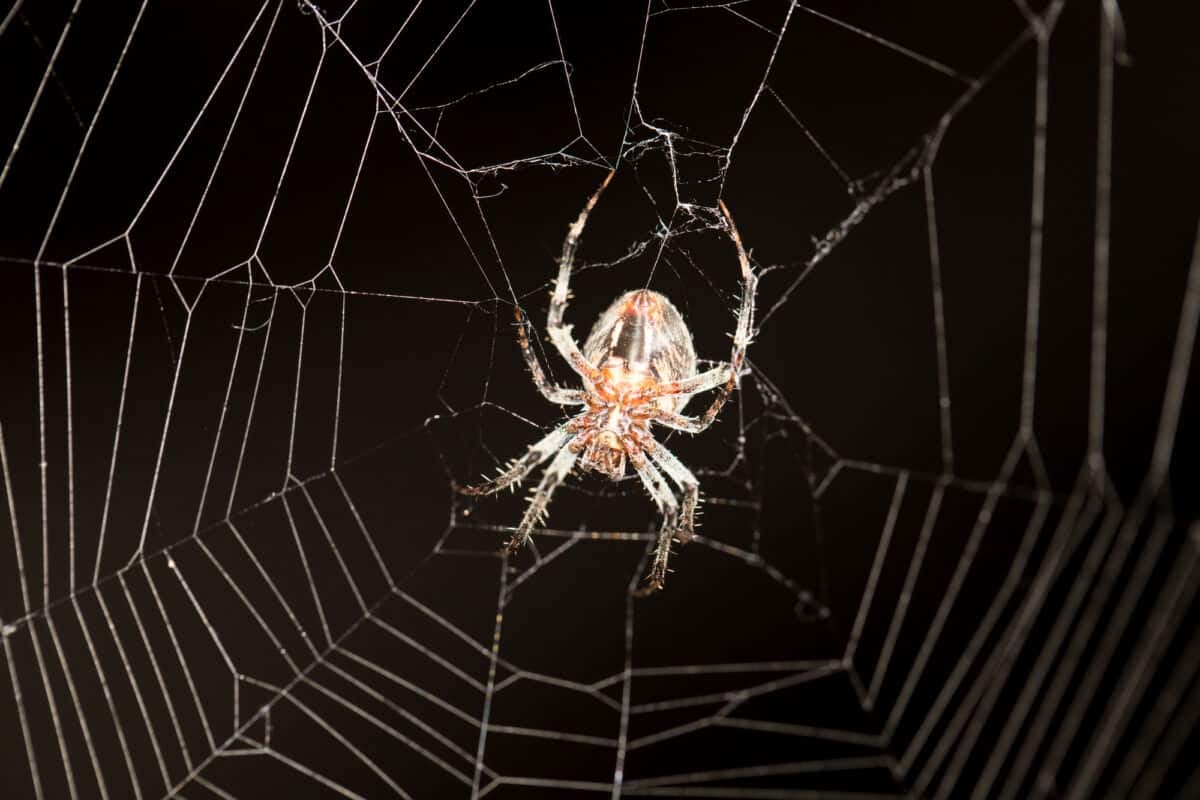
Typically, spiders are solitary and fiercely territorial creatures, often resorting to cannibalism or preying on other species, especially if there’s a size disparity. The larger Tegenaria domestica would ordinarily view its smaller neighbor, Prinerigone vagans, as a meal. Yet, within Sulfur Cave, an estimated 110,000 spiders – comprising approximately 69,000 T. domestica and 42,000 P. vagans – have forged an unlikely truce, collectively spinning a carpet-thick network of funnel-shaped webs along a narrow passage wall. This striking visual, quickly dubbed the "world’s largest spiderweb," offered a glimpse into a hidden world where the rules of the wild seem to be rewritten.
The unique environment of Sulfur Cave plays a crucial role in fostering this extraordinary community. Situated about 160 feet from the cave entrance, in a permanently dark zone carved out by the Sarandaporo River, the cave is characterized by its sulfur-rich atmosphere and the constant flow of "smelly water" (Vromoner, in Greek). This subterranean realm, however, is not devoid of life; beyond the spiders, it teems with terrestrial fauna including centipedes, isopods, scorpions, and beetles, forming a complex and resilient ecosystem. The most vital component, however, for the spiders’ peaceful coexistence, appears to be an astonishingly abundant food source: an estimated 2.4 million midge flies, or chironomid flies, that swarm densely around the sulfidic stream within the cave.
This continuous, overflowing buffet of midge flies acts as a powerful pacifier. As Grinsted explained, "So often if you have spiders in close vicinity, they will fight and end up eating each other." However, an abundance of food can significantly reduce aggression, turning potential predators into indifferent neighbors. With such a consistent and easily accessible food supply, the usual competitive pressures that drive spiders to prey on each other are dramatically lessened. Instead of expending energy fighting, the spiders can focus on simply harvesting the never-ending stream of midges, transforming the vast web into a communal pantry.
Scientists have put forward several hypotheses to explain this remarkable behavior. While the idea that the cave’s perpetual darkness might impair the spiders’ vision, making them less likely to perceive other spiders as threats, was considered, Grinsted believes it’s less probable. A more compelling theory suggests that the larger spiders have either evolved or adapted their sensory responses, primarily reacting to the vibratory cues of small flies landing on their silken traps, rather than indiscriminately attacking any movement within their web. This specialized hunting strategy, honed by the unique environment, allows them to coexist with smaller arachnids without triggering their typical predatory instincts.
While a true cooperative society, like those seen in some insect species, is unlikely for spiders, the possibility of some level of shared effort in web construction remains open. Grinsted clarified that genuine cooperation in activities like prey capture, brood care, or raising each other’s offspring is "highly unlikely." Her "apartment block" analogy remains apt: spiders might tolerate sharing the "stairs" (the communal web structure) but would fiercely defend their individual "living rooms" (their immediate hunting territories). Nevertheless, the very act of building such an expansive, interconnected web, even if each spider is primarily concerned with its own segment, creates a shared infrastructure that benefits all inhabitants by maximizing prey capture from the immense midge swarm.
Further insights into this mysterious colony come from biologist and zoologist Blerina Vrenozi of the University of Tirana, a co-author of the research paper. Her team’s DNA analysis revealed that the cave-dwelling spiders, while belonging to the same species as their outdoor counterparts, possess distinct genetic markers. This subtle but significant genetic divergence suggests a strong adaptation to the cave’s isolated and stable environment, potentially hinting at an evolutionary trajectory unique to this subterranean population. Marek Audy, the Czech speleologist who first observed the giant web in 2021, described the web as "dense; it’s more like a blanket," offering robust protection for the females. He also noted that cave spiders lay fewer eggs compared to those outdoors, a strategy indicative of a secure environment where offspring survival is virtually guaranteed.
The "party" metaphor extends beyond the spiders. Audy pointed out that the cave is also home to large bat colonies, which similarly thrive on the abundance of midges. "They are constantly having a party there, both the spiders and the bats," he exclaimed, painting a vivid picture of a bustling, vibrant ecosystem where the constant influx of food supports multiple trophic levels in an unusual state of equilibrium. This stable, resource-rich environment allows for reduced competition and a flourishing community, making Sulfur Cave a true biological hotspot.
While the study acknowledges that the methodology used might "slightly overestimate" the total spider population, the core findings regarding interspecies coexistence and the drivers behind it are robust and profoundly significant. Sara Goodacre, a professor of evolutionary biology and genetics at the U.K.’s University of Nottingham, underscores the broader implications of such discoveries. She emphasizes that these types of research projects are "fundamental to our understanding of what forces shape the world around us – spidery or not." Goodacre suggests that in this seemingly ideal environment of abundant food and relative safety, the "benefits of being part of this community far outweigh the costs." However, she also cautioned that if the environmental dynamics were to shift, "then ‘freeloading’ will emerge and it will all break down," highlighting the delicate balance upon which this unique coexistence rests.
The discovery has even sparked a touch of international curiosity, with Albania reportedly inquiring about the exact border location of this newly famous arachnid wonder. Audy confirmed, after checking, that the bulk of the colossal spider web lies on the Greek side, adding a whimsical geopolitical footnote to a remarkable scientific revelation. This extraordinary finding serves as a powerful reminder of the hidden complexities and astonishing adaptations found in nature, constantly pushing the boundaries of our understanding and challenging preconceived notions about the animal kingdom. It stands in stark contrast to other recent spider news, such as the discovery of "Big Boy," a new, more venomous species of funnel-web spider in Australia, showcasing the incredible diversity and sometimes surprising tranquility that exists within the world of arachnids.