Trump Asks Justice Department to Investigate Epstein’s Ties to Prominent Democrats, Banks
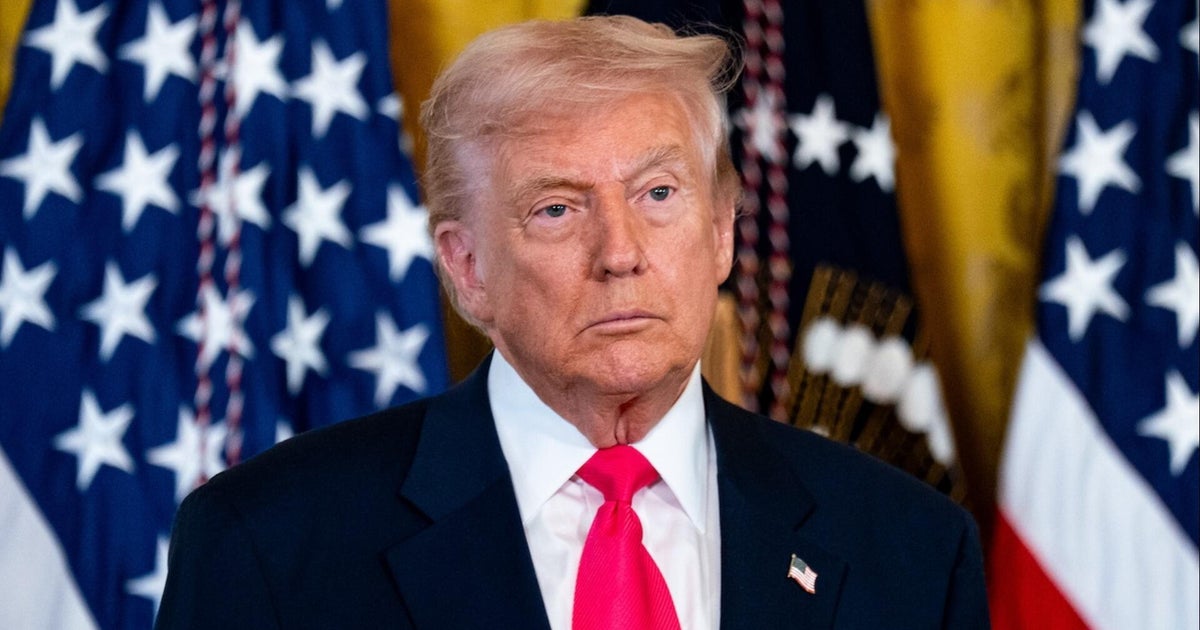
Washington – President Donald Trump on Friday formally requested that the Department of Justice (DOJ) and the Federal Bureau of Investigation (FBI) launch an extensive investigation into convicted sex offender Jeffrey Epstein’s intricate relationships with prominent Democrats and major financial institutions. This directive, delivered through a post on his Truth Social platform, signals a significant escalation in the politically charged saga surrounding Epstein, reigniting debates about accountability, influence, and the depths of his shadowy network.
In a move that immediately sent ripples through Washington and financial circles, President Trump accused Democrats of weaponizing the "Epstein hoax" as a diversionary tactic to deflect public scrutiny from the recently concluded government shutdown, the longest in U.S. history, which had just ended on Wednesday. Framing the new directive within a broader narrative of political persecution, Trump wrote, "I will be asking A.G. Pam Bondi, and the Department of Justice, together with our great patriots at the FBI, to investigate Jeffrey Epstein’s involvement and relationship with Bill Clinton, Larry Summers, Reid Hoffman, J.P. Morgan, Chase, and many other people and institutions, to determine what was going on with them, and him. This is another Russia, Russia, Russia Scam, with all arrows pointing to the Democrats. Records show that these men, and many others, spent large portions of their life with Epstein, and on his ‘Island.’ Stay tuned!!!"
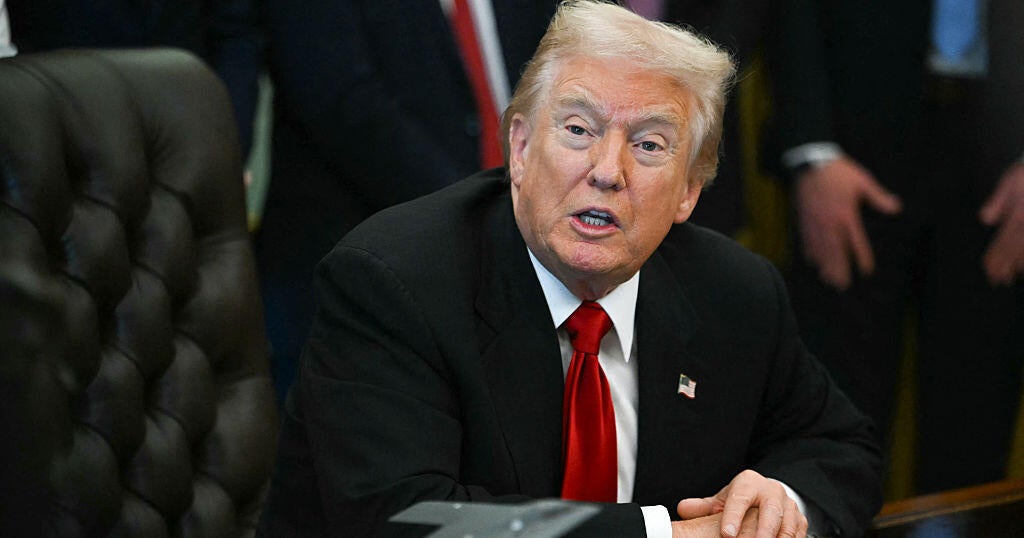
Attorney General Pam Bondi swiftly acknowledged the President’s directive, announcing shortly thereafter that she had tapped Jay Clayton, the U.S. Attorney for the Southern District of New York (SDNY), to lead the investigation. Clayton’s office, renowned for handling high-profile and complex cases spanning Manhattan, the Bronx, and the northern counties of New York City, now faces the daunting task of navigating an inquiry fraught with political sensitivities and public demands for transparency. Bondi affirmed the department’s commitment, stating on X, "As with all matters, the Department will pursue this with urgency and integrity to deliver answers to the American people."
This presidential mandate comes four months after the Justice Department and FBI had previously conducted an "exhaustive review" of materials pertinent to Epstein. In a July memo, those agencies had concluded that they "did not uncover evidence that could predicate an investigation against uncharged third parties," nor did they find a definitive "client list" or "credible evidence" that Epstein blackmailed prominent figures. This earlier conclusion had sparked considerable backlash, particularly among segments of the President’s base who remained skeptical, fueling conspiracy theories and a persistent demand for further disclosures.
The timing of Trump’s announcement is also critical, preceding an anticipated House vote next week on a bill designed to compel the Justice Department to release more files from its investigation into Epstein. Interestingly, President Trump has publicly opposed the release of such material in the past, even criticizing Republican representatives who supported the discharge petition to force a vote on the proposal as "soft and foolish." GOP Representative Marjorie Taylor Greene of Georgia, a staunch ally of the President, had earlier expressed her belief to "CBS Mornings" that Trump’s stance on the Epstein files was a "huge miscalculation." When questioned about the upcoming House vote on Saturday, Trump appeared to soften his previous position, stating, "I don’t care about it released or not. What I think you should do if you’re going to do it, then you have to go into Epstein’s friends." This shift hints at a strategic pivot, transforming what was initially a defensive posture into an offensive one.
Jeffrey Epstein, a financier whose connections spanned the highest echelons of global finance, politics, and celebrity, was indicted on federal sex-trafficking charges in July 2019. He subsequently died by suicide in August 2019 at a Manhattan correctional facility, an event that ignited a firestorm of speculation and demands for answers about his death and the scope of his criminal enterprise. His 2008 plea deal in Florida, which saw him serve a mere 13 months for soliciting prostitution from underage girls, had long been a source of public outrage and suspicion, particularly given the subsequent revelations of widespread abuse.
The House Oversight and Government Reform Committee, engaged in its own independent investigation into the federal government’s handling of the Epstein probe, recently intensified its efforts. Earlier this week, the committee released over 20,000 pages of material obtained from Epstein’s estate, providing unprecedented insight into his communications and network. Among these records were emails and messages exchanged with Epstein that explicitly mentioned Mr. Trump. In a January 2019 email to author Michael Wolff, Epstein cryptically wrote, "Of course he knew about the girls as he asked ghislaine to stop," referencing Mr. Trump and Ghislaine Maxwell, Epstein’s longtime associate and alleged accomplice. Maxwell herself was convicted in 2021 and is currently serving a 20-year prison sentence for her role in recruiting, grooming, and abusing underage girls for Epstein. Another email, from Epstein to Maxwell in April 2011, stated, "I want you to realize that that dog that hasn’t barked is trump.. virginia spent hours at my house with him ,, he has never once been mentioned."
While Mr. Trump and Epstein moved in the same elite social circles in New York and Palm Beach from the late 1980s to the early 2000s, the President has consistently denied any wrongdoing and maintained that the two had a falling out around 2004, claiming no contact with Epstein in the years leading up to his 2019 death. These newly surfaced emails, however, complicate that narrative, even if they do not directly accuse Trump of criminal conduct.
The Oversight Committee’s latest document dump further underscored the extent of Epstein’s high-profile connections. Records show that Epstein corresponded regularly with Larry Summers, who served as Treasury Secretary during President Bill Clinton’s administration and later led the National Economic Council under President Barack Obama. The Wall Street Journal had previously reported on Epstein’s contacts with Summers in 2023. A spokesperson for Summers acknowledged the interactions at the time, expressing that he "deeply regrets being in contact with Epstein after his conviction" in 2008, following the controversial plea deal. The nature of their engagement reportedly centered on economic and intellectual discussions, but the mere association now places Summers squarely in the crosshairs of the new DOJ investigation.
The House Oversight panel had already issued a subpoena to former President Bill Clinton in August, seeking his testimony due to his widely documented past ties to Epstein and Maxwell in the early 2000s. A spokesperson for Clinton, Angel Ureña, had previously stated in 2019 that the former president took four trips on Epstein’s private plane in 2002 and 2003, traveling to Europe, Asia, and Africa. Ureña emphasized that these trips were in connection with the Clinton Foundation, and that staff, foundation supporters, and Clinton’s Secret Service detail were present on every leg. Clinton also reportedly had one meeting with Epstein in 2002 and made "one brief visit" to Epstein’s apartment with a staff member and security detail. In a post on X late Friday, Ureña reiterated Clinton’s defense, asserting, "These emails prove Bill Clinton did nothing and knew nothing," signaling a preemptive defense against the looming investigation.
The directive also targets major financial institutions, specifically naming JPMorgan Chase. Trish Wexler, a spokesperson for JPMorgan Chase, responded to the allegations, stating on Friday that the federal government "had damaging information" about Epstein’s crimes but failed to share it with JPMorgan Chase or other financial institutions. "We regret any association we had with the man, but did not help him commit his heinous acts," she declared. "We ended our relationship with him years before his arrest on sex trafficking charges." This statement comes on the heels of JPMorgan’s 2023 agreement to settle a lawsuit for $290 million, filed by an unnamed victim of Epstein’s on behalf of herself and others. The lawsuit alleged that the bank had overlooked Epstein’s sex trafficking and abuse to profit from its lucrative financial relationship with him, raising serious questions about corporate responsibility in facilitating criminal enterprises.
Reid Hoffman, a co-founder of LinkedIn and a significant Democratic donor, is another figure named in Trump’s directive. Following Epstein’s 2019 arrest, Hoffman acknowledged having some interactions with Epstein and expressed regret for participating in fundraising activities with him, according to Axios. Hoffman stated in an email to the news outlet that his last interaction with Epstein occurred in 2015. However, during testimony before the Senate Judiciary Committee in October, Attorney General Pam Bondi had previously attacked Senator Sheldon Whitehouse, a Rhode Island Democrat, for accepting political contributions from Hoffman, whom she controversially claimed was "one of Epstein’s closest confidants." This earlier attack foreshadowed the current, broader investigation, explicitly linking Hoffman to the political funding apparatus of the Democratic Party.
The renewed federal investigation, spearheaded by the U.S. Attorney for the Southern District of New York, represents a significant shift from the Justice Department and FBI’s July memo, which had concluded that "no further disclosure would be appropriate or warranted." That earlier conclusion had ignited a firestorm of criticism against the Trump administration and Attorney General Bondi from within the President’s own base, many of whom harbored deep suspicions that critical information was being withheld. This new directive, therefore, can be seen as an attempt to appease a segment of the President’s supporters while simultaneously turning the narrative against his political adversaries.
The Oversight Committee, meanwhile, continues its steady release of records, including court filings, flight logs, videos, and messages. In September, the panel made public pages from a book compiled by Ghislaine Maxwell for Epstein’s 50th birthday in 2003. This collection included a letter allegedly signed by Mr. Trump and a drawing that appeared to be the outline of a woman’s body, though the President has denied penning the message. Documents released by the committee also show both Mr. Trump’s and former President Clinton’s names listed under the "friends" subheading in the book’s table of contents. Clinton himself appears to have written a handwritten note that reads, in part, "It’s reassuring isn’t it, to have lasted as long, across all the years of learning and knowing … and also to have your childlike curiosity, the drive to make a difference and the solace of friends." These documents, while not direct evidence of criminal activity, paint a vivid picture of the intertwined social circles that Epstein cultivated, fueling public fascination and demands for a full accounting.
The Justice Department’s renewed probe, under the direct gaze of the President, promises to be a highly politicized and closely watched affair. Its scope will undoubtedly encompass a meticulous review of financial transactions, travel records, and communications, aiming to uncover any potential complicity, obstruction, or unprosecuted crimes. The challenges will be immense, ranging from navigating the complexities of high-profile legal defense teams to discerning truth from political rhetoric. Ultimately, the investigation into Jeffrey Epstein’s dark network continues to be a battleground, not only for justice for his victims but also for the very integrity of political and financial institutions in America.