
OpenAI’s Fidji Simo Plans to Make ChatGPT Way More Useful—and Have You Pay For It
OpenAI, a company renowned for its groundbreaking advancements in artificial intelligence, operates under a structure that can only be described as uniquely complex: a nonprofit entity overseeing a for-profit arm that has since evolved into a public benefit corporation. Adding another layer to this intriguing organizational design, OpenAI now functions with a dual CEO leadership. While Sam Altman, the overarching chief executive, steers the critical domains of research and computational infrastructure, the responsibility for transforming cutting-edge AI into accessible, revenue-generating applications falls squarely on the shoulders of Fidji Simo. Appointed as CEO of Applications this past summer, Simo, formerly the highly successful CEO of Instacart, is tasked with the formidable challenge of commercializing OpenAI’s innovations, particularly ChatGPT, and establishing a robust financial foundation for the company’s ambitious future.
Simo’s arrival at OpenAI in August marked a pivotal moment, signaling a renewed focus on product development and market penetration. Although she has largely been working remotely from her home in Los Angeles due to a relapse of postural orthostatic tachycardia syndrome (POTS), a chronic illness that can cause fainting if she stands for extended periods, her influence is profoundly felt across all echelons of the company. Her physical absence from OpenAI’s bustling San Francisco campus has been more than compensated by her omnipresence on Slack, the company’s primary communication platform. Employees attest to her rapid responsiveness and active engagement, often appearing in channels and threads to offer insights and pose pertinent questions, a testament to her dedication and adaptability. This high level of digital engagement not only ensures her continued impact but also sets a precedent for transparent leadership, particularly regarding invisible illnesses. Simo’s candor about her health condition on her first day at OpenAI fostered an environment of trust and vulnerability, demonstrating that significant leadership roles are attainable even with chronic health challenges.
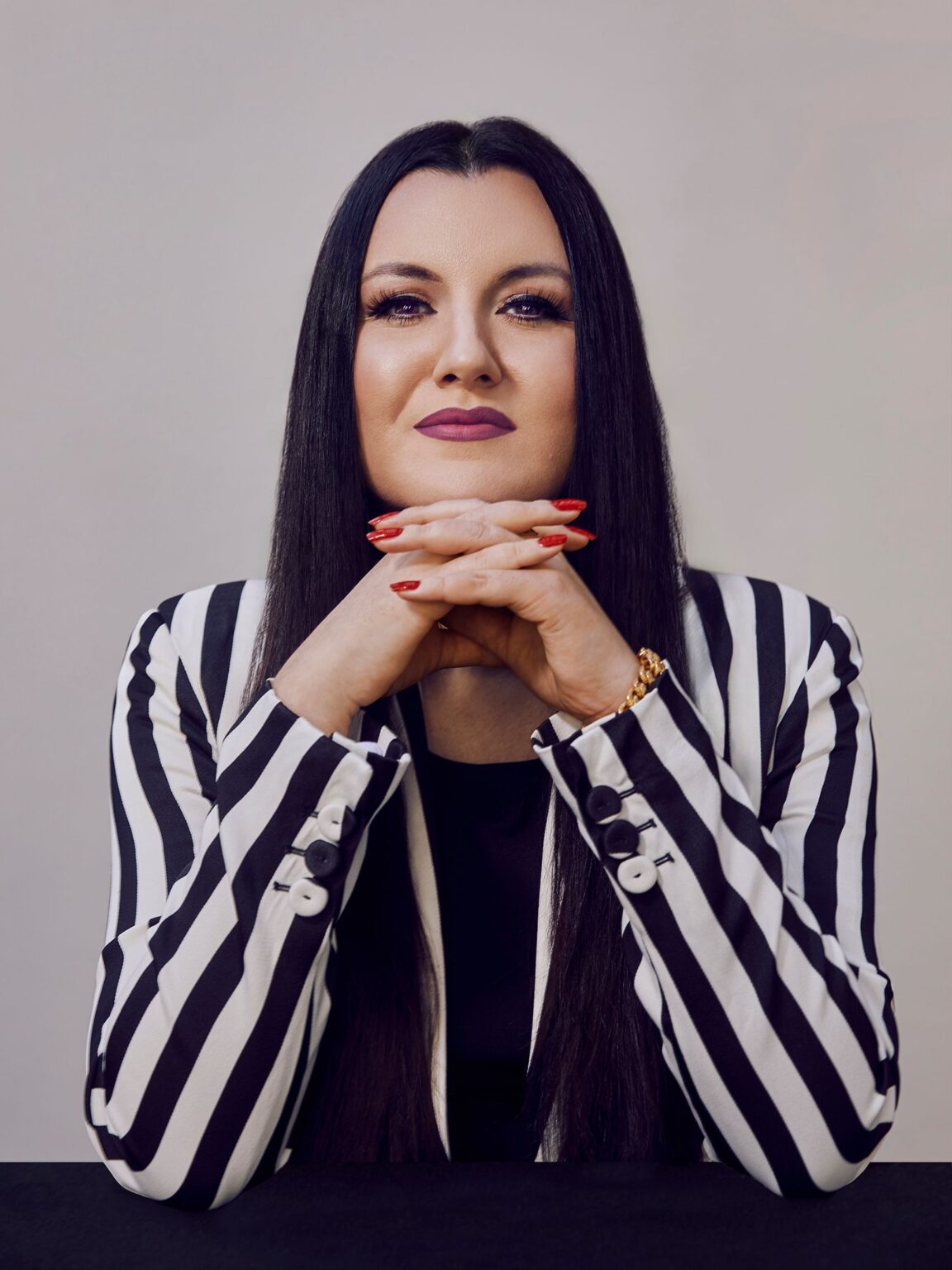
Simo stepped into her role during a period of intense and multifaceted expansion for OpenAI. The company is simultaneously venturing into sovereign AI partnerships, releasing new foundational models, forging retail collaborations, securing multibillion-dollar compute deals, developing proprietary chips, and even hinting at mysterious hardware products. Amidst this whirlwind of activity, Simo succinctly articulates the internal challenge: "We do not battle for scope. We battle for less scope." This statement underscores the immense pressure to prioritize and focus, ensuring that resources are strategically allocated to initiatives with the greatest potential impact. Simo’s extensive background makes her uniquely qualified for this task. Hailing from Sète, a small fishing town in southern France, she built an illustrious career at Meta, where she masterminded the growth of the Facebook app, before taking Instacart public in 2021. Her reputation as a product visionary with a proven track record of scaling consumer applications globally positions her perfectly to translate OpenAI’s complex research breakthroughs into widely adopted, indispensable consumer products.
Her primary mission is to bridge the gap between the astonishing intelligence of OpenAI’s models and their actual utility in the hands of everyday users. Simo openly admits, "The thing that keeps me up at night is that the intelligence of our models is well ahead of how much people are using them. I see my job as closing this gap." This objective is made even more challenging by the fierce competition from tech behemoths like Google and Meta, as well as a growing ecosystem of AI startups, many founded by OpenAI alumni such as Anthropic and Thinking Machines Lab. To address this, Simo has already spearheaded several key initiatives. She oversaw the launch of Pulse, an innovative product designed to connect with users’ calendars and deliver personalized information based on their schedules, chat histories, and feedback. She also established a jobs platform aimed at certifying individuals in AI skills and connecting them with relevant employment opportunities. Furthermore, she has intensified efforts to enhance ChatGPT’s responses, particularly for users experiencing acute mental health crises, acknowledging the profound societal implications of such a powerful tool. In the long term, industry sources indicate that Simo will be instrumental in determining how advertisements will be integrated into ChatGPT’s free tier, a delicate balance between monetization and user experience.
During an interview conducted in her serene, light-filled Los Angeles farmhouse, Simo delved deeper into her strategic vision. When asked about her working relationship with Sam Altman, she emphasized their complementary roles. Altman, she explained, sought to offload the responsibilities of application development and monetization to focus entirely on core research and compute. Simo’s role is to inject a "product company muscle" into an organization that originated primarily as a research lab, ensuring that its groundbreaking discoveries find practical, widespread application while respecting its innovative culture. Her hiring process, she casually noted, didn’t involve typical reference checks from figures like Mark Zuckerberg, as her reputation and professional network within the Silicon Valley ecosystem had long preceded her.
Simo’s tenure at Meta, where she admitted to taking significant risks and, at times, jeopardizing her role and reputation, has profoundly shaped her approach to OpenAI. She highlighted a crucial lesson learned from Meta: the failure to adequately anticipate the societal risks that products might engender. At OpenAI, this foresight is paramount. "At OpenAI, these risks are very real," Simo stated, citing mental health and job disruption as her immediate priorities upon joining. She believes the company has both the culture and the strategic focus to proactively address these challenges, even if the path ahead is uncharted. Regarding mental health, she proudly reported a significant reduction in negative responses from ChatGPT within a few months, alongside the introduction of parental controls and efforts to predict age for enhanced teen protection. However, she candidly acknowledged the immense complexity of getting it right every time, especially when dealing with subtle psychological states like mania, where seemingly positive language can mask underlying distress. The goal, she stressed, is continuous refinement through collaboration with clinical psychologists, ensuring appropriate interventions without inadvertently misdiagnosing users.
Addressing the elephant in the room—OpenAI’s substantial financial losses despite its astronomical valuation—Simo articulated a clear path to profitability. Her strategy hinges on identifying massive market opportunities and delivering immense value within them. She envisions ChatGPT evolving into a universal "team of helpers" for everyone, democratizing access to personal shoppers, travel agents, financial advisors, and health coaches—services once exclusively available to the wealthy. "If we build that, I assume that people are going to want to pay a lot of money for that, and that revenue is going to come," she asserted. On the enterprise front, she sees vast untapped potential beyond the current API and ChatGPT Enterprise offerings, envisioning the development of industry- and function-specific AI agents. The fundamental formula for monetization, she believes, rests on the sheer scale of the markets and the depth of value provided; the real constraint, then, becomes the availability of computational power.
The enormous compute deals OpenAI is undertaking, often valued in the hundreds of billions of dollars, have raised eyebrows and concerns about market concentration. Simo, however, views them as not just necessary but imperative. She explained that internal constraints on GPUs are so severe that the company’s product pipeline is constantly bottlenecked. "I know these deals look risky on the outside, but on the inside, what’s much riskier would be to not lean into compute," she clarified, emphasizing that these partnerships are with "extremely sophisticated" entities who understand OpenAI’s business intimately. She cited Pulse as a prime example: a product she wishes to make universally accessible but cannot due to compute limitations. Simo herself relies heavily on Pulse, utilizing it to stay updated on POTS research, summarize AI news, and even generate creative ideas for her husband, a chocolate maker.
Simo’s personal journey with a chronic illness has deeply influenced her leadership philosophy and product vision. She views her POTS not as a barrier but as a catalyst for creativity and intentional leadership. Her transparency about her condition, shared on day one with the company, fostered trust and demonstrated that professional excellence is achievable with accommodations. "Constraints also force you to be more creative," she reflected, noting how her physical limitations have made her more aware of product opportunities, particularly in healthcare. She hopes to contribute to a world where health conditions do not impede individuals from realizing their full potential, a vision made more tangible by technological advancements like remote work tools.
The conversation naturally turned to broader societal implications. Regarding Sora, OpenAI’s video generation app, Simo countered criticisms of "AI slop" by framing it as a nascent form of media, akin to early cinema. She argued that initial iterations often imitate existing forms before discovering their unique expressive potential. More importantly, she believes such tools "raise the floor" of creation, empowering individuals and small businesses who previously lacked access to high-quality creative resources. On the pressing issue of job disruption, Simo acknowledged that some categories would be "deeply disrupted" but expressed confidence in massive job creation. Her response has been proactive: the launch of OpenAI certifications, aiming to train 10 million workers, and a jobs marketplace to connect them with new opportunities. She envisions AI as a "superpower" for human creativity, not an inhibitor, citing her 10-year-old daughter’s entrepreneurial and creative endeavors as an example of how readily the next generation embraces these tools.
When pressed on the existential fear of AI wiping out humanity, Simo admitted it wasn’t a pre-existing fear for her but affirmed OpenAI’s commitment to mitigating such risks. Finally, she firmly dismissed any notion of her ascending to CEO of the entire company, emphasizing the distinct and equally vital contributions of both her role and Sam Altman’s. "What Sam does, I cannot do," she stated unequivocally, highlighting the immense scope of her current responsibilities and the collaborative leadership essential for OpenAI’s multifaceted mission.
In essence, Fidji Simo’s role at OpenAI is to forge a sustainable, profitable future for a company whose core mission is to benefit all of humanity. By meticulously focusing on product utility, user experience, and responsible monetization, she aims to transform OpenAI’s unparalleled research capabilities into widely adopted applications that not only generate substantial revenue but also navigate the complex ethical and societal challenges inherent in the age of artificial intelligence. Her leadership represents a critical pivot for OpenAI, moving it beyond pure research into a phase where its profound technological breakthroughs are seamlessly integrated into the fabric of daily life—and, inevitably, for a price.