
Alex Karp Goes to War
Alex Karp, the enigmatic CEO of Palantir, stands at the epicenter of a swirling vortex of controversy, power, and high-stakes technology. Leading a $450 billion data analytics firm deeply entwined with national security and global conflict, Karp embodies a figure constantly at war – with societal norms, Silicon Valley orthodoxy, and a barrage of critics who decry his company’s role in government surveillance and military operations. This "war" is not merely rhetorical; it defines his company’s mission, his personal philosophy, and his unapologetic stance against those who question his vision.
The interviewer from WIRED, Steven Levy, a self-proclaimed progressive journalist known for tough reporting on Trumpworld, initially sees little common ground with Karp. Levy, an English major living in New York’s East Village, contrasts sharply with Karp, a formidable intellect holding a law degree and a PhD in philosophy under the legendary Jürgen Habermas, residing in a sprawling 500-acre compound in rural New Hampshire. Karp, one of the highest-paid executives in the United States, openly dismisses progressive ideals as "pagan religion." Yet, a shared alumni status from Central High School, a Philadelphia magnet school, surprisingly paved the way for a candid sit-down. Karp, the son of a Jewish pediatrician and a Black artist, credits his transformative experience at Central High – where a teacher recognized and helped him overcome dyslexia – as foundational to his later success, positioning him to thrive amidst challenges.
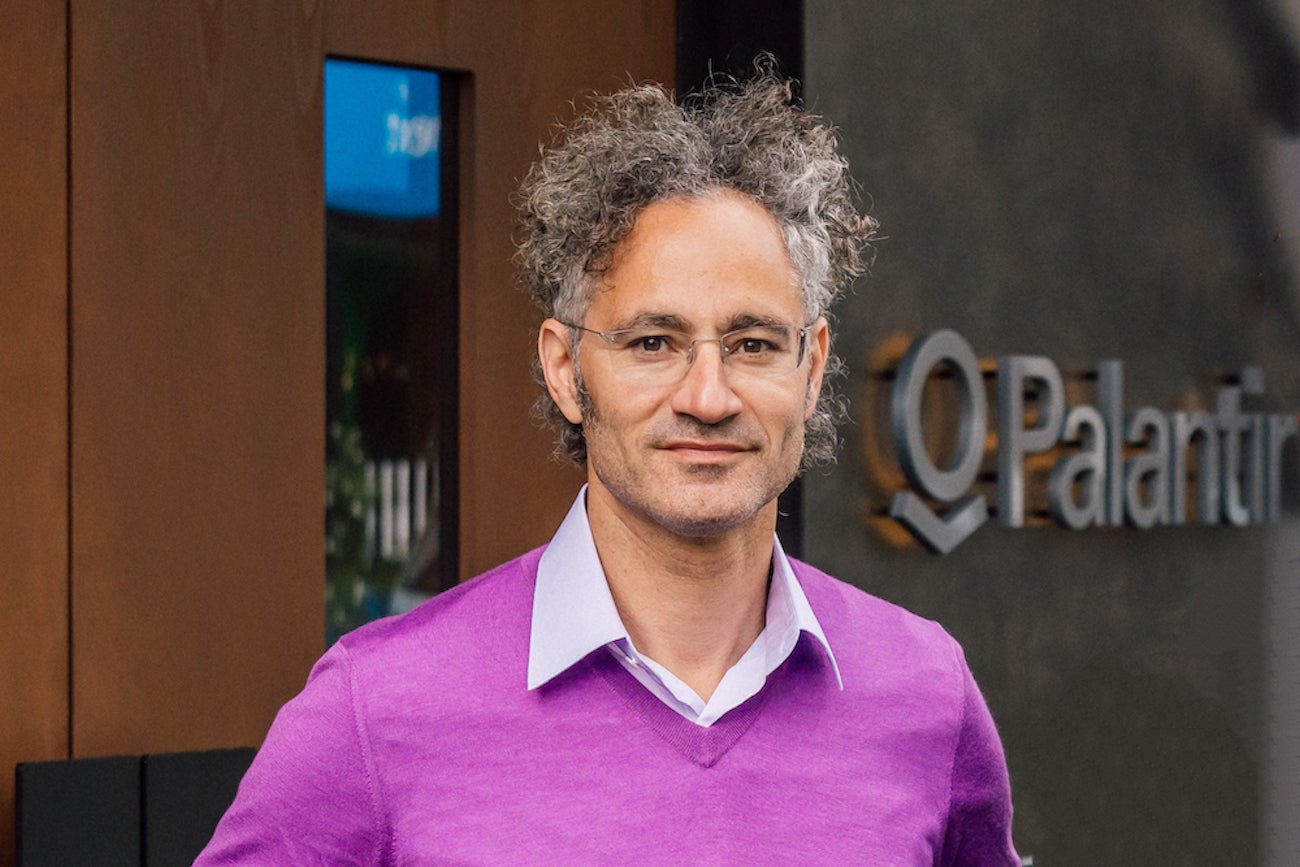
The interview itself took place at an annual gathering of Palantir’s corporate customers, an event that struck Levy as having the "giddy vibe of a multilevel marketing summit." Commercial clients, ranging from giants like American Airlines to more modest family firms, uniformly praised Palantir’s AI-powered systems as expensive but ultimately invaluable. However, the most significant customers – the US government and its allies – were conspicuously absent from the presentations, though they constitute the majority of Palantir’s business. Notably, Palantir maintains a strict policy of not doing business with Russia or China, underscoring its foundational commitment to Western interests.
Palantir was explicitly founded to bridge the gap between Silicon Valley’s innovation and the critical needs of defense and government technology. Karp, along with coauthor Nicholas Zamiska, elaborated on this philosophy in their book, The Technological Republic. This surprisingly readable polemic fiercely criticizes Silicon Valley for what Karp perceives as a profound lack of patriotism. He views Apple’s anti-establishment Macintosh marketing as the "original sin" that birthed a tech culture celebrating indulgent individualism at the expense of nationalist concerns. At the conference, dressed casually in a white T-shirt and jeans, Karp opened his remarks by declaring, "We’ve been at odds with Silicon Valley on and off since our inception 20 years ago." This ideological schism culminated in 2020 when Karp relocated Palantir’s headquarters from Palo Alto to Denver, transforming it into Colorado’s wealthiest corporation and further cementing its distinct identity.
Karp is acutely aware that many perceive him as a "dystopic supervillain." His response to such critics is unyielding: aggressive, blunt, and devoid of remorse. After years of contracts, Palantir has demonstrably proven to governments worldwide that its tools are highly effective in leveraging information for battlefield operations and intelligence gathering. The company holds a multimillion-dollar contract with ICE for "targeting and enforcement," essentially assisting the agency in locating individuals for deportation. In Ukraine, Karp proudly states that Palantir’s products have been instrumental in delivering lethal force. This operational reality stands in stark contrast to Palantir’s Code of Conduct, which ostensibly binds the company to principles such as "protect privacy and civil liberties," "protect the vulnerable," "respect human dignity," and "preserve and promote democracy."
These contradictions have fueled internal dissent. In an open letter last May, thirteen former employees accused Palantir’s leadership of abandoning its founding values and "normalizing authoritarianism under the guise of a ‘revolution’ led by oligarchs." Karp also disclosed that other employees departed due to the company’s work with the Israeli military during its campaign in Gaza. His defiant retort to these internal and external criticisms is characteristic: "If you’re not generating opposition, you’re probably doing something wrong."
Beneath this fiery defense, Levy senses a yearning in Karp to be truly understood. Karp notes that everyone only wants to discuss ICE, Israel, and Ukraine – subjects that indeed form the core of his public battles. Yet, their conversation also veered into broader topics: Donald Trump, the nature of democracy, and Karp’s profound affinity for German culture, alongside recollections of their shared high school alma mater.
Delving into his formative years, Karp explained the "transformational" impact of Central High. A pivotal moment occurred when Mrs. Snyder, in charge of the mentally gifted program, administered an IQ test. Discovering his high IQ alongside his dyslexia, she challenged him: "Clearly you’re dyslexic, but someone with your IQ can’t get B’s, you have to get all A’s." This push, Karp reflects, propelled him from a strong student to an exceptional one, fundamentally altering his trajectory.
When pressed to explain Palantir’s often-mysterious operations, Karp clarifies its multifaceted utility. For intelligence agencies, it’s about "finding terrorists and organized criminals while maintaining the security and data protection of your country." For special forces, it’s about operational awareness: "How do you know where your troops are? How do you get in and out of the battlefield as safely as possible, avoiding mines, avoiding enemies?" On the commercial side, he summarizes, "if you’re doing anything that involves operational intelligence, whether it’s analytics or AI, you’re going to have to find something like our products." He asserts that while other Silicon Valley companies aspire to orchestrate information with AI, Palantir uniquely possesses the expertise. "What I’m really saying is we know how to do it. If you find someone else who can do it, and you don’t want to work with us, buy it from them."
Karp believes Palantir’s true competition is "political." He sees both the "woke left and the woke right" as adversaries intent on harming Palantir. He identifies as a Democrat but distances himself from what he calls the "Mamdani wing" of the party, which he believes promotes "pagan religion views—a new religion with sacrifices." For Karp, he and Palantir are those sacrifices. He lambasts universities and elite institutions for fostering fear of an AI-driven, AGI environment where jobs are scarce, leading people to elect "ridiculous people." He defiantly states, "If you don’t want meritocracy, you hate Palantir. That is our competition."
Despite the fierce opposition, Karp insists Palantir is "not victims" and is "doing very well." He reiterated his book’s critique that many tech companies lack patriotism. Palantir, he argues, has always been "pro-American, pro-West, and pro-making the government functional," a stance initially controversial in Silicon Valley, where it was equated with financial failure. He believes Palantir "won that battle," and Silicon Valley is now, "at least behind closed doors, patriotic." He also highlights Palantir’s alignment with Silicon Valley’s pro-meritocracy stance. Their current "misalignment-alignment apex" lies in their belief in using large language models for empirical value and worker benefit. He proudly recalls, "We walked toward the government when everyone walked away. That’s how we ended up powering Maven, the US government’s AI battlefield plan."
Discussing the war in Ukraine, where Palantir has been involved from the outset, Karp offered insights into the future of warfare. Initially, software orchestration of small objects was key. However, Russian jamming efforts shifted the focus. "The lesson was that the only thing that basically mattered was how to get through the jam space and get your device to deliver its payload." This involves interacting with the device, planning its trajectory, and gathering intelligence—a significant departure from past combat. Karp frames this evolution not as "scarier" for America, but advantageous, given US strength in high-end satellites, coordination, software, and large language models.
Palantir’s unique, often perceived as "cult-like," culture is cultivated by Karp’s embrace of an "outsider mentality." Drawing a parallel to Philadelphia’s Eagles, he acknowledges that unpopularity is "not pleasant," but it’s a "massive feature." It attracts discerning talent—individuals who look beyond simplistic criticisms to understand the company’s complex problem-solving. He cites France, where Palantir’s brand is arguably at its worst due to perceptions of it being a "CIA front," yet they employ some of the "best French employees in the world."
Karp directly addresses working with the CIA and ICE. He clarifies that initial contracts were with US intelligence, followed by the DOD, and then Homeland Security under Democratic administrations. He acknowledges the current controversy surrounding ICE, particularly under Trump, but disputes the notion that Trump’s actions are entirely unprecedented, citing strict immigration policies in countries like Japan. He reiterates his stance as an "immigration skeptic," believing citizens should decide policy through their vote, and draws on his experiences in Germany, where he observed the consequences of open borders.
He insists on Palantir’s ethical boundaries: "I was the first CEO to say we would not build a Muslim database." While technically not the absolute first, the statement was impactful given Palantir’s business. He claims to have "pulled things from places in the United States where I thought there was something going on like that." When pressed on whether Palantir monitors for civil rights abuses, Karp affirms his commitment to intervene if their product were misused, though he maintains it’s "the hardest in the world to violate." He also points to Palantir’s decision to forgo business in Russia or China, which nearly put them out of business, as proof of their commitment to norms over commercial interests.
Regarding his Jewish background and Palantir’s support for Israel, Karp clarifies, "I don’t give to Israel. I allow them to purchase our product." He frames it as a defense of Western values rather than a derivative of his identity. Acknowledging the diversity of Jewish opinions, including those critical of actions in Gaza, Karp states that Palantir supports Israel as a country, not every "micro decision." He defends Israel against what he sees as "aggressive" and unfair critiques, stating he would be "much more willing to express in public the things I express in private to Israelis" if Israel were treated like any other nation.
He dismisses The New York Times‘ criticisms as "malarkey" but takes critiques from former Palantirians seriously, steelmanning their arguments. However, "if you attack me irresponsibly, that will harden my view."
On Donald Trump, Karp maintains a professional distance but expresses respect for the office. While acknowledging potential disagreements, he believes Trump "has done a much better job than you think he’s done," particularly on AI and Middle East policy, which he considers "very good."
Karp’s unconventional path—a non-technical CEO with a philosophy PhD—intrigued Levy. Karp attributes Peter Thiel’s choice to Thiel’s ability to find individuals who grasp the "sixth, seventh, eighth derivative of a problem." He points to a "Germanic overlap" in their aptitude for understanding long-term consequences. This Germanic influence permeates Palantir’s culture: the rigorous "Five Whys" problem-solving method, high quality standards, and a directness that eschews "white-lie-telling." While he brings this Germanic candor to America, he ultimately considers "America is a superior culture."
Karp’s personal life reflects his independent spirit. He lives life on his own terms, finding it harder as a dyslexic to conform to others’ expectations. He is a fanatical cross-country skier, finding profound happiness in the solitude and exertion. Alex Karp, through his company and his persona, is indeed at war – a relentless battle for his vision of technology, patriotism, and an uncompromising, meritocratic future, seemingly content in his chosen role as a polarizing but powerful force.