
Larry Summers Says He’s "Stepping Back From Public Commitments" Over Epstein Emails
Former Treasury Secretary and Harvard President Larry Summers announced Monday he would step back from "public commitments" following the release last week of messages between him and convicted sex offender Jeffrey Epstein. The disclosure, part of a broader trove of documents from Epstein’s estate made public by the House Oversight Committee, has cast a renewed shadow over Summers’ esteemed career and prompted a rare public admission of shame from the influential economist.
In a statement addressing the revelations, Summers expressed profound regret. "I am deeply ashamed of my actions and recognize the pain they have caused," he stated. "I take full responsibility for my misguided decision to continue communicating with Mr. Epstein. While continuing to fulfill my teaching obligations, I will be stepping back from public commitments as one part of my broader effort to rebuild trust and repair relationships with the people closest to me." This unequivocal statement marks a significant moment for a figure accustomed to being at the forefront of economic and public policy discussions. The decision to scale back his public presence underscores the gravity of the situation and the reputational damage incurred by his association with Epstein.
The dozens of messages exchanged between Summers and Epstein reveal a pattern of regular communication during the final years of Epstein’s life. Crucially, these exchanges transpired well after Epstein had pleaded guilty to prostitution charges in Florida in 2008, but before he was arrested on federal sex trafficking charges in July 2019, which ultimately led to his death by suicide in jail. This timeline is particularly damning, as Epstein’s public infamy and notoriety had grown significantly during this period, making continued association a conscious choice with clear ethical implications.
Among the more unsettling exchanges, a March 2019 conversation saw the pair seemingly bantering about a woman Summers knew in London. Summers described a conversation with the woman, writing in part, "I said what are you up to. She said ‘I’m busy.’ I said awfully coy u are." Epstein’s reply, equally disturbing in its casual tone given his history, read: "shes smart. making you pay for past errors." In another separate correspondence, Epstein reportedly referred to himself as Summers’ "wing man," a comment that, in retrospect, takes on a deeply sinister resonance considering Epstein’s known predatorial activities. While there is no evidence of illegal conduct on the part of Summers himself, these interactions suggest a degree of familiarity and a tone that is highly problematic when viewed through the lens of Epstein’s egregious crimes. The implication of such banter, particularly from a figure of Summers’ intellectual and public standing, raises serious questions about judgment and the ethical responsibilities of those in positions of power.
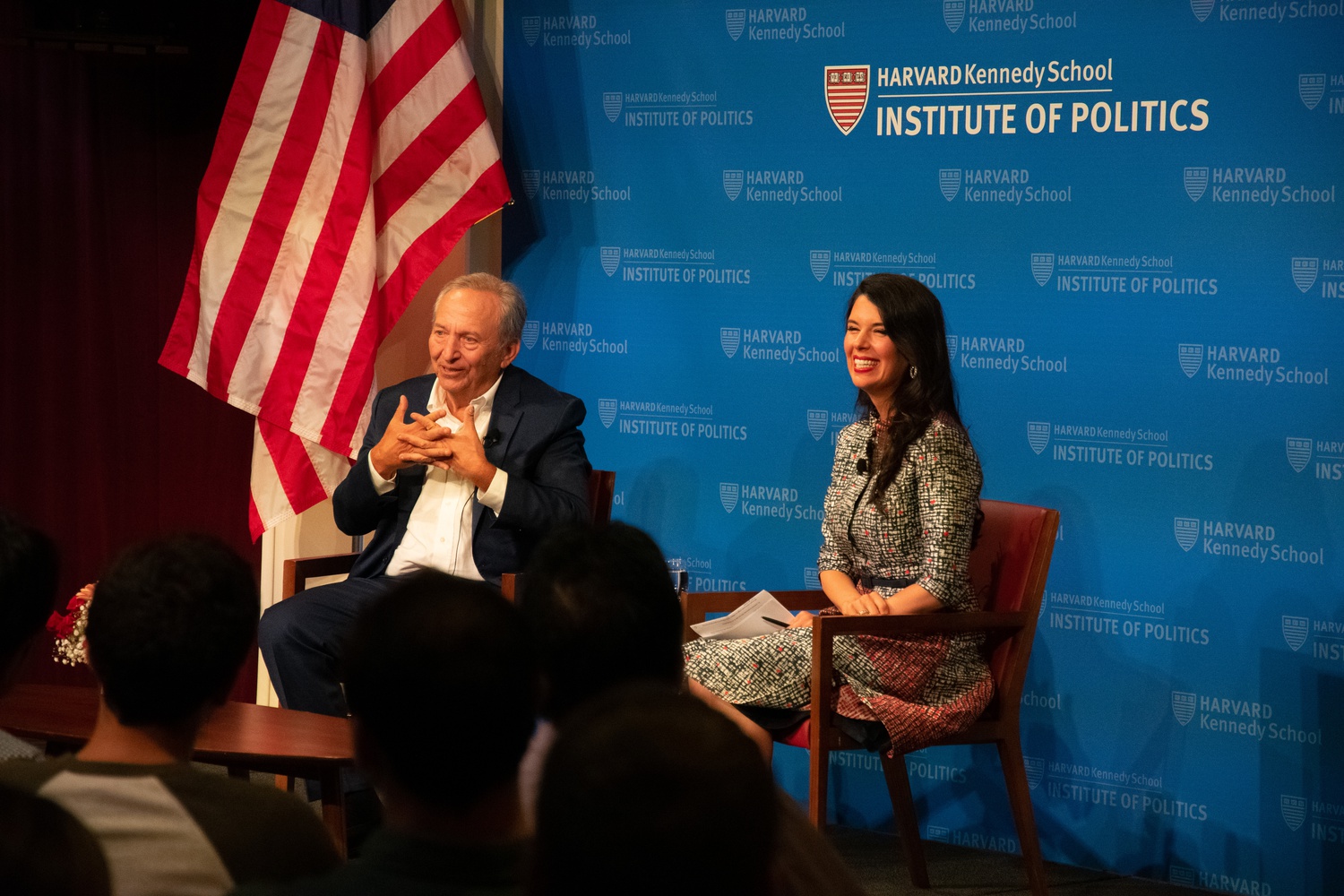
The specifics of which "public commitments" Summers will abandon remain unclear. As an economist by training, Summers has maintained a prominent presence in academia and public discourse since stepping down as Harvard’s president in 2006. He currently teaches two courses at the Harvard Kennedy School focusing on globalization and U.S. economic policy, which he has indicated he will continue. However, his influence extends far beyond the classroom. A former Treasury Secretary during the Clinton administration, Summers is an exceptionally influential voice on economic policy, frequently appearing in media, advising corporations, and participating in high-level conferences. He notably advised former President Barack Obama during the 2008 financial crisis and has been a vocal, often critical, commentator on contemporary economic policy, including publicly tangling with the Biden administration over its approach to post-COVID-19 economic stimulus. Stepping back could mean a reduction in his prolific media appearances, withdrawal from board memberships, or a halt to speaking engagements that bring him into the public eye. For a figure who has consistently shaped public opinion and policy, this self-imposed retreat represents a significant shift.
The revelations also shine a renewed light on Jeffrey Epstein’s long-standing, and ultimately controversial, ties with Harvard University. Before his 2008 guilty plea in Florida, the late financier donated upward of $9 million to the prestigious institution. A 2020 investigation by Harvard confirmed that the school ceased accepting donations from Epstein after that point. However, the report also detailed that Epstein continued to engage with faculty and visited the campus dozens of times, raising serious questions about the university’s oversight and the ethical implications of maintaining connections with a known sex offender. The fact that a figure like Summers, then a distinguished professor, was in regular communication with Epstein further complicates Harvard’s narrative and could prompt additional scrutiny into the institution’s handling of its relationships with controversial donors and figures. CBS News has reached out to Harvard for comment, indicating ongoing interest in the university’s perspective on these connections.
The broader political landscape has also been significantly impacted by the release of the Epstein documents. Former President Donald Trump notably called on the Justice Department last week to investigate Epstein’s relationships with Summers, former President Bill Clinton, and other high-profile Democrats. A spokesperson for former President Clinton quickly responded, stating that Clinton was unaware of Epstein’s actions and had done nothing wrong. However, Mr. Trump’s own relationship with Epstein has also drawn intense scrutiny. The two men traveled in the same Manhattan and Palm Beach social circles for a period of time, though Mr. Trump has consistently maintained that he cut ties many years ago and has not been charged with a crime or accused of wrongdoing in connection with Epstein’s activities.
Adding another layer to the complex web of relationships, Epstein regularly brought up Mr. Trump in the emails that were released. In one particularly striking correspondence, Epstein reportedly said of the president, "of course he knew about the girls as he asked ghislaine to stop," referring to Epstein’s convicted accomplice, Ghislaine Maxwell. This claim, though unverified and coming from a convicted sex offender, adds a sensational dimension to the scandal, fueling public speculation and political mudslinging. Mr. Trump, for his part, has vehemently denied all wrongdoing related to Epstein, dismissing the controversy as a "hoax" perpetuated by Democrats.
The unfolding narrative surrounding Larry Summers’ association with Jeffrey Epstein serves as a stark reminder of the long-reaching consequences of Epstein’s crimes and the moral compromises made by those who maintained connections with him. For public figures of Summers’ stature, the decision to communicate with a convicted sex offender, particularly after his crimes were publicly known, represents a significant lapse in judgment that transcends professional competence. The concept of "rebuilding trust and repairing relationships" is not merely personal; it extends to his students, his academic colleagues, and the broader public who have looked to him for intellectual leadership. This episode underscores the critical need for accountability, even for those who did not engage in illegal activities, when their associations lend credibility or perceived legitimacy to individuals engaged in heinous acts. The scrutiny on Summers, Harvard, and other high-profile individuals implicated in the Epstein saga is likely to continue, prompting deeper introspection into the ethical responsibilities of power and privilege in an increasingly transparent world. Daniel Ruetenik contributed to this report.