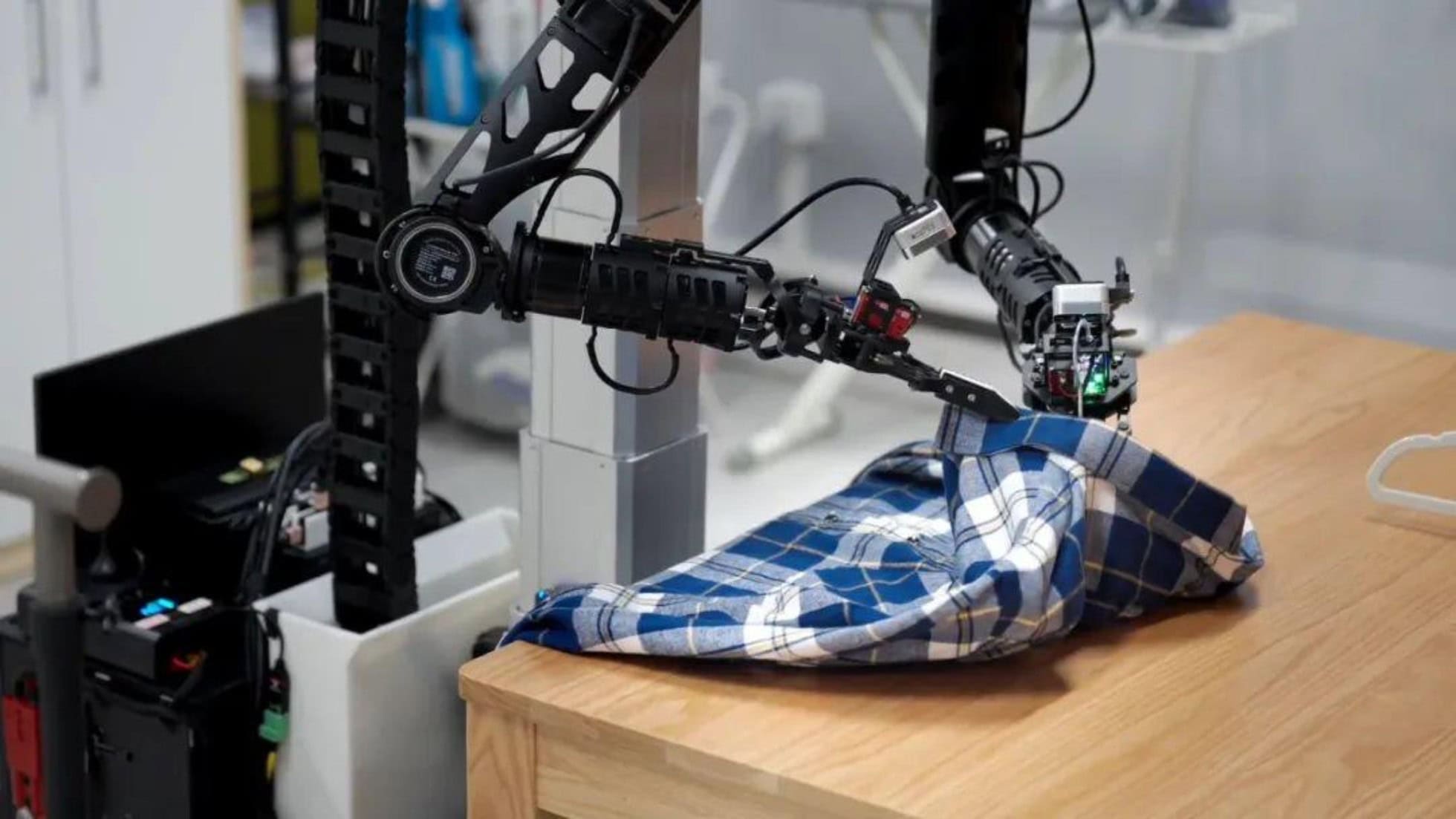
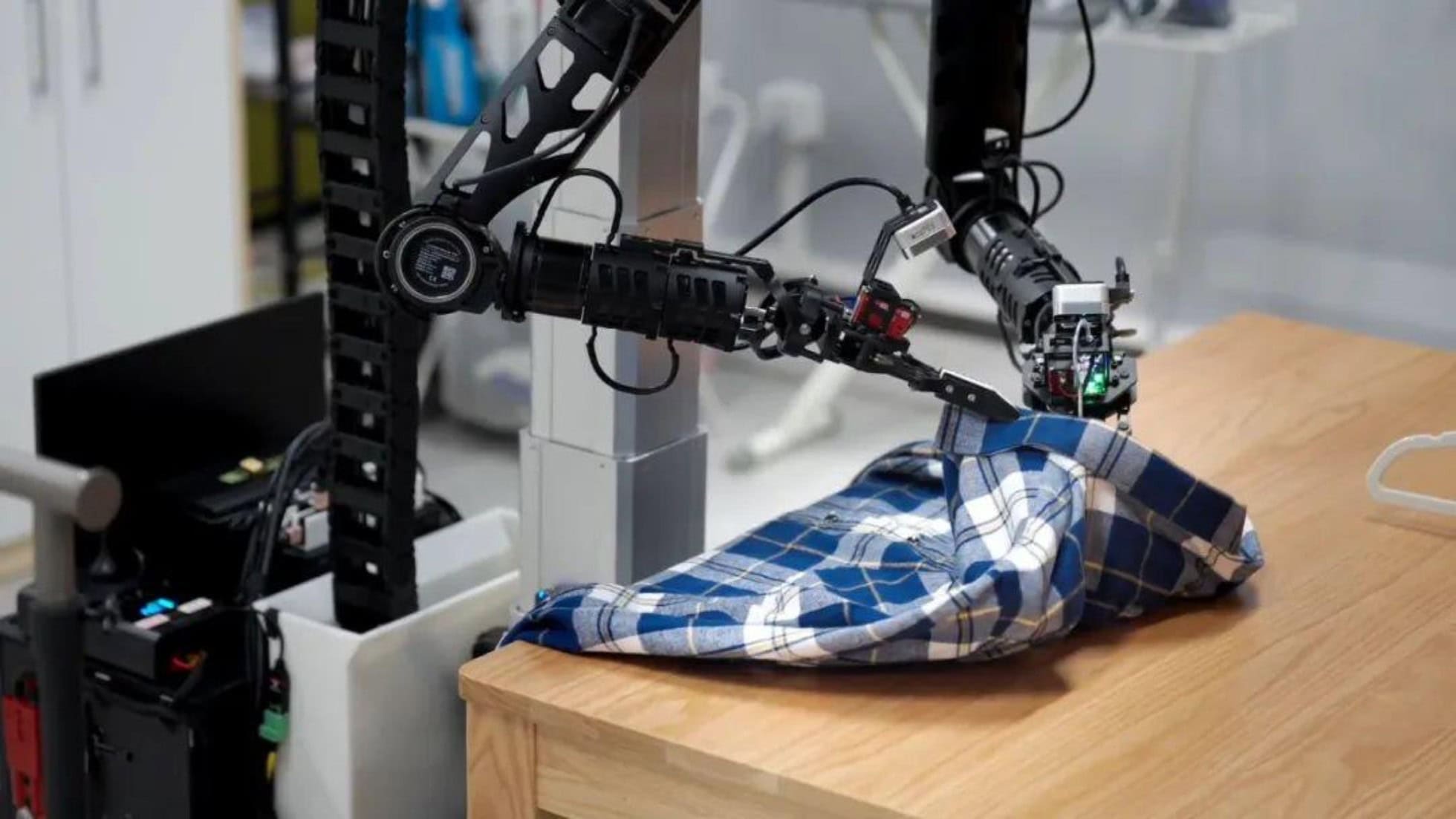
This Home Robot Clears Tables and Loads the Dishwasher All by Itself
Memo may not be the world’s fastest barista, but its ability to autonomously perform complex household tasks like making coffee, clearing tables, and loading dishwashers is undeniably impressive—especially for a robot designed for home use. This groundbreaking development comes from Sunday Robotics, a company poised to revolutionize domestic life with its innovative approach to artificial intelligence and robotics.
I recently witnessed Memo in action, observing it meticulously craft a cup of coffee in an open-plan kitchen situated in Mountain View, California. The robot, a creation of Sunday Robotics, moved with a deliberate grace that belied the intricate computational processes occurring within its gleaming white shell. Its design, reminiscent of the beloved character Wall-E, features a friendly, cartoonish face, two versatile arms, and a distinctive red baseball cap, adding a touch of personality to its advanced mechanics. Rather than emulating a fully humanoid form with legs, Memo navigates its environment using a robust wheeled platform, capable of adjusting its height by smoothly sliding up and down a central column, allowing it to interact with various kitchen surfaces and appliances with ease.
The request for an espresso initiated a sequence of precise movements. Memo, without hesitation, rolled over to the designated countertop where the espresso machine resided. With its two pincer-like hands, equipped with a surprising degree of dexterity, it slowly and methodically proceeded through each step required to operate the sophisticated coffee maker. This included carefully filling the porta filter with freshly ground coffee, tamping the grounds down with just the right amount of pressure, accurately slotting the porta filter into its proper place, positioning a coffee cup precisely beneath the spout, pressing the necessary buttons to initiate the brewing process, and finally, retrieving the hot, freshly brewed drink.
"We want to build robots that free people from laundry, from the dishes, from all chores," Tony Zhao, cofounder and CEO of Sunday Robotics, explained to me as the robot efficiently delivered the steaming coffee to the person who had requested it. This vision extends beyond mere convenience; it speaks to a future where individuals can reclaim valuable time previously spent on mundane household duties, allowing them to focus on more meaningful activities.
While making a single cup of espresso might seem like a straightforward task for a human, it represents a ridiculously difficult feat for a robot operating within the dynamic and often chaotic environment of a real, "messy" kitchen. The challenge lies in several critical areas: the robot must possess the ability to accurately identify a diverse range of objects (from coffee grounds to cups and machine components), figure out how to grasp each object reliably without causing damage or dropping it, and then use those objects properly in a sequential and context-aware manner. Sunday Robotics addresses this complexity by not only building its own sophisticated hardware but also by developing and training the advanced AI models that enable its system to learn and adapt. "We think the way to make a home robot is to be full-stack, and to vertically integrate," Zhao stated, emphasizing the comprehensive approach. "And that’s a very ambitious thing to do," he acknowledged, highlighting the monumental challenge of controlling every aspect of the robot’s development, from physical design to its cognitive functions.
Today, the vast majority of robots are confined to performing precise, repetitive work within tightly controlled industrial environments. These machines excel at tasks like moving the same item from one fixed position to another, over and over again, with unwavering accuracy. However, unlike humans, these industrial robots typically lack the capacity to adapt or improvise when faced with changes or unfamiliar situations. While the last decade has seen some companies develop robots that utilize AI for simpler tasks, such as identifying specific objects on a conveyor belt and determining the best way to grasp them, this level of complexity is still vastly different from the unpredictable and varied environment of a real home, where objects are rarely in the same place and unexpected obstacles are commonplace.
Of course, impressive robot demonstrations do not always serve as a reliable indicator of a robot’s overall utility or its long-term performance. The crucial question for Memo, and for Sunday Robotics, is how effectively and consistently the robot can perform its assigned tasks across a wide variety of homes, each with its unique layout, lighting, and clutter, and crucially, without the constant presence and intervention of Sunday’s engineers. The transition from a controlled demo environment to the unpredictable reality of everyday homes is often where even the most promising robotic projects face their greatest hurdles.
Despite these inherent challenges, Memo has already demonstrated a remarkable set of skills beyond its barista capabilities. In addition to making coffee, I observed Memo efficiently clearing glasses from a table and meticulously loading them into a dishwasher. This particular feat was especially impressive due to the advanced dexterity it required: the robot intelligently figured out how to grasp two glasses simultaneously in the same hand. It held one glass securely between its thumb and pointer finger, while deftly using the remaining fingers of its hand to firmly grab the second glass. Such a nuanced manipulation showcases an advanced level of object recognition, planning, and force control that is rare in current home robotics.
This sophisticated level of dexterity and adaptability is underpinned by Sunday Robotics’ key innovation: a novel and highly effective method for training robots that results in more human-like motor skills. Sunday employs remote workers who utilize specialized gloves, designed to precisely mimic Memo’s hands. These workers perform various household chores while wearing these gloves, providing rich, real-time data on human manipulation. Zhao explained that these gloves, which cost approximately $400 a pair, provide a significantly more accurate and detailed training signal compared to traditional teleoperation, which is the standard method for a person to remotely control a robot. The extensive training data collected from these glove-wearing workers is then meticulously fed into an advanced AI model. This model, in turn, processes input from the robot’s array of sensors and translates it into precise, intelligent motions, allowing Memo to execute complex tasks with remarkable finesse.
"This is a very exciting variant on home robots," commented Ken Goldberg, a distinguished roboticist at UC Berkeley and cofounder of Ambi Robotics, reflecting on Sunday’s approach. "It’s a beautiful design, and a much smarter kind of data capture." His endorsement underscores the potential impact of Sunday’s methodology on the broader field of robotics.
The very fact that any company now believes it can successfully build and deploy a useful and truly functional home robot is a clear indicator of the skyrocketing optimism within the robotics community regarding recent technological progress. This optimism is not unfounded. Researchers in recent years have demonstrated that robots can effectively tap into the capabilities of large language models (LLMs), the sophisticated AI brains behind today’s powerful chatbots. This integration allows robots to not only comprehend complex natural language commands but also to interpret and make sense of their physical environment, enabling more intuitive and adaptable interactions.
Furthermore, some researchers harbor the hope that by gathering vast amounts of diverse data illustrating how to perform countless different actions—ranging from picking up delicate cups and folding intricate shirts to navigating cluttered spaces—it will eventually lead to the development of a more general and robust form of robotic intelligence. This "universal" intelligence would allow robots to extrapolate from learned tasks and apply that knowledge to novel, unencountered situations, much like humans do.
Tony Zhao and Sunday’s other cofounder and CTO, Cheng Chi, have both made significant contributions that have fueled this hope for major robotic breakthroughs. Zhao notably worked on a project called Mobile ALOHA at Stanford University. This initiative focused on training robots using a low-cost, mobile teleoperation system, demonstrating that effective robotic learning could be achieved without prohibitively expensive equipment. Chi, on the other hand, contributed to a collaborative project involving Stanford, Columbia University, and the Toyota Research Institute. His work showed how a simple, inexpensive claw-like device could be effectively used to gather valuable data from humans performing everyday tasks, such as cleaning dishes, thus democratizing the data collection process essential for robotic learning.
"If you think about the most powerful AIs, ChatGPT or image-generation models," Zhao mused, drawing a compelling analogy, "they are trained on the whole internet. We just don’t have the internet for robotics." This statement succinctly captures the core challenge facing the robotics industry: the lack of a massive, universally accessible dataset of real-world human interactions and manipulations that could serve as the foundational "internet" for training truly general-purpose home robots. Sunday’s glove-based training method is a direct attempt to start building this crucial data infrastructure.
A handful of other ambitious startups are also currently hustling to develop and deploy more capable robots, including systems specifically designed to operate in ordinary homes. Companies like Physical Intelligence, Skild, and Generalist are all actively working on developing robot models that can adapt to new, unforeseen situations by leveraging similar data-driven, AI-centric approaches. Additionally, 1x recently unveiled its own humanoid home robot, though this system currently still relies on teleoperation for the execution of some of its more complex tasks, highlighting the ongoing challenge of full autonomy.
Eric Vishria, a general partner at the prominent venture capital firm Benchmark, which is notably backing Sunday Robotics, expressed his confidence in the startup’s practical and integrated approach as the most viable path to making robots genuinely useful in daily life. "The promise of AI robotics isn’t doing a backflip or dancing demos, but robots that work in messy, real-world situations," Vishria stated, clearly distinguishing between performative demonstrations and genuine utility. He added that Sunday’s "breakthroughs mark the start of an exponential curve toward a future where robots actually work in our day-to-day lives," painting a vivid picture of a future where autonomous helpers are a common fixture in homes.
Sunday Robotics plans to roll out Memo to a select group of beta testers next year. This pilot program will be instrumental in gathering crucial feedback and real-world performance data, showing how people respond to having a home robot that can handle certain chores—even if it operates slowly, or perhaps not with absolute perfection every single time. A key question that this testing phase will aim to answer is how reliably and efficiently Memo can perform its duties in authentic home environments, where the unpredictable presence of children, pets, and inevitable clutter are guaranteed to significantly complicate the challenge for any autonomous system.
Following the beta testing phase, Zhao stated that Sunday will proceed with rolling Memo out to its first official users. He believes that, much like early home computers which were initially complicated and primarily appealed to enthusiasts, Memo might initially find popularity among those who are eager to embrace a robotic future and are willing to tolerate some "rough edges" or occasional imperfections. This initial user base might even find themselves actively involved in the robot’s learning process, potentially showing their robots how to perform new tasks or refine existing ones. "I do think that people should be able to teach their own robots," Zhao emphasized, envisioning a collaborative relationship between human users and their robotic assistants.
Perhaps the era of truly capable, autonomous home robots is indeed almost upon us, shifting from science fiction to tangible reality. For now though, while the grand vision unfolds, many, myself included, would happily settle for the immediate, practical benefit of a perfectly brewed espresso, autonomously delivered.