Pentagon officials arrive in Ukraine to discuss military tech, explore peace efforts.
A high-stakes diplomatic and military overture unfolded in Kyiv on Wednesday, November 19, 2025, as Secretary of the Army Dan Driscoll led a delegation of senior Pentagon officials on a critical fact-finding mission. The visit, confirmed by multiple U.S. officials and initially reported by The Wall Street Journal, aims to delve into advancements in Ukrainian military technology and concurrently explore viable pathways to reignite stalled peace negotiations in the protracted conflict. This mission underscores a renewed push from the Trump administration to bring an end to hostilities in the region, leveraging military expertise to bridge diplomatic gaps.
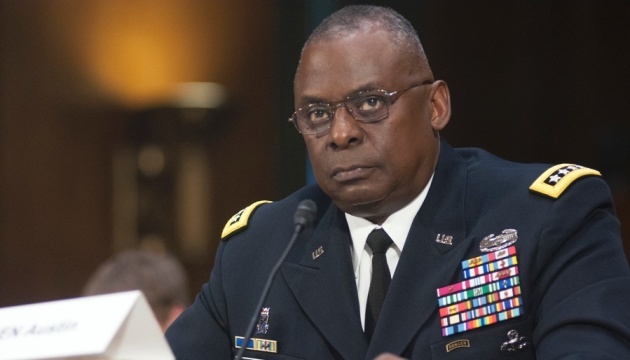
The formidable U.S. delegation, a carefully selected team, includes not only Secretary Driscoll but also Army Chief of Staff Gen. Randy George, the Commander of U.S. Army Europe and Africa Gen. Chris Donahue, and Sergeant Major of the Army Michael Weimer. The White House, according to one U.S. official, specifically tasked Driscoll with leading this pivotal mission. The rationale behind sending a delegation composed primarily of high-ranking military figures from the Pentagon was strategic: these officials possess the unique ability to articulate military perspectives and realities, a factor believed to be more effective in resonating with Russian counterparts and potentially unlocking new avenues for dialogue.
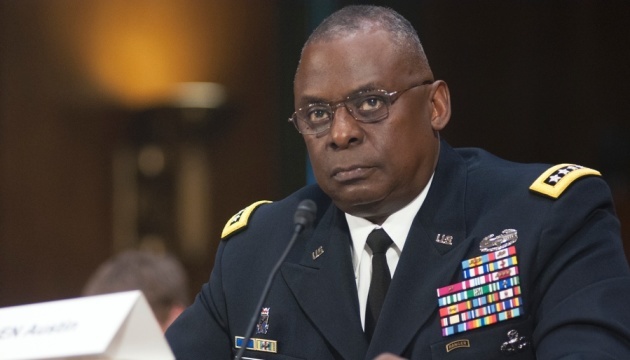
Colonel David Butler, an Army spokesman, articulated the immediate purpose of the visit, stating, "Secretary Driscoll and team arrived this morning in Kyiv on behalf of the administration on a factfinding mission to meet with Ukrainian officials and discuss efforts to end the war." This statement encapsulates the dual focus of the delegation: understanding the operational landscape and actively seeking a resolution to the ongoing conflict.
A significant component of Driscoll’s agenda during his time in Ukraine is a deep dive into the nation’s burgeoning military and defense industry. Specifically, he is slated to review cutting-edge Ukrainian technology, a move that highlights the growing recognition of Ukraine as an innovator in modern warfare. Driscoll himself had previously lauded Ukraine’s ingenuity on "Face the Nation with Margaret Brennan" just days prior. He characterized Ukraine’s adept use of drones and artificial intelligence (AI) technology as an "incredible treasure trove of information for future warfare."
Driscoll pointed to "Operation Spider’s Web," a stunning surprise attack launched in June by Ukraine deep inside Russian territory, as a prime example of this innovative prowess. This operation, executed with what Driscoll described as "a couple hundred thousand dollars worth of drones," resulted in the destruction of Russian military equipment valued at approximately $10 billion. This remarkable asymmetry – a minimal investment yielding massive destructive capability – has profound implications for global military doctrine and asymmetric warfare strategies. Furthermore, during Ukrainian President Volodymyr Zelenskyy’s visit to the White House last month, he extended an offer to share Ukraine’s advanced drone technology with the United States, signaling a potential for enhanced strategic cooperation and technology transfer that could benefit both nations.
Over the course of his multi-day visit, Secretary Driscoll is scheduled to engage with top Ukrainian leaders, culminating in a crucial meeting with President Zelenskyy. The primary objective of this high-level interaction is to explore concrete steps towards restarting long-stalled peace negotiations. A Ukrainian official, speaking to CBS News, emphasized the urgency and significance of Driscoll’s presence, stating that the focus of the visit would be on assessing "the military situation on the ground in addition to plans for a possible ceasefire." The official underscored the critical timing, noting that Driscoll’s visit "is extremely important, as we are stepping into a decisive phase now."
The Ukrainian official further revealed existing frameworks for a potential resolution, stating, "Presidents Zelenskyy and Trump have already agreed to stop the conflict along the existing lines of engagement, and there are agreements on granting security guarantees." This indicates a foundational understanding between the two leaders, potentially setting a baseline for future talks. Additionally, Ukraine has engaged in discussions with the "Coalition of the Willing," a group of over 30 countries supporting its sovereignty, regarding these crucial security guarantees. However, the official firmly reiterated Ukraine’s unwavering stance that it has not agreed to permanently cede any territory to Russia, a non-negotiable point that remains a significant hurdle in any peace settlement.
Driscoll echoed the administration’s overarching goal during his "Face the Nation" appearance, articulating the broader strategic imperative: "I think a lot of the questions are, how do we actually execute on the president’s agenda of peace in that part of the world." He underscored the economic dimension of this objective, adding, "I have not been to the White House, where it has not come up that we just want peace so that the American industrial base can thrive everywhere, and we have to focus on that part of the world unnecessarily right now." This perspective highlights the Trump administration’s desire to redirect focus and resources away from ongoing conflicts and towards domestic economic prosperity.
Negotiations to end the conflict have largely languished since the spring, despite concerted efforts by President Trump to inject new life into them. These past attempts included a summit in Alaska with Russian President Vladimir Putin during the summer and a subsequent meeting at the White House with President Zelenskyy in the fall. These earlier initiatives, however, failed to produce a breakthrough, leaving the conflict in a prolonged stalemate.
Since these previous diplomatic overtures, the geopolitical landscape has seen some shifts. The U.S. has notably resumed intelligence sharing with Ukraine, a move that has bolstered Ukraine’s operational capabilities. This renewed support, coupled with the provision of long-range equipment from the United Kingdom and Ukraine’s own advanced drone technology, has enabled Ukraine to conduct more effective attacks on Russian targets, potentially altering the dynamics on the battlefield and influencing future negotiation leverage.
Looking ahead, a defense official confirmed to CBS News that Secretary Driscoll intends to meet with Russian officials in the future, although no specific meetings are currently scheduled. This signals a broader intent to engage directly with Moscow as part of the peace initiative. A Russian official, in turn, confirmed to CBS News that Russia remains open to any talks and negotiations, reiterating President Putin’s standing invitation to Mr. Trump to visit Moscow, first extended in August. This reciprocal openness, despite underlying tensions, suggests a potential window for dialogue.
Adding another layer of complexity to the peace efforts, a controversial 28-point peace plan has emerged. In an interview with Axios conducted on Monday, Kirill Dmitriev, a close adviser to President Putin, claimed that he and Trump envoy Steve Witkoff had co-authored this comprehensive plan during a face-to-face meeting in Miami last month. The details of this plan remain undisclosed, but its existence points to back-channel diplomacy between key figures.
The involvement of Dmitriev, however, is not without controversy. He remains under U.S. sanctions, necessitating a waiver from the Treasury Department to facilitate his travel to the U.S. for these previously scheduled talks with Witkoff. A senior U.S. official at the time described these discussions as an effort "to continue to make progress on a proposal to end the war." The legitimacy of Dmitriev’s role and the proposed plan, however, were publicly challenged by Treasury Secretary Scott Bessent. In response to Brennan’s questioning on "Face the Nation" about these meetings, Bessent dismissed Dmitriev as a "Russian propagandist," highlighting the deep mistrust and political hurdles inherent in any dealings with sanctioned individuals.
A defense official contacted by CBS News was unable to comment directly on the specifics of the 28-point plan described by Dmitriev. However, the official confirmed that Secretary Driscoll intends to "open the door to discussing a peace plan," indicating a willingness to consider various proposals, including potentially this controversial framework. A Russian Embassy official contacted by CBS declined comment on the reported 28-point plan, and Dmitriev’s spokesperson did not respond in time for publication, leaving many details shrouded in speculation.
In a parallel diplomatic track, President Zelenskyy, speaking at a news conference in Spain on Tuesday, announced his intention to meet with Turkish President Recep Tayyip Erdogan to discuss "a just peace for Ukraine." This underscores Ukraine’s multi-pronged approach to securing peace, engaging various international partners and mediators. However, a State Department official denied reports that Trump envoy Steve Witkoff would be traveling to Türkiye for diplomatic meetings with Ukraine, suggesting that not all diplomatic channels are converging or are officially sanctioned. Witkoff himself had not responded to requests for comment at the time of publication.
Secretary Driscoll’s visit represents a critical juncture, attempting to blend military pragmatism with diplomatic urgency. The discussions on advanced Ukrainian military technology are not merely about tactical advantages but also about understanding the evolving nature of warfare and potentially strengthening Ukraine’s hand at any future negotiation table. Simultaneously, the exploration of peace efforts, complicated by past failures, existing agreements, and controversial back-channel proposals, highlights the immense challenges of achieving a lasting resolution. The success of this mission hinges on the delegation’s ability to bridge the profound trust deficits between the warring parties and to translate military insights into viable diplomatic pathways, all while navigating a complex web of international alliances, sanctions, and strategic interests. The world watches to see if this blend of military assessment and peace advocacy can finally steer the conflict towards a "just peace" for Ukraine and a stable future for the region.