Instead of Fitbit’s AI Health Coach, You Could Just Have Friends
Someone needs to say it, and I’m prepared to be that voice. There’s a profound, often unacknowledged defense to be made for simply being "mid"—mediocre, average, perfectly adequate—in our pursuits. I am, by all definitions, a mid-level runner. And the truth is, most of us are. We exist in that vast, relatable middle ground, far from elite athletes but equally distant from being sedentary. My daily life is a testament to this reality: I exercise regularly, but it’s always a delicate dance around a full-time job, two energetic children, a demanding dog, a supportive spouse, volunteer commitments, and cherished family dinners. Add to that the inevitable march of aging, and it becomes clear that I won’t be setting any 100-mile ultra-marathon records anytime soon. My fitness goals are modest, grounded in the desire to maintain health and keep pace with the vibrant chaos of my life, not to achieve athletic superstardom.
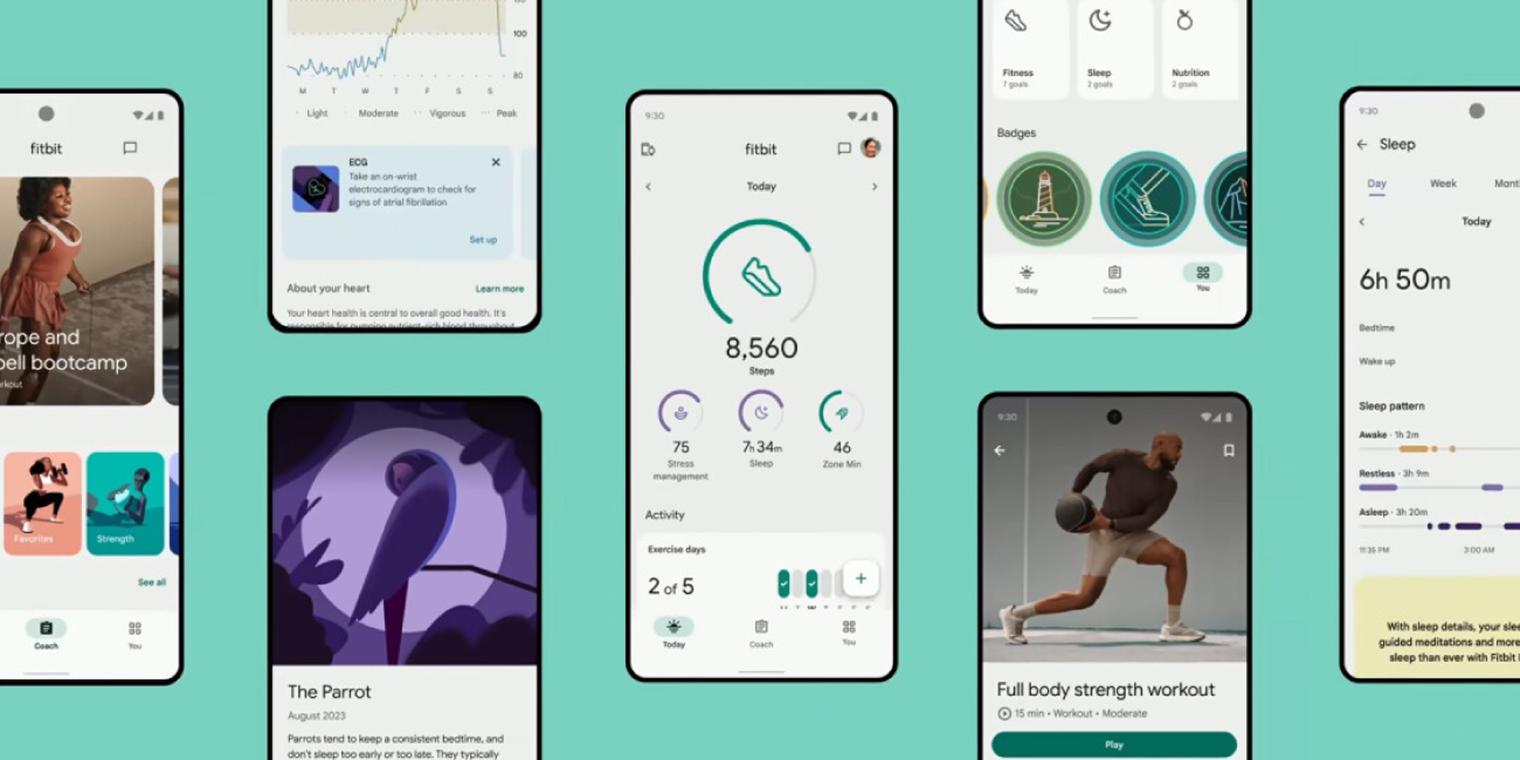
So, what do you do when the goal isn’t to shatter world records, but simply to avoid "collapsing into a bag of dust," all while lacking the time, financial resources, or even the incentive to engage a traditional personal trainer? The tech world offers tantalizing solutions. One path, as exemplified by Atlantic CEO and remarkably fast runner Nicholas Thompson, involves leveraging a custom GPT—a bespoke AI designed to cater to his specific training needs. More broadly accessible is Google’s new AI Health Coach, seamlessly integrated into the Fitbit app, part of the $10/month Fitbit Premium service. These digital guides promise hyper-personalized training, nutritional advice, and motivational nudges, all delivered through the convenience of a smartphone or smartwatch. They present themselves as the ultimate answer for the time-strapped, offering expert guidance without the logistical hurdles of human interaction.
Intrigued by this promise, and with a specific personal goal in mind, I embarked on a three-week trial of Fitbit’s Coach, which is currently in public preview—essentially, a beta phase. My motivation was simple yet potent: as a coach for Girls on the Run at my daughter’s school, I’d witnessed her develop a running friendship with a child competing in the Junior Olympics. My mission, therefore, was to achieve a 7:30 mile pace in an upcoming November 5K, primarily so I could keep up with, or perhaps even momentarily outpace, two elementary school children. Initially, I felt quite optimistic about this AI-driven approach. It seemed logical, efficient, and perfectly suited to my busy schedule. However, this optimism soon met with a dose of real-world skepticism when multiple people in my life, after hearing about my digital coaching sessions, gently but firmly suggested that perhaps I should "stop talking to a computer" and "talk to people in real life" instead. Their comments, while delivered with affection, planted a seed of doubt that would grow throughout my experiment.
To access Fitbit’s Public Preview, certain criteria must be met: an active Fitbit Premium subscription, an Android phone running Android 11 or higher, residence in the US, and English language settings for both the Fitbit app and the phone itself. (A comprehensive list of requirements is available on Google’s support pages). One notable feature, or perhaps a warning, is the ability to switch between the Public Preview and the regular app version. This flexibility is not just for convenience; it’s often necessary, as several important features are conspicuously absent from the Coach-integrated version. Crucial functionalities like menstrual health logging, blood glucose logging, Cardio Fitness scores, and advanced running metrics for Pixel Watch 3 and 4 users are currently unavailable. These omissions highlight a significant limitation: the AI, despite its advanced capabilities, still lacks the holistic data and interpretive power that a comprehensive human health professional might leverage.
My trial was conducted using a Pixel Watch 4 paired with a Pixel 9 phone, a setup that should have provided the optimal integration for the service (though Fitbit aims to expand to iOS users soon). My prior experience with Fitbit’s Running Coach, launched last year, had been rather lukewarm. However, I approached the new AI Health Coach with renewed optimism, largely because it promised a more comprehensive and flexible approach to overall health, not just running. Many seasoned runners, far more knowledgeable and experienced than my "mid" self, often remark that running success hinges on correctly answering numerous binary yes/no questions: "Should I do my long run on Saturday if Sunday is busy?" "Is this sniffle a sign to rest, or can I push through?" A bit more nuanced guidance, beyond a simple algorithm, is always welcome. My onboarding involved a 10-minute questionnaire detailing my goals and available equipment. Fitbit envisions a future where the AI can incorporate multimodal actions, such as analyzing a video of gym equipment to offer tailored suggestions, a vision that hints at impressive future capabilities.
Yet, my initial impressions were not entirely promising. The Coach, in its early interactions, seemed to believe I was attending a work conference, which I was not. While this initial misstep was easily corrected—I simply adjusted its suggestions for treadmill runs and hotel room workouts to outdoor runs and easy weight-lifting sessions at home—it underscored the AI’s inherent lack of real-world context. A human coach would likely have gathered more information or made more accurate assumptions based on initial conversations. On the positive side, I appreciated the flexibility of tracking live metrics via the Fitbit app or simply using my watch to record a workout and syncing it later. For someone like me, who finds live-tracking stressful and often inaccurate, especially when not running on a track, this feature was a welcome relief. It allowed me to focus on the run itself rather than constantly monitoring a screen.
However, the training philosophy itself presented a "bump in the road." Fitbit’s running workouts appear to loosely adhere to Zone 2 training principles, which aim to improve cardiovascular fitness by maintaining 60 to 70 percent of one’s maximum heart rate for the majority of a training session. While theoretically sound, this approach proved problematic for me. Being a foot shorter than many proponents of zone training, I found my heart rate could easily spike out of Zone 2 with minimal exertion—sometimes, it felt like just listening to a high-energy song like Rihanna could do it. The AI’s rigid adherence to heart rate zones didn’t account for individual physiological differences or the subjective feeling of effort.
Seeking a more human perspective, I consulted Beth Baker, a coach from Running Evolution. Her advice was refreshingly practical and intuitive. She suggested using other metrics, such as my ability to hold a conversation while running, monitoring my VO2 Max, and tracking my recovery time post-runs to gauge the appropriate intensity. "I mean, I’m not a doctor, but that’s just common sense," she remarked, highlighting the gap between data-driven AI and human experience. This simple, common-sense advice resonated more deeply than any algorithm.
A significant flaw emerged during my first week of training when I made the mistake of informing Coach that I was feeling unwell. True to its programming, it offered standard, albeit helpful, advice: if symptoms were above the neck, I could continue light workouts. (A piece of advice I, perhaps unwisely, later parroted to my daughter when she attempted to skip school). The problem arose when the Coach stubbornly adjusted my workouts down to annoyingly slow 1.5-mile or 2-mile sessions and refused to revert, even after I explicitly stated I was no longer sick. This rigid adherence to past input, despite updated information, was frustrating. The Fitbit team later acknowledged this issue via email, noting that "in the iterative Public Preview, we expect the coach to experience some trouble with memory expiration and persistence, which might cause some unexpected workout adjustments, and we are actively working on improving this." To correct the problem, I had to delve into the "Coach Notes"—a record of all my interactions—and manually delete any statements indicating I felt unwell, effectively rewriting my health history to restore my previous fitness settings. This experience underscored a critical limitation of AI: its current inability to understand context, nuanced recovery, or the dynamic nature of human health without explicit, manual intervention. A human coach would have engaged in a dialogue, assessed my current state, and adjusted the plan with far greater flexibility and understanding.
After several weeks of persistent tinkering with Coach, I did begin to observe some positive results. The AI eventually learned my preferences, such as attending a yoga class on Sundays and rock climbing on Wednesdays, and it commendably incorporated these diverse activities into my weekly plan. For strength training, it frequently recommended kettlebell swings and glute bridges, which are indeed invaluable exercises for runners. This suggested that Coach was drawing upon reliable, expert-backed information for its recommendations. Google has even partnered with figures like NBA star Stephen Curry and other external experts to ensure the Coach’s advice remains grounded in reality and best practices. These integrations point to the potential for AI to synthesize vast amounts of information and offer genuinely useful guidance.
However, a subtle yet unsettling phenomenon began to emerge. Coach started asking me about factors affecting my sleep. While seemingly innocuous, it felt difficult not to disclose various personal problems that might be impacting my health and willingness to work out. This raised a red flag: while Google explicitly states it does not use Fitbit data for advertising, I remained wary of divulging too much sensitive health information to a corporate entity that is neither a doctor nor bound by HIPAA regulations. The lines between a helpful tool and a data-collecting entity became uncomfortably blurred, prompting a deeper consideration of digital privacy and trust.
The social ramifications of my AI-centric fitness journey were perhaps the most telling. My spouse and real-life friends began to subtly distance themselves when I mentioned my conversations with Coach. When I told my husband I was asking Coach for breakfast recommendations, he looked at me askance, tentatively asking, "Doesn’t everyone know that you’re supposed to eat carbs before and protein after?" Similarly, when I confided in another friend about asking Coach for help with my macros, his response was direct and telling: "Maybe you need to… start talking to more people." Their reactions weren’t dismissive of technology, but rather an intuitive response to what felt like an over-reliance on a machine for aspects of life traditionally handled by human interaction and common sense.
I discussed my AI-generated training plans with coach Beth Baker, who offered another invaluable, human-centric suggestion. "There’s a sneaky way of getting faster, and that’s by running with people who are faster than you," she said. "There’s a whole, weird feeling of barely hanging on when you’re running with somebody. You’re uncomfortable for the first month or so, but it works every time." This advice encapsulates the essence of human motivation and progression: the challenge, the shared effort, the subtle competitive push, and the intrinsic reward of pushing limits alongside others. It’s an experience an algorithm, no matter how sophisticated, cannot replicate.
Many people are drawn to running precisely because of its solitary nature; it allows for spontaneous workouts without the need to coordinate plans, schedules, or tee times. You can simply lace up your shoes, sprint out the door, and squeeze in a workout whenever a spare hour presents itself. Yet, a fundamental, often overlooked, component that motivates us to stick with exercise—of any kind—is the presence and encouragement of others. My initial goal for this project was to keep pace with my daughter and her friend. And as I slowly but surely get faster, the appeal of running with other people increasingly eclipses the solitary interaction with a computer program. The joy of shared effort, the encouragement, and the camaraderie become more powerful motivators than any digital prompt.
As satisfying as it was to meticulously link up those daily exercises and check in with Coach every day, I eventually started to feel a distinct sensation that the real people in my life—the ones I actually did yoga, rock climbing, and running with—were beginning to stage an intervention. Their gentle nudges were not just about my fitness; they were about my connection to the human world.
While others, particularly those with exceptionally demanding schedules, might feel differently and find immense value in squeezing in a workout guided by AI, there remains an undeniable and irreplaceable value in receiving real-time, nuanced feedback from real people. Unlike a large language model, a friend can genuinely discern when you’re truly sick, or if you’re maintaining an easy conversational pace, or when you’re utterly "sucking wind." A real person can also, with kindness and concern, tell you when you’re "getting kind of weird" because you’re predominantly conversing with a chatbot and perhaps need to re-engage with the vibrant, messy, and infinitely rewarding world of human interaction. The AI health coach is a powerful tool, a testament to technological ingenuity, but it cannot, and perhaps should not, replace the profound and motivating power of human connection.