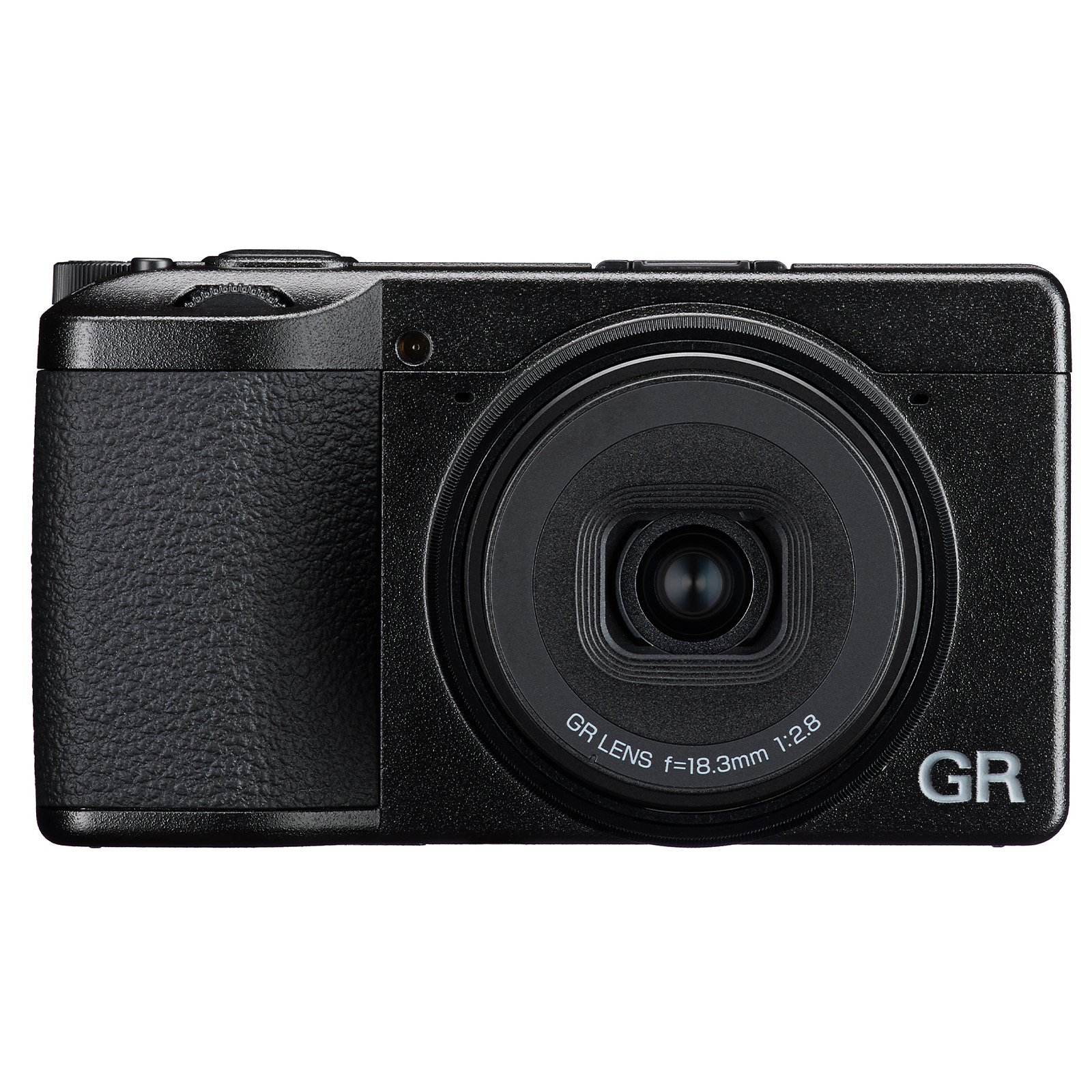
The Ricoh GR IV, the Cult Favorite Pocket Camera, Just Got Way Better
The past year witnessed an impressive influx of new camera releases, with giants like Nikon updating its Z5 line, Sony unveiling a new iteration of its beloved A7 series, and even Leica introducing a camera equipped with an electronic viewfinder. While these announcements certainly captivated the attention of photography enthusiasts, the most quietly anticipated, yet arguably most impactful, debut was that of the unassuming Ricoh GR IV. This little camera, often overlooked by those fixated on mirrorless behemoths, has long held a special place in the hearts of photographers who prioritize portability, discretion, and exceptional image quality above all else.
The GR series boasts a storied legacy as the ultimate pocket point-and-shoot, a reputation meticulously built over decades, tracing its roots back to its revered film camera days. It’s a lineage defined by a minimalist philosophy, a fixed prime lens, and an unwavering commitment to delivering outstanding results in a package small enough to slip into any pocket. For those deeply entrenched in the GR ecosystem, the arrival of a new model isn’t just an upgrade; it’s an event. I am thrilled to confirm that the latest addition to this celebrated lineup not only upholds its proud tradition but elevates it significantly. For the legions who preordered this camera the moment it was announced, rest assured, your intuition served you well. For the uninitiated or the skeptics, allow me to elaborate on why this camera is a triumph of thoughtful design and performance enhancement.
Truly great photographs possess an intangible quality, a resonance that transcends mere beauty and imprints itself on the mind. The same can be said for cameras. Throughout my decade-plus tenure testing cameras for WIRED, many of my most cherished photographic companions have been far from perfect, yet profoundly compelling. I think of the Fujifilm X70, the original Ricoh GR III, and the Panasonic GF1. Each had its quirks and limitations, but they also offered an inimitable shooting experience that fostered creativity and connection. The GR III, in particular, resonated so deeply with me that I penned a second, entirely unsolicited review long after its initial release, a testament to its enduring appeal. This personal affinity underscores the high expectations I harbored for the GR IV.
Living up to such lofty anticipation is a monumental task, yet the GR IV comes remarkably close. It’s not a radical reinvention, but rather a masterclass in refinement – everything the GR III was, only substantially better. This evolutionary approach is precisely what the GR faithful desire, preserving the core identity while addressing key areas for improvement.
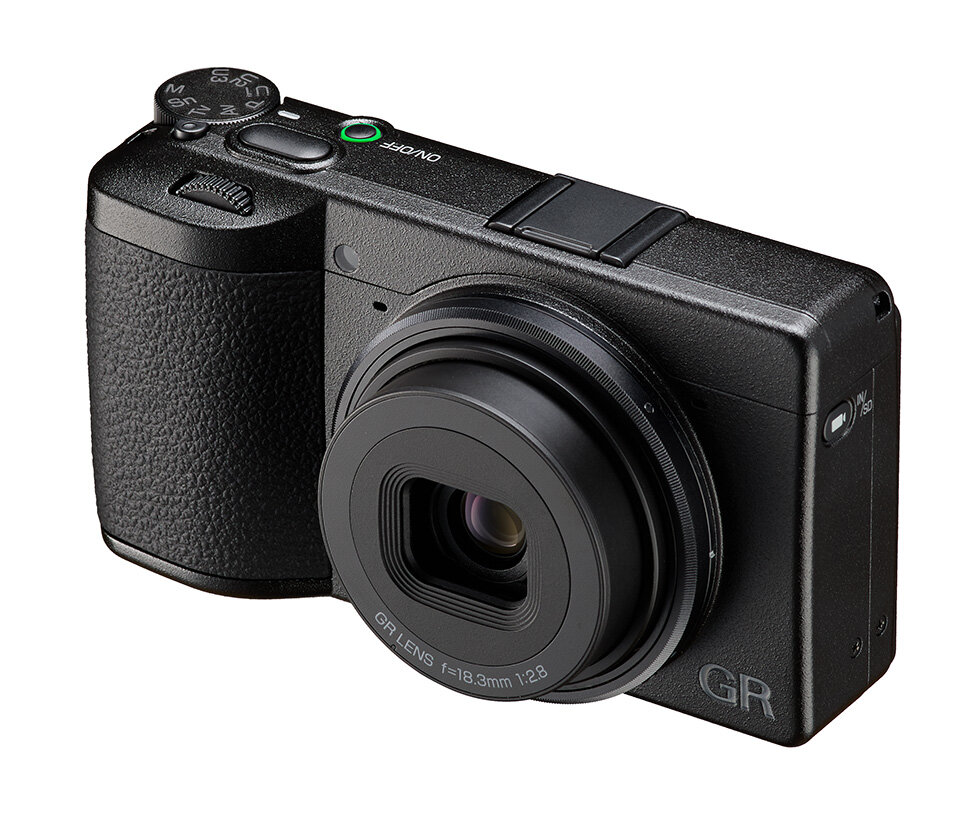
Let’s begin with what Ricoh wisely chose not to change: the fundamental body design. The GR IV maintains virtually the same svelte dimensions as its predecessor. While technically a couple of millimeters narrower and a few grams heavier, in practical terms, the difference is imperceptible. Crucially, it retains its signature pocketability. And by "pocketable," I don’t mean requiring an elaborate contortionist act or a specialized cargo pocket (ahem, Fujifilm X100 users might relate). The GR IV genuinely, effortlessly slides right into your pocket, ready for instant deployment, a fundamental aspect of its street photography prowess.
However, beneath this familiar exterior, the control layout has undergone subtle yet significant enhancements, all for the better. Ricoh has incorporated two unlabeled adjustment wheels – one conveniently positioned on the front and another on the back. Crucially, the rear control is now a proper, tactile wheel, replacing the less intuitive side-to-side rocker switch of the GR III. By default, the front wheel controls aperture and the rear dictates shutter speed, making the GR IV one of the most ergonomically intuitive cameras on the market for seamless, one-handed manual shooting. Naturally, these controls are fully customizable to suit individual preferences, should you possess a penchant for unconventional configurations.
Ricoh also judiciously eliminated the dial surrounding the D-pad, opting for a streamlined D-pad complemented by a dedicated +/- rocker switch situated at the top right of the camera’s rear. This thoughtful simplification further enhances the camera’s one-handed operability, allowing users to swiftly adjust critical settings without breaking their grip or diverting their gaze from the scene. The extensive customizability of all switches and dials ensures that every photographer can tailor the GR IV to their unique workflow.
One aspect that remains steadfast, echoing the GR series’ opinionated design philosophy, is the rear LCD screen. It steadfastly refuses to rotate or fold out in any capacity, foregoing waist-level shooting or vlogging capabilities. This fixed screen is a deliberate choice, signaling that the GR IV is a camera for looking through (or over, or around), not for self-monitoring. It’s a clear statement about its intended purpose as a discreet, direct photographic tool, a characteristic that enthusiasts either embrace wholeheartedly or find to be a dealbreaker.
Battery life, historically a minor Achilles’ heel for the GR series, has seen a moderate but welcome improvement. The new battery now delivers approximately 250 shots per charge, a notable increase from the GR III’s 200. While better, this still necessitates carrying spare batteries for extended shooting sessions, a small trade-off for such a compact powerhouse.
Perhaps the most unconventional design choice in the GR IV is its adoption of microSD cards instead of the standard full-size SD. Given the camera’s rather modest video specifications, microSD cards are perfectly adequate in terms of speed. However, for those without an ample supply of microSD cards, Ricoh has ingeniously integrated a generous 54 GB of built-in internal memory, offering a substantial buffer for capturing moments without immediate card changes. This internal storage mitigates the initial oddity of the microSD slot, hinting at clever internal space optimization.
The heart of any digital camera lies in its sensor, and the GR IV features an upgraded 25.7 MP APS-C CMOS sensor, a slight bump from the GR III’s 24.2 MP unit. While this marginal increase in megapixels might seem negligible on paper, in practice, the resulting image quality is subtly yet significantly enhanced. It’s challenging to precisely apportion credit between the new sensor and the completely redesigned lens, but the synergy is undeniable. The GR IV retains the classic 18.3mm f/2.8 fixed lens (equivalent to 28mm on a full-frame camera), but its optical design has been meticulously re-engineered. The outcome, whether primarily from the sensor, the lens, or both working in concert, is a discernible leap in image fidelity. The lens exhibits superior sharpness, particularly in the corners, compared to the GR III. More impressively, images possess an enhanced clarity and depth, rendering files that look cleaner and more refined straight out of the camera. I often found little to no need for post-processing, a testament to the camera’s excellent in-camera rendering. As for video, the GR IV can record, but it caps out at 1080p, a clear indication of Ricoh’s steadfast focus on still photography.
Another aspect that remains unchanged is the absence of comprehensive weather sealing. While this might disappoint some, Ricoh has addressed a common concern among GR III users by incorporating enhanced protection around the lens when it retracts, significantly reducing the likelihood of dust infiltrating the sensor – a persistent issue for some previous models.
While the refined body, intuitive control layout, and improved sensor-lens combination all contribute to a superior shooting experience, the single most impactful enhancement in the GR IV is undeniably the autofocus system. This improvement alone is compelling enough to warrant an upgrade for existing GR III owners. The GR III’s autofocus, while functional within its limitations, could occasionally be a source of frustration, particularly in dynamic street photography scenarios. The GR IV, however, is an entirely different proposition. Its autofocus is remarkably snappy and responsive for a camera of its size, a crucial factor for capturing fleeting moments. Beyond sheer speed, the subject tracking and face detection capabilities are remarkably effective. While not on par with the hyper-advanced, bird-eye-detecting systems found in top-tier Sony or Nikon cameras, they are highly usable and more than adequate for the demands of street photography and environmental portraits.
The In-Body Image Stabilization (IBIS) system has also received a substantial overhaul. Utilizing a new five-axis system, the GR IV now offers up to six stops of hand-holding stability. This is a monumental improvement, especially considering that its f/2.8 lens on an APS-C sensor, while excellent, isn’t inherently a low-light champion. Any additional stabilization is profoundly welcome, and the new system performs exceptionally well, allowing for sharper images at slower shutter speeds in challenging lighting conditions.
When I reviewed the GR III, I lauded its snap focus mode, a feature that allows photographers to pre-set a focus distance regardless of the aperture, enabling incredibly fast, decisive shooting. My GR III was configured to use autofocus with a half-press of the shutter and snap focus with a quick, full press, typically set to 1.5 meters for street candidness. All these functionalities persist, but the GR IV introduces a dedicated "Sn" letter on the mode dial, instantly activating Snap Focus mode. This new mode not only allows you to dial in your desired focus distance but also lock in a specific aperture, providing granular control over depth of field. This enhanced dedicated mode proved to be a highly enjoyable and frequently utilized feature, further empowering the GR’s signature intuitive shooting style.
So, should you get one? The Ricoh GR IV debuted at $1,497, a significant increase from the GR III’s launch price of $999. Is it worth the premium? For current GR III owners who have been hampered by its autofocus limitations, the upgrade is substantial and, if budget permits, unequivocally worthwhile. The improvements in AF alone are transformative, let alone the enhanced image quality and refined ergonomics.
However, if your primary photographic endeavors include video, this camera is not for you. Its 1080p video capabilities are rudimentary at best, clearly indicating Ricoh’s singular focus. For those seeking hybrid photo-and-video capable compacts, explore our guides to the best pocket cameras and travel cameras for more suitable options. But if your quest is for an APS-C sensor camera that genuinely slips into your pocket, offers unparalleled one-handed control, and consistently produces outstanding still images with a distinct photographic character, then the Ricoh GR IV is an exceptional choice. It is a camera designed for the discerning photographer who values intent, discretion, and the art of seeing.
Personally, I find myself eagerly anticipating the potential arrival of a GR IVx. Following the precedent of the GR IIIx, which offered a 40mm-equivalent lens, a GR IVx with a similar focal length would offer a compelling alternative perspective, broadening the GR’s appeal even further. At the time of writing, Ricoh has remained tight-lipped about such a prospect, but hope springs eternal for devotees of this exceptional camera series.