Trump and Mamdani Seek Common Ground After Highly Anticipated White House Meeting
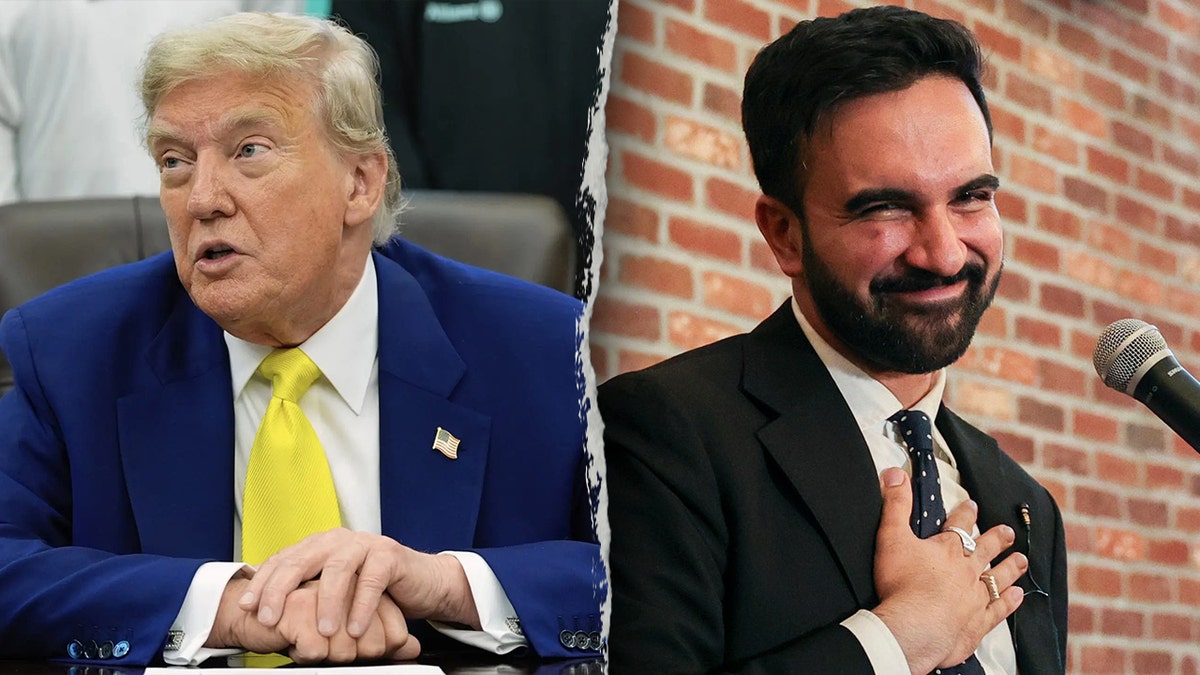
In a highly anticipated and potentially consequential encounter, President Donald Trump and New York City Mayor-elect Zohran Mamdani, two figures known for their stark ideological differences and often combative rhetoric, met for the first time at the White House on Friday, November 21, 2025. The meeting, which both sides described as "productive," concluded with a joint appearance in the Oval Office, where they attempted to project an image of unity centered on their shared desire to improve New York City, despite lingering political tensions.
The post-meeting press availability quickly veered into the thorny territory of past criticisms. A reporter challenged Mayor-elect Mamdani about his prior characterization of President Trump as a "despot." Mamdani, a democratic socialist who campaigned on a platform of "Trump-proofing" New York, skillfully navigated the question, emphasizing a forward-looking approach. "I think both President Trump and I, we are both very clear about our positions and our views," Mamdani stated, adding, "what I really appreciate about the president is that the meeting that we had focused not on places of disagreement, which there are many, and also focused on the shared purpose we have in serving New Yorkers." He underscored the urgency of addressing New York’s cost of living crisis, a central pillar of his mayoral campaign, stating that focusing on this shared purpose "could transform the lives of the 8.5 million who are currently struggling."

President Trump, known for his ability to defuse or embrace criticism with humor, interjected with a characteristic quip. "I’ve been called much worse than a despot, so it’s not that insulting," he joked, drawing a smile from Mamdani. The exchange escalated when Mamdani was pressed on whether he considers the president a "fascist." Before the mayor-elect could offer a substantial reply, Trump once again jumped in, suggesting, "That’s OK, you can just say yes, OK? It’s easier. It’s easier than explaining it, I don’t mind." Mamdani responded with a visible smile, a moment that encapsulated the unusual dynamic between the two leaders.
Earlier in the joint remarks, President Trump expressed unexpected confidence in Mamdani, acknowledging their philosophical divide but hinting at potential surprises. Still seated alongside a standing Mamdani, the president remarked that the mayor-elect "has got views that are a little out there," but quickly added that "everyone changes." Trump even drew a parallel to his own political journey, noting, "I can tell you, some of my views have changed" since he first assumed the presidency in 2017. He concluded with a surprising endorsement, "I feel very confident that he can do a very good job. I think he is going to surprise some conservative people, actually." This sentiment suggested a willingness from the president to engage with a political opponent, perhaps seeing an opportunity for practical cooperation over ideological purity, especially concerning his home city.
Mamdani echoed the positive tone, describing the meeting as "productive" and confirming that discussions centered on critical issues facing New Yorkers, particularly affordability. "I appreciated the meeting with the president, and as he said it was a productive meeting focused on a place of shared admiration and love, New York City," Mamdani said. He detailed the topics covered: "We spoke about rent, we spoke about groceries, we spoke about utilities. We spoke about the different ways in which people are being pushed out and I appreciated the time with the president. I appreciated the conversation. I look forward to working together to deliver that affordability for New Yorkers."
The meeting, held in the iconic Oval Office, began shortly after Mamdani’s arrival at the White House, which was confirmed by CBS News New York’s Jessica Moore. White House communications director Steven Cheung playfully noted the mayor-elect’s discreet arrival, posting a photo of assembled media with the caption "Too late guys! Y’all are too slow!"
Upon allowing reporters into the Oval Office, President Trump had initially set a conciliatory tone, declaring the meeting "really good" and "very productive." He highlighted the "one thing in common – we want this city of ours that we love to do very well." Trump further emphasized a pragmatic approach over partisan divisions: "The better he does, the happier I am. There’s no difference in party, there’s no difference in anything." This rhetoric stood in stark contrast to the often fiery exchanges that have characterized their relationship.
The stakes for this meeting were exceptionally high for New York City. Political analyst J.C. Polanco, a professor at Mt. Saint Vincent University, underscored the critical nature of the discussions, noting that the federal government controls approximately $10 billion in funds essential for Mamdani’s ambitious agenda. "This is a very consequential meeting," Polanco stated, highlighting Mamdani’s transition from an assemblymember representing 125,000 people to the CEO of New York City, tasked with being its "chief negotiator in the federal government."
Polanco’s analysis before the meeting captured the uncertainty surrounding the interaction: "It depends which Mayor-elect Mamdani and which President Trump show up." He alluded to Trump’s past confrontational style, as seen in his treatment of Ukrainian President Zelenskyy, contrasting it with a potentially more cooperative Trump. Similarly, he questioned whether Mamdani would present himself as the "happy warrior" from his campaign or the more defiant figure who, on election night, reportedly told President Trump, "turn the volume up, I ain’t playing with you."
Indeed, the backdrop to this meeting was a history of sharp personal and political attacks. President Trump has famously referred to Mamdani as "my little communist mayor" and a "communist lunatic." Mamdani, for his part, vowed to "Trump-proof" New York City and has been a vocal critic of the president’s immigration raids and economic policies. Despite this, Mamdani consistently framed the meeting as "an opportunity to make the case for New Yorkers," focusing on economic security and public safety. White House press secretary Karoline Leavitt confirmed Trump’s willingness to "meet with anyone and talk to anyone and to try to do what’s right on behalf of the American people," mirroring Mamdani’s own public stance of working with "anyone to make life more affordable for the more than 8.5 million people who call this city home."
Beyond the rhetoric, tangible issues were on the line. New York City relies heavily on federal funding for critical infrastructure projects. On October 1, the first day of a government shutdown, the White House froze $18 billion in funding for two major projects: the Gateway Tunnel and the Second Avenue Subway. President Trump had previously declared the Gateway Tunnel "terminated," leaving its funding status ambiguous. Immigration enforcement was another contentious point, with White House border czar Tom Homan indicating plans to "increase enforcement presence in New York City again because they’re a sanctuary city." A Mamdani spokesperson reiterated the mayor-elect’s "steadfast commitment to protecting the rights and dignity of every single New Yorker and upholding our sanctuary laws." Crucially, Mamdani also needs federal security clearance to receive briefings on terror threats and law enforcement activities, a process the president could expedite.
In preparation for the high-stakes meeting, Mayor-elect Mamdani engaged in strategic outreach. He spoke with Senate Minority Leader Chuck Schumer on Thursday, a veteran of challenging Oval Office encounters with President Trump. While Schumer had not endorsed Mamdani’s mayoral bid, their prior collaboration on securing debt relief for New York taxi medallion owners underscored a pragmatic working relationship that transcends partisan lines. New York Gov. Kathy Hochul also confirmed speaking with Mamdani before his White House visit, reflecting the broader state interest in maintaining a productive dialogue with the federal administration on issues like the Gateway Project and potential National Guard deployments.
Hours before Mamdani’s arrival, the House of Representatives passed a resolution "denouncing the horrors of socialism," a broadly bipartisan vote with 86 Democrats joining 199 Republicans. House Speaker Mike Johnson, a Republican from Louisiana, acknowledged the timing as a "happy coincidence" that "coincides with the Marxist mayor’s meeting at White House." Democratic Rep. Alexandria Ocasio-Cortez, who "chatted very briefly" with Mamdani that morning, defended the mayor-elect’s approach, reiterating his commitment to meeting "with anyone and everyone to tackle New York City’s affordability crisis."
President Trump himself had predicted a "quite civil" meeting in a Fox News Radio interview on Friday morning, stating he expected them to "get along fine." He acknowledged Mamdani’s "different philosophy" and gave him "a lot of credit for the run." Trump reiterated their shared goal: "Look, we’re looking for the same thing – we want to make New York strong."
Mamdani, maintaining a confident demeanor, posted a smiling photo on X (formerly Twitter) with a plane emoji as he traveled to Washington, keeping his public comments minimal before the meeting. At a press conference on Thursday, he had outlined his agenda, stating he would "make it clear to President Trump that I will work with him on any agenda that benefits New Yorkers. If an agenda hurts New Yorkers, I will also be the first to say so."
This first meeting between President Trump and Mayor-elect Mamdani represents a delicate balance between deeply entrenched political hostilities and the pragmatic necessities of governance. While the immediate outcome presented a facade of cooperation, the true test will be whether this initial dialogue can translate into concrete action that benefits New York City, or if the underlying ideological chasms will ultimately prove too wide to bridge. The future of billions in federal funding and critical city policies may well depend on it.