6 Best Phones With Headphone Jacks (2025): Tested and Reviewed
It’s been nine years since Apple controversially removed the headphone jack from the iPhone 7 in 2016, sparking a trend that has swept across the smartphone industry. While the market has since flooded with excellent wireless earbuds offering unparalleled convenience, a significant segment of users still clings to the undeniable benefits of wired audio. Perhaps you’re an audiophile who demands uncompressed sound, a gamer who can’t tolerate latency, or simply someone who despises the constant need to charge another device. The enduring appeal of the 3.5-mm headphone connector lies in its universality and simplicity: plug in any pair of corded headphones, and you’re good to go—no connectivity blips, no batteries to charge, no dongles to attach (unless your phone lacks the port), and no tiny earbuds or their cases to lose in the laundry.
While Bluetooth technology has made immense strides, offering increasingly robust and high-fidelity wireless experiences, the option to plug in remains a strong preference for many. Unfortunately, the trend of eliminating the headphone jack continues its relentless march. In 2025, even some traditionally budget-friendly series are succumbing, with Samsung notably cutting the venerable port from its popular Galaxy A-series phones. This development signals a worrying trend that the 3.5mm jack is becoming an endangered species across all price points. However, despair not! For those who prioritize a direct audio connection, the market, though smaller, still offers some compelling choices. As WIRED’s smartphone reviewer, I’ve delved into a myriad of handsets—big and small, cheap and expensive—to identify the best options for 2025 that proudly retain the headphone jack.
The Vanishing Act: A Historical Perspective
The saga of the disappearing headphone jack is a tale of technological evolution, corporate strategy, and consumer adaptation. While Oppo technically beat Apple to the punch by removing the port from its R5 in 2014, it was Apple’s decision with the iPhone 7 in 2016 that truly ignited the industry-wide shift. Apple’s stated reasons included making phones slimmer, allowing for larger batteries, and facilitating water resistance. However, a less-spoken motivation was undoubtedly to catalyze the burgeoning wireless headphone market, where Apple’s own AirPods quickly became a dominant force.
Following Apple’s lead, other major manufacturers like Google (with the Pixel 2), OnePlus, and eventually even most Android flagships, swiftly followed suit. What started as a premium feature omission gradually trickled down to mid-range devices. By 2025, we’re witnessing the port’s disappearance from even budget-friendly phones, as exemplified by Samsung’s Galaxy A-series. This suggests that manufacturers believe that the proliferation of affordable wireless earbuds—some decent options can be found for as little as $30—has made the dedicated 3.5mm port redundant for the mass market. This trajectory strongly indicates that within the next few years, the traditional 3.5-mm port will likely vanish entirely from all new smartphones, making the remaining options even more precious.
Why the 3.5mm Jack Endures: A Niche, Yet Passionate, Demand
Despite the industry’s push towards wireless, the demand for the headphone jack persists. This isn’t just about resisting change; it’s rooted in practical advantages that wireless still struggles to replicate consistently:
- Uncompromised Audio Quality: For audiophiles, wired connections are king. They deliver uncompressed audio signals, preserving more detail, dynamic range, and overall fidelity compared to even the most advanced Bluetooth codecs. This translates to a richer, more nuanced listening experience, especially when paired with high-quality headphones.
- Zero Latency: Critical for mobile gamers, musicians, and video editors, wired connections offer virtually zero latency. There’s no perceptible delay between the action on screen or the input signal and the audio output, ensuring a perfectly synchronized experience.
- Unmatched Reliability and Convenience: Plug-and-play functionality means instant connection without pairing hassles, dropped signals, or Bluetooth interference. There’s no battery to manage, eliminating the dreaded scenario of your headphones dying mid-listen.
- Cost-Effectiveness and Sustainability: Generally, wired headphones offer better sound quality for the price point compared to their wireless counterparts. Furthermore, they contribute less to electronic waste due to their simpler components and lack of built-in batteries that degrade over time.
Top Phones with Headphone Jacks in 2025-2026
Even as options dwindle, a few manufacturers understand the niche demand and continue to cater to it. Here are the standout phones that still offer the beloved 3.5mm jack:
-
Motorola Moto G Stylus 2025 / Moto G Play 2026 (Best for Value and Practicality)
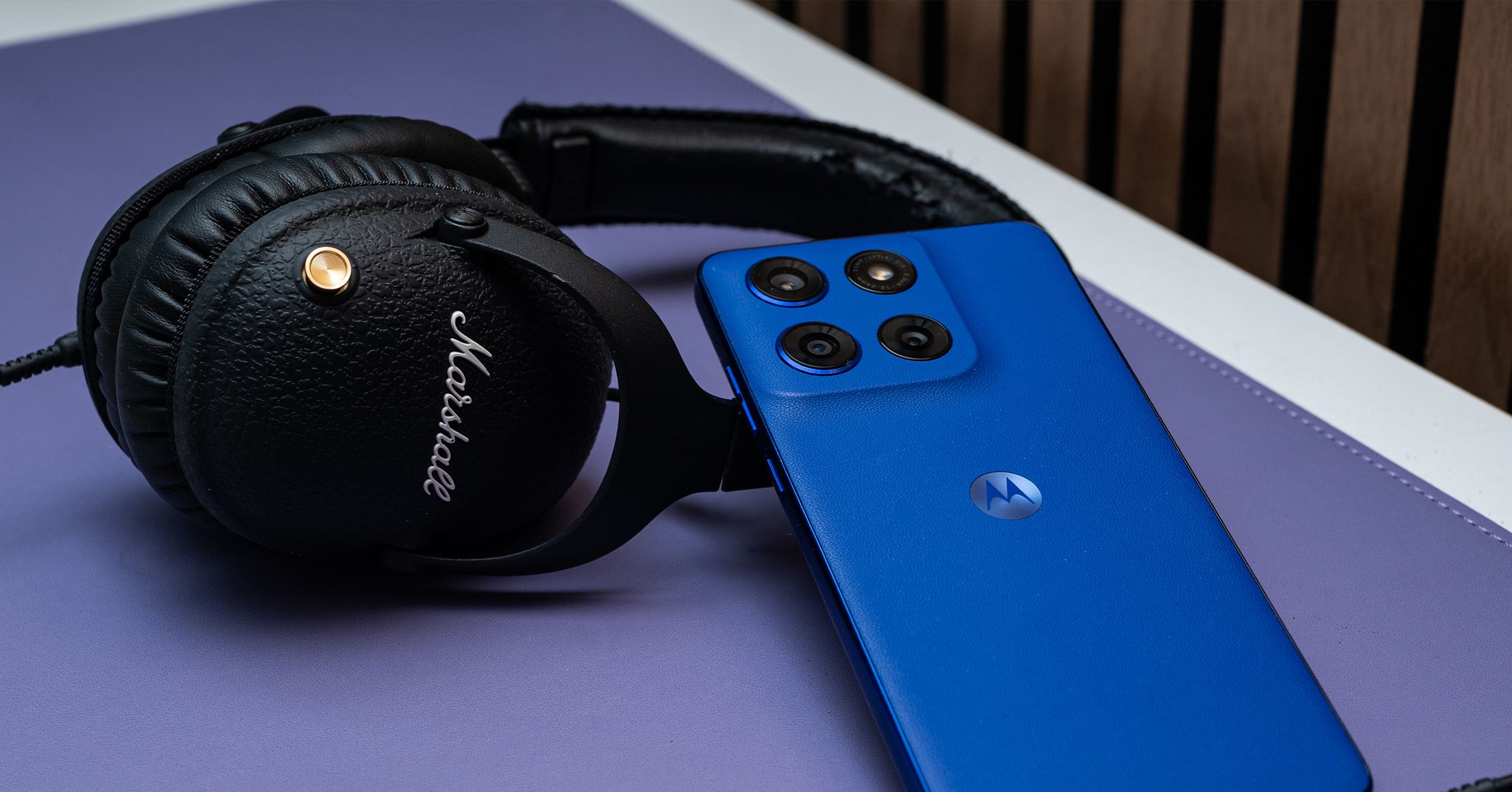
Motorola has consistently been a champion of the headphone jack in its budget and mid-range offerings, and 2025 is no different. The Moto G Stylus 2025, along with the recently added Moto G Play 2026, represent excellent choices for users seeking practicality without breaking the bank. These phones are known for their clean Android experience, reliable performance for everyday tasks, and—crucially—the inclusion of the 3.5mm port. The Moto G Stylus further enhances its utility with an integrated stylus, making it a versatile device for note-taking and casual creativity. The Moto G Play series, meanwhile, focuses on essential features and long battery life, making it a fantastic option for those who simply want a dependable smartphone with an audio jack for their daily commute or casual listening. These devices prove that you don’t need to sacrifice essential features for affordability. -
Asus ROG Phone 9 / ROG Phone 10 (Best for Gaming and Performance)
At the opposite end of the spectrum from budget-friendly options, we have Asus’s Republic of Gamers (ROG) Phone series. The Asus ROG Phone 9, and its anticipated successor the ROG Phone 10, are high-performance beasts designed from the ground up for mobile gaming enthusiasts. It’s no surprise that these phones steadfastly retain the headphone jack. For competitive gaming, low-latency audio is paramount, and a wired connection offers the most stable and immediate sound delivery. Furthermore, the ROG Phones are often used with extensive accessories, including cooling fans and external controllers, making it crucial to have a dedicated audio port that doesn’t conflict with charging or other peripherals. These devices combine cutting-edge processors, high refresh rate displays, and advanced cooling systems with the traditional audio jack, making them the ultimate choice for gamers who demand an immersive, lag-free audio experience.
Deep Dive: The Undeniable Benefits of Wired Audio
Let’s explore in more detail why many users, especially discerning listeners, still advocate for wired connections:
- Superior Sound Fidelity: When you plug in, the audio signal travels directly from the phone’s Digital-to-Analog Converter (DAC) to your headphones. This direct path avoids the compression and potential signal loss inherent in Bluetooth transmission. Wired connections can support higher bit rates and sample depths, allowing for a truer reproduction of the original audio source. While modern Bluetooth codecs like LDAC and aptX HD have significantly improved wireless audio, they still involve some form of compression. For critical listening or enjoying high-resolution audio files, wired remains the gold standard.
- Unmatched Reliability and Convenience: A wired connection is fundamentally more reliable. There are no pairing issues, no dropped connections due to interference, and no battery life concerns for your headphones. Just plug and play. This simplicity is invaluable in situations where you need guaranteed audio, such as making important calls, monitoring recordings, or simply wanting to relax with your music without any technological hiccups. The universality of the 3.5mm jack also means you can use your favorite pair of headphones with almost any compatible device, without worrying about specific Bluetooth profiles or proprietary connectors.
- Cost-Effectiveness and Sustainability: For a given budget, wired headphones almost invariably offer better sound quality than their wireless counterparts. The technology required for a high-quality wired driver is often simpler and less expensive than integrating wireless chips, batteries, and advanced digital processing into headphones. From an environmental perspective, wired headphones are generally more sustainable. They don’t contain rechargeable batteries that degrade and become e-waste, and their simpler construction often means a longer lifespan and easier repairability.
The Rise of Wireless: Acknowledging Progress
It’s important to acknowledge that Bluetooth audio has come a long way. Modern wireless earbuds and headphones offer undeniable advantages:
- Convenience and Freedom: The absence of cables offers unparalleled freedom of movement, ideal for workouts, commutes, or simply moving around the house.
- Advanced Features: Many wireless headphones boast features like active noise cancellation (ANC), transparency modes, spatial audio, and seamless integration with voice assistants—features that are typically not available on passive wired headphones.
- Improved Sound Quality: As mentioned, codecs like LDAC, aptX Adaptive, and LHDC have significantly narrowed the fidelity gap. For most casual listeners, the difference in audio quality between good wired and good wireless headphones is becoming increasingly difficult to discern.
Living Without the Jack: Adapters and Alternatives
For those with a jack-less phone, hope is not lost. Several workarounds allow you to use your wired headphones:
- USB-C Dongles: Your Gateway to Wired Audio
The most common solution is a USB-C headphone dongle, which plugs into your smartphone’s USB-C charging port and provides a 3.5-mm jack. These adapters are relatively inexpensive and widely available.- Apple USB-C to 3.5-mm Adapter for $9: This adapter from Apple is an excellent, compact solution and will work with any smartphone featuring a USB-C port, including Android devices and iPhones 15 and newer. It’s advisable to buy a few, as they are notoriously easy to misplace. For older iPhones (14 and earlier) with the Lightning port, you’ll need to seek out a third-party Lightning-to-3.5mm dongle, as Apple has officially discontinued its own. While convenient, some cheaper dongles might have lower-quality DACs, impacting sound. Investing in a slightly better-quality adapter can make a difference.
- USB-C Earbuds: A Simpler Digital Solution
Alternatively, you can opt for USB-C earbuds. These are standard wired earbuds but terminate in a USB-C connector instead of a 3.5-mm jack, plugging directly into your phone’s charging port.- Google USB-C Earbuds for $26: I’ve personally used these earbuds from Google for several years; they offer decent sound quality for their price point and are a straightforward, no-fuss option. A wider selection of third-party USB-C headphones is available, but always check reviews to ensure quality. The main drawback is that you typically can’t charge your phone and listen to audio simultaneously without a specialized (and often clunky) splitter.
- Beyond Phones: Car Audio Solutions
If your car is older and lacks Bluetooth connectivity, dongles can sometimes be finicky. A more robust solution might be a car FM transmitter.- Scosche Car FM Transmitter for $22: This device plugs into your car’s 12-volt port. You tune your car’s FM radio to the station displayed on the transmitter’s screen. Once paired via Bluetooth to your smartphone, your music is transmitted wirelessly to that FM station, effectively giving your older car Bluetooth audio. Many of these transmitters also include a 3.5-mm auxiliary input, allowing you to connect directly if your car has an AUX port, offering a versatile solution.
The Future of the Headphone Jack
The trajectory is clear: the 3.5-mm headphone jack is on its way out, even from the budget and mid-range segments that once championed its inclusion. The increasing affordability and sophistication of wireless audio solutions, coupled with manufacturers’ desire for slimmer designs and greater water resistance, continue to push the industry towards a port-less future. While it’s highly unlikely that the jack will make a comeback on flagship phones, for now, dedicated users and those prioritizing specific audio needs still have viable options in phones like Motorola’s G-series and Asus’s ROG line. However, the dwindling selection means that if you’re a wired audio purist, your choices will become increasingly limited, making the phones listed above more valuable than ever.
Read our Best Android Phones, Best Samsung Phones, Best Motorola Phones, Best Pixel Phones, Best iPhones, and Best Cheap Phones guides for more.
Updated November 2025: We’ve added the Moto G Play 2026 and mentioned the ROG Phone 10.
What Happened to the Headphone Jack?
It all began when Apple removed the port on the iPhone 7 in 2016—yes, technically Oppo did it first, but it was Apple’s decision that sparked an industry trend. Apple famously cited space-saving reasons to make the phone slimmer and fit a bigger battery, but it was also to nudge along the burgeoning wireless headphone market (guess who sits at the top right now?). Since then, other companies followed swiftly, until the port was only found on budget and midrange phones.
Now, cheap phones are beginning to lose the port, likely because you can buy decent wireless earbuds for as little as $30 these days. It’s very likely that within the next few years, the 3.5-mm port will disappear entirely from all smartphones.
Does Plugging In Get You Better Audio Quality?
Yes, plugging in a pair of wired headphones means the audio is not compressed, so it’s able to transmit more detail, offering a higher-fidelity audio experience. There’s also little to no latency, meaning there’s no delay between the music coming from your phone to the audio playing through the headphones. Wired connections also have the benefit of zero connectivity issues, and you won’t have to worry about battery life.
On the other hand, today’s Bluetooth codecs are significantly better than those from even 5 years ago. Most people will not hear a huge difference in audio quality when using wired headphones versus wireless headphones.
You Can Use a USB-C Adapter
Not having a 3.5-mm port doesn’t mean you can’t use wired headphones at all with a smartphone. You can buy a USB-C headphone dongle, which plugs into the USB-C port of your smartphone and adds a 3.5-mm port.
Apple USB-C to 3.5-mm Adapter for $9. This adapter from Apple will do the job for any smartphone with a USB-C port—that means Android phones and the iPhone 15 and newer. I recommend buying a few because they’re easy to lose. If you have an iPhone with the Lightning port (iPhone 14 and older), you’ll have to go for a third-party dongle as Apple officially discontinued its adapter.
Google USB-C Earbuds for $26: Alternatively, you can use USB-C earbuds. They’re standard wired earbuds but instead of a 3.5-mm connector at the end, it’s a USB-C one that connects to your phone’s charging port. I’ve used these earbuds from Google for a few years—they sound decent and are cheap. You can probably find plenty of other USB-C headphones, just make sure you check reviews to see what’s worth your money.
Scosche Car FM Transmitter for $22: This isn’t a solution for people with wired headphones, but if you’re like me and have an older car without Bluetooth and have had mixed results with dongles, I recommend this adapter. Plug it into your car’s 12-volt port, and turn on your FM radio to the station displayed on the device’s screen. Once you pair your smartphone to it via Bluetooth, your music will transmit over the air to the FM station, almost exactly as if your car had Bluetooth. It’s seamless, and this comes with a 3.5-mm cable that goes from this device to your car’s auxiliary port.
-SOURCE-Julian-Chokkattu..jpg "6 Best Phones With Headphone Jacks (2025): Tested and Reviewed")