9 Best Espresso Machines for Home (2025), Tested by Coffee Pros
The allure of a perfectly pulled espresso shot, rich with crema and bursting with nuanced flavors, is a daily ritual many aspire to bring into their homes. With the coffee landscape continuously evolving, and innovative machines hitting the market, selecting the ideal espresso maker for your personal sanctuary can be as complex as mastering latte art. To cut through the noise and guide you to your perfect brew, our team of seasoned coffee professionals has rigorously tested the latest and greatest espresso machines, identifying the top contenders for home baristas in 2025.
Our extensive testing process involved brewing countless cups across a spectrum of roasts and bean types. Our diverse team, including former baristas and long-time coffee writers, meticulously evaluated each machine’s performance on fundamental espresso metrics, milk frothing capabilities, ease of use, durability, and overall user experience. We assessed everything from the consistency of grind and dose to the precision of temperature control, the effectiveness of pre-infusion, and the sheer joy (or frustration) of daily operation and maintenance. Our goal was to pinpoint machines that not only deliver exceptional espresso but also integrate seamlessly into a home environment, offering a balance of sophisticated results and user-friendly design.
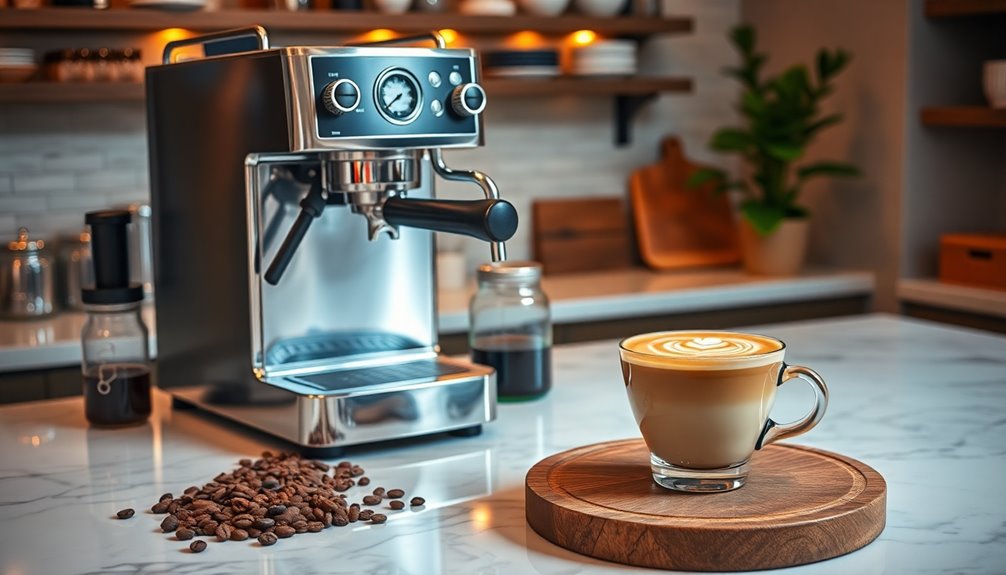
Here are our top 9 picks for the best home espresso machines in 2025:
The Top 9 Espresso Machines for Home (2025)
1. La Marzocco Linea Mini for $6,600: The Professional’s Dream at Home
For those who demand uncompromising quality and a taste of the professional cafe experience, the La Marzocco Linea Mini stands as a monumental achievement. While its price point might seem "eye-searing," as our reviewer Julian Chokkattu noted after two weeks of testing, the resulting espresso is nothing short of an "absolutely fantastic elixir." This home version of the iconic commercial machine offers unparalleled room for experimentation, allowing true connoisseurs to dial in every aspect of their shot. Its build quality is robust, designed for longevity, and its "killer cool-touch steam wand" froths milk to velvety perfection in mere seconds, making latte art an effortless pursuit. The exceptional customer service from La Marzocco further enhances the premium ownership experience, ensuring that even the most intricate adjustments are supported. This machine is an investment in a lifetime of extraordinary coffee.
2. Breville Oracle Dual Boiler for $3,000: Automated Excellence with Manual Control
The Breville Oracle Dual Boiler is a powerful and truly impressive machine that expertly bridges the gap between automation and manual control. This updated iteration of the beloved Breville Dual Boiler marries the intuitive touchscreen operation, automatic dosing, and precise tamping of the Oracle Jet with a welcome "manual" mode. This allows users to delve into advanced techniques like pre-infusion and bloom, all while monitoring a digital pressure gauge on the crisp touchscreen. We found this "future-retro design" approach brilliant, offering both convenience for daily use and deep control for refining your espresso. The dual-boiler system boasts incredibly fast heat-up times (around four minutes) and delivers the temperature stability and consistency expected from high-end machines, enabling simultaneous espresso brewing and milk steaming. While an early production model presented a very tight portafilter fit that required some muscle initially (loosening after about 30 shots), and light-roast beans occasionally led to under-filled portafilters, for medium to dark roasts, this Dual Boiler is an absolute beast, producing rich, full-bodied espresso with abundant crema.
3. Meraki Espresso Machine for $1,999: A Premium Newcomer with Innovative Features
Emerging from a successful Kickstarter campaign by a young Hong Kong-based company, the Meraki Espresso Machine has made a remarkable debut. This premium semiautomatic double-boiler machine is packed with features often found in machines costing hundreds more. It includes a Timemore grinder capable of grinding by weight with two-tenths of a gram precision, precise PID temperature control, easy pre-infusion, a quiet rotary pump, and a secondary scale under the brewer for output control. The powerful steam wand regulates froth temperature within about 3 degrees, perfect for any milk-based drink. Its luxurious tamper and tamping station, combined with "wondrous aesthetics and ease," made it a strong contender for our top picks. However, potential concerns include customer service for a newer, direct-to-consumer brand, and a "wackily complicated descaling procedure" that could make maintenance a chore. Despite these minor points, the Meraki offers an incredibly feature-rich package for its price.
4. Breville Dual Boiler for $1,600: The Enduring Workhorse
The previous-generation Breville Dual Boiler remains an "absolute tank" of an espresso machine. It’s sizable and weighty, commanding a presence on the counter, but it consistently produces "amazing espresso." While it requires a bit more time to heat up compared to newer thermoblock-style Brevilles, the advantage of a true dual boiler is significant: you can brew shot after shot, steam milk, and dispense hot water simultaneously without any waiting. This ensures a smooth workflow, especially for multiple drinks or entertaining. Given that the newer Oracle Dual Boiler is now on the market at a higher price, this classic model offers incredible value, often available for half the price, making it a fantastic choice for those prioritizing raw performance and durability over the latest technological advancements.
5. De’Longhi La Specialista Touch for $1,000: Intuitive Italian Flair
De’Longhi’s new La Specialista Touch, released this year, is more than just a touchscreen version of its analog counterparts; it offers a distinct set of trade-offs tailored for a specific user experience. As "handsome as the Opera," the Touch introduces a bean-assist function that allows you to save settings for different coffee beans, similar to De’Longhi’s Rivelia. It also features an improved steam wand with the ability to read milk temperature as you steam, enhancing consistency for milk-based beverages. Overall, it feels more intuitive to operate. However, it sacrifices some of the easy customization found in other models, lacking granular control over temperature, shot time, or ratios. The cold brew function, while present, isn’t as finely tuned as the Opera’s. Designed as an "Italian machine on training wheels," it excels with medium to dark roasts but can feel like a "black box" to advanced users due to the absence of a pressure bar or shot timer, limiting real-time feedback.
6. De’Longhi La Specialista Opera for $900: Analog Charm with Versatile Brews
The De’Longhi La Specialista Opera is a beautifully forgiving semiautomatic machine that consistently delivers excellent espresso, particularly with medium- to dark-roast beans. Utilizing non-pressurized portafilter baskets, it produces a delightfully nuanced and surprisingly subtle cup. What truly sets the Opera apart is its refreshing analog design, featuring a satisfying metal frame, tactile metal buttons, and a prominent pressure gauge that provides immediate feedback. It offers a good range of options, including dose and temperature control, without overcomplicating the experience. A notable perk is its robust cold brew function, which is particularly well-dialed, making it a strong contender for those who enjoy chilled coffee drinks or espresso martinis. While the built-in grinder is decent, its 15 settings might not offer enough sensitivity for optimal extraction from every roast. Minor drawbacks include a non-removable hopper and a tamping lever that could be sturdier. Nonetheless, the Opera gives comparable Breville models a strong run for their money.
7. Breville Barista Express Impress for $800: Smart Automation for Consistent Shots
The Breville Barista Express Impress is the more advanced sibling of the widely popular Breville Barista Express, designed to simplify the pursuit of consistently good espresso. This machine builds upon its predecessor by including more grind and dosing settings, and crucially, automating some of the trickier aspects of espresso preparation, such as getting precisely the right amount of beans ground and tamped per shot. This "Impress" feature is particularly beneficial for home baristas looking to reduce variability and achieve repeatable results without needing extensive manual skill. It streamlines the workflow, making the journey to a perfect shot more accessible and less prone to user error, solidifying its place as an excellent mid-range option.
8. Ninja Luxe Cafe Premier for $600: Feature-Packed All-in-One Value
Ninja’s foray into espresso machines has been nothing short of impressive, with the Luxe Cafe Premier emerging as a "corker" of a low-priced all-in-one device. This versatile machine offers not just espresso, but also cold brew and regular coffee, coupled with excellent milk frothing capabilities. It surprises with "unexpected luxury features" like a built-in scale that doses coffee by weight, a rarity at this price point. Depending on your perspective, the device can feel either "overstuffed or generous," but its sheer functionality delivers immense value. It nearly unseated the Breville Barista Express as our mid-tier top pick, only held back by a "few leaks" encountered during testing and sensible caution regarding its long-term durability, given it’s a newer product line. (Note: Ninja has since released an upgraded Luxe Cafe Pro version at $750, offering even more refinements).
9. De’Longhi Stilosa for $150: The Unbeatable Budget Champion
For years, the De’Longhi Stilosa has been our steadfast budget pick, often available on sale for less than $100. While it naturally foregoes high-end features like a pressure gauge or a built-in grinder and has a slightly "plasticky" feel, the Stilosa provides everything essential for making great espresso at home. It boasts a solid portafilter, a reliable steam pump, and an effective steaming wand. Its lightweight nature means you’ll need to brace it when mounting and dismounting the portafilter to prevent it from sliding. Crucially, after brewing countless cups, the Stilosa has consistently proven its durability, showing no signs of slowing down or breaking, a common pitfall for many inexpensive machines. With recent tips emerging on how to optimize it for even light-roast espresso, the Stilosa remains an outstanding entry-level option, proving that quality espresso doesn’t have to break the bank.
Also Tried (Honorable Mentions / Worth Considering)
Cuisinart EM-160 Slim for $250: This model from Cuisinart’s new espresso line is a treasure for kitchens with limited counter space, measuring less than 7 inches across. The espresso quality, produced via a pressurized portafilter, is smoother and less nuanced but incredibly forgiving for beginners trying to dial in their beans. It’s particularly well-suited for those who prefer milk-based espresso drinks. The "cold espresso" option, though a bit tannic and taking a couple of minutes to brew, mixes well with cold milk or ice. However, an external grinder is a must for optimal results; supermarket pre-ground beans will yield disappointing shots.
Cuisinart EM-640 Espresso Bar for $650: Cuisinart showed ambition with this semiautomatic machine, featuring a built-in grinder and a non-pressurized, bottomless portafilter, aiming to compete with top-tier devices like Breville’s. Unfortunately, our testing revealed significant inconsistencies in both dosing and grinding from the built-in grinder. The system for customizing the dose was largely guesswork, leading to botched shots and unpredictable spray from the portafilter. While the concept was promising, the execution fell short of delivering the ease and consistency expected from a semiautomatic machine in this category.
De’Longhi La Specialista Arte Evo for $675: This semiautomatic De’Longhi La Specialista Arte Evo, with its built-in burr grinder, makes good espresso straight out of the box and boasts a slimmer profile than many competitors. It does, however, come with a few quirks: a small plastic adapter is needed to attach the portafilter to the grinder spout, and a "stepstool" for your espresso cup is required to prevent splashing. While a capable machine, it didn’t quite reach the heights of its sibling, the Opera, which we would recommend for a superior overall experience.
Frequently Asked Questions
What Beans Are Best for Espresso?
First and foremost, there’s no such thing as "espresso beans" in a botanical sense; they are simply coffee beans ground appropriately for espresso extraction. Traditionally, espresso is made with darker-roast beans, which naturally highlight deep, chocolatey notes, synonymous with classic Italian espresso. Most machines are designed with these roasts in mind, as darker beans are generally easier to grind and extract consistently.
However, modern craft coffee culture has embraced medium and medium-dark roasts, offering more balance, character, and sometimes a pleasant acidity. Enthusiasts, including some of our testers, even experiment with light roasts, especially natural-processed beans, to extract unique flavors like strawberries. Be aware that lighter roasts require more precise adjustments to grind and temperature. The classic recommendations for a 25-30 second, 9-bar pressure, 2:1 ratio shot were all formulated for traditional dark roasts.
Regardless of roast level, fresh beans are paramount. Stale beans, exposed to oxygen, not only taste inferior but also make it technically challenging to pull a good shot, often leading to channeling and uneven extraction. Source fresh beans from local roasters or look for a roast date on the bag (ideally within 2-4 weeks of purchase). For convenience, consider one of WIRED’s recommended coffee subscriptions.
Espresso Accessories That Make for Great Cups
Investing in a quality espresso machine is only half the battle; the right accessories can significantly elevate your home barista experience.
-
An Espresso-Capable Grinder (e.g., Baratza Encore ESP for $200): If your machine doesn’t have an integrated grinder, a dedicated espresso grinder is non-negotiable. Pre-ground supermarket coffee is inadequate for espresso, leading to poor extraction and off-flavors. You need a grinder capable of producing a consistent, fine grind. The Baratza Encore ESP is an excellent choice, offering innovative fine-tuning for espresso, drip, and French press alike. It provides precise grinds with clarity of flavor and is built like a tank, representing exceptional value.
-
An Accurate Scale with a Timer (e.g., Cozy Blue Coffee Scale with Timer for $14): Most grinders and many espresso machines lack a truly precise scale, but accurate measurement is crucial for dialing in espresso ratios. While high-end options like the Acaia brew-by-weight scale ($400) exist, a more affordable scale accurate to a tenth of a gram with a built-in timer, like the Cozy Blue, will significantly help you control your dose and shot size.
-
The Best Knock Box (e.g., Breville Knock Box for $34): Once you’ve pulled your shot, you’ll need a clean and efficient way to dispose of the coffee puck. Our reviewer, Pete Cottell, highly recommends the Breville Knock Box. It’s sturdy, features a perfectly positioned crossbar for clean puck ejection, and its grippy base prevents it from sliding around on the counter. Its simplicity and effectiveness make it an indispensable tool.
-
A Quality Frothing Pitcher (e.g., Brewista Frothing Pitcher for $30): Ditch the flimsy aluminum pitcher that might have come with your machine. A good frothing pitcher, like the Brewista, makes a world of difference. It features thick walls for superior heat retention, a precision tip for expert latte art pours, and often includes a thermometer sticker on its side for a rough gauge of milk temperature, eliminating the need for a separate thermometer. This pitcher is designed to withstand daily use and help you achieve perfectly textured milk every time.
Choosing the right home espresso machine is a journey of personal preference, budget, and desired involvement. Whether you’re a hands-on enthusiast seeking ultimate control or a convenience-driven coffee lover, our curated selection for 2025 offers a pathway to exceptional espresso right in your kitchen. Invest wisely, choose fresh beans, and elevate your daily coffee ritual.