9 Best Chromebooks of 2025: All the Latest Models, Tested
The landscape of portable computing continues to evolve at a rapid pace, and 2025 marks a significant year for Chromebooks. With Google’s sustained investment in ChromeOS, bolstered by the "Chromebook Plus" initiative and deeper integration of AI capabilities, these lightweight, secure, and often budget-friendly laptops are more compelling than ever. Our extensive testing of the latest models reveals a class of Chromebooks that deliver robust performance, impressive battery life, and innovative features, making them ideal companions for students, remote workers, and casual users alike. Whether you prioritize versatility, raw power, gaming prowess, or sheer affordability, there’s a Chromebook in 2025 designed to meet your needs.
Our Top Chromebook Picks for 2025

Our rigorous testing has identified several standout models that define excellence in 2025, showcasing the diverse capabilities within the Chromebook Plus lineup and beyond.
Acer Chromebook Plus Spin 714 for $711
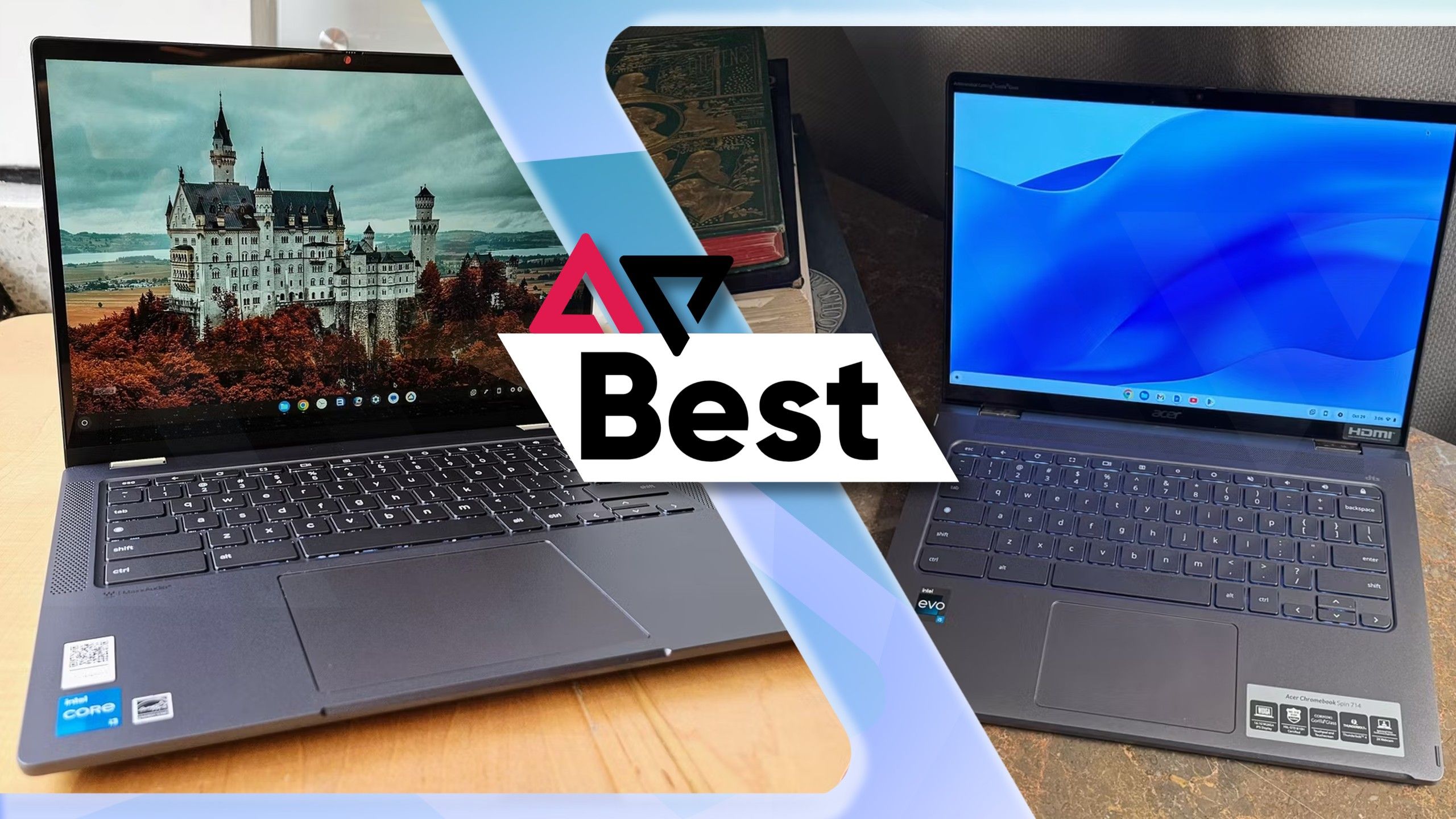
Acer’s Chromebook Spin series has consistently delivered strong performers, and the latest iteration, the Chromebook Plus Spin 714, upholds this esteemed reputation. Earning a solid 9/10 (WIRED Recommends), this 2-in-1 convertible is a testament to Acer’s ability to pack surprising power into a versatile form factor. At around $699 (often found for less on sale), it features an Intel Core Ultra 5 115 processor, which demonstrated remarkably breezy performance during our tests. The integrated AI processing capabilities of this chip are a perfect match for the growing suite of AI features Google is seamlessly integrating into ChromeOS, from enhanced video conferencing to intelligent document assistance. Its robust aluminum chassis, vibrant 14-inch 16:10 WUXGA (1920 x 1200) display, and comfortable backlit keyboard contribute to a premium user experience, despite its price point being slightly higher than some newer Chromebook Plus models. The ability to flip into tablet mode makes it exceptionally adaptable for both productivity and media consumption, though the stylus is often an optional extra. For users seeking a premium, future-proof Chromebook with strong performance and AI readiness, the Spin 714 remains a top contender.
Acer Chromebook Plus 516 GE for $550
Chromebooks are traditionally not associated with high-end gaming, but the rise of cloud gaming has transformed this perception. The Acer Chromebook Plus 516 GE stands out as the best in its class, specifically designed to leverage streaming services like Xbox Cloud Gaming and Nvidia GeForce Now. Rated 8/10 (WIRED Recommends), this machine isn’t just a basic laptop; it’s a cloud gaming hub. Equipped with an Intel Core 5 120U processor, 8GB of RAM, and a spacious 256GB SSD, it provides the horsepower needed for smooth streaming. Its defining feature is the 16-inch 2560×1600 (WQXGA) 120Hz display, which offers stunning visuals and fluid motion, crucial for an immersive gaming experience. While the Steam beta for Chromebooks still limits native gaming to lighter indie titles, the 516 GE truly shines when paired with cloud platforms, turning what was once a productivity device into a formidable portable gaming station. The RGB-backlit keyboard, tactile trackpad, and excellent audio further enhance its gaming credentials, making it an excellent choice for gamers on a budget who embrace the cloud.
Asus Chromebook CX34 for $399
Breaking away from the often monotonous design of many Chromebooks, the Asus Chromebook Plus CX34 injects a much-needed dose of style. Its gorgeous white, albeit plastic, shell felt remarkably durable during our rigorous testing. In a sea of bland, gray competitors, the CX34’s attractive design made us reach for it more often. Rated 7/10 (WIRED Recommends), it features hardware typical of a Chromebook Plus model, including an Intel Core i5 processor and 8GB of RAM. This configuration delivered responsive performance, even when handling over a dozen browser tabs and multiple applications simultaneously. However, it’s not without its drawbacks. The absence of a backlit keyboard is a notable omission, and its 14-inch 16:9 display feels somewhat cramped compared to the taller 16:10 screens found on many contemporary Chromebooks. Despite these minor shortcomings, the CX34 is a solid, reliable workhorse that stands out aesthetically, making it a great option for users who value design as much as performance, especially at its competitive $399 price point.
Acer Chromebook Plus 515 for $300
For users seeking snappy performance without breaking the bank, the Acer Chromebook Plus 515 is an exemplary choice. While it may not boast a flashy design, it excels by focusing on the fundamentals. Priced at an accessible $300, this Chromebook (8/10, WIRED Recommends) comes with an Intel Core i3-1215U processor, which effortlessly handles ChromeOS and up to 20 open tabs. Battery life is a strong suit, easily lasting a full workday and enduring 8.5 hours of continuous full-screen video playback in our tests. The 15-inch 1920 x 1080-pixel display, while not revolutionary, is crisp and comfortable for extended viewing, preventing eye strain. Its larger screen size is a significant advantage for productivity, providing ample workspace for documents and spreadsheets. The Acer Chromebook Plus 515 is a no-frills, high-value machine perfect for students or professionals who need reliable performance and longevity on a tight budget.
Acer Chromebook Plus 514 for $355
As the slightly more compact sibling to the 515, the Acer Chromebook Plus 514 (8/10, WIRED Recommends) delivers a similarly excellent experience for budget-conscious buyers. While it shares the functional rather than fashionable aesthetic of its larger counterpart, its performance is anything but basic. Powered by an Intel Core i3-N305 processor and 8GB of RAM, it breezes through most daily tasks with remarkable fluidity. Its 14-inch form factor makes it highly portable, perfect for carrying between classes or commuting. Crucially, the Chromebook Plus 514 can frequently be found on sale for less than its usual $399 price, enhancing its value proposition even further. It’s an ideal choice for users who need a responsive, reliable Chromebook for everyday tasks, especially those who prioritize portability without sacrificing performance.
Asus Chromebook CM14 for $169
When only the most basic, bare-bones Chromebook will suffice, the Asus Chromebook CM14 (7/10, WIRED Recommends) emerges as a strong contender in the extreme budget category. Typically available for under $200, this Chromebook makes strategic compromises to achieve its low price. It features a dull 14-inch 1366×768 display, a modest 64GB of storage, and 4GB of RAM – specifications that are anything but fancy. However, its MediaTek Kompanio 520 processor consistently delivered an impressive 10 to 11 hours of battery life during our testing, a remarkable feat for a laptop in this price bracket. While its performance is geared towards light web browsing, email, and basic document editing, its exceptional battery endurance makes it a perfect, long-lasting companion for children, casual users, or as a secondary device for quick tasks.
Lenovo Chromebook Duet 5 13 Inch for $400
Though a bit older, the Lenovo Chromebook Duet 5 remains a solid choice for those who appreciate the detachable form factor of the original Chromebook Duet but desire a larger display. Instead of an 11-inch screen, the Duet 5 offers an excellent 13-inch OLED panel, delivering vibrant colors and deep blacks that enhance any viewing experience. Powered by the Qualcomm Snapdragon 7c Gen 2 processor, it provides great battery life, making it a reliable portable companion. While its slightly older hardware means it won’t perform miracles with Google’s latest AI features, it remains a highly capable device for browsing, media consumption, and light productivity. Its included keyboard cover and kickstand add to its versatility, making it a fantastic tablet-first Chromebook. We highly recommend trying to snag this model on sale for under $300 to maximize its already strong value proposition.
Understanding Chromebooks in 2025: An Expanded FAQ
To help you make the most informed decision, here’s a deeper look into what makes Chromebooks tick in 2025.
What Specs Should You Look for in a Chromebook?
The price range for Chromebooks can vary wildly, from an ultra-budget $150 to a premium $800, and naturally, specifications reflect this diversity. Here’s a breakdown of what to prioritize:
-
Processor (CPU): For the optimal experience in 2025, it’s best to steer clear of older Chromebooks with Intel Celeron processors, as they often struggle with modern multitasking. The "Chromebook Plus" specifications provide an excellent baseline, guaranteeing snappy performance. We highly recommend opting for at least an Intel Core i3, Core i5, or an AMD Ryzen 3 7000 series processor. These chips offer a good balance of power and efficiency for everyday use, handling multiple tabs, Android apps, and even some Linux applications with ease. Be cautious about overspending on configurations with Intel Core i7 processors unless you genuinely require the extra horsepower for heavy multitasking, demanding Android games, extensive Linux app usage, or managing dozens of Chrome tabs simultaneously. While Intel and AMD dominate the market, you’ll occasionally find Chromebooks utilizing ARM processors, such as the Qualcomm Snapdragon 7c Gen 2. These can be perfectly adequate for very basic tasks like web browsing and email, but they won’t fare as well under sustained, intense workloads. Excitingly, a new generation of ARM chips is on the horizon, with examples like the MediaTek Kompanio Ultra 910 already powering models such as the Lenovo Chromebook Plus 14, promising improved performance and efficiency.
-
RAM (Random Access Memory): Always prioritize at least 8GB of RAM if your budget allows. Chromebooks with 4GB of RAM are generally found only in basic, super-budget models, and they severely limit your ability to multitask effectively, leading to slowdowns and frustrating reloads of tabs. For a smooth, responsive experience, 8GB of RAM is the standard you should aim for. If your budget is strictly under $300, finding 8GB might be challenging, but it’s worth seeking out.
-
Storage: Unlike traditional Mac or Windows PCs, a significant portion of your Chromebook work is designed to be stored in the cloud. This cloud-centric approach means you can typically manage with less local storage. However, we wouldn’t recommend going below 128GB to ensure sufficient space for downloaded files, Android apps, and system updates. If your budget permits, you’ll be significantly more comfortable with at least 256GB. For the best speed and responsiveness, look for models featuring an NVMe solid-state drive (SSD) on the specification sheet, as this offers much faster data access compared to eMMC storage.
-
Screen: The vast majority of Chromebook displays you’ll encounter will be IPS LCD panels, which are generally excellent. IPS LCDs offer a good balance of brightness, contrast, and color accuracy, suitable for most users. While OLED displays are finally beginning to appear on more premium Chromebooks, offering superior contrast and true blacks, IPS remains the common and highly capable standard. If you’re shopping in the extreme budget range, be wary of older TN LCD panels, as they typically offer lower quality visuals and significantly worse viewing angles. For resolution, a 1920 x 1080-pixel resolution (or 1200p for the increasingly popular 16:10 aspect ratio) should be your minimum standard. This resolution provides crisp visuals on 13- and 14-inch screens and is perfectly passable on 15-inch displays. Higher resolutions will undoubtedly look even better, but they are still relatively uncommon in the Chromebook market. A 16:10 aspect ratio is generally preferred for productivity, offering more vertical screen real estate.
-
Ports: USB-C ports have become ubiquitous on Chromebooks, so there’s no longer any justification for purchasing a model without them. Aim for a Chromebook that supports charging over USB-C, allowing you to conveniently recharge with a portable power bank while on the go. A microSD card slot can also be highly beneficial if you anticipate needing an easy way to expand your storage quickly. You’ll find that some higher-end Chromebooks support Thunderbolt 4 over their USB-C ports. While this is an excellent feature to have if you plan to connect your Chromebook to high-end external monitors or powerful docks, it isn’t strictly necessary for most users. For external monitor support, you can often achieve similar results (and spend considerably less) with a standard HDMI port or DisplayPort over USB-C support.
What is Chromebook Plus?
The "Chromebook Plus" designation represents a pivotal initiative launched by Google in late 2023, in collaboration with its hardware partners, to establish a new category of Chromebooks designed to offer a superior, more premium user experience. To earn the Chromebook Plus moniker, a laptop must meet or exceed a specific set of rigorous hardware requirements. These generally include a faster processor (e.g., Intel Core i3 12th Gen or AMD Ryzen 3 7000 series or better), at least 8GB of RAM, a minimum of 128GB of NVMe storage, and a Full HD (1080p) IPS display or better.
The result of these elevated standards is a new baseline that guarantees a certain level of performance and quality. With the surge in remote work and online learning, Google has particularly emphasized ensuring Chromebook Plus laptops deliver an exceptional video calling experience, featuring higher standards for webcams (often 1080p) and AI-powered camera enhancements like background blur and noise cancellation. Google is also progressively integrating advanced AI features into ChromeOS that significantly benefit from the added hardware capabilities of Chromebook Plus models. In a compelling offer, purchasing a new Chromebook Plus laptop currently grants you a free 12-month subscription to Google AI Pro, providing access to powerful AI tools like NotebookLM and Gemini, alongside a generous 2TB of cloud storage.
While regular Chromebooks haven’t disappeared and continue to cater to the super-budget segment (typically sub-$300), Chromebook Plus models generally start at $399 and can range up to $800, though they are frequently available at discounted prices. Expect non-Plus Chromebooks to remain focused on more basic computing needs.
How Long Do Chromebooks Get Updates?
In 2023, Google announced a transformative new policy that guarantees an impressive 10 years of automatic software updates for any Chromebooks released in 2021 or later. This commitment significantly extends the lifespan of these devices, far beyond the typical upgrade cycle for most users. This extended support ensures that secondhand Chromebooks and those heavily utilized in educational institutions will continue to remain secure, receive the latest features, and perform optimally for a prolonged period. When a Chromebook approaches its final automatic update, ChromeOS will proactively send you a notification, informing you that it’s nearing the end of its supported life.
The 10-year automatic update timer commences from the date a Chromebook model is first released, not when you purchase it. You can conveniently check your Chromebook’s specific final update date at any time within its settings menu: navigate to Settings > About ChromeOS > Additional details > Update schedule. Google also maintains a comprehensive and regularly updated list of automatic update timelines for every Chromebook model on its official support site.
What’s the Downside of a Chromebook?
Despite their numerous advantages, Chromebooks do have certain limitations that might make them unsuitable for specific users or tasks.
Firstly, there are significant restrictions on application installation. While you can download and organize files locally, you cannot install traditional desktop applications like you would on a MacBook or Windows laptop. Nearly everything you do must occur within the Chrome web browser. You can open countless Chrome windows and tabs, but if you need to download the full desktop version of Adobe Photoshop, Microsoft Word, or specialized engineering software, you’ll find yourself stuck. Proprietary school or work applications designed for Windows or macOS are also unlikely to function. Furthermore, while cloud gaming has found a home, you certainly can’t play demanding AAA Steam games natively (beyond the limited Steam beta for lighter indie titles). However, many users are often surprised by just how much of their daily work and entertainment can indeed be accomplished entirely within a browser window or web-based applications.
Android apps from the Google Play Store can, to some extent, bridge certain gaps. You can install Android games or utilize Android versions of various productivity apps. This can be helpful in a pinch, though it’s often observed that the web-based versions of these applications perform more seamlessly on Chromebooks if they are available. Google has also announced plans to further merge ChromeOS and Android on its laptops, so future improvements in this area are anticipated.
Another common downside of Chromebooks often relates to hardware compromises. Most Chromebooks, particularly in the budget and mid-range, are constructed primarily from plastic and utilize more cost-effective components. Like many budget laptops, areas such as touchpads and displays are frequently where manufacturers make compromises to keep prices low. While the Chromebook Plus initiative has brought about a noticeable improvement in overall build quality and component standards, it remains true that truly high-end, premium hardware (e.g., top-tier displays, haptic trackpads, all-metal chassis) is still less common on Chromebooks compared to their Windows or macOS counterparts.
Lastly, users may occasionally encounter compatibility issues with certain accessories. Standard peripherals such as external mice, keyboards, and USB-C hubs typically function without problems, and most modern printers are compatible. However, it’s the more niche or specialized peripherals designed for highly specific uses that often lack driver support or compatibility on ChromeOS. For instance, professional tools like USB colorimeters for display calibration, or certain advanced audio interfaces, might not be supported.
In 2025, Chromebooks are no longer just basic, cheap laptops. With the robust "Chromebook Plus" standard and Google’s relentless push for AI integration, they represent a mature, secure, and increasingly powerful computing option. From versatile 2-in-1s and cloud gaming powerhouses to stylish workhorses and ultra-affordable companions, the diverse range of models ensures that there’s a Chromebook perfectly suited for almost any user looking for a straightforward, efficient, and long-lasting digital experience.