
China launches spacecraft to bring 3 stranded astronauts back from space station sometime next year.
Beijing, China – In a critical mission underscoring the complexities and inherent risks of human spaceflight, China successfully launched its Shenzhou-22 spacecraft on Tuesday, November 25, 2025. The unmanned vessel’s primary objective is to serve as a crucial lifeline, ultimately ensuring the safe return of three Chinese astronauts who have been temporarily left without a guaranteed return vehicle at the Tiangong space station. This rescue mission, projected to culminate in the astronauts’ return sometime in 2026, highlights China’s rapid advancements in space technology alongside the ever-present need for robust contingency planning in its ambitious space program.
The Shenzhou-22, propelled by a Long March-2F Y22 carrier rocket, majestically blasted off from the Jiuquan Satellite Launch Center in northwest China, marking a significant step in resolving a precarious situation. The launch, meticulously executed by the China Manned Space Agency (CMSA), was monitored globally, with space enthusiasts and experts keenly observing the proceedings. This mission is not merely a routine supply or crew rotation but a dedicated effort to mitigate an unforeseen emergency, demonstrating China’s commitment to astronaut safety and its growing capabilities in independent space operations.
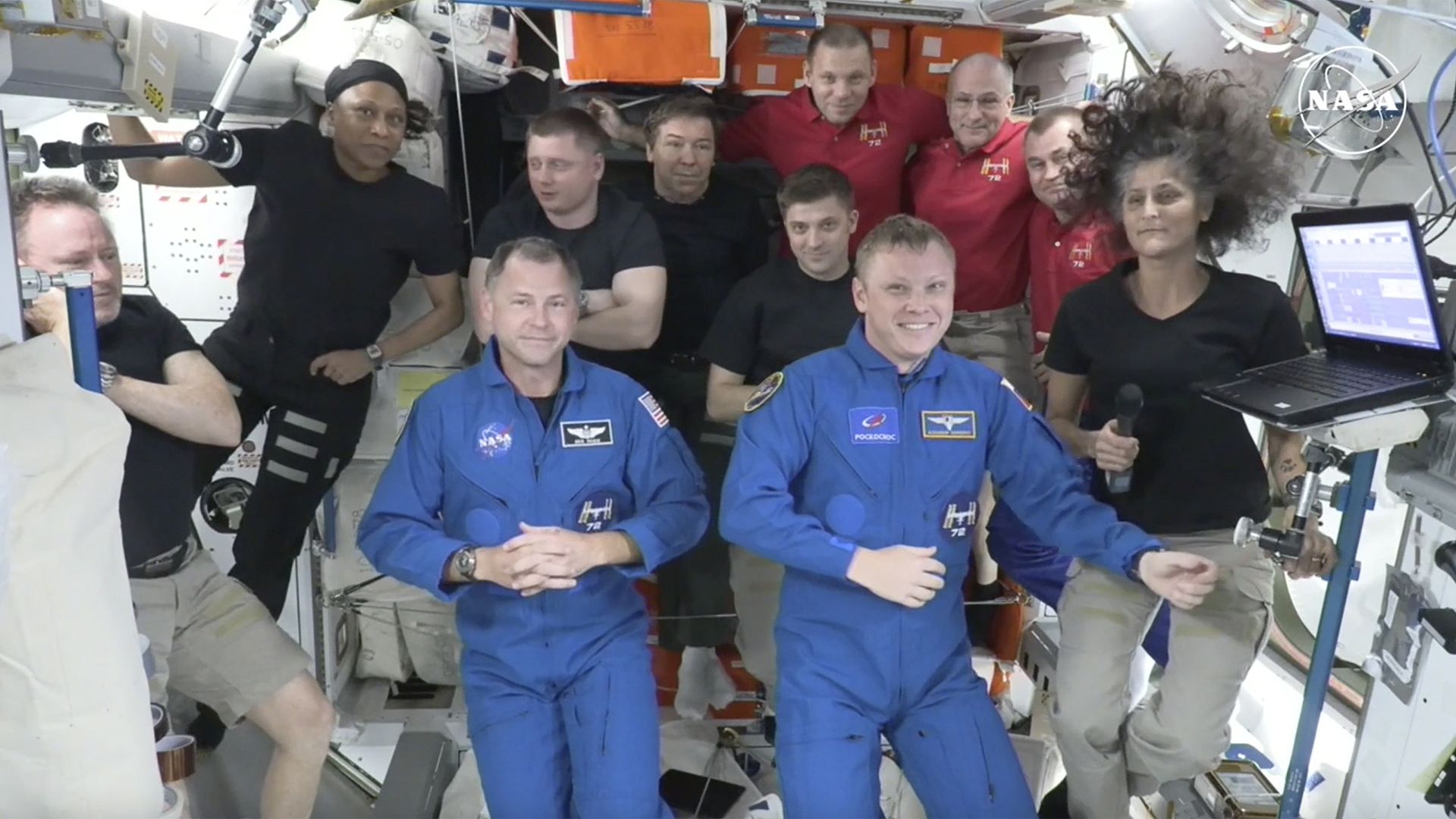
The three astronauts, whose names have not been publicly disclosed at this stage but are part of the current Tiangong crew, docked with the orbiting laboratory on November 1, 2025, embarking on a standard six-month mission. Their presence on the Tiangong station, affectionately known as the "Heavenly Palace," was meant to continue the ongoing scientific experiments, maintenance, and expansion work critical to China’s long-term space ambitions. However, their routine mission took an unexpected turn due to a severe technical issue with their designated return vehicle, the Shenzhou-20 spacecraft.
Earlier this month, the Shenzhou-20 spacecraft, which had transported the current crew to Tiangong, suffered significant damage, rendering it unsafe for atmospheric re-entry and subsequent landing. According to official reports from state broadcaster CCTV, the damage, specifically to one of its critical windows, led to an exhaustive safety assessment by Chinese space engineers. The program administrators determined that the spacecraft no longer met the stringent safety standards required for transporting astronauts back to Earth. This decision, while necessary, effectively left the three taikonauts without a viable primary escape craft, a situation that is rare but not unprecedented in the history of human spaceflight.
The incident involving Shenzhou-20 follows a closely related event that occurred just weeks prior. Another group of Chinese astronauts, who were part of the Shenzhou-20 mission’s preceding crew, faced a nine-day delay in their return to Earth due to similar, though perhaps less severe, issues with their craft. They eventually made a safe return using the Shenzhou-21 spacecraft. Crucially, the Shenzhou-21 was the very vessel that had just delivered the replacement crew (the three currently stranded astronauts) to Tiangong. While this maneuver allowed the previous crew to return safely, it inadvertently created the current predicament: the Shenzhou-21, having served its purpose, departed, leaving the newly arrived crew without a dedicated "lifeboat" or return capsule for emergencies or the end of their mission. This chain of events underscored the critical importance of having a redundant return capability for every crew on orbit. The damaged Shenzhou-20 spacecraft remains in space for now and will eventually be deorbited and assessed further by ground teams to understand the full extent of the damage and prevent future occurrences.
The concept of a "lifeboat" spacecraft is a fundamental safety protocol for any long-duration human mission, especially those involving space stations. Just as the International Space Station (ISS) always maintains at least one Soyuz or Crew Dragon capsule docked for emergency evacuation or planned return, Tiangong is designed to operate with a dedicated return vehicle. The temporary absence of such a vehicle for the current crew represented a significant safety gap, one that the Shenzhou-22 mission is now rectifying. While the astronauts are not in immediate danger, the psychological assurance and practical safety of having a fully operational return craft are paramount.
China’s space program, managed by its military, has seen an astonishing acceleration in recent decades. The construction of the Tiangong space station itself is a testament to this rapid progress. Launched in modules starting in 2021, Tiangong represents China’s independent foray into permanent human presence in low Earth orbit. Its modular design allows for expansion and customization, with taikonauts frequently conducting spacewalks to assemble and maintain its various components. The station hosts scientific experiments ranging from space medicine to material science, contributing significantly to China’s scientific and technological prowess.
The genesis of Tiangong is rooted in geopolitical realities. China was deliberately excluded from participation in the International Space Station program due to U.S. national security concerns, primarily stemming from the military control of China’s space activities. This exclusion spurred Beijing to develop its own independent capabilities, leading to the creation of Tiangong. Although smaller than the ISS, which has been continuously occupied for 25 years, Tiangong is a fully functional and continuously crewed orbiting laboratory, symbolizing China’s growing self-reliance and ambition in space.
This incident, while challenging, also serves as a crucial learning experience for China’s burgeoning space program. It highlights the inherent risks of operating in the harsh environment of space and the absolute necessity of rigorous pre-flight checks, in-orbit monitoring, and robust contingency planning. The decision to launch Shenzhou-22 as a dedicated rescue/return craft, even if the actual return is planned for next year, demonstrates a proactive approach to astronaut safety. It underscores the global consensus in space exploration that human life takes absolute precedence over mission schedules or financial considerations.
Looking ahead, China’s space ambitions extend far beyond low Earth orbit. The nation has outlined plans for lunar exploration, including potential crewed missions to the Moon and the establishment of a lunar research station. Missions to Mars are also on the horizon, following the successful Tianwen-1 orbiter and Zhurong rover. Such ambitious endeavors necessitate even more sophisticated safety protocols and redundancy measures, as the distances and mission durations increase exponentially. The lessons learned from the Shenzhou-20 incident and the Shenzhou-22 rescue mission will undoubtedly inform the design and execution of these future deep-space explorations, further refining China’s operational capabilities and risk management strategies.
The successful launch of Shenzhou-22 brings a wave of relief, not only to the families of the astronauts but also to the global space community. It reaffirms the universal commitment to astronaut safety and the ingenuity required to overcome the formidable challenges of space travel. While the return of the three taikonauts is still many months away, the arrival of their designated return vehicle at Tiangong will provide the crucial assurance needed for them to continue their mission with peace of mind, knowing that a safe passage home awaits them in 2026. This mission marks another significant chapter in China’s rapidly evolving and increasingly influential role in the exploration of the cosmos.