
Kara Swisher Would Rather Work for Sam Altman Than Mark Zuckerberg
Kara Swisher, a formidable presence in the tech journalism landscape, a true multi-hyphenate known for her roles as a podcast host, journalist, author, and an unyielding "CEO agitator," recently offered a candid glimpse into her unfiltered opinions on the titans of Silicon Valley. Speaking at a live event and during an episode of The Big Interview, Swisher reaffirmed her reputation for cutting through corporate jargon and PR spin, embracing her "IDGAF" (I Don’t Give A F***) personal brand. Deeply sourced and unafraid to pose the most challenging questions, she famously quipped, "I have four kids!" when asked about her indifference to being liked. Her dedication to journalistic integrity over popularity is a cornerstone of her illustrious career.
As the host of On With Kara Swisher, her twice-weekly podcast for Vox Media, Swisher consistently puts leaders from technology and politics under the microscope, often extracting insights and confessions they might never divulge elsewhere. Similarly, on Pivot, her Vox show co-hosted with New York University marketing professor Scott Galloway, she maintains a lively banter while never shying away from expressing her own, often provocative, opinions. Her recent interview delved into critical topics such as the burgeoning field of Artificial Intelligence, the intricate and often fraught relationship between Silicon Valley and former President Donald Trump, and, perhaps most tellingly, her least favorite tech CEO.
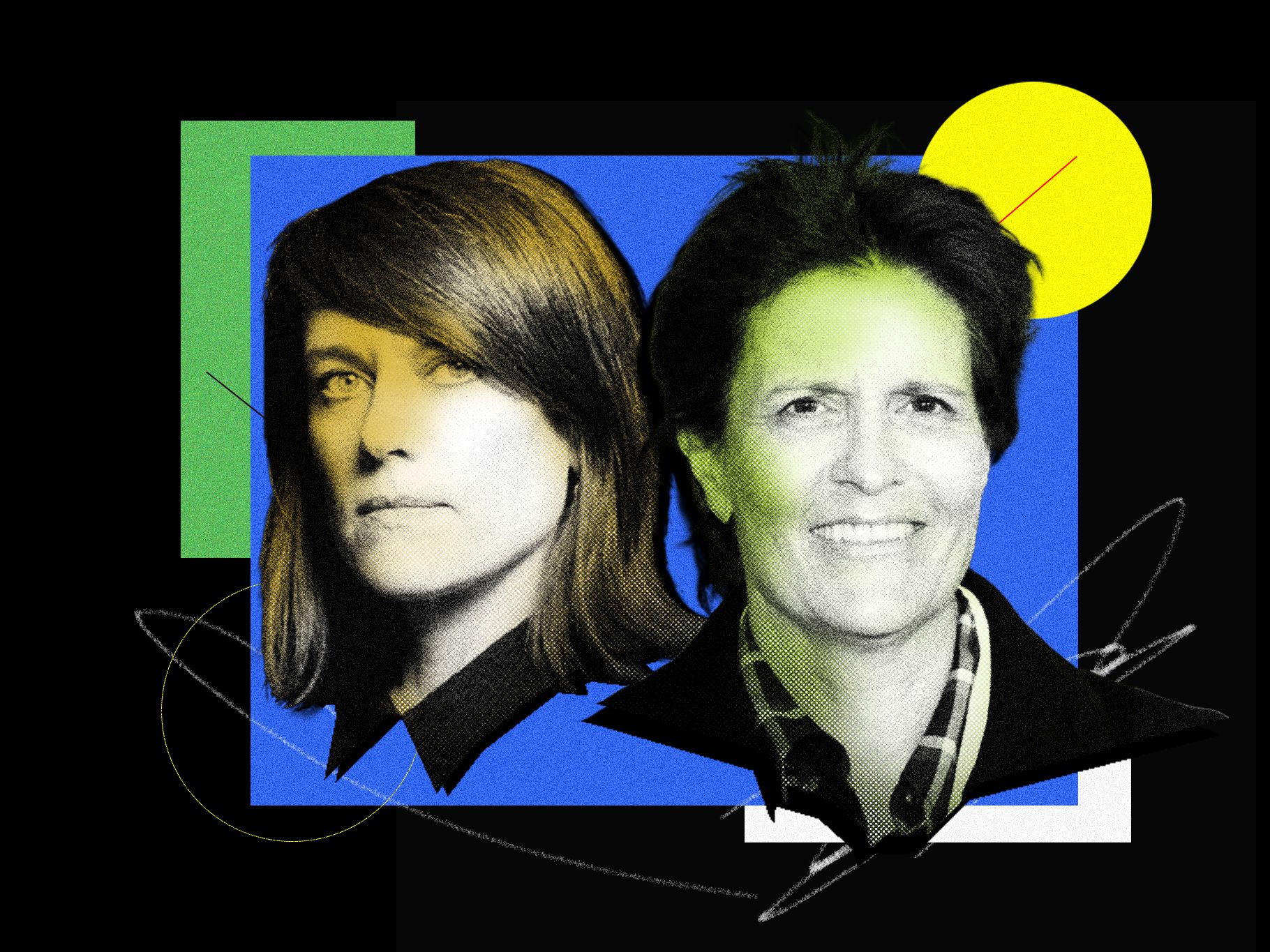
During a rapid-fire segment designed to elicit quick, unvarnished responses, Swisher wasted no time in revealing her preferences and pet peeves. When asked about her most active text thread, she immediately cited her children. Given a choice between podcasts and Substacks, she unequivocally chose podcasts, a natural preference for someone who has built a significant part of her empire in the audio medium. However, it was her response to "The tech exec you would least want to get stuck in an elevator with" that drew particular attention: "Oh my God. All of them. Um, Mark Zuckerberg." This blunt assessment set the tone for her broader critique of tech leadership.
Further quick-fire questions illuminated her perspective: she considers social media, not AI, to be more disruptive; prefers still water over sparkling; and believes the biggest lie Silicon Valley perpetuates is "that it cares about people." When pressed on who would portray her in a biopic – a project inspired by her book Burn Book that has reportedly been optioned – she suggested Kristen Stewart or Jenna Ortega, noting the need for a "believable lesbian" with a "sassy" demeanor, humorously adding that finding someone "tiny" like her could be a challenge, though acting prowess should overcome height discrepancies. She also cited the iconic Gates-Jobs interview she conducted with Walt Mossberg as the most transformative interview of her career, an exchange she believes will "last the test of time."
Delving into her experiences as a woman and a gay woman in a historically male-dominated field, Swisher offered insights that challenge conventional wisdom. She contended that her identity as a gay woman has, surprisingly, not hindered her career, and in some ways, has been a "net positive." She speculated that straight men in the industry, largely the subjects of her reporting, might feel "more comfortable" with her. She recounted an anecdote where VCs, discussing women objectively, were met with her retort: "Still a feminist. I don’t talk about women objectively like that." While acknowledging the "manospheres" that tech companies have historically created, she asserted that this dynamic never "kept me out."
Swisher candidly addressed the frequent characterization of her as "unlikable," attributing it to a societal tendency to label strong-willed women in a way that strong-willed men are not. Her response, characteristic of her brand, was simply, "Yes, exactly. I don’t care." She maintained that her indifference to being liked is "genetically" ingrained, perhaps linked to her lesbian identity, freeing her from needing "the favor of men." She argued that her directness is not "unlikable" but "honest," and despite the occasional sensitivity of some tech leaders, she has consistently secured "more than my fair share of great interviews."
Offering advice to ambitious women in male-centric spaces, Swisher’s counsel was direct: "Just ignore it." She described her strategy of meeting sexist comments with "insulting jokes," such as "Did you lose weight? Oh, no, I guess not," when men embark on "negging" behavior. She shared a powerful anecdote about her then 12- or 13-year-old son confronting someone who asked if his mother ever smiled, demonstrating how she has instilled her values in her children. Her ultimate dismissal of such juvenile comments is born from a lifetime of experience: "They’re so f***ing juvenile. I have enough toddlers in my life that I don’t need more."
This segued naturally into her assessment of leadership in the tech industry, which she describes as being populated by "toddlers." Having covered and interviewed these figures for decades, she reflected on who has genuinely embraced their societal responsibility and who has fallen short. Mark Cuban emerged as a surprising positive example. Despite his early reputation as an "arrogant little prick," Swisher noted his significant development into a "really interesting, complex person" who always thinks deeply about his positions, likely influenced by fatherhood. Evan Spiegel of Snapchat, initially hostile to the press, has similarly matured into a "really thoughtful person." Airbnb CEO Brian Chesky also earned her praise for his honesty and effort to be a "better man."
Conversely, Mark Zuckerberg topped her list of those failing to evolve, remaining "at the top of the list" for not trying to be a better person, viewing himself as a "particularly victimized person" who desires to "put on his MMA mitts and go for it." Elon Musk, while distinct, is seen as "plagued by other issues," leading to a "sad" trajectory he largely brings upon himself. Tim Cook’s recent behavior at Apple also raised concerns, prompting Swisher to question if this is how he truly wants his legacy to conclude.
Swisher provided a sharp critique of the "cozy dynamic" between tech leaders and politicians, particularly the "overt demonstration of fealty" witnessed during the Trump administration. While acknowledging that "currying favor" is a historical business practice, she differentiated Trump’s demand for "explicit, performative fealty." She disagreed with the notion that this is simply the "cost of doing business," arguing that these immensely wealthy individuals don’t have to comply, but choose to prioritize shareholder value above societal duty. She suggested that some, like Zuckerberg, actively enjoy exercising power in this way, seeing it as an opportunity to shed perceived constraints. She cited Sergey Brin’s shift towards "Trumpy" views, influenced by his girlfriend, as another example of this phenomenon. Swisher described a chilling encounter where a tech figure gloated about "winning," to which she responded, "Hmm, you did. But you’re still an asshole."
She views this behavior as "shortsighted," predicting negative long-term consequences, especially with a change in administration. She famously joked that if Kamala Harris were to win, Mark Zuckerberg would instantly adopt "they/them" pronouns and profess his love for kombucha and Taylor Swift. The "silence of the workforce" within these companies, she noted, stems from fear, citing Amazon’s firing of an employee protesting for Palestine as evidence that the tech giants’ "free-speech warrior" rhetoric was merely "performative bullshit."
Despite these criticisms, Swisher retains hope for a new generation of tech leaders. She sees a generational shift exemplified by her own son, a mechanical engineering student at Michigan, who, despite being a "capitalist," is driven by a desire to "make things" that foster community and help people, without the "power thing" mindset of current leaders. She praised the idealism of younger students, contrasting it with the "bullshit" lies of early internet founders like Zuckerberg, who claimed to want to "bring the world together" but never delivered. She believes this new generation is "not telling themselves lies," offering a glimmer of optimism amidst the industry’s current challenges. Her older sons have already abandoned social media because "it makes me feel bad," a simple yet profound reason.
Addressing common criticisms leveled against her on social media—that she was too "bullish" on the industry before turning critical—Swisher largely dismissed them. She attributed much of this sentiment to Elon Musk, admitting she "did have great hopes for Elon" given his work on cars and climate, contrasting him with others working on "stupid things." She vehemently denied ever being "nice" to Zuckerberg, challenging critics to find such articles and pointing to her consistent questioning of privacy issues. While she admired Steve Jobs, she maintained that her interviews with him were challenging, not slavish. She defended her "heel turn" when problems became apparent, criticizing the "exhausting purity tests" of some liberals who refuse to accept "imperfect allies."
On the topic of Artificial Intelligence, Swisher highlighted the "outrageous and outlandish" talent wars currently gripping the industry. When asked who she’d rather work for between Sam Altman and Mark Zuckerberg for a hundred-million-dollar offer, her answer was unequivocal: "Altman." She differentiated them by noting Altman’s "touches of normalness" and his better understanding of his own problems, a stark contrast to Zuckerberg, who she believes "has no idea about his problems" and "doesn’t look backwards for one second." She drew parallels between current AI investment deals and the "round-tripping" or "circle jerk" financial schemes of the early internet era, warning that while some will become "very wealthy," many will "lose."
Swisher views AI as a "general-purpose technology" with massive, cross-sector implications. She emphasized the overlooked importance of "robotics plus AI," particularly "real robots" (not necessarily humanoid) powered by AI, which will profoundly change various fields. While hesitant to bet on a single winner, she sees OpenAI as potentially a "Google" rather than a "Netscape," noting its innovation. She also acknowledged Google’s inherent advantages and Microsoft’s role, while dismissing Amazon and predicting Apple will "ride on everybody’s rails." Meta, she believes, is simply "throwing money at it," with advertising being Zuckerberg’s most likely dominant area.
Transitioning to the state of journalism, Swisher reflected on the balance between "access" journalism and accountability reporting. From her own experience at The Wall Street Journal and The Washington Post, she found "access" to be "icky" and not particularly valuable. She described how at All Things D, she "kind of perfected" getting information not from direct access but from "leaky" insiders and memos, fundamentally shifting the power dynamic. She recalled Zuckerberg ceasing interviews after she cornered him on his stance on Holocaust deniers, realizing she could extract uncomfortable truths. This led tech executives to retreat into their "own media" and conferences. She lamented the current trend where companies often don’t even respond to fact-checking inquiries, calling it a "really bad development."
Despite her long and successful career, a recent New York Times article quoting her as being at "the end of this long career" caught attention. Swisher clarified that her career has simply been "doing really well," driven by an entrepreneurial spirit. While she believes "older people should get outta the f***ing way for young people," she plans to retire at 70, envisioning writing historical novels or gardening. She openly discussed her earnings, including a $25 million split with Scott Galloway from their previous Vox deal, emphasizing that "we lose power when we don’t say how much money we make," especially women. She proudly stated that her lucrative products also benefit Vox as a business.
Swisher also revealed her ongoing, albeit unreciprocated, plan to acquire The Washington Post from Jeff Bezos. She has engaged an investment banker, but Bezos, who she believes has "run this thing into the f***ing wall" and is too rich to care, has not engaged. She has an idea to make the paper "break even" through "creator networks" and a joint framework for journalism across the country, aiming to restore "journalistic trust." While she wouldn’t be CEO (suggesting someone like Vox Media CEO Jim Bankoff), she envisions herself as chairman or editorial director, driven by a desire to "employ people and create really good truthful reporting," rather than for personal profit. She expressed concern over billionaires like the Ellisons acquiring news outlets like CBS News, fearing they "aren’t interested in news" but rather other assets.
Concluding with a game of "Control, Alt, Delete" (a tech-nerd version of "Fuck, Marry, Kill"), Swisher articulated her ultimate vision. She would "delete" social media, "alter" AI by implementing safety guidelines and government regulations (believing in its potential but advocating for control), and "control" government itself. Her aim for government would be a renaissance, reforming it to be more democratic, removing money from politics, and expanding the Supreme Court. She underscored the government’s critical role, recalling its invention of the internet, and expressed deep worry about "wealthy people in general controlling all of our fates," comparing the current era to the Gilded Age, but with tech oligarchs wielding far greater power across every sector. Her parting words served as a stark warning: these powerful individuals, "especially when they have proven themselves to be selfish pricks most of the time," do not have society’s best interests at heart, and such unchecked power "will not end well."