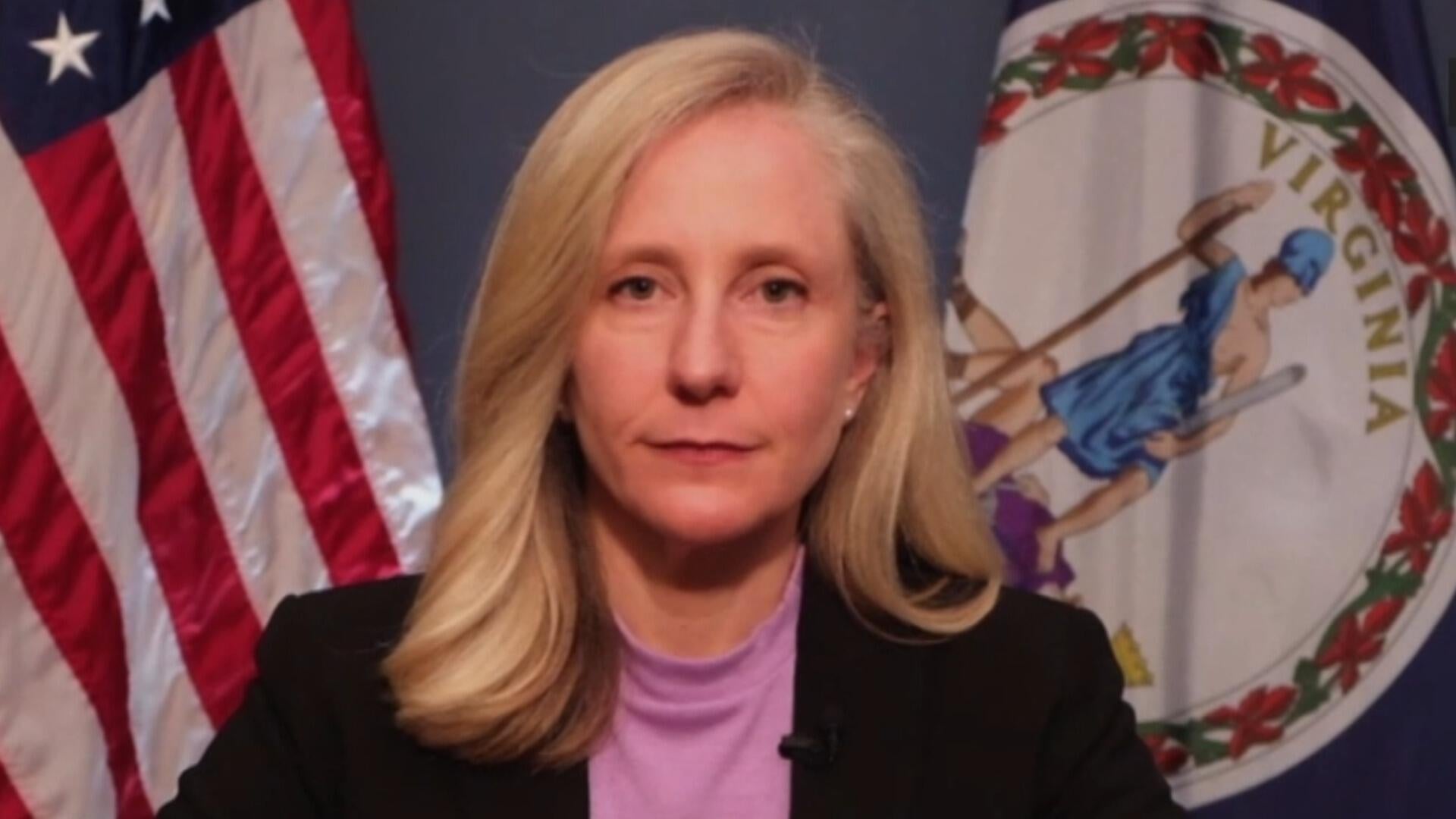
Transcript: Virginia Gov.-elect Abigail Spanberger on "Face the Nation with Margaret Brennan," Nov. 9, 2025
On Sunday, November 9, 2025, Virginia Governor-elect Abigail Spanberger, a Democrat, appeared on CBS News’ "Face the Nation with Margaret Brennan," offering her first major interview since her historic victory, which saw her become the Commonwealth’s first female governor. Speaking from Glen Allen, just outside Richmond, Spanberger delved into a range of pressing issues, from the ongoing federal government shutdown and its severe impact on Virginians to the complexities of the state’s energy future amidst the artificial intelligence boom, and the internal dynamics shaping the Democratic Party.
The interview opened with the immediate crisis gripping the nation: a federal government shutdown. Margaret Brennan highlighted Virginia’s unique vulnerability, boasting one of the highest concentrations of federal workers in the country, many of whom were currently unpaid. Brennan pressed Spanberger on whether her recent electoral success, alongside a Democratic win in New Jersey, should be interpreted by congressional Democrats as a mandate to maintain a hard line in funding negotiations, potentially prolonging the shutdown. Spanberger unequivocally rejected this notion. "Absolutely not," she declared, emphasizing that her victory was rooted in a campaign addressing "concerns related to costs and chaos."
Spanberger articulated a clear message for Washington: the government must reopen immediately. Her campaign, spanning two years, had consistently focused on the economic burdens faced by Virginians—rising costs in healthcare, housing, and energy—and the disruptive "chaos coming out of Washington." She cited the lingering effects of "DOGE efforts" (likely referring to prolonged, perhaps politicized, government operations or specific legislative initiatives that created instability), chaotic trade policies, and now, the government shutdown, as direct impacts on her constituents. "Virginians need to and Virginians want to see the government reopen," Spanberger asserted, expressing her expectation that Congress, the Senate, and the President would work towards that goal.
Brennan pushed further, asking if congressional Democrats should prioritize reopening the government before tackling other issues like healthcare. Spanberger’s response was firm: "The government needs to open and it needs to open immediately." She called for presidential leadership to facilitate negotiations, stressing that her primary concern was the "devastation" affecting over 300,000 Virginians who are federal employees. She also highlighted the plight of government contractors, who, unlike federal workers, would "never get made whole," and the broader impact on Virginia’s economy. The urgency, she underscored, was paramount, with the shutdown having persisted for "weeks too long."
The conversation then pivoted to the intersection of the shutdown and healthcare. Brennan brought up the 825,000 enrollees in the SNAP program in Virginia, currently in limbo, and the "immediate pain" they were experiencing. She asked Spanberger to weigh this acute suffering against the "potential of health care premiums." Spanberger acknowledged the severity, stating, "And it’s been going on now for weeks, weeks too long the government needs to reopen because in addition to the pain that we are already seeing." She then linked this to another critical issue: the potential catastrophic impacts of a proposed federal healthcare bill, sarcastically dubbed the "One Big, Beautiful Bill." Spanberger warned that its passage would strip $26 billion from Virginia’s healthcare system, potentially leading to the closure of at least six rural hospitals—three rural clinics had already announced their closure—and cause hundreds of thousands to lose Medicaid coverage. "The impacts on health care are already catastrophic. We cannot compound that pain by keeping the government closed," she passionately argued, calling for bipartisan action to open the government, noting that "eight Democrats could cross the aisle and do so."
Following a commercial break, the discussion shifted to Virginia’s economic landscape and the burgeoning artificial intelligence sector. Virginia hosts the world’s largest concentration of data centers, a direct consequence of the AI boom. Brennan pointed out that power bills in the state had risen by nearly 7% over the past year and inquired whether this was driven by the increased demand from AI data centers and how Spanberger planned to mitigate these rising energy costs. Spanberger clarified that current research indicated the recent cost increases were not primarily due to data centers but rather "bad energy policies in some of our neighboring states," particularly impacting southwest Virginia.
However, she painted a stark picture of the future: "we have to be clear eyed about the fact that we will have an energy crisis headed into the future." As governor, Spanberger vowed to address this proactively. She emphasized the importance of transparency and fairness in energy pricing, stating that "large scale energy users, particularly data centers, that the public, know that they are paying their fair share for the energy that they are using." Her proposed solutions included significantly increasing domestic energy production to meet the growing demand from both large-scale users and communities. This challenge, she noted, was "pervasive across our communities and particularly acute in southwest Virginia," leading her to prioritize an affordability plan focused on energy early in her administration.
The interview then took a sharp turn towards federal government overreach, specifically targeting universities. Brennan referenced Cornell University’s recent $60 million deal with the Trump administration to restore federal funding, noting it was the fifth such agreement since the administration began its pressure campaign on higher education institutions. Drawing a parallel to Spanberger’s alma mater, the University of Virginia (UVA), which also made concessions, including the removal of its president, Brennan reminded Spanberger of her past condemnation of such actions as "extortion." She then asked if, as governor, Spanberger would be compelled to "play ball" with the Department of Education and Justice Department to secure vital federal funding.
Spanberger expressed outrage at the situation, stating, "It should shock everyone that universities, public and private, are receiving demands from the federal government and that dollars, research dollars, are being withheld, that our universities are under attack." She recounted the forced departure of a "popular, experienced, excellent president" at UVA, lamenting that the then-current governor had failed to "step up in defense of our university." She unequivocally condemned the federal government’s practice of withholding appropriated research dollars to compel specific actions from universities as "absolute federal government overreach." As governor, Spanberger pledged to be "clear eyed about ensuring that we have structures in place, including boards of visitors across our universities that want to defend academic freedom and frankly, the viability and vitality of extraordinary institutions like the University of Virginia."
Finally, Brennan probed Spanberger on the internal ideological struggles within the Democratic Party. She recalled Spanberger’s 2020 post-election advice for Democrats to "not ever use the word socialist or socialism ever again." Brennan juxtaposed this with a recent Democratic socialist victory in New York City, asking if such wins created a "branding problem" for the party by rewarding "progressive policies." Spanberger acknowledged the "big tent party" nature of Democrats but firmly rooted her success in Virginia in a different approach. "I’m excited about what we did here in Virginia on Tuesday," she began, reiterating her campaign’s focus on "addressing, wanting to address the issues of costs and stopping the chaos." She proudly declared, "I’m a capitalist, I’m a Democrat, and I won by 15 points in Virginia."
Spanberger drew parallels to Mikie Sherrill’s similar victory in New Jersey, now the governor-elect there, suggesting a shared successful strategy. She concluded by emphasizing that the "mandate for real governance here in the Commonwealth of Virginia" was based on her practical, results-oriented platform. "It was based on what I campaigned on, the efforts to really address the challenges that people are facing in a day to day basis," she stated. She vowed to deliver on lowering costs, strengthening schools, keeping communities safe, and providing steady leadership, especially in contrast to the "chaos coming out of Washington." For Spanberger, this was not only "a winning message, but the winning path towards governance."
Margaret Brennan concluded the interview by congratulating Governor-elect Abigail Spanberger, acknowledging her historic achievement as the first female governor of Virginia, and signaling a new chapter for the Commonwealth under her leadership. Spanberger’s interview painted a picture of a pragmatic Democrat focused on tangible results, ready to confront both state-specific challenges and federal gridlock with a clear vision for her constituents.