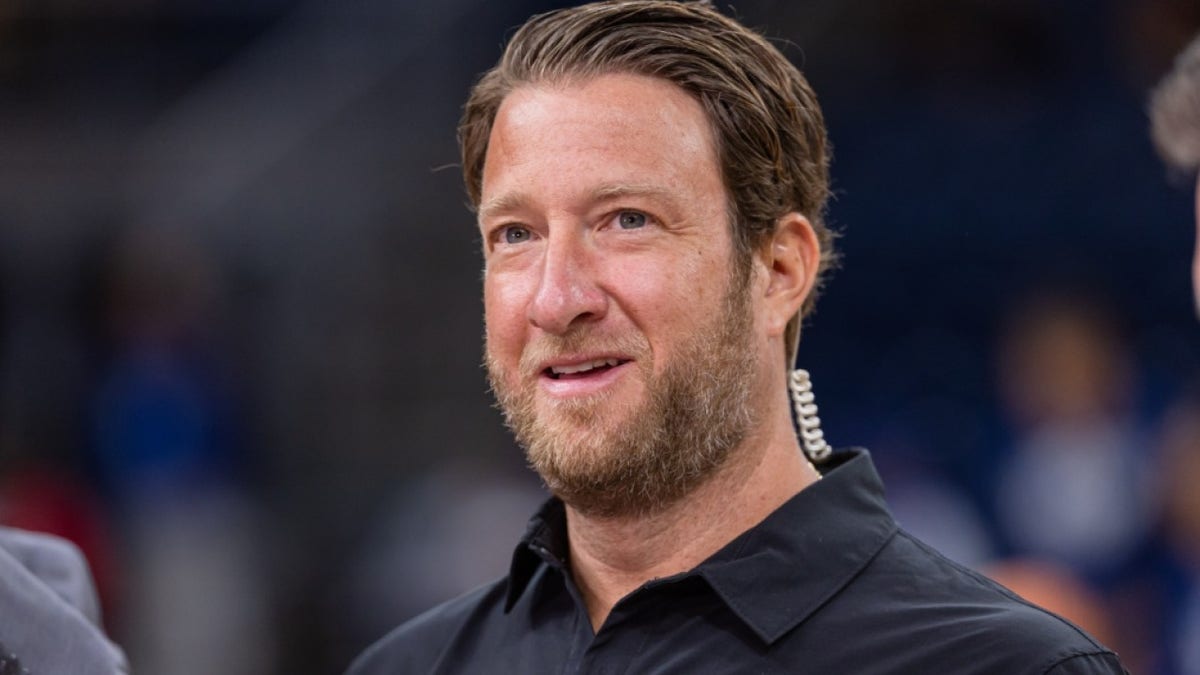
Dave Portnoy says there’s been a "definitive shift" toward antisemitism: "People are coming up with real hate"
Dave Portnoy, the outspoken President of Barstool Sports, has issued a stark warning about a "definitive shift" towards antisemitism, revealing that he now experiences hateful comments daily – a disturbing escalation from the occasional remarks he once encountered. Portnoy shared his concerns in an upcoming interview with "CBS Sunday Morning," scheduled to air on November 16, 2025, emphasizing the gravity of the situation and his personal commitment to speaking out against this alarming trend. His candid remarks underscore a growing unease within the Jewish community and among public figures regarding the increasingly overt and aggressive nature of antisemitic expressions.
Known for his unfiltered opinions and massive online following, Portnoy’s platform at Barstool Sports has made him a prominent voice across various cultural landscapes. While often associated with sports commentary, lifestyle content, and his popular "One Bite" pizza reviews, his recent foray into discussing the rise of antisemitism highlights the pervasive nature of this hate, reaching even into seemingly innocuous public interactions. This shift from his usual comedic and sports-focused persona to addressing a deeply serious societal issue lends significant weight to his observations, drawing attention to a problem that many fear is becoming normalized.
During his conversation with veteran journalist Tony Dokoupil for "CBS Sunday Morning," Portnoy articulated the qualitative change he has witnessed. "It’s every day now. Like, there’s a definitive shift in what’s going on," Portnoy told Dokoupil, contrasting it sharply with a past where such comments were isolated incidents. This isn’t merely an increase in frequency; Portnoy suggests a fundamental change in the boldness and intensity of the hate he receives. What was once relegated to the anonymous corners of the internet or whispered in isolated instances, he implies, has now spilled into public spaces, becoming a more direct and aggressive form of harassment.
The urgency of Portnoy’s message was tragically underscored just days before his interview is set to air, with a real-life incident validating his claims. While filming one of his signature "One Bite" pizza reviews in Mississippi, Portnoy was subjected to an antisemitic slur yelled from the crowd. This public display of hate, occurring in broad daylight during a casual event, serves as a chilling testament to the "definitive shift" he described. It transforms an abstract concern into a tangible, personal threat, demonstrating how easily bigotry can surface in everyday life, regardless of the context. This incident, though occurring after his interview with Dokoupil was taped, starkly illustrates the very phenomenon Portnoy sought to highlight: that antisemitism is no longer a fringe issue but an increasingly present danger.
Portnoy expressed a profound sense of responsibility as a public figure and a member of the Jewish community. "For me, being a Jewish person, like, you got to step up," he asserted. "You’re kind of someone people look up to in the Jewish community. You have to be, like, ‘All right, this is not normal ha-ha with the guys. People are coming up with real hate.’" This statement reflects a common sentiment among those who find themselves in positions of influence: the moral imperative to use their platform to combat injustice, particularly when it targets their own community. His words signal a refusal to dismiss these incidents as mere jokes or harmless banter, insisting instead that they represent genuine malice and a dangerous undercurrent in society.
The "definitive shift" Portnoy describes aligns with numerous reports and studies from organizations dedicated to tracking and combating antisemitism. Groups like the Anti-Defamation League (ADL) and the American Jewish Committee (AJC) have consistently documented a concerning rise in antisemitic incidents across the United States and globally in recent years. These incidents range from verbal harassment and online abuse to vandalism, physical assaults, and threats against Jewish institutions. Experts attribute this rise to a confluence of factors, including the proliferation of hate speech on social media, political polarization, the mainstreaming of conspiracy theories, and heightened global tensions that often spill over into antisemitic rhetoric. Portnoy’s personal experience, therefore, is not an isolated phenomenon but a reflection of a broader, well-documented societal regression.
The impact of such pervasive hate extends beyond individual encounters, creating an environment of fear and anxiety within Jewish communities. When public figures like Portnoy, who are often seen as resilient and unshakeable, speak out about experiencing daily antisemitism, it validates the fears of countless others who may not have such a visible platform. It signals that the threat is real, widespread, and requires urgent attention. His willingness to discuss this openly on a national platform like "CBS Sunday Morning" serves not only as a warning but also as an act of solidarity, encouraging others to acknowledge and confront the problem rather than ignore it.
The upcoming "CBS Sunday Morning" interview is poised to delve deeper into these critical issues, providing a platform for Portnoy to elaborate on his experiences and insights. The program, known for its in-depth reporting and thoughtful discussions, offers a significant opportunity to elevate the conversation about antisemitism beyond typical news cycles. It will allow a broader audience to hear directly from Portnoy about the insidious ways hate manifests and the importance of active resistance. By choosing this esteemed news program, Portnoy signals the seriousness with which he views the issue, transcending his usual online persona to address a matter of profound societal concern. Viewers can expect a candid and potentially emotional discussion about the personal toll of antisemitism and the collective responsibility to counter it.
Portnoy’s call to recognize "real hate" is a crucial distinction. In an era where "cancel culture" and online outrage are common, it can sometimes be challenging to differentiate between legitimate criticism, perceived slights, and genuine bigotry. Portnoy cuts through this ambiguity, asserting that what he’s encountering transcends mere disagreement or casual offense; it is rooted in deep-seated prejudice and animosity. This distinction is vital for formulating effective responses, as addressing "real hate" requires a different strategy than navigating typical online discourse. It demands education, advocacy, and, where necessary, legal and social consequences for those who propagate it.
Ultimately, Dave Portnoy’s warning serves as a stark reminder of the enduring nature of antisemitism and its concerning resurgence in contemporary society. His personal experiences, corroborated by broader trends, paint a grim picture of a world where ancient prejudices are finding new avenues for expression. By leveraging his influence to highlight this "definitive shift," Portnoy is not only sharing his truth but also challenging his vast audience and the public at large to confront this growing threat head-on. The upcoming "CBS Sunday Morning" interview on November 16 promises to be a pivotal moment in this ongoing dialogue, urging vigilance, empathy, and collective action against the corrosive force of hate. The battle against antisemitism, as Portnoy clearly articulates, is far from over; indeed, it appears to be entering a new, more overt, and deeply troubling phase.