
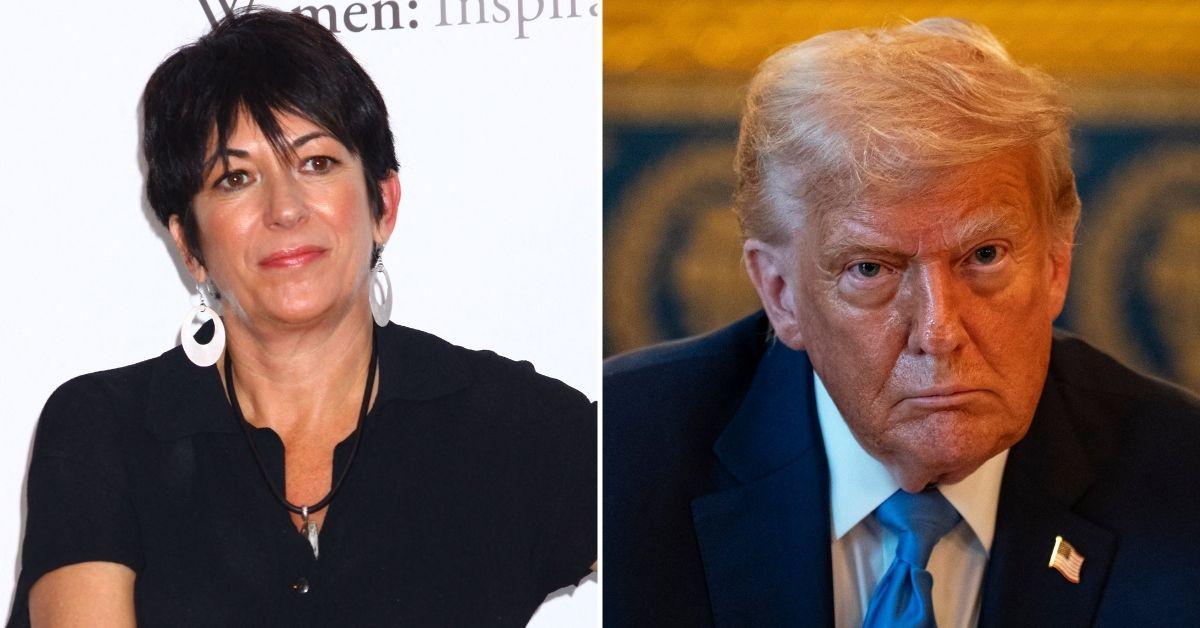
Ghislaine Maxwell plans to ask Trump to commute prison sentence, House Democrats say. Ghislaine Maxwell, the convicted sex trafficking co-conspirator of the late Jeffrey Epstein, is reportedly preparing a formal application to President Donald Trump for a commutation of her federal prison sentence, which is currently set to extend through 2037. This significant development has been brought to light by documents obtained by Democrats on the House Judiciary Committee and subsequently reviewed by CBS News.
In a stark and urgent letter dispatched to President Trump on Monday, November 10, 2025, Judiciary Committee Democrats conveyed their profound alarm and suspicion regarding Maxwell’s intentions. The letter, also seen by CBS News, explicitly states that Maxwell "is preparing a ‘Commutation Application’ for your Administration to review, undoubtedly coming to you for your direct consideration." Even more controversially, the Democrats alleged direct and active assistance from prison authorities, adding, "The Warden herself is directly helping Ms. Maxwell copy, print, and send documents related to this application."
The language used by the Democrats in their communication was uncompromising, underscoring their deep concern over potential undue influence and a grave miscarriage of justice. They asserted that the information received demonstrates "either that Ms. Maxwell is herself requesting you release her from her 20-year prison sentence for her role as a co-conspirator in Jeffrey Epstein’s international child sex trafficking ring, or that this child sex predator now holds such tremendous sway in the second Trump Administration that you and your DOJ will follow her clemency recommendations." This strong rhetoric highlights the committee’s apprehension about political favoritism potentially overriding the judicial process for a convicted sex trafficker.
Beyond the impending commutation request, the letter delves into serious allegations of "preferential and lenient treatment" purportedly being afforded to Maxwell at the Bryan federal prison camp in Texas. Maxwell was transferred to this facility over the summer, a move that followed a highly unusual meeting she had with Deputy Attorney General Todd Blanche to discuss the sprawling Epstein case. The committee’s letter claims that "Federal law enforcement staff working at the camp have been waiting on Ms. Maxwell hand and foot," suggesting an environment far removed from the typical correctional experience.
The alleged special treatment outlined in the letter paints a picture of "favorable concierge-style treatment." This includes specific claims such as customized meals being prepared solely for Maxwell and hand-delivered directly to her cell, a privilege rarely, if ever, extended to the vast majority of federal inmates. Such practices, if true, raise immediate questions about equity within the Bureau of Prisons (BOP) and whether the standard protocols are being subverted for a high-profile prisoner.
Further adding to the controversy, the letter details instances where Maxwell purportedly received exceptional privileges concerning her visitors. When Maxwell reportedly expressed a desire to arrange a private meeting with guests, "the Warden personally arranged it for her — and then provided a special cordoned off area for visitors to arrive, as well as an assortment of snacks and refreshments for her guests." Perhaps most alarmingly, the Democrats claim that Maxwell’s visitors were allowed to bring computers into the facility. The committee explicitly labeled this an "unprecedented action by the Warden given the security risk and potential for Ms. Maxwell to use a computer to conduct unmonitored communications with the outside world," raising profound concerns about prison security and the potential for illicit activities.
Ghislaine Maxwell, a former British socialite and intimate associate of Jeffrey Epstein, was convicted in December 2021 on multiple counts related to sex trafficking, including conspiracy to commit sex trafficking and sex trafficking of a minor. Her trial vividly exposed her integral role in recruiting, grooming, and facilitating the abuse of underage girls alongside Epstein, who died by suicide in a New York jail in 2019 while awaiting his own trial. The 20-year sentence she received was a judicial acknowledgment of the severe nature of her crimes and the enduring, often devastating, trauma inflicted upon her numerous victims. The mere possibility of her sentence being commuted has already ignited a wave of outrage among victims’ advocates and the public, who view her as a central and unrepentant figure in Epstein’s abhorrent network.
A commutation is a specific form of executive clemency that serves to reduce the severity of a sentence, typically by shortening the prison term, but crucially, it does not erase the underlying criminal conviction itself. This differs significantly from a presidential pardon, which implies forgiveness and the restoration of civil rights. While presidential clemency powers are constitutionally broad, their application, particularly for individuals convicted of such egregious crimes against children, invariably attracts intense public and political scrutiny. Historically, presidents have used these powers sparingly for high-profile offenders, often reserving them for cases of perceived injustice or during the final days of an administration.
The political ramifications for President Trump in considering or granting clemency to Maxwell would be immense and potentially damaging. Given Trump’s past social connections to Epstein, and his record of utilizing presidential pardons and commutations for political allies or those he believes were unfairly targeted by the justice system, any move to release Maxwell would undoubtedly be met with fierce opposition, accusations of cronyism, and claims of undermining the rule of law. The House Democrats, through their preemptive letter, appear to be strategically highlighting these concerns, aiming to deter such a controversial decision.
These current developments are set against the backdrop of the "highly unusual meeting" that took place between Maxwell and Deputy Attorney General Todd Blanche. CBS News had previously reported on August 1 that Maxwell was transferred from a low-security prison in Tallahassee, Florida, to the smaller, minimum-security Bryan prison camp. This transfer occurred just days after her meeting with Blanche in Tallahassee, where her attorney publicly stated that Maxwell had answered all questions pertinent to the Epstein case. Legal experts and former prosecutors widely described the meeting itself as unorthodox, raising persistent questions about its true purpose and whether any undisclosed information, promises, or "favors" were exchanged.
In their latest letter, the Judiciary Committee Democrats forcefully called for Deputy Attorney General Blanche to be made available for a public hearing. They seek transparent answers regarding the allocation of law enforcement resources and any "potential exchange of favors" during his interactions with Maxwell. This demand underscores the committee’s unwavering belief that there may be undisclosed aspects of the meeting or subsequent events that necessitate public transparency and accountability from the highest levels of the Justice Department.
As of the time of this report, the Bureau of Prisons has yet to issue any official comment on the specific allegations of preferential treatment outlined in the Democrats’ letter. CBS News has also reached out to the Justice Department and the White House for their official responses to the committee’s serious claims, but no immediate statements have been provided. This initial silence from the executive branch and federal agencies only serves to intensify speculation and concern among critics and the public alike.
Rep. Jamie Raskin, the ranking Democrat on the House Judiciary Committee and the signatory of the letter, has consistently been a prominent voice for congressional oversight and accountability. His direct involvement signifies the profound seriousness with which the Democrats are approaching these allegations, framing them as a direct challenge to the fundamental integrity of the federal justice system and the fair, impartial application of the law.
The victims of Epstein and Maxwell’s abhorrent crimes, many of whom have bravely come forward to share their harrowing stories, would likely experience profound distress, anger, and a devastating sense of betrayal if Maxwell were to receive a commutation. The judicial process, while often imperfect, offered a crucial measure of justice and a modicum of closure for some survivors. Undermining Maxwell’s hard-won sentence through executive action could re-traumatize survivors, erode public trust in the legal system’s ability to protect the vulnerable, and send a chilling message about the influence of power and privilege.
The enduring shadow of Jeffrey Epstein’s vast criminal network and the lingering, unanswered questions surrounding his death continue to render any development involving Ghislaine Maxwell exceptionally sensitive and politically charged. Many observers believe Maxwell possesses critical information about other high-profile individuals involved in Epstein’s illicit activities, and any perception of her being rewarded for silence, cooperation, or simply benefiting from political connections would be extraordinarily inflammatory. This unfolding situation sets the stage for a significant and potentially explosive confrontation between the legislative and executive branches, with the fate of a notorious sex trafficker and the integrity of the justice system at its very core. The intense scrutiny from House Democrats, coupled with the serious nature of the allegations, ensures that any decision regarding Ghislaine Maxwell’s future will remain under an unforgiving public spotlight.