Khanna explains his call for Schumer to be replaced over shutdown deal: "He is not meeting the moment"
Democratic Representative Ro Khanna of California has ignited a significant debate within the Democratic Party, explicitly calling for Senate Minority Leader Chuck Schumer to step down from his leadership post following a contentious government shutdown deal. Khanna’s sharp criticism, delivered in an interview and reiterated on social media, centers on the belief that Schumer failed to adequately fight for the party’s core principles, particularly regarding expiring Affordable Care Act (ACA) tax credits, and is now "not meeting the moment." The unfolding drama highlights deep fissures within the Democratic caucus, pitting progressive ideals against the pragmatic realities of a divided Congress.
The controversy stems from a recent protracted government shutdown, which, after 41 days, saw a group of eight Senate Democrats break ranks to strike a deal with Republicans. This agreement advanced a short-term funding measure, effectively ending the shutdown, but crucially offered only a promise of a future vote on a Democratic healthcare bill rather than guaranteeing a specific outcome or an extension of the vital ACA tax credits. For Khanna and many progressives, this was a capitulation, and they squarely laid the blame at the feet of the Senate’s top Democrat.
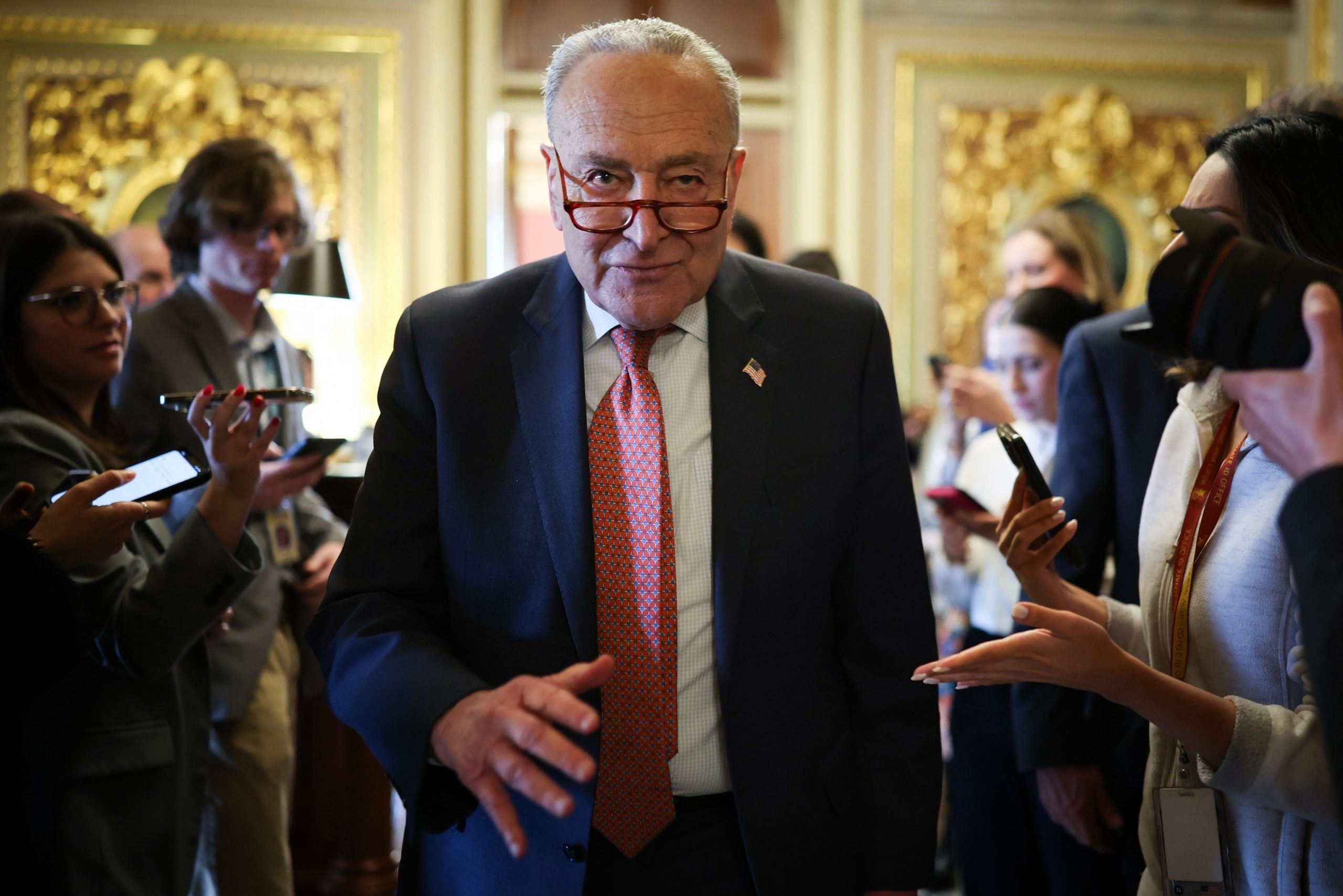
"He’s the leader of the Senate. This deal would never have happened if he had not blessed it," Khanna asserted during an interview with CBS News’ "The Takeout." He dismissed any notion that Schumer was not involved, adding, "Don’t take my word for it. Take the word of other senators who are saying that they kept Sen. Schumer in the loop the whole time." This implication that Schumer, at the very least, tacitly approved or allowed the deal to proceed, despite his eventual vote against it, underscores Khanna’s belief in the leader’s ultimate responsibility.
Khanna, a prominent voice from the progressive wing of the party, acknowledged Schumer’s past legislative victories, citing his "incredible job on the CHIPS Act, on the [Inflation Reduction Act], on infrastructure." These landmark achievements, which saw significant investments in American manufacturing, climate change initiatives, and critical infrastructure, were widely celebrated by Democrats. However, Khanna argued that these past successes do not excuse what he perceives as a current failure of leadership. "But it’s time for him to be replaced," Khanna declared, articulating the sentiment of a growing segment of the party. "He is not meeting the moment. He’s out of touch with where the party’s base is."
The California Congressman first made his demand for Schumer’s replacement public on Sunday night via a post on X (formerly Twitter). His message was stark: "If you can’t lead the fight to stop healthcare premiums from skyrocketing for Americans, what will you fight for?" This pointed question cut to the heart of progressive frustration, emphasizing the belief that if Democrats cannot defend fundamental access to affordable healthcare, their broader legislative agenda loses its moral and practical grounding. The expiring ACA tax credits, initially expanded under the American Rescue Plan, have been crucial in lowering health insurance costs for millions of Americans. Allowing them to lapse without a firm commitment to renewal was seen by many as a direct betrayal of Democratic voters and a failure to protect a signature achievement of the party.
The government shutdown itself had become a high-stakes political poker game. Republicans, often seeking spending cuts and policy concessions, had leveraged the funding deadlines to push their agenda. Democrats, in turn, aimed to use the shutdown to highlight Republican intransigence and protect key programs. The decision by a faction of Senate Democrats to negotiate directly with Republicans, outside of a unified party strategy, signaled a fracture in the Democratic front. While Schumer himself ultimately voted against advancing the short-term funding measure, his critics argue that his inability to keep his caucus united, or to negotiate a more favorable outcome, demonstrated a critical lapse in leadership.
Senator Dick Durbin of Illinois, the second-highest-ranking Democrat in the Senate, offered a nuanced defense of Schumer, stating that the leader gave the deal "neither a blessing nor a curse" and did not explicitly direct senators on how to vote. This position suggests a degree of tactical ambiguity, perhaps allowing moderate Democrats facing electoral pressure in swing states to vote with Republicans to end the shutdown without directly defying their leader. However, for critics like Khanna, such a hands-off approach in a moment of crisis is precisely the problem, indicating a lack of decisive leadership when the party’s core values are perceived to be under threat.
The backlash against Schumer is not monolithic, however. House Minority Leader Hakeem Jeffries, also a New York Democrat, quickly came to Schumer’s defense. When pressed by reporters on Monday, Jeffries offered an unequivocal "yes and yes" when asked if Schumer was an effective leader and should retain his position. Jeffries praised Schumer’s efforts, stating, "The overwhelming majority of Senate Democrats, led by Chuck Schumer, have waged a valiant fight over the last seven weeks, defeating the partisan Republican spending bill 14 or 15 different times, week after week after week, and continue to oppose this effort of passing legislation that does not address the Republican health care crisis by extending the Affordable Care Act tax credits." Jeffries’ comments underscore the importance of inter-chamber solidarity and the recognition that leading a diverse caucus through difficult legislative periods is inherently challenging. His defense also highlighted the consistent efforts by Senate Democrats to resist Republican demands, framing the ultimate deal as an unfortunate necessity rather than a failure of leadership.
The core of Khanna’s argument—that Schumer is "out of touch with where the party’s base is"—speaks to a broader ideological struggle within the Democratic Party. Progressive voters and activists often demand a more confrontational approach, believing that compromise with a Republican Party they view as obstructionist often leads to the erosion of Democratic priorities. They see a leader’s role not just as a negotiator but as a standard-bearer, willing to push for transformative change and defend social programs vigorously. For them, allowing the shutdown to end with only a promise of a vote on healthcare, rather than a firm guarantee or an immediate extension of the ACA tax credits, represents a missed opportunity and a failure to leverage political power effectively.
Schumer’s leadership style, cultivated over decades in the Senate, has often been characterized by a blend of shrewd political maneuvering and a willingness to find common ground. He has successfully navigated highly partisan environments to pass significant legislation. However, the current political landscape, marked by intense polarization and a vocal progressive base, presents unique challenges. Balancing the demands of moderates, who may prioritize ending a shutdown to avoid political fallout, with the fervent calls of progressives for an uncompromising stance on issues like healthcare, requires an exceptionally delicate touch. Khanna’s critique suggests that Schumer’s touch has faltered in this instance.
The call for a change in leadership, while not unprecedented in American politics, is a serious matter that can destabilize a party, especially when it is in the minority. It raises questions about the future direction of the Democratic Party in the Senate and who might be considered as an alternative leader. While Khanna did not name specific successors, his challenge opens the door for such discussions. The episode also casts a shadow over Democratic unity as the party gears up for future legislative battles and upcoming election cycles. The promised vote on the healthcare bill, while a small concession, now carries immense weight, as its outcome could either somewhat vindicate Schumer or further fuel calls for new leadership.
Ultimately, Representative Ro Khanna’s outspoken demand for Senator Chuck Schumer’s replacement over the government shutdown deal highlights a fundamental tension within the modern Democratic Party: the struggle between pragmatic compromise in a divided government and the unwavering pursuit of progressive ideals. While Schumer’s supporters point to his long track record of legislative achievement and the inherent difficulties of leading a diverse caucus, Khanna’s critique resonates with a base yearning for more assertive leadership, particularly when essential programs like affordable healthcare are on the line. The repercussions of this internal dispute will undoubtedly shape the Democratic Party’s strategy and cohesion in the crucial months and years ahead.