Trump becomes first sitting president to attend regular season NFL game in nearly 50 years
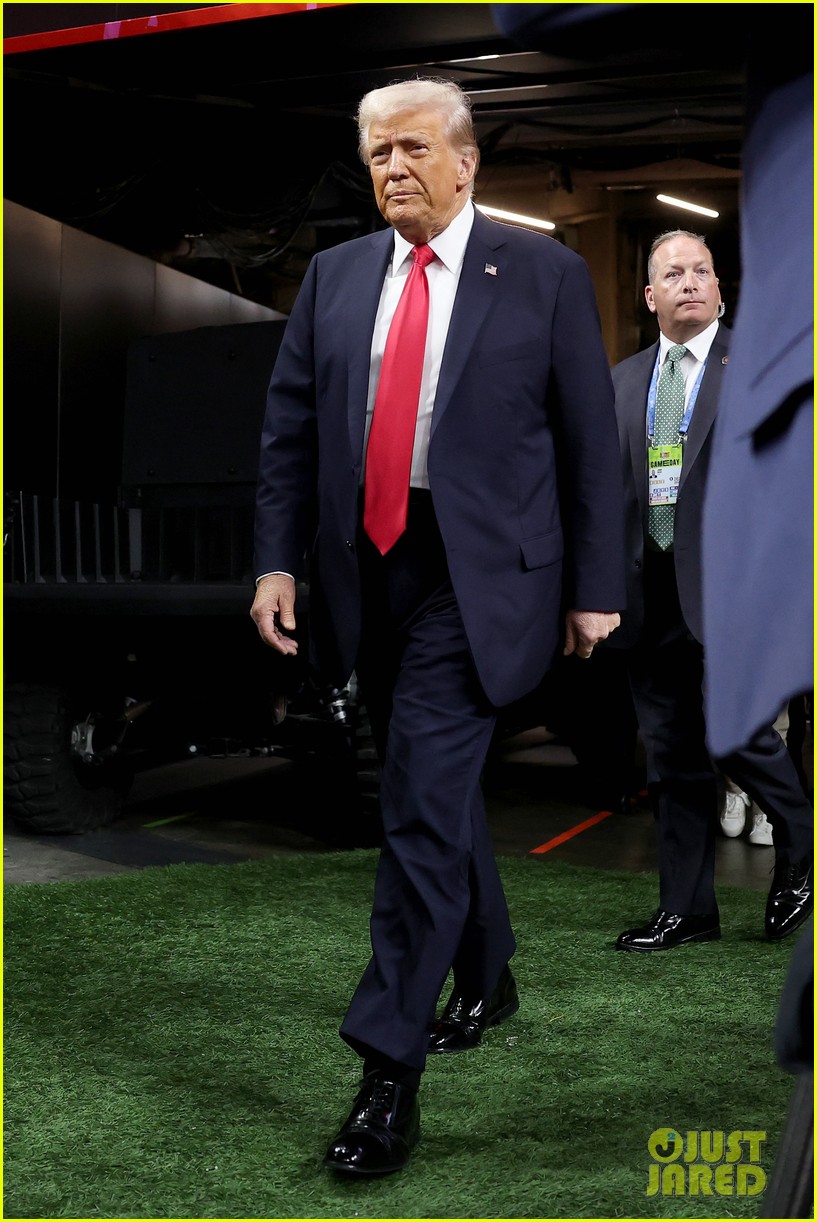
President Donald Trump made a notable entry into sports history on Sunday, November 9, 2025, by becoming the first sitting U.S. president in nearly half a century to attend a regular-season NFL game. The highly anticipated appearance saw him taking in a portion of the Washington Commanders’ contest against the Detroit Lions at Northwest Stadium in Landover, Maryland. This visit underscored the unique blend of politics, celebrity, and American spectacle that often characterized Trump’s presidency, drawing both fervent supporters and vocal detractors.
The atmosphere inside the stadium was electric, though tinged with political polarization. When Mr. Trump was shown on the videoboard late in the first half, standing in a suite alongside prominent Republican figures such as House Speaker Mike Johnson and Defense Secretary Pete Hegseth, a chorus of loud boos erupted from various sections of the stands. This audible disapproval intensified moments later when the stadium announcer formally introduced the president at halftime. The jeering continued unabated as Mr. Trump stepped onto the field to lead an on-field enlistment ceremony, reading an oath for new members of the military to recite. This public display of mixed reactions highlighted the deep divisions within the country, even in the ostensibly unifying context of a sporting event.
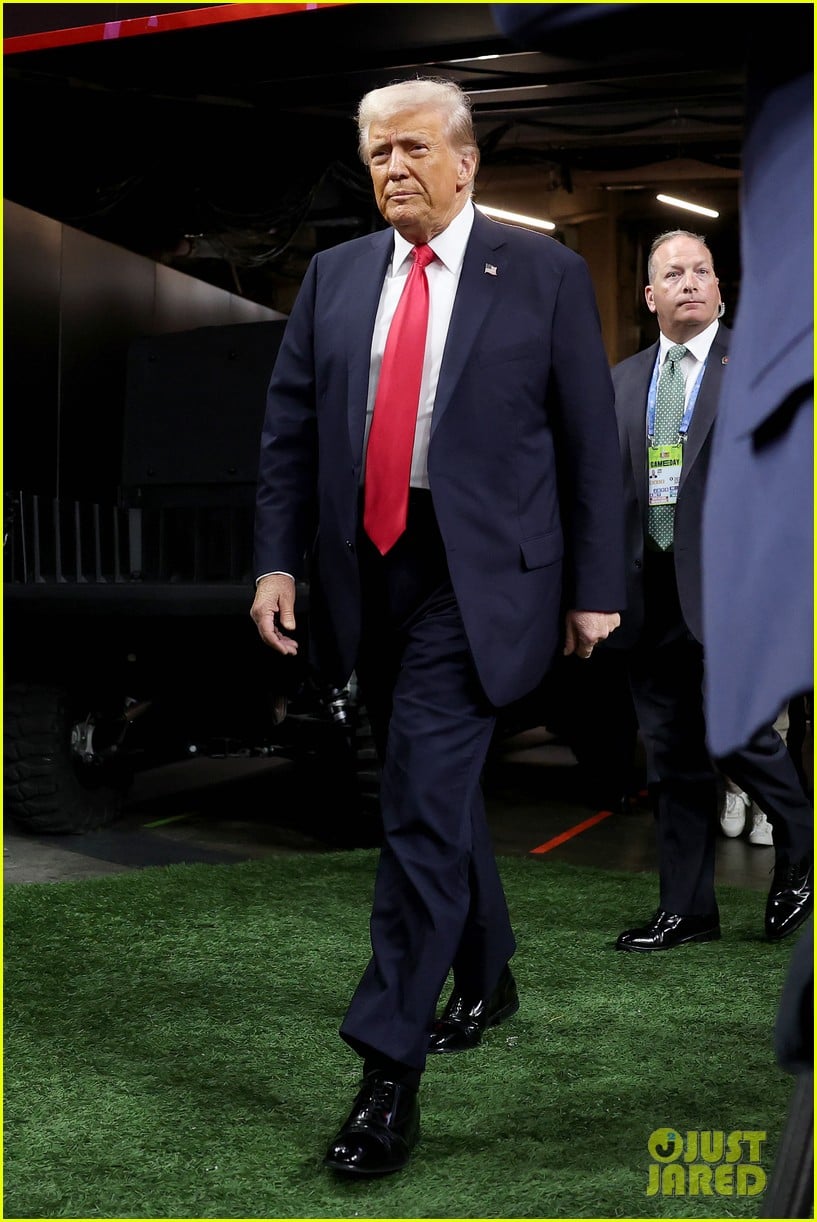
The enlistment ceremony itself was a powerful moment, albeit one overshadowed by the crowd’s response. With Defense Secretary Pete Hegseth by his side, President Trump administered the Oath of Enlistment to a group of brave individuals preparing to join the U.S. armed forces. This solemn tradition, where new recruits pledge their allegiance to the Constitution, is a cornerstone of military induction. For a sitting president to preside over such a ceremony at a major sporting event adds a layer of patriotic gravitas, yet the persistent boos underscored the difficulty of separating the office from the man, especially in a highly charged political environment. The image of the president performing a civic duty amidst such a divided reception became a poignant symbol of the times.
Mr. Trump’s arrival at Northwest Stadium was preceded by a brief but characteristic interaction with reporters upon disembarking Air Force One at Joint Base Andrews. Following a ceremonial flyover of the stadium during the game, he quipped, "I’m a little bit late," before entering his armored car for the final leg of the journey. His remarks quickly pivoted from the game to the political landscape, stating, "We’re gonna have a good game. Things are going along very well. The country’s doing well. The Democrats have to open it up," a direct reference to the ongoing government shutdown. This shutdown, a recurring theme during his administration, had stalled legislative progress and created economic uncertainty, making his public comments on the matter highly scrutinized. Later that Sunday, Mr. Trump offered a glimmer of hope, telling reporters, "It looks like we’re getting close to the shutdown ending. You’ll know very soon." Indeed, the Senate voted later that night to advance a bill aimed at resolving the impasse, providing a potential conclusion to a tense political standoff.
Adding another layer of intrigue to the game’s narrative was an unexpected moment in the first quarter. Before the president’s arrival, Lions receiver Amon-Ra St. Brown celebrated a touchdown catch by pointing into the stands and mimicking a distinct arm movement, widely recognized as the "Trump dance." This celebratory gesture, popularized by various athletes in the preceding year, had become a subtle nod to the president and his supporters. St. Brown’s decision to employ it on such a high-profile stage, just before Trump’s actual presence, was an unplanned coincidence that further blurred the lines between sports and political expression, sparking immediate chatter among fans and commentators alike.
During the third quarter, Mr. Trump joined Fox broadcasters Kenny Albert and Jonathan Vilma in the booth for an approximately eight-minute segment of what was described as lighthearted chat. Albert initiated the conversation by asking Mr. Trump about his time playing high school football at New York Military Academy. With a touch of self-deprecating humor, the president responded, "I played tight end, but it was not quite football like this. It was a little bit easier. It wasn’t so tough." This rare, informal interaction provided a glimpse into a different side of the president, engaging in sports banter rather than political discourse, though his presence alone ensured a political undertone to the broadcast. Mr. Trump, however, did not stay for the entire game, departing before the final whistle.
This visit marked a significant historical anomaly. According to the NFL, only two other times had a sitting president attended a regular-season NFL game: Richard Nixon in 1969 and Jimmy Carter in 1978. These instances were rare due to the logistical complexities and security demands associated with a presidential visit, as well as the tradition of presidents generally avoiding partisan events, which a high-profile game can inadvertently become. While presidents often attend more nationally unifying events like the Super Bowl – Mr. Trump himself became the first president to attend a Super Bowl while in the White House when he watched the Philadelphia Eagles beat the Kansas City Chiefs 40-22 in February of the same year – a regular-season game holds a different, more localized significance. This further underscored the unique nature of Trump’s public engagement, often prioritizing visibility and direct interaction over traditional presidential decorum.
A fascinating undercurrent to Trump’s attendance was a report by ESPN on Saturday, alleging that an intermediary for the White House had informed the Commanders’ ownership group of Mr. Trump’s desire for the club’s new stadium to bear his name. The Commanders were embarking on an ambitious nearly $4 billion project to build a new arena in the nation’s capital, potentially at the historic site of what was once known as RFK Stadium. This audacious request, if true, would be a highly unusual move, intertwining presidential legacy with a commercial sports venue in a manner rarely seen. During his TV appearance, Mr. Trump seemed to allude to his involvement in the stadium plans, stating, "They’re going to build a beautiful stadium. That’s what I’m involved in, we’re getting all the approvals and everything else. And you have a wonderful owner, Josh (Harris) and his group. And you’re going to see some very good things." This comment, while not directly confirming the naming request, certainly suggested a level of personal engagement in the project’s development, fueling speculation about his influence. Josh Harris’s group had purchased the Commanders from Daniel Snyder for approximately $6 billion in 2023, signaling a new era for the team, and a presidential naming request would undoubtedly add a layer of complex political maneuvering to their ambitious plans.
Sunday’s visit was consistent with a broader pattern of high-profile appearances by Mr. Trump at various sporting events throughout his presidency, including golf’s Ryder Cup, auto racing’s Daytona 500, and tennis’ U.S. Open. These appearances often served as opportunities for him to connect with his base, project an image of strength, and enjoy the communal excitement of American sports. During the broadcast, he encapsulated his appreciation for sports, stating, "I just love it. It’s a microcosm of life. It’s sort of like life – the good, the bad and the ugly." This philosophical reflection on sports resonated with his political rhetoric, often portraying life and politics as a competitive arena where outcomes are determined by grit and determination.
Before the game commenced, Defense Secretary Pete Hegseth, a prominent conservative media personality before joining the administration, engaged in discussions with Josh Harris, the leader of the ownership group. Hegseth also participated in an on-field ceremony with military personnel, highlighting the strong military presence often intertwined with NFL games. Watching the game alongside Mr. Trump in the suite were other key figures from his administration and political circle, including White House chief of staff Susie Wiles, Education Secretary Linda McMahon, and Republican Senator Steve Daines of Montana. Their presence underscored the political nature of the visit, turning a sports outing into a de facto political gathering.
The visit also brought to mind the significant friction between Mr. Trump and the NFL during his first presidential term. This tension largely stemmed from his strong objections to players kneeling during the national anthem to protest social or racial injustice, a movement initiated in 2016 by then-49ers quarterback Colin Kaepernick. Mr. Trump consistently used social media and other public platforms to insist that players should stand for the national anthem, famously calling on team owners to fire anyone who took a knee. This stance ignited a culture war, deeply dividing fans and creating a persistent ideological battleground within the league. His attendance at this game, years after the height of that controversy, served as a reminder of his enduring, albeit complex, relationship with America’s most popular sport.
In conclusion, President Trump’s attendance at the Washington Commanders’ game was far more than a simple presidential outing. It was a potent blend of sports, politics, and historical precedent, marked by both fervent support and vocal opposition. From the unique crowd reactions to the subtle political messaging and the speculative stadium naming discussions, the event served as a microcosm of the Trump presidency itself – dynamic, polarizing, and always at the center of attention.