Justice Department says it’s investigating "violent riots" at UC Berkeley Turning Point USA event.
The Department of Justice has launched a federal investigation into the "violent riots" that erupted outside a Turning Point USA (TPUSA) event on the University of California, Berkeley campus on Monday evening, Attorney General Pam Bondi announced Tuesday. Bondi explicitly linked the probe to President Trump’s broader crackdown on the antifa movement, stating in a post on X that the "violent riots" are now under investigation by the FBI’s Joint Terrorism Task Force (JTTF), a unit typically reserved for threats of national security significance.
This significant federal intervention underscores a growing tension between free speech, campus safety, and political activism in America. The TPUSA event, a sold-out gathering featuring conservative speakers, was the final stop on a national college campus tour organized by the group. This tour gained particular poignancy following the tragic death of TPUSA founder, conservative activist Charlie Kirk, who was killed on a Utah college campus just two months prior. His death had already heightened security concerns and political fervor surrounding TPUSA events, making the Berkeley incident a flashpoint in an already polarized climate.
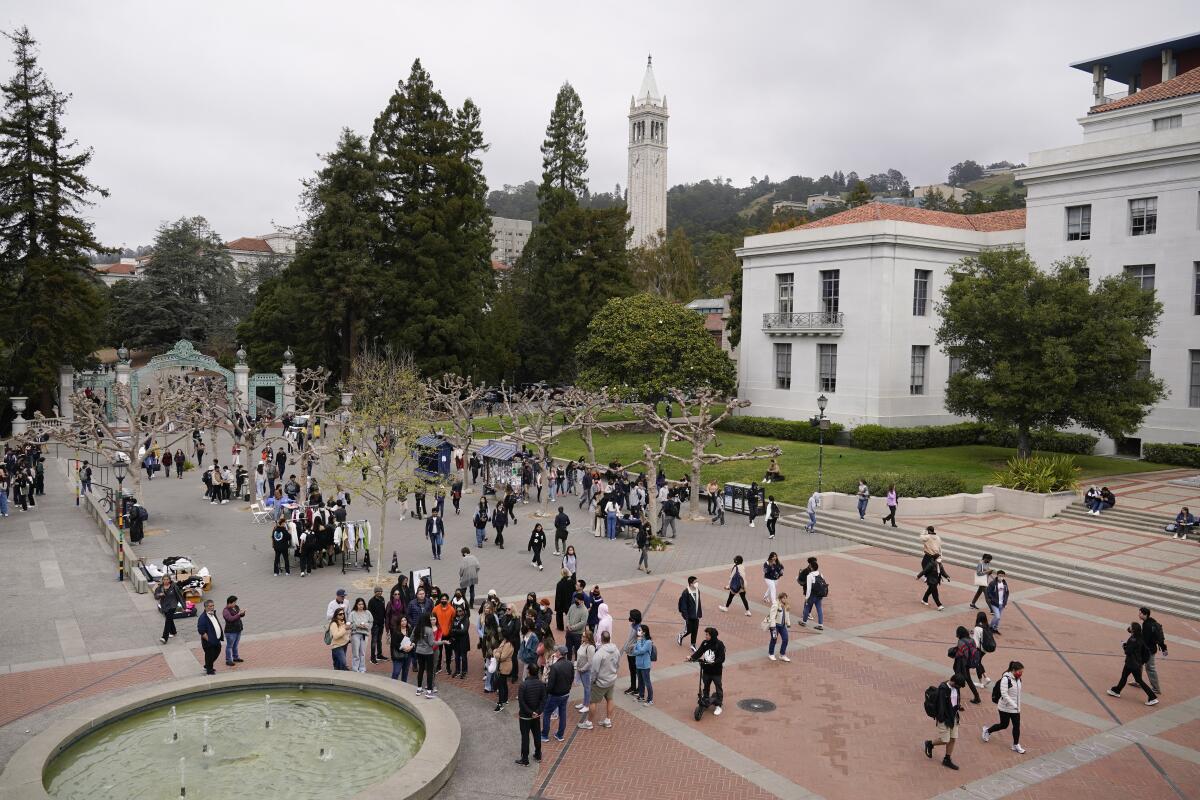
On Monday night, the scene outside the university’s event venue quickly devolved from a planned protest into a chaotic confrontation. While dozens of demonstrators initially gathered peacefully, their numbers swelled, and the atmosphere grew increasingly volatile as the evening progressed. Videos of the demonstrations captured by attendees and news outlets depicted escalating scuffles between a segment of the protesters and university police, who were attempting to maintain order and secure the event perimeter. At one critical juncture, multiple smoke bombs were reportedly thrown into the crowd, causing panic and further disrupting the already tense environment.
According to a statement released by the Berkeley Police Department, two men were initially arrested on suspicion of fighting in public. One of these individuals was later released after officers determined he was attempting to retrieve his chain, which had allegedly been stolen by a 25-year-old man. Separately, campus police made two additional arrests for individuals failing to comply with directions given by officers. A university spokesman confirmed that one of those arrested was a current UC Berkeley student, while the other had no affiliation with the university. The violence also resulted in at least one serious injury: a 45-year-old man attending the TPUSA event was struck by a glass bottle and required transportation to a hospital for treatment.
In response to the escalating situation and the federal announcement, UC Berkeley issued its own statement, affirming that the school "is conducting a full investigation" and pledged to cooperate fully with federal authorities. The university’s statement emphasized its commitment to identifying "the outside agitators responsible for attempting to disrupt last night’s TPUSA event," clearly distinguishing between legitimate protest and criminal behavior. "There is no place at UC Berkeley for attempts to use violence or intimidation to prevent lawful expression or chill free speech," the statement read, reflecting the university’s delicate balance between upholding its legacy as a bastion of free expression and ensuring the safety of its community.
The involvement of the FBI’s Joint Terrorism Task Force signals a significant escalation in how the federal government views and responds to campus unrest, particularly when associated with political groups. Attorney General Bondi’s swift announcement and her direct reference to Antifa underscore the Trump administration’s commitment to categorizing and prosecuting what it perceives as domestic extremist threats. Her characterization of Antifa as an "existential threat to our nation" is consistent with President Trump’s rhetoric and policies.
In September, President Trump signed an executive order formally labeling Antifa as a "domestic terrorist organization." This order directed federal agencies to utilize "all applicable authorities to investigate, disrupt, and dismantle" illegal operations conducted by groups or individuals associated with Antifa. The label itself, a shorthand for "anti-fascist," describes a decentralized movement of far-left and anarchist individuals rather than a cohesive organization with a clear leadership structure. The Congressional Research Service has previously described Antifa as lacking a "unifying organizational structure or detailed ideology," instead encompassing a broadly defined movement that often embraces anarchism, socialism, and communism.
Legal experts have voiced skepticism regarding the designation of Antifa as a "domestic terrorist organization," primarily because "domestic terrorism" is not a chargeable offense under existing federal law. While acts of violence or property destruction committed by individuals identifying with Antifa can be prosecuted under various statutes, the broad "terrorist" label carries significant political weight and raises concerns about potential infringements on civil liberties and freedom of assembly.
Despite these legal complexities, the Justice Department has shown a willingness to pursue charges against individuals allegedly linked to Antifa-related violence. Just last month, the DOJ made headlines by charging two Texas men with allegedly providing material support to Antifa – a first-of-its-kind prosecution. These charges stemmed from their alleged involvement in a violent July Fourth attack at an Immigration and Customs Enforcement detention center in Alvarado, Texas, which resulted in injuries to a federal officer. The Justice Department contended that the pair were part of an "Antifa cell" that meticulously plotted the attack, reportedly using guns and explosives. This precedent-setting case has set the stage for federal law enforcement to take a more aggressive stance against groups or individuals deemed to be associated with Antifa-inspired violence, potentially influencing the approach to the UC Berkeley investigation.
Further federal involvement in the Berkeley incident comes from Harmeet Dhillon, Assistant Attorney General for Civil Rights at the Justice Department. Dhillon also took to X, stating that her division would investigate "several issues of serious concern regarding campus and the local security" on the school’s campus. Her focus suggests an inquiry not only into the actions of the protesters but also into the university’s security protocols, the response of local law enforcement, and potential civil rights implications related to free speech and assembly on campus.
The current events at UC Berkeley are not without historical precedent. The campus has long been a crucible for political activism, famously giving birth to the Free Speech Movement in the 1960s. However, in recent years, events featuring conservative speakers have repeatedly triggered significant unrest. Most notably, in 2017, a planned speech by right-wing activist Milo Yiannopoulos was abruptly canceled after hundreds of protesters gathered, lighting fires, damaging property, and engaging in widespread vandalism. The university sustained over $100,000 in damages during that incident, highlighting the persistent challenges Berkeley faces in balancing its commitment to open dialogue with the imperative of maintaining safety and order. The specter of the 2017 riots undoubtedly loomed large over Monday’s event and informs both the university’s and the federal government’s forceful responses.
The Justice Department’s investigation into the UC Berkeley events marks a critical juncture in the ongoing national debate over political polarization, free speech on college campuses, and the federal government’s role in addressing domestic unrest. The invocation of the Joint Terrorism Task Force and the explicit linking of the protests to a broader anti-Antifa campaign signal a determined effort by the Trump administration to assert federal authority in what has traditionally been considered local law enforcement or campus security matters. As the investigation unfolds, it is expected to generate intense scrutiny and further fuel the already heated political discourse surrounding these complex issues, with potential implications for future protest movements, university policies, and the interpretation of civil liberties in a charged political landscape.
Melissa Quinn contributed to this report.