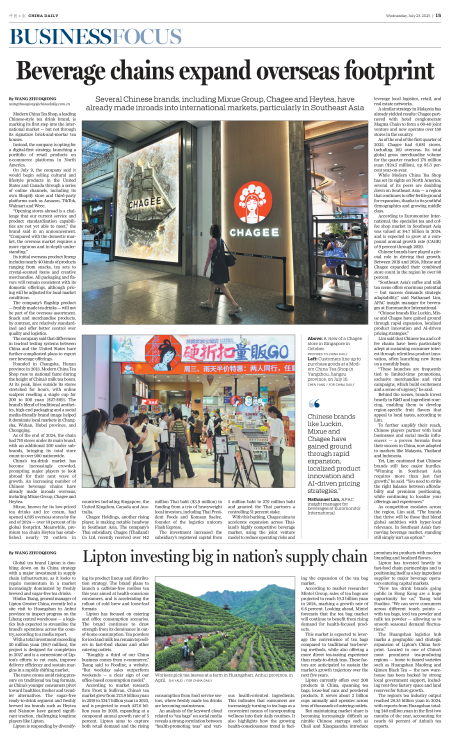
Chinese Beverage Chains Spread Across the US, Challenging Starbucks’ Dominance
Starbucks opened its first store in China in 1999, a pivotal moment when the concept of sipping coffee in a Western-style café was still a novel and aspirational experience for many Chinese locals. For decades, the Seattle-based giant cultivated a loyal following, becoming synonymous with a modern, cosmopolitan lifestyle. However, in the years since, a vibrant ecosystem of homegrown coffee and bubble tea brands has emerged, gradually chipping away at Starbucks’ once unassailable share of the Chinese market. Innovators like Luckin Coffee, Heytea, Chagee, and Mixue have not only adapted to local tastes but have also redefined convenience and customer experience through technology and cultural branding. Now, these formidable challengers are crossing the Pacific, bringing their unique beverage culture to American shores, hoping to compete with Starbucks and other established American beverage chains on their home turf.
To understand the dynamics of this burgeoning competition, we embarked on a sensory and experiential journey, eager to taste and evaluate what these Chinese brands are offering American consumers. Over the past week, our team visited two Luckin Coffee shops and one HeyTea store in the bustling metropolis of New York City, complementing this with a visit to a Chagee location in the vibrant city of Los Angeles. Our immersive exploration revealed not just new drinks, but an entirely new and distinct beverage culture taking shape. This culture is meticulously built around an ethos of speed, seamless smartphone application integration, and an unwavering focus on premium, often culturally inspired, flavors. This strategic blend of innovation and consumer-centric design positions these chains as serious contenders in the highly competitive American market.
The arrival of these Chinese chains comes at a particularly difficult and opportune moment for Starbucks. The global coffee behemoth has recently faced a series of significant setbacks that underscore its vulnerability. This year alone, the company closed more than 600 stores worldwide, signaling a period of restructuring and retrenchment. Concurrently, approximately 900 corporate staffers were laid off, reflecting a broader effort to streamline operations and cut costs. Adding to its woes, New York City mayor-elect Zohran Mamdani publicly urged people to boycott Starbucks, as unionized baristas at dozens of its US locations went on strike, highlighting growing labor disputes and employee dissatisfaction within the company. Perhaps most tellingly, earlier this month, Starbucks announced it had agreed to sell up to 60 percent of its China business to a private equity firm. This move, a partial divestment from what was once considered its most important growth market, can be interpreted as an acknowledgment of the intense competition it faces from the very brands now expanding into the US. These challenges create a fertile ground for new entrants, especially those armed with fresh models and aggressive expansion strategies.
Luckin’s App-First Model: A Digital Disruption
Among the Chinese beverage brands making inroads into the US, Luckin Coffee appears to be expanding at the most rapid pace. This year alone, Luckin has opened five new locations in Manhattan, quickly establishing a visible presence in one of the world’s most competitive urban markets. Luckin is not just any coffee chain; it is China’s largest, boasting an astounding global footprint of more than 26,000 stores. To put its dominance into perspective, in China, there are approximately three Luckin coffee shops for every one Starbucks, a testament to its pervasive reach and rapid growth. The company was founded less than a decade ago by a former tech executive, a background that profoundly shaped its core philosophy. Luckin is renowned for its sleek, app-oriented cafés, where technology isn’t just a convenience but the central pillar of the customer experience.
Our colleague, Zeyi, first visited one of Luckin’s outposts in the bustling Financial District of New York City. He ordered a regular-sized iced coconut latte, which came to $7.02 after tax – a competitive price for a premium drink in Manhattan. What immediately struck Zeyi was the profound quietness of the store. At 4 PM on a Tuesday, a time when many coffee shops would be abuzz with activity, there were only about four customers present. However, the eerie silence had less to do with a lack of business and more with the operational model. Luckin fundamentally requires customers to place their orders online, primarily through its dedicated smartphone application. This eliminates the need for verbal interaction with staff at the counter, creating a remarkably streamlined, albeit somewhat impersonal, experience.
A large computer screen prominently displayed incoming orders, while a small printer churned out stickers for baristas to affix to each cup, ensuring accuracy and efficiency. The only customer interaction Zeyi witnessed, or indeed experienced himself, occurred when he and another patron appeared momentarily confused at the counter. An employee, sensing their bewilderment, politely inquired, "Is it your first time here? We do everything online here. You can scan the code and order." Once Zeyi’s drink was prepared, the baristas simply left it on the counter alongside others, requiring him to identify his order himself based on the printed sticker. This system, while incredibly efficient, stands in stark contrast to the personalized, "third place" ambiance Starbucks famously cultivates.
The very next day, Zeyi visited another Luckin location, this time in Midtown Manhattan. This store proved to be noticeably busier than its Financial District counterpart, suggesting varying levels of adoption across different neighborhoods. This time, Zeyi decided to fully embrace the Luckin experience by downloading the official app. He quickly discovered one of Luckin’s aggressive market penetration tactics: new customers who use the app are offered their first drink for an incredibly appealing price of $1.99. This promotional offer is a significant draw, especially in a city like New York where beverage prices can easily climb much higher. Zeyi ordered a cold brew, and true to the Luckin model, the baristas maintained their silent efficiency, placing his finished drink on the counter without a word once it was ready. This app-first approach, with its focus on speed, digital ordering, and minimal human interaction, represents a significant departure from traditional café culture and caters directly to the modern consumer’s demand for seamless convenience and competitive pricing.
The Scent of HeyTea and the Craft of Chagee: A "Guochao" Infusion
Beyond coffee, Chinese tea shop chains like Chagee and HeyTea are making waves with their premium offerings and aesthetically pleasing, Instagram-ready packaging. Both brands are at the forefront of a significant cultural trend in China known as guócháo (国潮), or "China chic." This movement celebrates the fusion of traditional Chinese cultural elements with modern design and contemporary consumer trends, creating products that resonate deeply with a sense of national pride and sophisticated aesthetics.
HeyTea, established in 2012 by a visionary 19-year-old Chinese entrepreneur, is the oldest brand among those we reviewed and has already established a fairly substantial US footprint. It boasts over a dozen stores spread across California, New York, Texas, Florida, and other key regions, indicating a more seasoned and strategic approach to international expansion. The company’s American menu reflects its premium positioning, featuring elaborate and enticing drinks with evocative names such as “Cloud Coconut Blue” ($7.99) and “Crisp Grape Boom” ($7.49). These names hint at complex flavor profiles and high-quality ingredients, designed to appeal to a discerning clientele willing to pay for an elevated beverage experience.
Zeyi visited HeyTea’s store in Brooklyn, a location typically less frenetic than its Manhattan counterparts, allowing for a more relaxed observation. Similar to Luckin, a monitor screen on the wall efficiently displays which drinks are ready for pickup, signaling a blend of digital convenience with a more traditional service model. However, unlike Luckin, the finished drinks at HeyTea are deliberately placed out of reach of customers, necessitating a brief interaction with a barista to retrieve an order. This subtle difference creates a more personal, albeit still efficient, customer service experience compared to Luckin’s purely transactional approach. One distinctive feature that Zeyi particularly appreciated about this HeyTea location was the remarkably strong and pervasive tea scent, which was noticeable from several storefronts away. This powerful aroma, a testament to the quality and freshness of their ingredients, added an immersive sensory dimension to the visit. Zeyi mentioned hearing rumors that HeyTea might be using even better ingredients in its US stores than in China, a speculation that could certainly explain the potent and appealing fragrance.
Chagee is arguably the most visually sophisticated chain we visited, embodying the "China chic" aesthetic with refined elegance. Despite its upscale presentation, its drinks don’t meaningfully differ in price from those of Luckin or HeyTea, maintaining competitive accessibility. Founded in 2017, Chagee has rapidly grown to more than 7,000 stores globally, including a significant international presence with 200 locations outside China. In the US, it currently operates two outposts, both strategically located in California, a state known for its diverse culinary scene and openness to new trends. Like Starbucks, Chagee consciously strives to create its stores as warm, welcoming, and aesthetically pleasing spaces where people can work, study, and socialize with friends, positioning itself as a "third place" alternative with a distinct cultural flair. Its logo, inspired by the intricate masks worn by actors in traditional Chinese opera, serves as a powerful visual representation of its guócháo identity, marrying heritage with contemporary appeal.
On a Thursday evening, around 7 PM, the Chagee store in the Westfield Century City mall in Los Angeles was comfortably busy, with approximately ten people waiting for their drinks or already settled at tables. I opted to place my order through the convenient Chagee app, selecting two distinct beverages: a refreshing Jasmine Green Lemon Tea ($7.45) and a robust Roasted Oolong Pure Tea ($5.25). A welcome 15 percent off coupon automatically applied, bringing my order total to a reasonable $13.94. I specifically chose the oolong tea for its relatively low caffeine content, as there didn’t appear to be any entirely caffeine-free options explicitly listed on the menu, a minor point for those seeking decaffeinated alternatives.
Chagee truly distinguishes itself through the meticulous care it invests in even the smallest details, elevating the entire customer experience. Unlike Starbucks’ often-simplified green tea lemonade, Chagee’s jasmine lemon tea arrived adorned with fresh lime and lemon slices, lending it a visually appealing and genuinely luxurious feel that hints at superior ingredient quality. The roasted oolong tea was brewed to perfection, exhibiting a deep, rich flavor that spoke to expert preparation and high-grade tea leaves. Near the counter, where customers retrieve their orders, a thoughtful "Straw Guide" provided clear instructions on the recommended type of straw for each specific drink, a subtle but significant detail that underscores Chagee’s commitment to enhancing the drinking experience. This level of attention to both product quality and presentation positions Chagee not just as a beverage provider, but as a curator of a refined tea culture.
In conclusion, the entry and rapid expansion of Chinese beverage chains like Luckin Coffee, HeyTea, and Chagee in the US market signify a dynamic shift in the American beverage landscape. These brands are not merely offering new flavors; they are introducing a distinct cultural experience characterized by tech-driven efficiency, premium ingredient focus, and sophisticated cultural branding rooted in the guócháo movement. As Starbucks grapples with internal challenges and intense competition in its global markets, these agile and innovative Chinese players are poised to capture a significant share of American consumers seeking convenience, quality, and a taste of something new. This emerging competition promises to diversify choices and challenge established norms, marking an exciting new chapter in the US beverage industry.