U.S. reopens shuttered Puerto Rico naval base as Caribbean military buildup continues
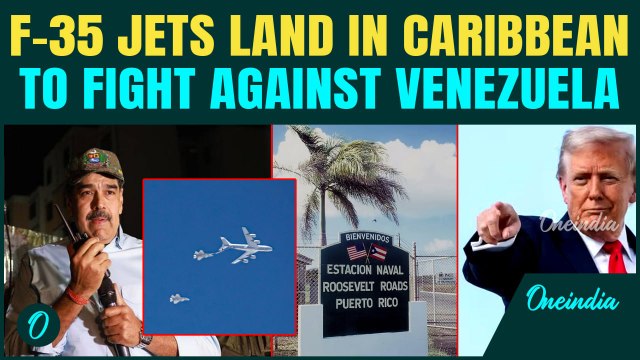
Near Ceiba, Puerto Rico – In a dramatic escalation of its strategic posture in the Caribbean, the United States has reactivated a naval base in Puerto Rico that lay dormant for more than two decades. Naval Station Roosevelt Roads, a sprawling complex that once served as a cornerstone of U.S. military operations in the region, is now back in full operation, signaling an intensified military buildup aimed squarely at Venezuela. This move comes amidst mounting tensions and explicit discussions within the Trump administration about potential military action against the Maduro regime.
The reopening of Roosevelt Roads, which officially ceased operations in 2004 under the Base Realignment and Closure (BRAC) commission, marks a significant shift in U.S. foreign policy and military strategy. Established in 1943 during World War II, Roosevelt Roads was a vital hub for naval training, logistics, and intelligence gathering throughout the Cold War, boasting a deep-water port, an airfield capable of handling large aircraft, and extensive support facilities. Its closure nearly twenty years ago was seen as a cost-saving measure and a response to local environmental and social concerns, leaving behind a vast, underdeveloped tract of land and a significant economic void in the municipality of Ceiba. Its resurgence now transforms a former symbol of military retrenchment into a potent forward operating base, strategically positioned just north of Venezuela, underscoring its renewed importance in a volatile geopolitical landscape.
The current deployment is formidable and multifaceted. Roosevelt Roads is now one of five locations in Puerto Rico hosting U.S. forces, transforming the American territory into a crucial staging ground. Since early September, the U.S. has poured significant assets into the region. A source confirmed to CBS News that ten F-35 fighter jets, advanced stealth aircraft capable of both air-to-air combat and precision ground strikes, were deployed to Puerto Rico. While their stated mission initially focused on operations targeting drug cartels—a persistent concern in the Caribbean—their presence sends an unmistakable message of air superiority and readiness that extends far beyond counter-narcotics efforts. Samuel Rivera Baez, the mayor of Ceiba, the town immediately adjacent to the base, offered a mixed but largely reassuring perspective to CBS News, stating that the roar of the F-35s now routinely wakes him in the mornings. "Right now, the United States is the most powerful in the world," Baez affirmed. "Having them here taking care of us, we feel more than safe."
However, not all local residents share the mayor’s sense of security. Damien Leon, a Puerto Rican local, expressed palpable anxiety. "I feel tense, kind of anxious not knowing what is going to happen, maybe an attack of someone close," Leon told CBS News, reflecting a deeper unease about the potential for Puerto Rico to become embroiled in a regional conflict. The prospect of the island transitioning from a strategic outpost to a frontline operational zone weighs heavily on many.
The airpower display is complemented by an imposing naval presence. New Pentagon images captured a B-52 long-range bomber, an icon of strategic deterrence, flying provocatively over the USS Gerald R. Ford, the Navy’s newest and most advanced aircraft carrier. The Ford, a supercarrier at the heart of a powerful carrier strike group, is now steaming towards the Caribbean, a clear demonstration of American military might being marshaled against Venezuela. According to a Navy official, as of Friday morning, the U.S. had four military ships in the western Atlantic Ocean, including the USS Gerald R. Ford and three guided-missile destroyers, formidable vessels equipped with advanced radar and missile systems. An additional seven military ships were operating in the Caribbean itself, comprising two guided-missile destroyers, two guided-missile cruisers (capable of a wide range of defensive and offensive operations), an amphibious assault ship, and two amphibious transport dock ships. This extensive naval armada suggests not only a capability for sustained air and sea operations but also the capacity for large-scale amphibious landings and troop deployments, should such measures be deemed necessary.
The stated reason for this aggressive posture is the U.S. desire to remove Venezuelan President Nicolás Maduro from power, citing his alleged ties to drug cartels and his regime’s authoritarian rule. This narrative is further complicated by the fact that as the U.S. conducts live-fire exercises—simulations of combat operations—across the region, it has also executed at least 20 strikes on what the White House alleges are drug-trafficking boats since early September. These operations have resulted in a significant loss of life, with at least 80 people killed, raising questions about the rules of engagement and the blurring lines between counter-narcotics missions and overt military pressure on a sovereign nation.
Venezuelan President Nicolás Maduro has vociferously condemned what he perceives as a blatant threat of invasion and imperialist aggression. In a public address on Thursday, he defiantly challenged a crowd, asking, "Raise your hand if you want Venezuela to become a Yankee colony." His rhetoric taps into a deep vein of anti-imperialist sentiment within Venezuela and across Latin America, portraying the U.S. actions as an infringement on national sovereignty and a return to past interventions. This clash of narratives sets the stage for a potentially volatile confrontation.
The discussions in Washington underscore the gravity of the situation. On Wednesday, senior military officials briefed President Trump with "updated options" for potential operations in Venezuela, which critically included "strikes on land," according to multiple sources familiar with the meetings at the White House. This revelation indicates a significant shift from mere deterrence or interdiction operations to a serious contemplation of direct military intervention. On Friday, President Trump continued these high-stakes discussions at the White House for at least the third consecutive day. Key figures present included Vice President JD Vance, Defense Secretary Pete Hegseth, Secretary of State Marco Rubio, and Chairman of the Joint Chiefs of Staff Dan Caine. The presence of such a high-level contingent signifies the profound strategic implications and the urgent nature of the Venezuelan crisis for the administration.
The reopening of Naval Station Roosevelt Roads and the accompanying military surge represent a watershed moment in U.S.-Caribbean relations and particularly in the fraught relationship with Venezuela. It signals a decisive move away from diplomatic pressure and sanctions alone, towards a robust, visible, and highly provocative projection of military power. The strategic location of Puerto Rico, coupled with the immense assets now deployed, transforms the island into a potential launchpad for future operations. While the immediate focus is on countering drug trafficking and pressuring the Maduro regime, the sheer scale and nature of this buildup suggest that the U.S. is preparing for a range of contingencies, up to and including direct military engagement. The world watches with bated breath as the Caribbean becomes an increasingly tense arena, with the fate of Venezuela, and potentially regional stability, hanging in the balance.
Eleanor Watson and Jennifer Jacobs contributed to this report.