
Sen. Jeanne Shaheen says "we need to put the shutdown behind us, end the circular firing squad"
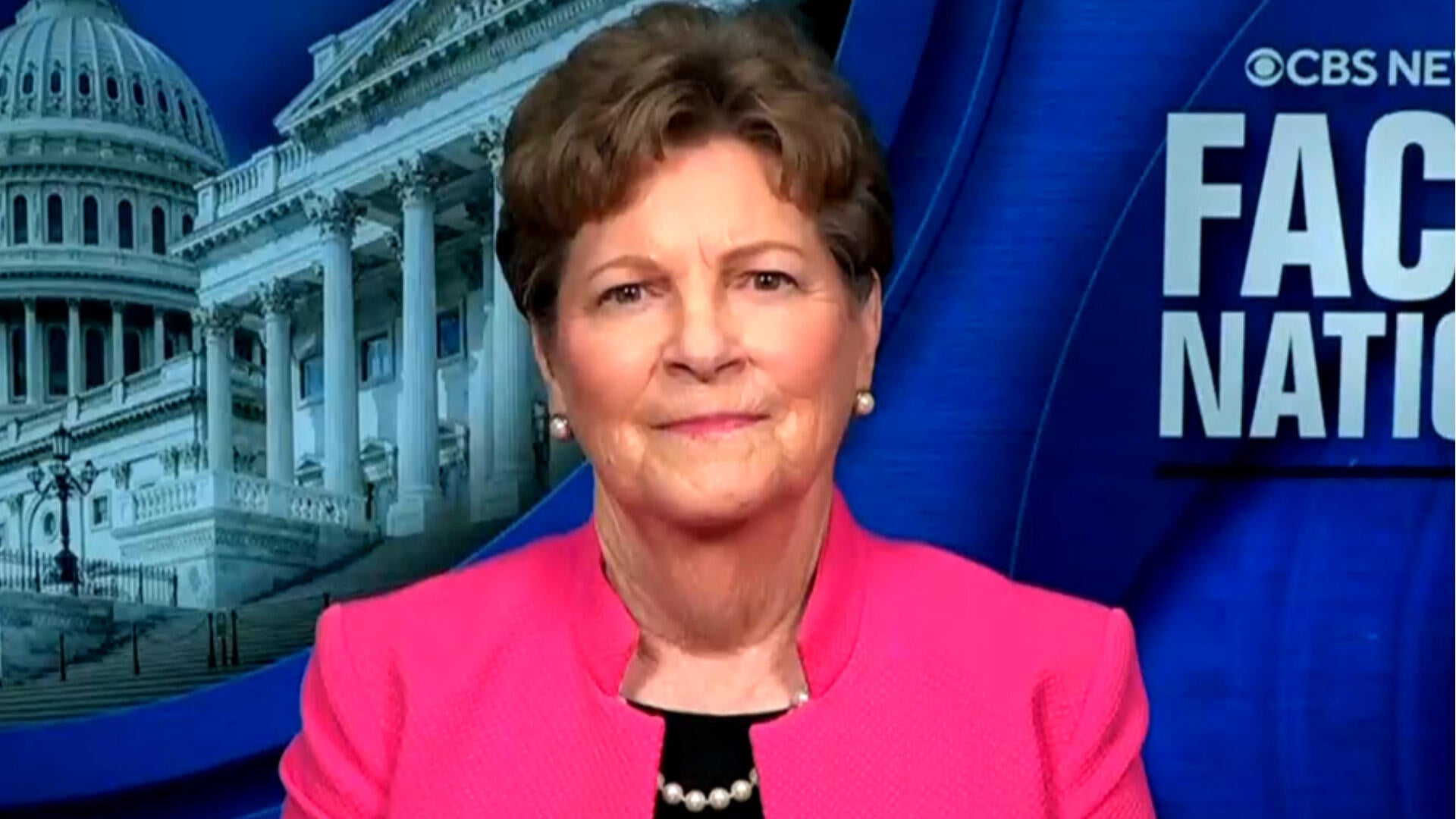
Washington D.C. – As the nation exhaled following a tumultuous 40-day government shutdown, Senator Jeanne Shaheen, a Democrat representing New Hampshire, issued a poignant call for unity and forward momentum, urging lawmakers to transcend the recent gridlock and collaboratively tackle the pressing issue of healthcare costs. Speaking on "Face the Nation with Margaret Brennan" on November 16, 2025, Shaheen, who played a pivotal role in facilitating the bipartisan agreement that ultimately reopened the federal government, articulated a clear path: "We need to put the shutdown behind us, end the circular firing squad, and remember why we’re in this situation." Her words resonated as a plea for pragmatism and a return to legislative purpose after weeks of intense political infighting and public frustration.
The protracted shutdown, which had paralyzed federal agencies and left hundreds of thousands of government employees without paychecks, was the culmination of deep ideological divisions and a budget impasse that spiraled into a test of wills between Congress and the White House. At its core, Shaheen asserted, the crisis stemmed from a fundamental refusal by key Republican figures—namely then-President Donald Trump, Speaker Johnson, and the Republican majorities in both the House and Senate—to seriously address the escalating cost of healthcare for American families. This political deadlock had become a prime example of the "circular firing squad" mentality Shaheen lamented, where political factions within the same government apparatus expend energy attacking each other rather than seeking common ground to serve the public interest. The metaphor aptly captured the self-defeating nature of the standoff, which yielded no clear winners and inflicted considerable damage on the nation’s governance and economy.
For Democrats, a central demand in the shutdown negotiations had been the extension of expiring Affordable Care Act (ACA) tax credits. These credits are a lifeline for millions of Americans, significantly reducing the burden of health insurance premiums for plans purchased on state exchanges. Without these subsidies, many individuals and families would face dramatically higher monthly costs, potentially forcing them to drop coverage altogether. The impending expiration of these credits had created an urgent imperative for Democrats, who viewed their extension as a non-negotiable component of any funding agreement. The Republican leadership, however, had initially resisted this linkage, leading to the prolonged impasse and the subsequent shutdown, which cast a long shadow over Washington.
The turning point came on the 40th day of the shutdown, a testament to the grinding toll of political stalemate. A group of eight Senate Democrats, including Senator Shaheen, made the politically courageous decision to break ranks with their party’s leadership. In a demonstration of compromise over protracted conflict, they forged a deal with Republicans to end the funding lapse. This was not a capitulation, but a strategic maneuver aimed at restoring government functionality while securing a concrete commitment: a promise to hold a vote next month on the crucial ACA tax credits. This concession, though deferred, provided a glimmer of hope for millions of Americans reliant on affordable healthcare, and it underscored Shaheen’s ability to navigate complex political terrain and build bridges across the aisle. Her role as a facilitator was critical in transforming an intractable deadlock into a viable legislative path forward.
Now, with the government reopened, Democrats find themselves with a narrow window and a clear mandate to advance legislation addressing the expiring tax credits. The challenge, however, remains substantial: crafting a bill that can garner sufficient bipartisan support to pass both chambers of Congress and ultimately be signed into law. Senator Shaheen, ever the pragmatist, has already outlined potential avenues for compromise. She suggested that while extending the credits, lawmakers "ought to be able to agree on some changes, like capping the income of people who receive those premium tax credits," alongside seeking to root out fraud and abuse within the program. These proposed adjustments reflect a willingness to refine the existing framework, making it potentially more palatable to Republicans who have long sought reforms to the ACA. Her call to "focus on what we can agree to" and "look at what we can get done in the timeframe we have" highlights the urgent need for a results-oriented approach.
Shaheen’s collaborative spirit extends beyond mere rhetoric. She confirmed ongoing discussions with her Republican counterparts, notably Senator Bill Cassidy of Louisiana, throughout the shutdown. These dialogues, along with outreach to House members from both parties, underscore a genuine commitment to bipartisan problem-solving. Senator Cassidy, who also appeared on "Face the Nation," presented a somewhat different vision for addressing healthcare costs, indicating communication with the White House regarding a plan to reduce expenses for Americans. His approach involved giving individuals money to help offset the often-high deductibles associated with lower-cost policies under the ACA, a concept that the President had also reportedly floated. This proposal represents a distinct philosophical path, focusing on direct consumer assistance for out-of-pocket costs rather than primarily subsidizing premiums.
While Shaheen acknowledged the merit in exploring various solutions, she expressed a pragmatic reservation about Cassidy’s more comprehensive reform proposals in the immediate context. "We can work together, we can extend the credits," she stated, "but we probably can’t implement significant reforms that Sen. Cassidy was talking about in the time frame that we’ve got." This statement is crucial, highlighting Shaheen’s strategic prioritization. She recognizes the urgent need for a short-term fix – the extension of the premium tax credits – to prevent millions of Americans from losing affordable healthcare. While long-term, structural reforms are necessary and desirable, she argues that the immediate crisis demands a focused, achievable solution. Her perspective emphasizes a dual approach: addressing immediate needs while simultaneously laying the groundwork for more ambitious, long-term overhauls of the healthcare system.
The resolution of the shutdown and the subsequent pivot to healthcare reform offer a critical case study in modern American governance. It demonstrates the profound challenges of legislative consensus in a deeply polarized environment, where even essential functions of government can be held hostage by political maneuvering. Yet, it also highlights the indispensable role of moderate voices and bipartisan brokers like Senator Shaheen, who are willing to transcend partisan divides to find workable solutions. The "circular firing squad" mentality, while seemingly pervasive, ultimately proved unsustainable, forcing a return to the negotiating table.
The path ahead for healthcare legislation remains fraught with complexity. Democrats will need to skillfully navigate the fine line between their ideal outcomes and what is politically achievable with Republican support. The upcoming vote on the tax credits will be a litmus test for the sustainability of this fragile bipartisan cooperation. Failure to extend these credits would undoubtedly trigger another wave of public outcry and deepen the healthcare crisis for many families. Conversely, a successful passage, even with compromises, could signal a renewed capacity for Congress to address critical national issues through collaboration rather than confrontation. As Shaheen aptly concluded, "So we need to look both in the short term and in the long term for how we address the cost of health care," underscoring that while the shutdown may be behind us, the arduous journey toward truly affordable and accessible healthcare for all Americans continues.