TikTok Shop Is Now the Size of eBay. Despite an unrelenting storm of political controversy, including persistent threats of a nationwide ban, President Donald Trump’s notoriously volatile tariff regime, and internal executive shake-ups designed to empower Chinese leadership, TikTok’s burgeoning e-commerce division continues its trajectory of truly massive, almost unprecedented, growth. This expansion defies the complex geopolitical and corporate headwinds it faces, cementing its position as a formidable new player in the global retail landscape.
While TikTok, a company notoriously private about its consolidated financial figures, does not publicly disclose aggregate sales data, granular insights are available. The price and sales volume of individual products are conspicuously visible within the app, allowing analytics firms to paint a comprehensive picture. Based on this accessible data, the respected analytics firm EchoTik estimates that TikTok Shop achieved an astonishing $19 billion in global product sales during the third quarter of this year, spanning from July through September. The United States, having rapidly ascended to become TikTok Shop’s largest individual market, contributed a significant $4 billion to $4.5 billion of that total. This figure represents an extraordinary increase of approximately 125 percent compared to sales recorded in the second quarter of the preceding year.
To truly grasp the magnitude of these numbers, it’s essential to place them in perspective. TikTok Shop, a platform that only launched its full e-commerce capabilities in the US in September 2023, has already reached a scale comparable to that of eBay, an industry titan with a legacy spanning over three decades. For context, eBay reported total sales of $20.1 billion in the same recent quarter. The speed with which TikTok Shop has achieved this competitive standing is nothing short of remarkable, signaling a seismic shift in consumer behavior and market dynamics. “We have mostly focused on TikTok from the point of view of the TikTok ban, and we have almost forgotten that TikTok Shop’s share in US e-commerce just continues to grow slowly, but surely,” observes Juozas Kaziukėnas, a prominent independent e-commerce analyst, highlighting how the political drama has overshadowed the platform’s quiet, yet relentless, commercial ascent.
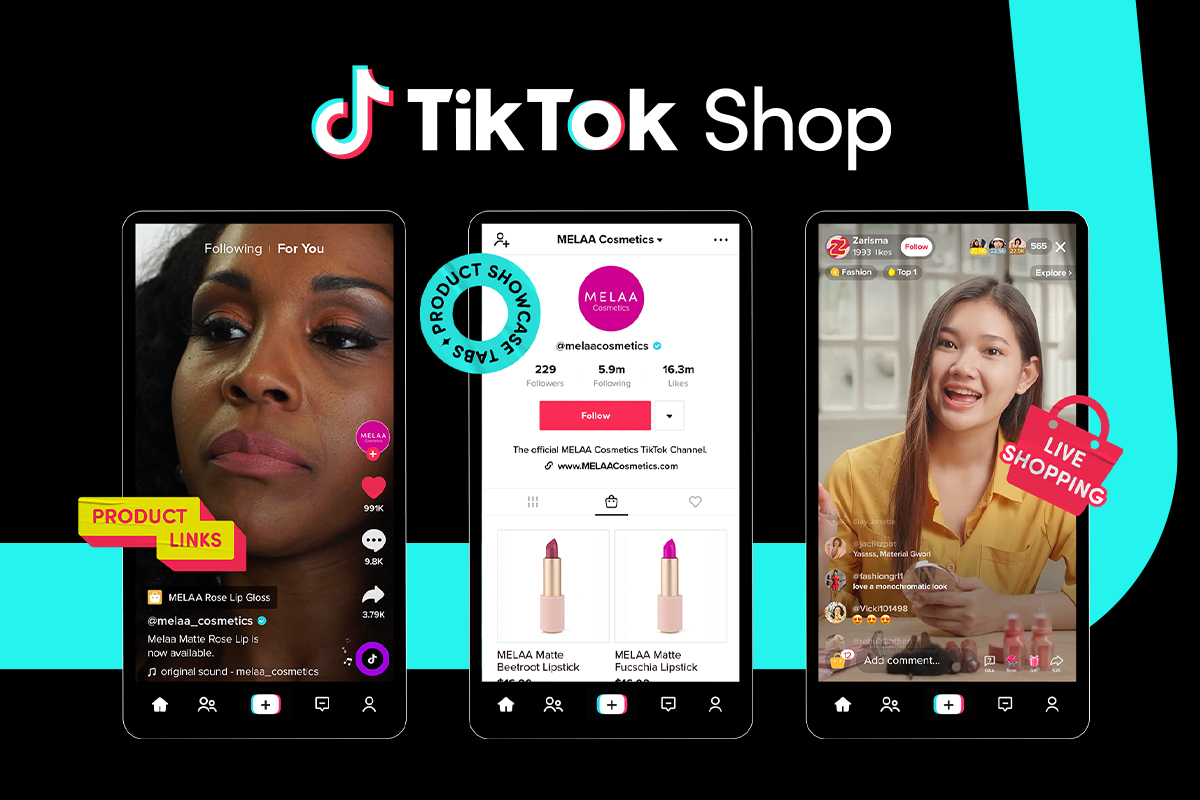
TikTok Shop’s meteoric rise into the intensely saturated US e-commerce landscape is largely attributable to its masterful execution of an age-old adage: show, don’t tell. In a digital age overwhelmed by text and static images, TikTok has leveraged its core strength – short-form video content – to create an immersive and highly effective shopping experience. Creators on the platform produce engaging, bite-sized videos demonstrating products, whether it’s trying on the latest fashion trends or showcasing the practical utility of innovative home gadgets. Crucially, these videos are seamlessly integrated with direct links that allow consumers to purchase the featured products within the same platform. This streamlined approach offers a significantly more straightforward and intuitive experience for consumers, who can witness real people interacting with and testing products, thereby circumventing the often tedious and sometimes unreliable process of sifting through countless written reviews on conventional e-commerce websites.
Ivy Yang, the astute founder of Wavelet Strategy, a strategic public relations consultancy, provides a compelling personal anecdote that perfectly encapsulates TikTok Shop’s appeal. She recounts purchasing a dust-mite-removing vacuum on Amazon, only to later scroll past a TikTok Shop video featuring a remarkably similar product. Upon closer inspection, Yang quickly realized the TikTok Shop version boasted superior features and functionality. Without hesitation, she ordered the TikTok Shop vacuum, tested it, and subsequently returned the less-impressive Amazon purchase. For Yang, this experience crystallized the core allure of shopping on TikTok: “I need to see how it works in action,” she explains, articulating a preference shared by a growing segment of modern consumers. This visual, demonstrative approach cuts through the noise, offering transparency and tangible proof of a product’s value.
The theoretical extension of this visual appeal is livestream shopping, a phenomenon that has achieved unparalleled popularity, particularly in China. Here, influencers engage directly with audiences in real-time, touting products on camera with minimal editing, which in turn fosters a sense of authenticity and immediate feedback, potentially exposing any product defects. In recent years, livestream shopping has fundamentally reshaped consumer purchasing habits in China, evolving into one of ByteDance’s primary revenue pillars. However, despite TikTok’s strenuous efforts and significant investments, replicating this profound success in the United States has proven to be an elusive challenge. Kaziukėnas suggests that TikTok Shop’s overall performance, particularly concerning livestream shopping, likely still falls short of ByteDance’s ambitious internal expectations for the Western market.
Compared to its overwhelming success in China, TikTok Shop’s livestream sales in the US remain comparatively minuscule. Dandan He, the CEO of CHC Fashion Group, a New York-based company specializing in hosting TikTok livestreams for US sellers, meticulously breaks down the disparity. In the US, approximately 80 percent of TikTok users primarily engage with the app for entertainment purposes, while the remaining 20 percent are drawn to shopping-related content. Within that 20 percent, only about one in ten actively watches livestreams. This means that, in total, a mere 2 percent of TikTok’s overall traffic in the US is directed towards livestream shopping content. This stands in stark contrast to China, where, according to He, “livestream e-commerce accounts for nearly 50 percent of all Douyin traffic,” referring to the Chinese counterpart of TikTok. While TikTok declined to share precise sales figures specifically for TikTok Shop, company spokesperson Kathryn Hull stated in an email that TikTok Shop live shopping sessions witnessed a robust 72 percent year-over-year increase in September, and sales were up 120 percent year-over-year in June, indicating growth, albeit from a lower base compared to China.
The question of whether Americans will ever fully embrace livestream shopping remains a contentious one. Having reported on Chinese platforms’ endeavors to introduce livestream shopping to the US since 2020, a growing skepticism permeates the industry regarding their ultimate success. A significant part of the problem lies in the stark qualitative difference between livestream e-commerce content on TikTok today and the captivating spectacles Chinese consumers are accustomed to on Douyin. Many in the West still perceive TikTok live shopping as little more than a verticalized, mobile version of traditional home shopping channels like QVC. However, younger demographics, the primary user base of TikTok, show little interest in watching a reimagined QVC on their phone screens. In China, top-tier shopping livestreams are expertly crafted to function more like dynamic variety shows, incorporating elements of comedy, sensational stunts, and often featuring prominent celebrities, creating an immersive "shop-tainment" experience.
Yang further elaborates on this cultural chasm: “In China, there’s this sense of novelty: ‘Oh my god, it’s literally a public intellectual selling me facemasks.’ That is innovation. Can you imagine Taylor Swift or Travis Kelce going on livestream and selling things to you here? That would not happen.” This highlights a fundamental difference in celebrity engagement and consumer perception. In the US, direct selling by A-list celebrities often carries a stigma or is seen as less authentic, whereas in China, it’s a powerful driver of engagement and sales.
Another critical issue hindering the widespread adoption of livestreaming on TikTok Shop in the US is that it remains a strategy predominantly employed by Chinese brands targeting overseas markets. These sellers frequently grapple with significant cultural and language barriers, struggling to produce content that genuinely resonates with and captivates American consumers. Felicity Zhang, a Houston-based TikTok Shop seller originally from China, has witnessed this firsthand. Having previously worked at TikTok recruiting and training livestreamers, she now manages her own brand on the platform. Zhang observes that TikTok Shop hosts such a large contingent of China-based sellers that “when you scroll the livestreams, it feels like you are in Yiwu,” referring to the renowned Chinese manufacturing hub famous for its vast array of inexpensive plastic goods and commodities.
While TikTok has reportedly been tightening its merchant registration rules to stem the tide of overseas sellers, Zhang notes an ironic side effect: these more stringent regulations have inadvertently made it more challenging for genuine small American businesses to onboard, further impeding domestic adoption and growth. Hull, the TikTok spokesperson, affirmed that the platform meticulously vets merchants on TikTok Shop, disclosing that 1.4 million new seller applications were declined in the first half of 2025. However, she did not specifically address whether these rules were explicitly designed to screen out non-US sellers, leaving some ambiguity about the impact on local entrepreneurs.
In stark contrast to its struggles in the US, TikTok Shop is experiencing significantly greater success in Southeast Asia. The platform’s top-performing markets in the third quarter, excluding the US, included Thailand, Indonesia, Vietnam, and the Philippines. While none of these countries individually surpasses the US in sales volume, their combined performance represents a more profound success story for TikTok. This is particularly true because livestream e-commerce resonates much more deeply with consumers in this region. In a compelling example from October, a single Thai influencer reportedly sold over $17 million worth of products, predominantly cosmetics and supplements, during an extraordinary six-day TikTok broadcast marathon, which included appearances from numerous Thai celebrities.
“It’s now mainstream across Thailand and Southeast Asia,” confirms Warin Tinprapa, the chief growth officer at MI Group, a prominent Thai social media marketing agency. She explains that the livestream shopping model “fits perfectly with the region’s shopping-as-entertainment culture and mobile-first habits,” indicating a strong alignment between the platform’s offering and local consumer preferences. Several factors contribute to Southeast Asia proving to be a more fertile ground for TikTok Shop. Firstly, consumer behavior in the region more closely mirrors that of China, where social commerce and live selling are deeply ingrained. Secondly, the competitive landscape from established local companies and global tech giants like Amazon is considerably less intense. Finally, TikTok’s aggressive low-price strategy, often featuring heavily discounted items, aligns well with local consumption habits and economic realities in many Southeast Asian nations.
The overarching takeaway from numerous industry conversations is that TikTok Shop in the US, in its current form, is fundamentally distinct from its highly successful Chinese counterpart, Douyin. The cultural nuances, consumer expectations, and competitive environments are simply too varied for a direct replication. However, TikTok has demonstrated remarkable adaptability, devising new strategies that have enabled it to steadily embed itself into the fabric of the American shopping market. Unlike other platforms, TikTok is investing an unparalleled amount of resources into cultivating social commerce, pushing shopping content so aggressively that users frequently voice complaints about being inundated with too many shopping-related videos on their "For You Page." This persistent push, while sometimes irksome to users, indicates a strategic long-term commitment.
For sellers aiming to capitalize on this burgeoning market, the clear implication is to prioritize and expertly utilize TikTok’s original content format: short videos. This format, which initially propelled TikTok to global fame, remains the most effective driver of traffic and sales to products within the platform. Dandan He, who manages the New York-based TikTok e-commerce agency, acknowledges this shift in strategy. While her company initially focused predominantly on livestreaming, it now allocates half of its efforts to producing compelling short videos, recognizing their immediate impact.
Despite this strategic pivot, He is not yet willing to abandon livestreaming entirely. Her hope, and the hope of many betting on the future of social commerce in the US, is that as TikTok continues its exponential growth as a social media platform, the currently modest 2 percent of traffic directed to livestream e-commerce will eventually mature into a significant revenue stream. Her company, she asserts, aims to be fully prepared and positioned before this shift becomes mainstream. “The reason we have persisted till now is to see when the livestream e-commerce traffic in the US can catch up with that in China. We are betting on the future,” she concludes, embodying the speculative yet determined spirit driving TikTok Shop’s audacious journey.