Judge rules Trump’s National Guard deployment to D.C. is illegal.
A federal judge delivered a significant blow to the Trump administration on Thursday, ruling that President Trump’s extensive, months-long deployment of thousands of National Guard forces to the streets of Washington, D.C., fundamentally violates federal law. The decision by U.S. District Judge Jia Cobb marks a critical moment in the ongoing legal battles over the executive branch’s use of military personnel in domestic law enforcement roles, particularly within the unique jurisdiction of the nation’s capital.
Judge Cobb’s ruling sided squarely with D.C. Attorney General Brian Schwalb, who initiated legal action against the federal government, contending that the deployment of the D.C. National Guard (DCNG) and other state-level Guard units far exceeded the President’s constitutional and statutory authority. Schwalb’s lawsuit argued that such an unprecedented use of military forces for sustained domestic law enforcement duties undermined the distinct separation between military and civilian authority and infringed upon the District’s limited autonomy. While the ruling delivered a clear victory for D.C. officials, Judge Cobb temporarily stayed her decision for 21 days, granting the Trump administration a window to file an appeal and potentially prolong the legal contest.

The White House was quick to condemn the ruling, with spokeswoman Abigail Jackson issuing a strong statement defending the President’s actions. Jackson asserted that Mr. Trump possesses the inherent authority to deploy Guard troops within the nation’s capital, framing Schwalb’s lawsuit as "nothing more than another attempt — at the detriment of DC residents — to undermine the President’s highly successful operations to stop violent crime in DC." This retort highlights the administration’s consistent narrative that the deployments were a necessary measure to combat a perceived surge in violent crime within the District, an assertion often met with skepticism by local D.C. officials who view the federal presence as an overreach.
In the wake of the ruling, Attorney General Schwalb reiterated his concerns, emphasizing the broader implications of the President’s actions. "Normalizing the use of military troops for domestic law enforcement sets a dangerous precedent," Schwalb stated, "where the President can disregard states’ independence and deploy troops wherever and whenever he wants — with no check on his military power. This unprecedented federal overreach is not normal, or legal. It is long past time to let the National Guard go home — to their everyday lives, their regular jobs, their families, and their children." His words underscored the dual concerns of legal precedent and the practical impact on the Guard members themselves, many of whom have been away from their civilian lives for extended periods.
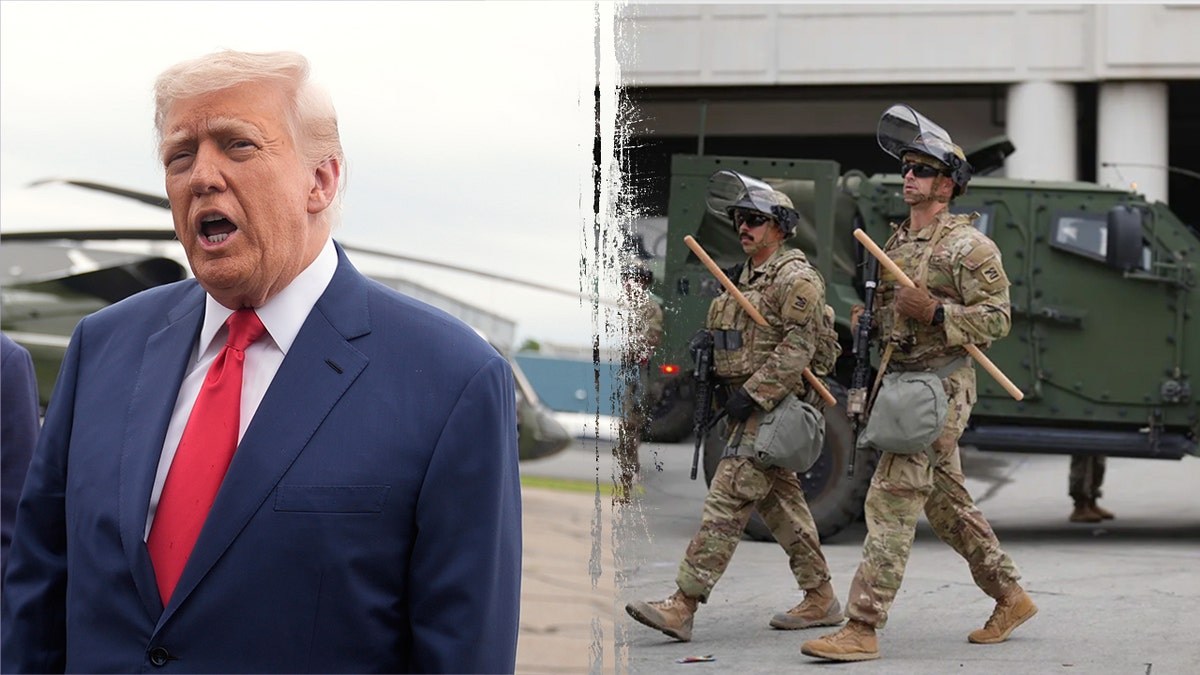
The origins of this controversy trace back to August, when President Trump first ordered National Guard forces to D.C. This move was part of a wider, aggressive crackdown on crime, which combined Guard troops with federal law enforcement agents and, controversially, involved a brief federal takeover of local D.C. police operations. Since then, Guard forces have become a ubiquitous sight across the capital, particularly in high-traffic tourist areas and commercial districts. The visual presence of armed military personnel on city streets, typically reserved for states of emergency or specific military operations, has drawn considerable pushback from local officials and residents alike, who viewed it as an unnecessary militarization of their city. Despite the objections, the deployment has been repeatedly extended, with its current authorization set to run until at least February 2026, creating a persistent military presence in a civilian urban environment.
A key aspect of the legal dispute revolved around the unique command structure of the D.C. National Guard. Unlike state-level Guard forces, which are typically under the direct control of their respective governors, the D.C. National Guard reports directly to the President as its commander-in-chief. This distinct arrangement was central to the administration’s argument for its authority. However, several GOP-led states also dispatched their own Guard troops to the city, further complicating the legal landscape and blurring the lines of authority.
In her detailed ruling, Judge Cobb meticulously dissected the legal arguments presented by both sides. She concluded that the President, despite his role as commander-in-chief of the D.C. Guard, lacked the power to deploy the DCNG for "non-military, crime-deterrence missions in the absence of a request from the city’s civil authorities." This finding directly challenged the administration’s interpretation of D.C. local laws. The federal government had cited a clause stating the Guard’s commanding general "may order out any portion of the National Guard for such drills, inspections, parades, escort, or other duties," arguing that the current deployment fell under "other duties." Judge Cobb, however, sharply disputed this, asserting that "other duties" in that context appeared to be limited to military exercises and not broad domestic law enforcement.
Furthermore, the Trump administration had also invoked another local law that permits the Guard to "aid the civil authorities in the execution of the laws." But Judge Cobb again found this interpretation flawed, stating that it does not empower the government to "unilaterally call upon the DCNG to assist the District with crime control," especially without a formal request or invitation from local D.C. officials. Her ruling underscored the importance of local civilian authority in authorizing military assistance for domestic matters, even when the military force in question reports directly to the federal executive. Separately, Cobb also addressed the deployment of out-of-state National Guards, finding that federal law "cannot support the out-of-state National Guards’ operations in the District because there is no state-law basis for those Guards to travel to the District," thus effectively challenging the legality of non-DCNG forces as well.
This D.C. ruling is not an isolated incident but rather the latest in a series of legal challenges against the Trump administration’s broader strategy of deploying National Guard forces to various cities across the country. In recent months, President Trump had dispatched Guard units to other urban centers, often ostensibly to protect federal agents and property during immigration crackdowns or civil unrest. These deployments frequently met with fierce local opposition and yielded mixed results in court.
For instance, members of the California National Guard were deployed to Los Angeles over the summer, despite strong objections from Governor Gavin Newsom. While an appeals court panel initially allowed the Los Angeles deployment to proceed following a lawsuit from Newsom, a subsequent judge later ruled that the troops had illegally engaged in civilian law enforcement activities, highlighting the complex legal terrain. Similarly, hundreds of out-of-state National Guard forces were sent to Chicago and Portland, Oregon. In these cases, judges blocked Guard forces from being deployed onto the streets in Chicago and permanently blocked the deployment in Portland, often leaving troops in a protracted "holding pattern" and unable to actively engage in the intended missions.
The administration consistently argued that these deployments were justified under federal statutes like Title 10, which allows for the Guard’s use when "there is a rebellion or danger of a rebellion against the authority of the government of the United States." This broad interpretation of federal authority to suppress domestic unrest has been a cornerstone of their defense. However, local officials in these cities consistently countered that such deployments were unnecessary and inappropriate, asserting that local police forces were fully capable of handling protests and maintaining order without federal military intervention. The D.C. ruling further solidifies the argument that the federal government’s authority to unilaterally deploy military forces for domestic law enforcement is not boundless and is subject to stringent legal limitations, particularly in the absence of a clear and present threat of rebellion or direct request from local civilian authorities.
The 21-day stay on Judge Cobb’s ruling means that the current deployment of National Guard troops in D.C. will continue for now, allowing the Trump administration time to decide on its next legal steps, which almost certainly include an appeal to a higher court. Should the appeal fail, or if the administration chooses not to pursue it, the ruling could compel the immediate withdrawal of thousands of Guard members, effectively ending a controversial chapter in D.C.’s recent history. Beyond D.C., the ruling carries significant weight for federalism and the delicate balance of power between the executive branch and local jurisdictions, potentially shaping future debates over the appropriate use of military forces in domestic civil matters across the United States.