Officer Acquitted of Murder in Shooting Death of Ta’Kiya Young, Pregnant Black Mother Accused of Shoplifting
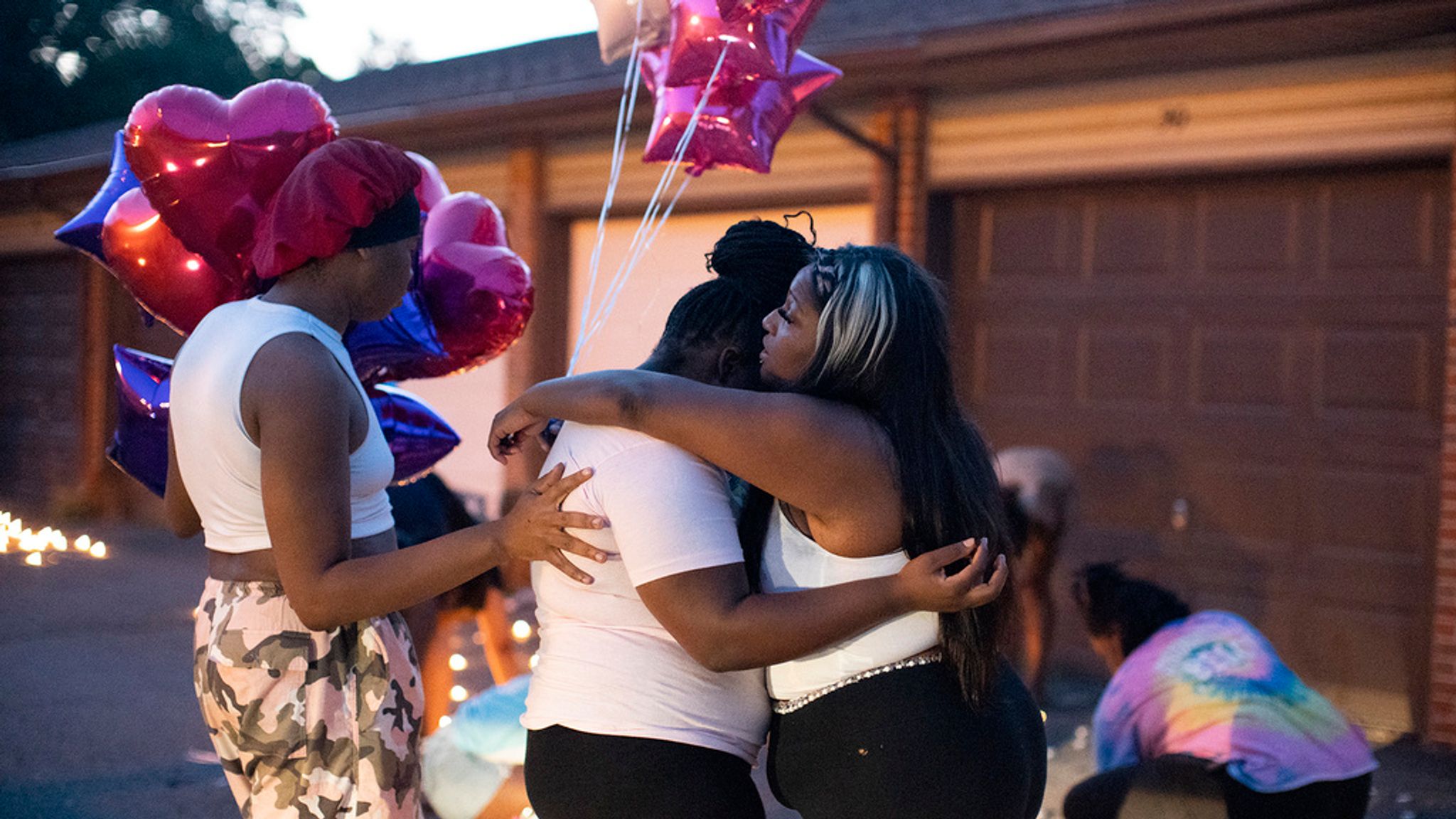
The verdict delivered on a somber Friday afternoon sent ripples of shock and anguish through a courtroom already strained by weeks of emotional testimony, as Blendon Township police officer Connor Grubb was acquitted of all charges, including murder, in the fatal shooting of Ta’Kiya Young, a pregnant Black mother accused of shoplifting. After multiple days of intense deliberation, the jury’s decision closed a chapter in a case that had drawn national attention to issues of police accountability, racial bias, and the use of deadly force, yet left many questions unresolved and deep wounds unhealed. Grubb, who could have faced a life sentence had he been convicted, stood stoic as the judge read the verdicts, a stark contrast to the profound grief that overwhelmed Ta’Kiya Young’s grandmother, who collapsed into heart-wrenching sobs, her cries of "It’s not right! This is not right!" echoing through the hushed chamber. The outcome reignited fierce debates about justice in America, particularly for marginalized communities, and highlighted the chasm between legal findings and public perception of fairness.
The tragic incident unfolded on August 24, 2023, in the bustling parking lot of a Kroger supermarket in Blendon Township, a suburb of Columbus, Ohio. Officers Connor Grubb and Erick Moynihan had responded to a report alleging that Ta’Kiya Young was suspected of stealing alcohol from the store. Approaching her parked car, a tense confrontation quickly escalated. Bodycam footage, a critical piece of evidence shown repeatedly during the trial, captured the sequence of events. Young partially lowered her driver’s side window as both officers, their voices raised and laced with expletives, repeatedly commanded her to exit the vehicle. Grubb could be seen positioning himself directly in front of Young’s car, his left hand placed firmly on the hood while his right hand gripped his firearm, pointed directly at her. In a chilling moment captured on video, Young, trapped in a rapidly intensifying situation, could be heard asking the officers, "Are you going to shoot me?" Almost immediately after her desperate query, she engaged her turn signal, and her car began to roll slowly forward, undeniably moving in the direction of Officer Grubb. It was at this precise instant that Grubb fired a single bullet into her chest.
Moments later, the car, now driverless, came to a halt against the supermarket building. Officers swiftly moved to break the driver’s side window, attempting to render aid to Young. Despite their efforts, she was mortally wounded. Ta’Kiya Young and her unborn daughter were both pronounced dead shortly after arriving at a nearby hospital. The loss of both a mother and her unborn child amplified the tragedy, drawing widespread condemnation and calls for a thorough and transparent investigation. Ta’Kiya Young was already a mother to two young sons, and her family had been eagerly anticipating the arrival of her third child, a daughter she had already named. The senselessness of the deaths, stemming from an alleged shoplifting incident, fueled public outrage and brought into sharp focus the proportionality of police response to non-violent offenses. For her family, the pain of losing Ta’Kiya and her unborn daughter was compounded by the struggle for justice, a struggle they felt was far from over.
The two-week trial in Franklin County Common Pleas Court was a crucible of legal arguments and emotional testimonies. Jurors were presented with a comprehensive array of evidence, most notably the visceral bodycam video that offered an unfiltered glimpse into the final moments of Ta’Kiya Young’s life. Expert witnesses from both the prosecution and defense offered competing interpretations of the events, delving into use-of-force protocols, the dynamics of perceived threats, and the psychology of high-stress encounters. Sgt. Erick Moynihan, the officer who accompanied Grubb, took the stand, recounting his perspective of the chaotic scene. Officer Grubb, though present throughout the proceedings, chose not to testify in his own defense. Instead, his detailed statement, previously given to a special agent for the Ohio Bureau of Criminal Investigation, was read into the record. This decision by Grubb not to face cross-examination was a strategic move by his defense team, aimed at controlling the narrative presented to the jury.
In his statement, Grubb articulated his rationale for his actions, emphasizing what he perceived as a rapidly unfolding threat. He asserted that he had strategically positioned himself in front of Young’s vehicle to provide backup for his partner and, crucially, to protect other patrons in the crowded parking lot from a potentially runaway vehicle. Grubb stated that he drew his firearm only after Young had repeatedly failed to comply with Sgt. Moynihan’s direct commands to exit the car. The critical juncture, according to Grubb, was when Young’s car began to move forward. He claimed he felt the vehicle make contact with his legs and shins, causing his body to begin to lift off the ground, an experience that, in his account, instilled a profound fear for his life and compelled him to fire his weapon. This narrative of self-defense and the "car as a weapon" doctrine formed the cornerstone of the defense’s argument, portraying Grubb’s actions as a desperate, split-second decision made under extreme duress.
A significant development during the trial came when Franklin County Common Pleas Judge David Young, who shares no relation with Ta’Kiya, made a pivotal ruling. He dropped four of the ten counts Grubb faced, specifically those related to the death of Young’s unborn daughter. Judge Young concurred with the defense’s argument that prosecutors had failed to present sufficient proof that Officer Grubb was aware of Ta’Kiya Young’s pregnancy at the moment he fired his gun. This legal distinction, focusing on the officer’s knowledge or intent regarding the unborn child, underscored the complexities of prosecuting such cases and the specific elements required to prove certain charges under Ohio law. While the tragic loss of the unborn daughter remained a profound element of the case, the legal standard for proving murder or manslaughter related to her death proved too high without evidence of Grubb’s specific knowledge of Young’s condition.
The acquittal sent a powerful message, one that was immediately interpreted differently across various segments of society. Sean Walton, an attorney representing the Young family, condemned the outcome as "an American tragedy," lamenting what he characterized as a "dual system of justice" in the U.S., where accountability for law enforcement officers in fatal shootings often appears elusive. Walton and the family’s legal team vowed to persist in their fight, shifting their focus to civil court. A federal lawsuit had already been filed in August against Blendon Township and its police chief, alleging that Grubb had not received adequate training or supervision and had "recklessly escalated" his response to a situation that did not necessitate deadly force. This civil action aims to hold the department accountable for its policies and practices, seeking damages for the profound loss suffered by the Young family, even as the criminal justice system has cleared the officer.
Grubb’s attorney, Mark Collins, expressed relief at the verdict, revealing that Grubb had wept upon hearing the decision. Collins also took the opportunity to criticize the protests that had occurred outside the courthouse during the trial, arguing that his client should never have been subjected to felony murder charges. "For the rest of his life, he has to deal with this," Collins stated, reflecting on the lasting psychological toll on his client. "You didn’t get to hear from him because the government put his statement on, but he feels he took a life on duty and realizing, in his life after the fact, he has to walk around with that. And that is a difficult situation." Collins’ remarks highlighted the immense pressure and trauma that officers can experience in the line of duty, even when their actions are deemed legally justified.
The Ta’Kiya Young case, from its harrowing beginning to its controversial end, will undoubtedly remain a touchstone in the ongoing national discourse about police reform, racial justice, and the definition of reasonable force. It leaves a legacy of profound grief for a family that lost a daughter and an unborn grandchild, a sense of vindication for an officer whose actions were deemed lawful, and a stark reminder of the deep divisions that persist in how justice is perceived and administered in America. The civil lawsuit offers another avenue for the Young family to seek redress, but the criminal acquittal underscores the formidable challenges inherent in prosecuting officers for on-duty shootings, even when the circumstances are as tragic and hotly debated as the death of Ta’Kiya Young.