Best Indoor TV Antenna (2025): Mohu, Clearstream, One for All
As we navigate into 2025, the landscape of television consumption continues to evolve, with an increasing number of households cutting the cord from traditional cable and satellite services. In this new era of streaming and on-demand content, the humble indoor TV antenna has experienced a remarkable resurgence, offering a cost-effective and reliable gateway to free, high-definition (HD) over-the-air (OTA) broadcasts. With the ongoing rollout of NextGen TV (ATSC 3.0), which promises superior picture quality (including 4K), enhanced audio, and interactive features, selecting the right indoor antenna is more crucial than ever. This guide delves into various models from prominent brands like Mohu, Clearstream, and One for All, evaluating their performance, reliability, and value to help you make an informed decision for the year ahead.
Understanding Indoor TV Antennas: Key Considerations for 2025
Choosing the "best" indoor TV antenna isn’t a one-size-fits-all proposition. Several factors dictate performance, and understanding them is vital:
-
Amplified vs. Passive:
- Passive Antennas: These do not require external power and simply receive signals. They are ideal for users in urban or suburban areas with strong, nearby broadcast signals. They are generally less prone to interference.
- Amplified Antennas: These include a built-in amplifier that boosts weak signals. They are highly recommended for users in rural areas, those living further from broadcast towers, or homes with signal obstructions (like thick walls or hills). While they can pull in more channels, a poorly designed amplifier can also introduce noise or interference.
-
Range and Signal Strength: Antenna manufacturers often advertise impressive range figures (e.g., 50, 70, or even 100 miles). However, real-world performance is heavily influenced by terrain, building materials, and the power of local broadcast towers. Tools like AntennaWeb.org or TVFool.com are indispensable for determining your precise distance to towers and the strength of signals in your area.
-
Design and Placement: Indoor antennas come in various forms:
- Flat/Leaf-style: Ultra-thin, often multi-directional, designed to blend discreetly into a room or be mounted on a window.
- Bar/Panel-style: More robust, can be omnidirectional or directional, sometimes offering better performance than flat designs.
- Spherical/Unique Designs: Focus on aesthetics while attempting to maintain performance.
Placement is critical; higher locations (like an attic or second-story window) and proximity to external walls usually yield the best results. Experimentation is key.
-
ATSC 3.0 (NextGen TV) Compatibility: As the new broadcasting standard, ATSC 3.0 is rolling out across the US. While existing ATSC 1.0 antennas can still receive these signals (if your TV or tuner is compatible), some newer antennas are optimized for the NextGen TV spectrum, potentially offering more stable reception of these advanced broadcasts. For 2025, considering future-proofing with ATSC 3.0 capability is a smart move.
Our evaluation methodology for these antennas focused on consistency in channel scanning and operation, the total number of channels received (including major network affiliates like ABC, CBS, NBC, PBS, FOX), signal stability over multiple days, and the overall user experience, including ease of setup and value for money.
Antennas Worth Considering: Strong Contenders for 2025
While the market is flooded with options, a few models stand out as reliable choices, each catering to different needs and budgets. From our testing, the following options from Mohu and One for All demonstrated commendable performance, making them strong contenders for the best indoor TV antenna in 2025.
Mohu Leaf (Passive) for $40-$45
A Solid Choice for Urban Dwellers Seeking Simplicity
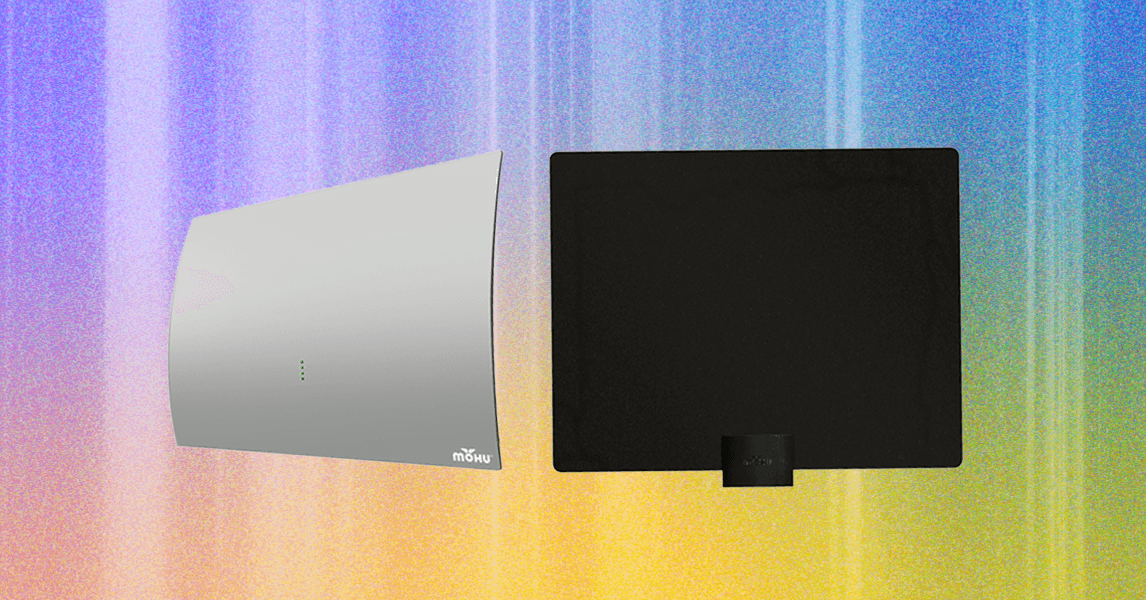
The Mohu Leaf has long been a recognizable name in the indoor antenna market, known for its ultra-thin, discreet design resembling a sheet of paper. The latest passive version, priced between $40 and $45, continues this legacy. In our tests, after multiple scans and minor adjustments, the Mohu Leaf (Passive) proved capable of receiving nearly as many channels as some of our top-performing amplified antennas. It consistently pulled in all essential core channels, making it a viable option for many households.
Its primary appeal lies in its passive nature: it doesn’t require an external power source, simplifying setup and reducing clutter. This makes it particularly attractive for users in areas with strong signal reception who prioritize simplicity and a minimalist aesthetic. Its multi-directional capability means less fuss with precise aiming, often a challenge with more directional antennas.
However, the passive design comes with limitations. While it performs admirably in ideal conditions (urban/suburban environments close to broadcast towers), its consistency in both initial scanning and day-to-day operation was slightly less robust than some amplified alternatives. For those in rural areas or homes with significant signal obstructions, the Mohu Leaf (Passive) might struggle to deliver a comprehensive channel lineup. Considering its similar price point to some amplified top picks, its value proposition becomes more nuanced. Unless you find it on a significant sale or absolutely do not want to deal with an amplifier, it’s a good, but not always the best, option. It’s a reliable workhorse for those in strong signal environments who value convenience and discreet design.
One for All Amplified (16662) for $100-$120
Premium Performance with a Modern Aesthetic and a Price Tag
The One for All Amplified (16662) antenna is an intriguing entry, immediately standing out with its distinctive spherical design. Priced between $100 and $120, it positions itself at the higher end of the indoor antenna market, suggesting a premium offering. Our testing revealed that this antenna largely lives up to its price point in terms of performance.
During its initial channel scan, the One for All Amplified (16662) successfully detected nearly all available channels, a truly impressive feat. Crucially, it also demonstrated strong reception for multiple NextGen TV (ATSC 3.0) channels, providing clear and stable reception. This makes it a forward-thinking choice for 2025, allowing users to tap into the next generation of broadcast television. Its amplified nature ensures a boosted signal, which is beneficial for homes with moderate signal challenges or those located slightly further from transmission towers.
Despite its excellent performance and modern aesthetic, its primary drawback is undeniably its high cost. While it delivers on its promise of consistent, high-quality reception, including cutting-edge NextGen channels, the price tag might be a barrier for budget-conscious cord-cutters. Its spherical shape, while stylish, might also be a design choice that doesn’t fit every décor. However, for users who prioritize aesthetic appeal, robust performance, future-proofing with NextGen TV support, and are willing to invest in a premium indoor antenna, the One for All Amplified (16662) is a compelling option that consistently delivers. It’s an investment in reliable, high-quality, free television.
Antennas to Approach with Caution (or Avoid Entirely)
Not all antennas are created equal, and some models, despite their marketing claims or attractive prices, simply do not deliver a satisfactory viewing experience. Our testing highlighted several antennas from various brands, including Mohu, Clearstream, and One for All, that struggled with consistency, channel acquisition, or overall reliability.
HIDB Electronics TV Antenna for $20
The "Too Good to Be True" Trap
This tiny antenna tower from HIDB Electronics is a popular seller on Amazon, likely due to its incredibly low price point of around $20. The allure of a cheap and compact solution is strong, and we genuinely hoped it would perform well. While it was able to scan a significant number of channels initially, its performance proved to be highly inconsistent over multiple days of testing. We frequently observed "dead channels" – channels that appeared in the scan list but showed no signal or picture – between rescans. This level of unreliability is incredibly frustrating for users simply trying to access free local broadcasts. While it might occasionally "get the job done" on a shoestring budget in extremely strong signal areas, it’s a gamble. For most users, especially those outside dense urban centers, this antenna is likely to leave many channels on the table, resulting in a subpar and inconsistent viewing experience. The old adage "you get what you pay for" often rings true in the world of antennas.
Mohu Vibe Amplified for $50
Style Over Substance?
Mohu’s Vibe Amplified, priced at $50, is another example of a "pad and wand-style" antenna that, despite its stylish appearance, failed to impress in performance. We have generally had mixed luck with this particular design aesthetic, and the Vibe Amplified was no exception. Across multiple TVs, this model demonstrated significant inconsistency, frequently dropping major local channels such as CBS, NBC, and PBS affiliates. Beyond these crucial networks, it also struggled to maintain a stable signal for many lesser-used channels. For an amplified antenna at this price point, such fundamental failures are unacceptable. Users expect amplified models to enhance reception, not to be less reliable than passive alternatives. The Mohu Vibe Amplified prioritizes a modern look at the expense of consistent and dependable channel reception, making it difficult to recommend.
Mohu Versa for $30
Passive Struggles to Perform
The Mohu Versa, priced at $30, is marketed as a stylish and simple indoor antenna, notably one of the few models available today that doesn’t include an optional amplifier. While its minimalist design is appealing, its performance in our tests was severely lacking. The Versa proved to be one of the worst antennas at pulling in channels, struggling even with signals that other passive antennas could reliably capture. What was particularly frustrating was its tendency to scan and list several channels that subsequently showed "no signal" when selected. This fundamental failure renders the antenna largely ineffective, as a channel list without a viewable picture is useless. For a passive antenna, consistency and basic channel acquisition are paramount, and the Mohu Versa simply did not deliver on these fronts. Its style does not compensate for its poor functionality.
Clearstream Flex Amplified for $60
A Massive Antenna with Underwhelming Results
The Clearstream Flex Amplified, priced at $60, is a visually substantial antenna, suggesting a powerful performance. However, its physical size did not translate into superior signal reception. This model struggled considerably with channel reliability during scanning, even after repeated attempts and adjustments. Perhaps most concerning, it was one of the few antennas we tested that completely failed to pick up our local ABC affiliate, a major network channel. Additionally, it missed several other important channel bands. For a "massive" and amplified antenna, such significant gaps in coverage are a major disappointment. Users invest in larger, amplified antennas specifically to overcome signal challenges, and the Clearstream Flex Amplified’s inability to reliably capture major channels makes it a poor choice for consistent, comprehensive OTA viewing.
One for All Suburbs Ultimate Antenna (14426) for $50-$60
Stylish Design, Inconsistent Performance
The One for All Suburbs Ultimate Antenna (14426), a thin black bar-style antenna priced between $50 and $60, boasts a sleek, modern aesthetic. Unfortunately, its looks did not translate into reliable performance. This model was consistently among the least effective antennas we tested. It repeatedly pulled in significantly fewer channels compared to similar models and, critically, often omitted wide channel bands, including major station affiliates. For an antenna in this price range, such inconsistency and poor channel acquisition are unacceptable. Consumers expect a dependable stream of free content, and the 14426’s inability to deliver on this basic promise makes it a model to avoid.
One For All Suburbs Ultimate (14450) for $30
Setup Headaches and Performance Gaps
Another offering from One for All, the Suburbs Ultimate (14450), priced at $30, presents a unique, rectangular design. While attempting to be stylish, its setup proved to be somewhat "janky," particularly with its stand legs, which felt less secure than desired. More importantly, its performance was underwhelming. This antenna had more trouble bringing in multiple channels, including some major network affiliates, than the top-performing antennas in our evaluation. For an antenna designed for "suburban" areas, where signals can be varied, this lack of robust reception is a significant flaw. The combination of a fiddly setup and inconsistent channel acquisition means the One for All Suburbs Ultimate (14450) ultimately falls short of providing a reliable and enjoyable free TV experience.
Making the Right Choice: Tips for Buyers in 2025
To ensure you pick the best indoor TV antenna for your needs:
- Research Your Location: Use AntennaWeb.org or TVFool.com before buying to understand your local signal environment.
- Consider Amplification: If you’re more than 20-30 miles from towers, or have obstructions, an amplified antenna is usually a safer bet.
- Experiment with Placement: The best spot is often near a window, high up, and facing the broadcast towers. Be prepared to try different locations and rescan your TV.
- Don’t Be Fooled by Price Alone: While budget is a factor, ultra-cheap antennas often lead to frustration. Invest a little more for reliability.
- Prioritize Consistency: An antenna that consistently delivers a stable signal for your desired channels is far better than one that picks up many channels but loses them frequently.
- Future-Proof with ATSC 3.0: If your TV supports it, choosing an antenna optimized for NextGen TV will enhance your viewing experience in the coming years.
In 2025, the opportunity to enjoy free, high-quality television with an indoor antenna is greater than ever. By carefully considering your specific circumstances and the proven performance of models from brands like Mohu and One for All, you can confidently cut the cord and unlock a world of entertainment.