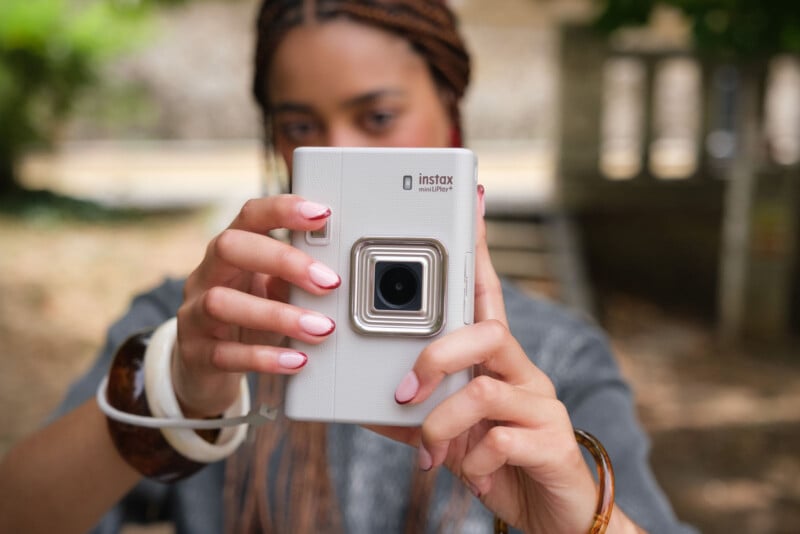
Fujifilm Instax Mini LiPlay+ Camera Makes Shooting With Digicams Cool Again.
In an era dominated by smartphone photography, where billions of digital images are captured and often forgotten in the vastness of cloud storage, the concept of a "digicam" – a dedicated digital camera that isn’t a high-end DSLR or mirrorless system – might seem anachronistic. Yet, Fujifilm, with its innovative Instax Mini LiPlay+, has managed to breathe new life into this category, proving that there’s still a significant appeal in a camera that offers a tangible, immediate, and profoundly fun photographic experience. This device doesn’t just capture moments; it transforms them into physical memories, making the act of shooting with a digital camera cool, relevant, and deeply satisfying once more. It brilliantly bridges the gap between the instant gratification of digital preview and the nostalgic charm of a physical print, appealing to a generation craving authentic experiences beyond endless scrolling.
When I initially reviewed the original Mini LiPlay back in 2019, I was a little dismissive of the sound recordings, viewing them perhaps as a novel but ultimately superficial gimmick. My initial skepticism stemmed from the inherent limitations of capturing audio with a small, consumer-grade device and the perceived lack of practical application for sound attached to a physical photograph. However, over the years, my perspective has evolved dramatically, and I’ve come to genuinely appreciate these little snippets of ambient sound. I have about two dozen of them that I’ve downloaded over the years, and while I’ve mostly lost the Instax prints that go with them, the audio files themselves have become potent time capsules. I can still vividly recall the specific photo and the entire context of the moment just by listening to the sound. A child’s distant laughter, the murmur of a bustling market, the gentle lapping of waves on a beach, or the distinct music playing at a memorable event – these sounds add an entirely new, multi-sensory dimension to memory. They don’t just remind you of what you saw, but also what you heard and, by extension, how you felt. It’s a subtle yet profound enhancement that transforms a static image into a richer, more immersive recollection. The new Sound Album feature, which presumably organizes these audio clips more effectively, hasn’t wowed me so far, but I’m withholding judgment for a few years to see how I get on with them, anticipating its potential as a digital archive for these precious auditory memories.

Beyond the innovative sound feature, there remains a tantalizing "dream feature" that I sincerely hope Fujifilm explores: expanding the QR capabilities to be able to embed links. Imagine the possibilities: I could shoot a portrait of someone and then print them a unique QR code directly on their portrait, linking to a gallery where they could find higher-resolution digital images, behind-the-scenes shots, or even a short video clip from the session. This functionality would not only bridge the physical and digital realms more robustly but also empower creators and individuals to share extended narratives or supplementary content seamlessly. For events, a QR code could link to the event’s official website, a guestbook, or a shared photo album. For businesses, it could direct customers to product information or social media profiles. Alas, so far as I know, there is no way to do this currently, which feels like a missed opportunity to unlock an even greater degree of interactivity and utility from the Instax print. Such a feature would truly elevate the LiPlay+ from a simple camera-printer to a powerful, interactive storytelling tool.
Dream features aside, the LiPlay+ is unequivocally a solid upgrade from its predecessor, demonstrating Fujifilm’s commitment to refining its hybrid camera offerings. What stands out as a particular highlight for me is the layered images mode. This creative function allows users to superimpose two different images onto a single print, opening up a world of artistic possibilities. It’s Instax at its best – not taking itself too seriously, but instead enabling fun, creative options that allow you to play with images and experiment in ways you might not otherwise do with a traditional camera or even a smartphone. You can create surreal double exposures, combine textures, or tell a more complex story within a single frame. This mode encourages serendipity and artistic exploration, fostering a sense of playful creativity that is often missing in the more rigid, technical world of digital photography. It reminds us that photography can be about experimentation and self-expression, not just perfect replication. The ability to preview and manipulate these layers digitally before committing to a physical print gives users control while still retaining the magic of instant physical output.
If you’re in the market for both an Instax mini-sized camera and printer, the choice essentially narrows down to two excellent options: the newer Mini LiPlay+ and the older, but still very capable Mini Evo. Both offer the unique hybrid experience of digital capture with instant physical printing, but they approach it with distinct philosophies and design choices. Understanding these differences is key to making the right choice for your photographic style and needs.
The Mini Evo, with its captivating retro, film camera-inspired design, is a masterclass in nostalgic aesthetics and tactile functionality. It pays homage to classic film cameras, not just in looks but also in its operational feel. Functions like a rotating lens ring to switch between ten different lens effects (e.g., vignette, blur, fisheye) and an ISO-style dial control for ten distinct film effects (e.g., sepia, monochrome, vivid) provide a wonderfully analogue and satisfying user experience. To print, you engage a tactile film winder, mimicking the process of advancing film on a traditional camera. It’s all very clever and fun, designed to appeal to those who appreciate the physical interaction and the ritual of photography. This emphasis on the process makes the Evo feel like a true camera first, with printing as a delightful extension.
Like the LiPlay+, the Evo boasts an f/2 lens, which is excellent for capturing clear images even in lower light conditions and allows for a pleasant shallow depth of field. It can store about 45 images internally, expandable to a generous 1 GB with a microSD card, ensuring you have plenty of space for your digital captures before deciding which ones to print. It also offers quite a few fun borders and effects to further customize your prints, aligning with the playful spirit of Instax.
The Mini LiPlay+, on the other hand, leans into a more modern, streamlined aesthetic and focuses on specific creative functionalities. While it also features an f/2 lens and similar storage capabilities (internal and expandable via microSD), its standout features are the rear selfie camera and the aforementioned layered images mode. The rear selfie camera is a game-changer for group shots, vlogging-style capture, or simply getting creative with unique angles that a front-facing screen wouldn’t allow. It makes the LiPlay+ incredibly versatile for social gatherings and personal content creation. Its interface is generally more app-driven and touch-screen focused, offering a different kind of intuitive experience compared to the Evo’s physical dials.
In the end, the choice between the Mini LiPlay+ and the Mini Evo comes down to a clear distinction in preference and photographic style. Do you prioritize the unique creative tools like the rear selfie camera and the artistic layered photos of the LiPlay+, along with a slightly more modern, perhaps more accessible user interface? Or are you drawn to the retro aesthetics, the tactile controls, and the immersive, ritualistic photographic experience offered by the Evo? Both cameras excel at delivering instant, tangible prints and fostering creativity, but they do so through different means. The LiPlay+ feels like a versatile, feature-rich hybrid for the contemporary digital-native who still craves a physical output, while the Evo appeals to the purist or the nostalgic soul who cherishes the journey of taking a photograph as much as the destination of the print.
The Instax Mini LiPlay+ camera, therefore, does more than just capture images; it revives the joy of photography itself in an oversaturated digital world. It makes shooting with a dedicated digital camera cool again by offering a unique blend of digital flexibility and analogue charm. It’s a device that encourages playfulness, experimentation, and the creation of tangible memories that can be held, shared, and cherished. In an age where digital photos often disappear into the ether of our devices, the LiPlay+ stands as a refreshing reminder of the enduring power and appeal of a physical photograph – a small, printed artifact that carries not just an image, but a sound, a feeling, and a story. It’s a testament to Fujifilm’s understanding that sometimes, the most advanced technology is the one that brings us back to the simple, fundamental pleasures of life.