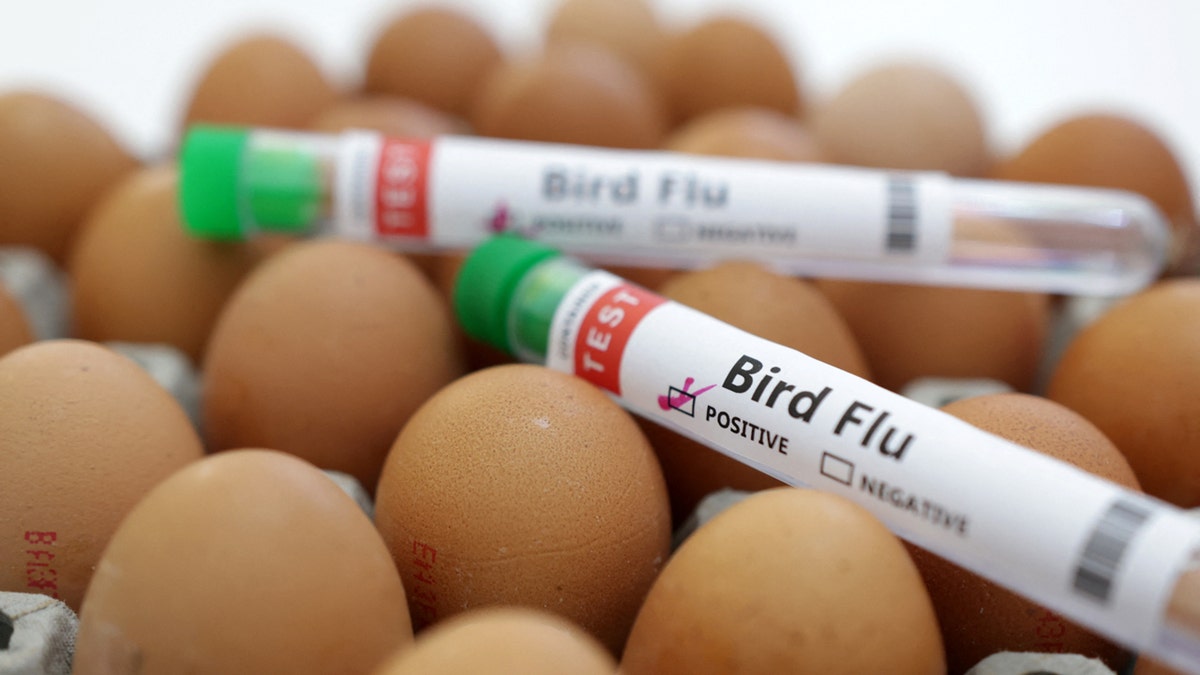
Washington state resident dies after contracting a bird flu strain never before detected in humans, officials say
FOR IMMEDIATE RELEASE
Seattle, WA – November 21, 2025 – Health officials in Washington state announced Friday the tragic death of a resident from a novel strain of avian influenza, H5N5, marking what is believed to be the first human fatality globally attributed to this specific subtype. While the news sends a ripple of concern through public health circles, authorities swiftly moved to reassure the public that the overall risk of widespread transmission remains low.
The deceased, an older adult residing in Grays Harbor County, approximately 78 miles southwest of Seattle, had been receiving treatment for the H5N5 bird flu infection. This individual’s case is considered the inaugural documented human infection by this particular strain, raising critical questions about viral surveillance and zoonotic disease threats. The patient had several pre-existing health conditions, which may have contributed to the severity of the illness. The source of infection was identified as a backyard flock of domestic poultry owned by the man, which had known exposure to wild birds – a common pathway for avian influenza transmission.
This incident represents the first human case of bird flu reported in the United States since February of this year, a period during which the nation primarily grappled with the H5N1 strain. The Washington State Department of Health, in a statement released Friday evening, reiterated that despite the fatality, the risk to the broader public remains minimal. "No other people involved have tested positive for avian influenza," the statement affirmed, highlighting the absence of human-to-human transmission in this isolated case.
Immediate Public Health Response and Monitoring
Following the diagnosis and subsequent death, a rigorous public health response was initiated. Health officials are actively engaged in monitoring all individuals who came into close contact with the deceased. This includes family members, healthcare workers, and anyone else identified as having direct exposure. The monitoring process involves symptom checks and, where deemed necessary, testing for avian influenza to detect any potential secondary infections swiftly. The current assessment, however, indicates no evidence of the virus spreading from person to person, which is a crucial factor in evaluating pandemic potential.
Earlier this month, upon confirming the initial H5N5 infection, the Centers for Disease Control and Prevention (CDC) released a preliminary statement. At that time, the CDC concluded that there was "no information to suggest the risk to public health has increased as a result of this case." This assessment was based on the limited nature of the exposure and the epidemiological investigation findings. The CDC continues to collaborate closely with Washington state health authorities, providing resources and expertise for surveillance and response efforts.
Understanding H5N5 in the Context of Avian Influenza
The distinction between H5N5 and the more commonly discussed H5N1 virus is subtle but significant from a virological perspective. Both are highly pathogenic avian influenza (HPAI) viruses, meaning they cause severe disease in birds. The "H" and "N" in their names refer to two surface proteins on the virus: hemagglutinin (H) and neuraminidase (N). There are 18 known H types and 11 known N types. In this case, both H5N1 and H5N5 share the H5 hemagglutinin protein, which is critical for the virus to bind to host cells. However, they differ in their neuraminidase protein – N1 versus N5. The neuraminidase protein is crucial for the virus to be released from infected cells and to spread to surrounding cells. Variations in these proteins can affect a virus’s transmissibility, host range, and pathogenicity.
While H5N5 is new to humans, H5N1 has been responsible for a wave of 70 reported human infections in the U.S. during 2024 and 2025. Most of these H5N1 cases in humans have been characterized by mild illnesses, primarily affecting workers on dairy and poultry farms, underscoring the risk associated with close animal contact. The current scientific consensus, informed by genetic sequencing and epidemiological data, suggests that H5N5 is not believed to pose a greater threat to human health or exhibit an enhanced capacity for human-to-human transmission compared to H5N1. However, the emergence of any new subtype in humans warrants heightened vigilance.
The Broader Avian Flu Landscape and Zoonotic Threat
The global landscape of avian influenza has been a subject of increasing concern for public health agencies. Since January 2022, various strains of bird flu have been detected in an unprecedented number of bird populations worldwide, leading to mass culling of poultry and significant economic impacts. The virus’s ability to jump species barriers is a key concern. In March of last year (2024), avian influenza was detected in dairy cows for the first time, a development that surprised many experts and broadened the scope of surveillance.
Beyond birds and cattle, bird flu can infect a wide range of mammals, including pigs, which are considered "mixing vessels" for influenza viruses due to their susceptibility to both avian and human strains. Other documented mammalian infections include foxes, bears, and even domestic cats, some of which have succumbed to the disease, particularly after consuming raw infected animal products.
The primary route of human infection remains direct and prolonged contact with infected animals or heavily contaminated environments. This places farm workers, poultry handlers, veterinarians, and individuals with backyard flocks at a higher risk. They are often exposed to respiratory droplets, feces, or contaminated surfaces. Public health campaigns continuously emphasize biosecurity measures, proper hygiene, and the use of personal protective equipment (PPE) for those working with animals. For backyard poultry owners, precautions include isolating their flocks from wild birds, monitoring for signs of illness, and reporting unusual deaths to authorities.
Expert Perspectives and Future Preparedness
Virologists and epidemiologists are closely scrutinizing the genetic makeup of this H5N5 strain to understand its evolutionary path and potential for adaptation. Dr. Lena Hansen, a leading infectious disease specialist at the University of Washington, commented, "While this is a tragic loss and a stark reminder of the zoonotic threat, the current data does not suggest an immediate elevated risk to the general population. However, every novel human infection with an avian flu strain is a critical event that demands thorough investigation, genomic sequencing, and continuous surveillance. It’s a natural experiment playing out in real-time."
The emergence of H5N5 in humans underscores the ongoing need for robust global surveillance systems for both animal and human health. Early detection of novel strains in animal populations is paramount to prevent spillover events. Furthermore, research into broad-spectrum influenza vaccines and enhanced rapid diagnostic tests remains a priority. Pandemic preparedness plans, which were significantly updated during the COVID-19 pandemic, are continuously reviewed and refined to address emerging threats like avian influenza.
This incident also reignites discussions about the delicate balance between public reassurance and necessary vigilance. While panic is unwarranted, awareness and adherence to public health guidelines are crucial. The scientific community continues to monitor the virus’s evolution, particularly its ability to mutate in ways that could enhance its transmissibility or pathogenicity in humans. The fear is that if an avian flu virus acquires the ability to spread efficiently from person to person, it could trigger a new pandemic.
In conclusion, the death of a Washington state resident from a never-before-seen human infection of H5N5 bird flu is a profound event, marking a somber first for global public health. While officials are working diligently to contain and monitor the situation, reassuring the public that the immediate risk remains low, this case serves as a powerful reminder of the persistent and evolving threat posed by zoonotic diseases. Continued vigilance, robust surveillance, and international collaboration will be essential in navigating the challenges presented by avian influenza and safeguarding global health.