FBI opens inquiry into 6 Democrats appearing in video that urged defying illegal orders, lawmakers say.
The Federal Bureau of Investigation (FBI) has launched an inquiry into six Democratic members of Congress following accusations of "seditious behavior" by President Trump. The controversy stems from a video released last week in which the lawmakers called upon service members and members of the intelligence community to "refuse illegal orders." This development, confirmed by several of the involved lawmakers, has ignited a fierce debate over executive power, the boundaries of political speech, and the role of the military in a democratic society.
In a formal statement released on Tuesday, four House members confirmed that the FBI had reached out to both the House and Senate sergeants at arms, signaling an intent to arrange interviews with the six lawmakers. Senator Elissa Slotkin of Michigan, a former CIA analyst and Pentagon official, further elaborated on the situation, stating on Tuesday that the FBI’s counterterrorism division had informed the group on Monday night that "they are opening what appears to be an inquiry against the six of us."
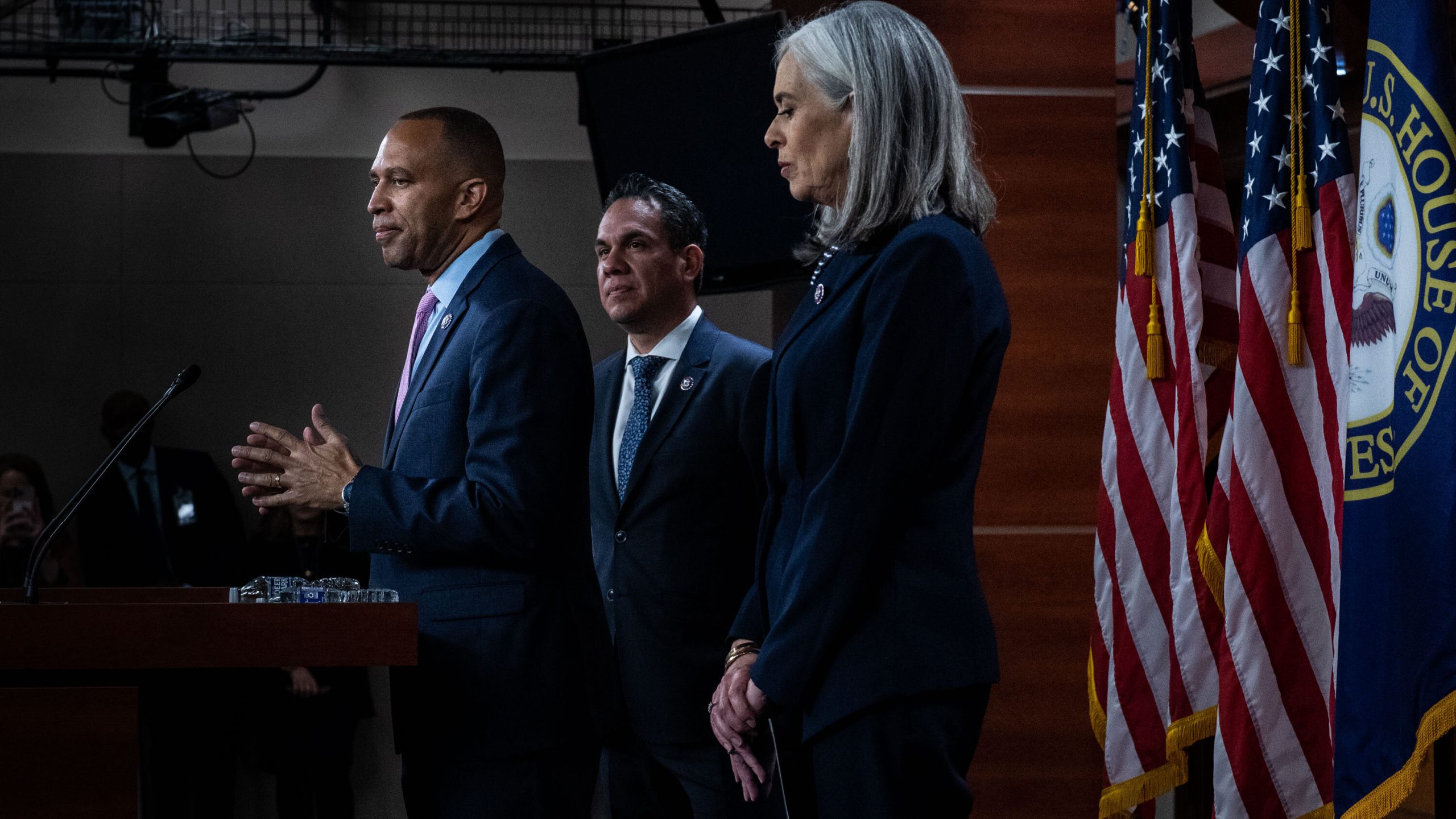
The group of lawmakers under scrutiny includes prominent figures with significant national security backgrounds: Senator Elissa Slotkin of Michigan, Senator Mark Kelly of Arizona (a retired U.S. Navy captain and former astronaut), Representative Jason Crow of Colorado (a former Army Ranger), Representative Chris Deluzio of Pennsylvania (a Navy veteran), Representative Maggie Goodlander of New Hampshire (a former National Security Council official), and Representative Chrissy Houlahan of Pennsylvania (an Air Force veteran). Their collective experience in military service and intelligence lends particular weight to their message, but also makes them targets for accusations when that message challenges the executive. Both the Justice Department and the FBI have, predictably, declined to comment on the ongoing inquiry, adhering to their standard policy regarding active investigations.
Senator Slotkin, speaking at an event in her home state, vehemently dismissed the FBI’s move as a "scare tactic" orchestrated by President Trump. She argued that the president’s reaction and his alleged use of the FBI against them precisely validated the necessity of their video. "He believes in using the federal government against his perceived adversaries, and he’s not afraid to use the arms of the government against people he disagrees with. He does not believe the law applies to him… which is exactly why we made the video, to give people some assurance that they weren’t alone as they watch this stuff unfold," Slotkin asserted. Her words underscore a growing concern among critics about the potential weaponization of federal agencies for political gain, particularly by an administration known for its confrontational stance against opponents.
The four House members echoed Slotkin’s sentiments, condemning President Trump for "using the FBI as a tool to intimidate and harass members of Congress." They declared their unwavering resolve, stating unequivocally, "No amount of intimidation or harassment will ever stop us from doing our jobs and honoring our Constitution." This defiant stance highlights the core tension at play: the right of elected officials to speak on matters of constitutional importance versus the executive branch’s perception of such speech as seditious.
The video itself, which prompted this intense backlash, was crafted against a backdrop of heightened political polarization and concerns about potential executive overreach. The lawmakers, many of whom possess intimate knowledge of military and intelligence protocols, aimed to remind uniformed personnel and intelligence operatives of their fundamental duty to uphold the Constitution, even if it means refusing orders deemed illegal or unconstitutional. This principle is a cornerstone of military ethics and international law, enshrined within the Uniform Code of Military Justice (UCMJ), which mandates that service members must disobey unlawful orders. Examples of unlawful orders could range from commands to commit war crimes to directives that violate fundamental constitutional rights. The video sought to reinforce the idea that allegiance is to the Constitution, not to any single individual or political party, particularly in times of perceived constitutional crisis.
President Trump’s accusation of "seditious behavior" against these lawmakers is a serious charge under U.S. law. Seditious conspiracy, as defined in 18 U.S. Code § 2384, involves two or more persons conspiring to overthrow the U.S. government by force, or to oppose by force the authority of the government, or to hinder the execution of any law. Advocating the overthrow of the government is covered under 18 U.S. Code § 2385. Legal experts generally agree that the bar for proving sedition is extremely high, requiring clear evidence of intent to incite violence or overthrow the government, far beyond mere political dissent or criticism. The lawmakers’ video, which urged refusal of illegal orders, explicitly positioned itself within the framework of existing law and military ethics, rather than advocating for unlawful defiance.
Adding another layer to the controversy, the Pentagon on Monday confirmed it is conducting a separate review of misconduct allegations against Senator Mark Kelly. As a retired U.S. Navy captain, Kelly remains subject to certain provisions of the UCMJ, meaning he could potentially be recalled to active duty to face court-martial proceedings over his involvement in the video. Defense Secretary Pete Hegseth has reportedly asked the secretary of the Navy to complete a review of Kelly’s conduct by December 10. This military review raises distinct questions about the intersection of a retired service member’s constitutional right to free speech and their enduring obligations under military law, particularly when their speech addresses matters of national security and command authority.
Significantly, the actions against Senator Kelly have drawn a rare show of bipartisan support for him. Republican Senator Lisa Murkowski of Alaska sharply criticized the move, stating, "To accuse him and other lawmakers of treason and sedition for rightfully pointing out that servicemembers can refuse illegal orders is reckless and flat-out wrong. The Department of Defense and FBI surely have more important priorities than this frivolous investigation." Her condemnation underscores the concern that this inquiry is politically motivated rather than a genuine pursuit of justice. Similarly, GOP Senator John Curtis of Utah commended Kelly’s public service, also saying, "I respect Mark Kelly and value his friendship." These statements from within the Republican party suggest that even some political allies of the President view the inquiries as an overreach, potentially setting a dangerous precedent for the suppression of legitimate political discourse.
The legal and constitutional ramifications of these inquiries are vast. At its heart, the conflict probes the delicate balance of powers and the First Amendment rights of elected officials. Can members of Congress, in their capacity as representatives of the people and upholders of the Constitution, advise citizens—including military personnel—on their constitutional duties without facing federal investigation? The principle that military members must disobey unlawful orders is not a radical notion; it is a fundamental ethical and legal obligation. Commanders are required to issue lawful orders, and subordinates are obligated to follow them, but simultaneously empowered, and indeed required, to refuse orders that are clearly illegal or unconstitutional. This mechanism serves as a critical check against potential tyranny or abuse of power within the military chain of command.
Historically, presidents have faced accusations of using federal agencies for political ends, raising alarms about the politicization of justice and intelligence apparatuses. The current inquiries against the six Democrats contribute to this long-standing debate, particularly when the President publicly labels their actions as "seditious behavior" before any formal investigation concludes. Such rhetoric can exert immense pressure on the agencies involved and create a chilling effect on legitimate political dissent.
The outcomes of these inquiries remain uncertain. For the FBI, a preliminary inquiry could lead to a full-blown investigation, or it could be closed with no charges filed if no evidence of criminal wrongdoing is found. For Senator Kelly, the military review could result in a formal reprimand, a recall to active duty for court-martial, or a determination that no misconduct occurred. Regardless of the legal conclusions, the political fallout is already significant. This episode highlights the deep divisions within the American political landscape and the escalating tensions surrounding the rule of law, executive authority, and the fundamental rights and responsibilities of citizens and their representatives in safeguarding the Constitution. The willingness of federal agencies to pursue inquiries based on presidential accusations against sitting members of Congress raises profound questions about the future of civil-military relations and the health of democratic institutions.
Jacob Rosen contributed to this report.