Nvidia CEO Dismisses Concerns of an AI Bubble. Investors Remain Skeptical
Nvidia CEO Jensen Huang wasted no time addressing the pervasive "elephant in the room" during a recent earnings call, directly confronting the growing discourse surrounding an "AI bubble." With a clear and confident tone, Huang acknowledged the widespread speculation but quickly countered, stating, "From our vantage point, we see something very different." His immediate and proactive stance underscored the company’s conviction in the sustainability of the artificial intelligence boom, a sector in which Nvidia has become an undeniable titan.
Over the course of approximately five minutes, Huang meticulously laid out his comprehensive thesis, aiming to articulate how Nvidia, a company that has skyrocketed to become the world’s most valuable publicly traded entity in just three years, plans to sustain the unprecedented surge in customer demand for its specialized chips. At the core of his argument lies the belief that artificial intelligence is not merely a transient trend but a fundamental technological revolution poised to permeate every facet of global industry. Consequently, Nvidia’s advanced chips, he asserted, are not just components but indispensable enablers of this ongoing transformation. Huang emphasized the ubiquitous need for Nvidia’s products, declaring that "all industries, across every phase of AI, across all of the diverse computing needs in a cloud, and also from cloud to enterprise to robots," will inevitably require the company’s cutting-edge technology. This vision paints a picture of AI as an foundational layer across the entire economic landscape, with Nvidia’s hardware as the essential infrastructure.
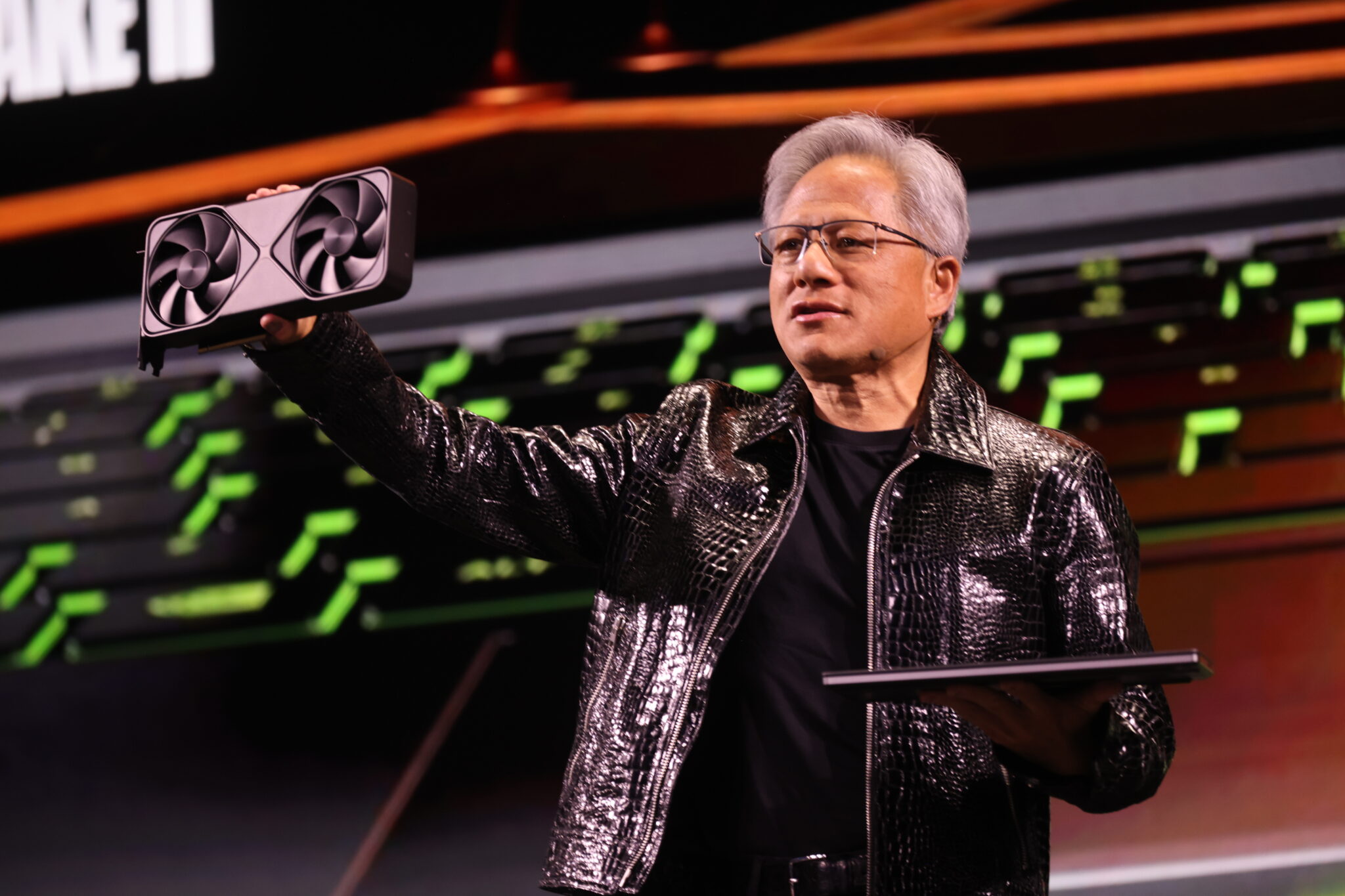
Despite the CEO’s emphatic "pep talk" and robust financial reporting, Wall Street’s reaction remained notably mixed. Nvidia shares had experienced a significant dip in the weeks leading up to the announcement, shedding approximately 10 percent after reaching an all-time high in late October. While the shares did see a modest uptick of about 5 percent in after-hours trading following the disclosure of record quarterly sales and Huang’s anti-bubble remarks, this increase was insufficient to fully offset the preceding sell-off. This lukewarm response from investors highlights a persistent undercurrent of skepticism, suggesting that even stellar performance and confident leadership may not entirely assuage concerns about the long-term sustainability of the AI market’s current valuation.
Nvidia’s remarkable ascent over the past three years can be directly traced to a pivotal moment in technological history: the debut of OpenAI’s ChatGPT. This generative AI breakthrough ignited an unforeseen explosion in demand for the company’s Graphics Processing Units (GPUs), which are the computational backbone for training and operating sophisticated generative AI systems. Nvidia’s dominance in the global GPU market is virtually unrivaled, a position solidified by its continuous innovation and the superior performance of its latest releases. The demand for these highly sought-after chips has consistently outstripped supply, a testament to their critical role in the AI ecosystem. On the earnings call, Nvidia executives further underscored this imbalance, revealing a staggering backlog of approximately $500 billion in unfilled orders, a figure that dramatically illustrates the sheer scale of the current demand.
Leveraging its newfound and immense wealth, Nvidia has strategically pursued a dual approach: extensive share buybacks to bolster shareholder value and substantial investments totaling billions of dollars into key AI companies. These investments are not random; they target top users and crucial customers of Nvidia’s chips, creating a powerful symbiotic relationship. Notable beneficiaries of Nvidia’s capital include OpenAI, the pioneering developer behind ChatGPT; CoreWeave, a rapidly growing data center operator specializing in AI workloads; and Elon Musk’s xAI, the entity responsible for developing the Grok chatbot. This investment strategy, while strengthening Nvidia’s ecosystem, has simultaneously become a focal point for investor apprehension.
Indeed, these intricate deals have fueled concerns among some investors that Nvidia might be artificially propping up its own sales figures, creating an unsustainable cycle. The fear is that by investing in its customers, Nvidia is essentially financing its own demand, potentially masking underlying weaknesses or overinflating market valuations. However, executives within the AI industry offer a different perspective, asserting that a close partnership with Nvidia is not merely beneficial but crucial. They argue that such alliances provide indispensable access to Nvidia’s scarce and vital chips, along with essential technical support. From their vantage point, their revenues are projected to increase sufficiently over time to independently fund their GPU purchases, thus validating the initial investments as strategic enablers of future growth.
During Wednesday’s earnings call, Huang directly addressed a financial analyst’s pointed question regarding the rationale behind investing in companies like OpenAI. His explanation was rooted in strategic collaboration and mutual growth. "The partnership that we have with them is one so that we could work even deeper from a technical perspective, so that we could support their accelerated growth," Huang stated. He expressed strong conviction in the financial returns of these ventures, adding, "I fully expect that investment to translate to extraordinary returns." This response positions Nvidia’s investments not as a financial crutch for its customers, but as a mechanism for deeper technical integration, fostering innovation, and securing long-term revenue streams through the success of its ecosystem partners.
Further solidifying this strategy, Huang revealed that Nvidia had recently invested in Anthropic, a prominent rival to OpenAI, earlier that same week. This latest partnership, he explained, aims "to have a deep partnership with them" and facilitate the integration of Anthropic’s advanced Claude chatbot onto Nvidia’s powerful chips for the very first time. This continuous "parade of partnerships," as it were, shows no signs of abating. Huang indicated a growing trend where customers, after exploring other options, are increasingly gravitating towards Nvidia. "The number of customers coming to us and the number of platforms coming to us after they’ve explored others, is increasing, not decreasing," he affirmed, suggesting a consolidation of the AI market around Nvidia’s leading technology.
The robust demand in the most recent quarter translated directly into stellar financial results for Nvidia, with the company reporting sales of $57 billion and an impressive profit of nearly $32 billion. Looking ahead, Nvidia projected an even stronger performance for the current quarter, estimating sales of $65 billion. This forecast comfortably exceeded the $62 billion estimate projected by Wall Street analysts, further highlighting the company’s current momentum and its ability to consistently outperform market expectations.
However, beneath the surface of these remarkable figures, a subtle shift in growth trajectory has caught the attention of some investors. While Nvidia has spectacularly more than doubled its annual revenue in each of the past two fiscal years, the company’s own projections indicate a deceleration in growth. For the current fiscal year, which concludes in January, Nvidia anticipates growth to slow to 64 percent. While this figure remains extraordinarily high by any industry standard, the rate of growth is projected to decrease. This slowdown, even from such stratospheric levels, contributes to the lingering skepticism among investors who are accustomed to, and perhaps have come to expect, an unending acceleration in Nvidia’s expansion.
Another significant concern articulated by some investors revolves around potential infrastructural bottlenecks. Specifically, worries about electricity and supply chain constraints loom large. These factors could potentially impede the rapid construction and expansion of data centers, which are the primary consumers of Nvidia’s GPUs. Any slowdown in data center development would inevitably curb the demand for Nvidia’s chips in the coming years, posing a tangible threat to its future revenue streams. This vulnerability underscores the company’s dramatic business transformation: approximately 90 percent of Nvidia’s sales, which were once predominantly driven by chips for personal gaming computers, now originate from its burgeoning data center business. This strategic pivot, while immensely successful, also concentrates risk in a sector highly dependent on large-scale infrastructure deployment and energy availability.
In essence, Nvidia stands at a fascinating juncture, embodying both the immense promise and the inherent uncertainties of the AI revolution. CEO Jensen Huang’s unwavering confidence in the long-term trajectory of AI and Nvidia’s indispensable role within it paints a picture of sustained, foundational growth. Yet, Wall Street’s tempered reaction, marked by a failure to fully recover recent share losses and ongoing questions about investment strategies and future growth rates, reveals a deep-seated investor skepticism. The tension between Huang’s vision of an inevitable, pervasive AI future powered by Nvidia and the market’s cautious assessment of potential bubbles and infrastructural limits defines the current narrative surrounding this pivotal technology company.