The Best Artificial Christmas Trees, as Blind-Judged By Interior Designers
Shopping for an artificial Christmas tree can often feel like navigating a dense forest of uncertainty, especially when relying solely on online images. The perennial questions surface: How genuinely realistic will it appear in my living room? Will it shed needles excessively, leaving a constant mess? Can ambient light be seen through its branches, revealing sparse spots? And perhaps most crucially for many, are the branches robust enough to securely hold that cherished, slightly lopsided homemade macaroni ornament that has graced your tree since 2004?
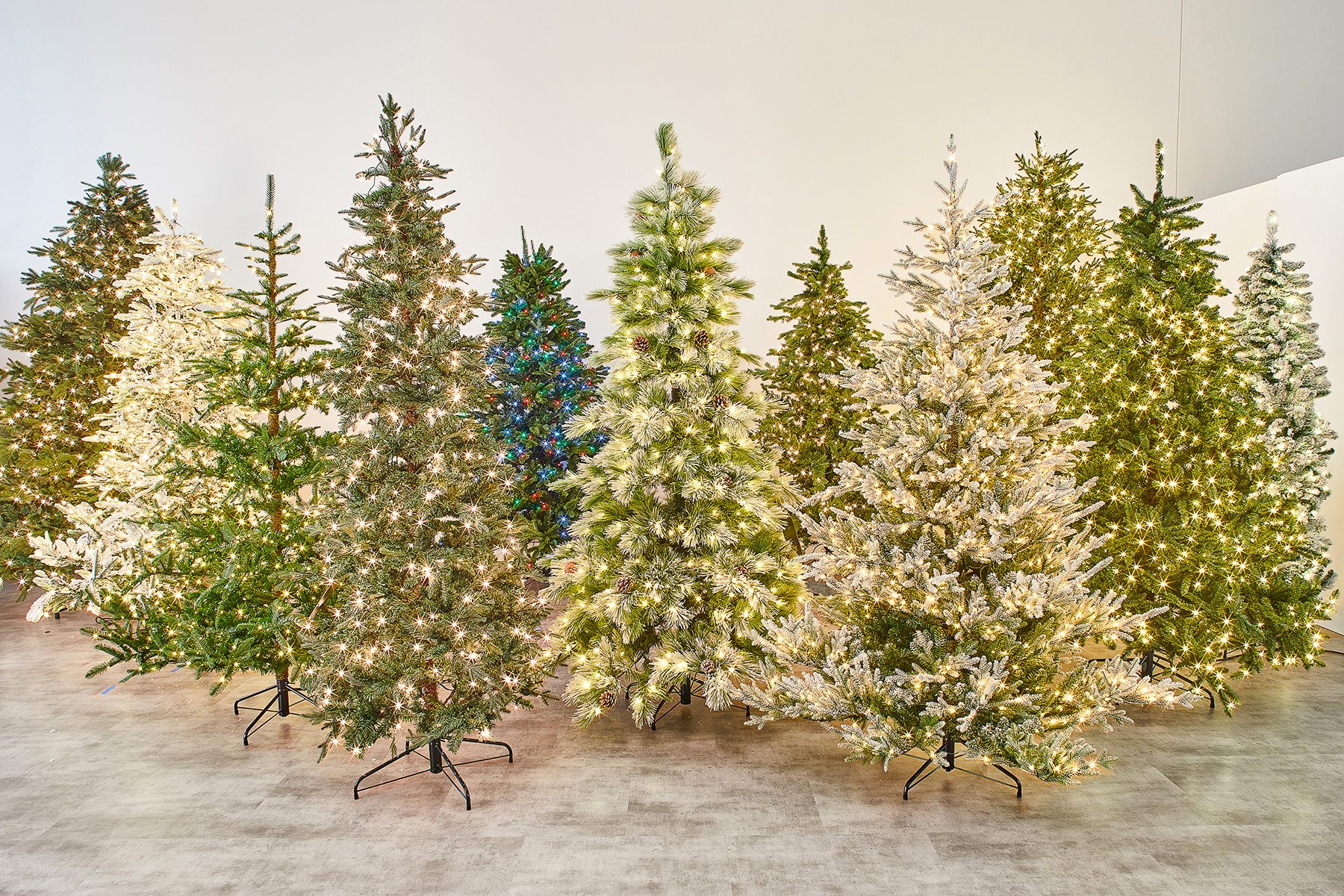
Tired of the endless guesswork and product photo analysis, we embarked on a unique and rigorous experiment to uncover the truly best artificial Christmas trees on the market. Our mission was to eliminate bias and subjective brand loyalty, focusing solely on the tangible qualities that make a superior artificial tree. We gathered 10 of the most popular artificial trees from three leading brands—Balsam Hill, King of Christmas, and National Tree Company—and transported them to a spacious photo studio in the heart of Kansas.

The testing process was meticulously designed for fairness and impartiality. Ten dedicated volunteer assemblers spent an entire morning unboxing, constructing, and meticulously fluffing each tree. Crucially, three seasoned professional interior designers were brought in as judges. These experts were kept entirely unaware of the brands, the price points of each tree, or any of the assembly challenges. Their evaluations were based exclusively on the visual appeal and tactile quality of each tree, providing an unbiased assessment rooted in their professional design sensibilities.
After a full day of intensive evaluation, a unique opportunity was extended: every assembler was invited to take their tree home and set it up for their own families. The majority accepted, providing invaluable real-world feedback on the assembly process and the trees’ performance in a home setting, complete with festive decorations. This additional layer of review offered practical insights beyond the controlled studio environment, culminating in a comprehensive guide to selecting the perfect artificial Christmas tree.
Our Blind-Judged Top Picks:
Best Overall Christmas Tree: Balsam Hill Vermont White Spruce ($1,199 – $1,699)
The Balsam Hill Vermont White Spruce emerged as the undisputed champion, earning the highest praise from our interior design panel. Its exceptional realism was consistently highlighted, with judges commending the lifelike needles and natural branch structure that closely mimicked a genuine spruce. The tree’s dense foliage effectively concealed the central pole, creating a lush, full silhouette. Its sturdy branches were noted for their ability to support a variety of ornaments without sagging, a critical factor for families with diverse ornament collections. The overall aesthetic was deemed sophisticated and timeless, making it an ideal centerpiece for any holiday decor scheme. Assemblers also reported a relatively straightforward setup, further solidifying its top-tier status.
Best Flocked Christmas Tree: King of Christmas King Flock ($499 – $899)
For those who adore the enchanting, snow-dusted look, the King of Christmas King Flock tree was the clear standout. The flocking was applied with a masterful touch, appearing natural and evenly distributed without an artificial, heavy-handed feel. Judges praised its ability to evoke a winter wonderland atmosphere, noting that the snowy texture added depth and visual interest. Unlike some flocked trees that can shed excessively, this model maintained its snowy appearance remarkably well during assembly and handling. Its robust construction ensures stability, making it a beautiful and durable choice for a festive, snow-kissed display.
Best Traditional Christmas Tree: King of Christmas Cypress Spruce ($1,399 – $1,899)
The King of Christmas Cypress Spruce perfectly captured the essence of a classic holiday tree, earning it the title of "Best Traditional." Its rich, deep green needles and pyramidal shape resonated with the judges’ vision of a quintessential Christmas tree. The branches were full and well-distributed, providing ample space for ornaments while maintaining a dense, verdant appearance. This tree exuded a sense of warmth and tradition, making it an excellent choice for those seeking a timeless holiday aesthetic without the modern flair of more contemporary designs. Its quality construction promised years of traditional holiday joy.
Sturdiest Christmas Tree: Balsam Hill Balsam Fir ($1,249 – $1,699)
When it came to sheer durability and branch strength, the Balsam Hill Balsam Fir was unmatched. This tree impressed the judges with its incredibly sturdy branches, which felt substantial and unyielding. This characteristic is particularly valuable for collectors of heavy or oversized ornaments, ensuring that every cherished piece can be displayed without fear of drooping branches. Beyond its strength, the Balsam Fir also offered a beautiful, realistic appearance with dense, dark green needles that contributed to its overall premium feel. Its robust build makes it an investment that promises reliability and longevity through countless holiday seasons.
Our Rigorous Testing Methodology:
To ensure a truly objective evaluation, we started by researching extensively, consulting other publications and user reviews to identify the 10 most popular and frequently discussed artificial trees. This included stalwarts like Balsam Hill’s Classic Blue Spruce, National Tree Company’s beloved Dunhill Fir, and even an Amazon best-seller priced under $300. All trees selected were standardized at a height of 7.5 feet, eliminating height as a variable in the visual assessment.
Our rented studio in Overland Park, Kansas, was set up under controlled lighting conditions – natural light from one wall of windows augmented by consistent white-hued recessed ceiling lights. This ensured that needle structure, branch density, and overall shape could be properly assessed without any atmospheric lighting skewing results. The prices of the trees ranged dramatically from $170 to $1,700, and a total of $9,540 worth of trees were assembled for the experiment.
Each of the 10 assemblers was given an hour and a half to unbox, unload, build, and fluff their assigned tree. Most completed the process in approximately 45 minutes. While some trees came with their own gloves, we provided latex utility gloves, scissors, and box cutters to all, ensuring a consistent setup experience. I acted as timekeeper and managed the removal of empty boxes to maintain an unobstructed workspace.
Once the trees were fully assembled and fluffed, the three interior designers from Kansas City-based firm ML Designs arrived. Each judge received scorecards with a rubric totaling 25 points, evaluating each tree on five categories on a scale of 1 to 5. The categories were:
- Realism: How closely did the tree resemble a natural tree? Were the needles varied in color and texture?
- Fullness/Density: How dense were the branches? Were there visible gaps or the central pole?
- Sturdiness: How firm and supportive were the branches? Could they hold ornaments without drooping?
- Ease of Assembly (post-assembler feedback): How straightforward was the setup process? (This feedback was integrated after assemblers took trees home).
- Overall Aesthetic/Shape: How pleasing was the tree’s silhouette and general appearance?
The goal was to determine which tree truly excelled when stripped of brand names and price tags. After all three judges scored a tree, their points were combined for a final score out of a possible 75. The top tree impressively garnered 72 out of 75 points, while the lowest-scoring tree received 32 points. The judges, admittedly on the "nice" side, only gave one score of 1 throughout the entire process.
More Artificial Trees We Tested (and Why They Scored as They Did):
While our top picks excelled, other trees in our lineup offered different value propositions or revealed areas for improvement:
King of Christmas Yorkshire Fir ($589): This tree, while not fooling anyone up close, possessed a certain charm. Judge Jill Connard noted its commendable branch placement, contributing to a pleasing overall shape. However, another judge, Mayer, observed that the trunk remained quite visible even after thorough fluffing, and the needles had a somewhat papery texture. It was deemed a decent secondary tree, but not one that could command the attention of a main living room display. Its score reflected a middle-ground performance, offering a visually appealing form but lacking the tactile realism of higher-end models.
Balsam Hill Classic Blue Spruce ($999): The Classic Blue Spruce evoked a strong sense of nostalgia, appealing to those seeking a more traditional, classic artificial tree look. However, the judges unanimously agreed it lacked a premium feel; Lindstrom specifically mentioned it reminded her of her very first artificial tree as a young adult. While Mayer appreciated the subtle brown tones in the needles, which enhanced its realism, the tree’s overall upscale impression was diminished. Its silhouette tapered significantly at the top, losing fullness, and a close inspection of its branches and needles left more to be desired compared to its higher-scoring counterparts. Despite these qualms, it remains a solid, mid-grade option for those prioritizing a traditional aesthetic over hyper-realism. Score: 47.5 of 75.
Hykolity Artificial Christmas Tree ($150): As an Amazon best-seller with a 4.5-star average rating, the Hykolity tree was a must-test for its budget-friendly appeal. It largely met expectations for its price point; judges concluded it would be best suited as a secondary tree, perhaps in a child’s room or a less prominent space. While the branch wiring was visible upon close inspection, Judge Mayer succinctly stated, "There’s a place for every tree," acknowledging its utility. Positively, the needles offered a surprisingly realistic appearance for its price, and the included lights were of good quality. One assembler noted that the individual light strands needed to be plugged into each other, which was initially confusing, but overall setup was straightforward. Its inviting price tag makes it a compelling option for those on a strict budget. Score: 46 of 75.
National Tree Company Dunhill Fir (Pre-Lit) ($361): This tree delivered the biggest surprise and disappointment of the testing session. Its performance stood in stark contrast to its non-pre-lit fraternal twin, which scored significantly higher. Dubbed the "Charlie Brown Tree" by both judges and assemblers, it appeared remarkably bare even after extensive fluffing. The top branch struggled to stand upright, making a star or angel topper problematic. Exposed cords marred its appearance, and large, unhideable gaps persisted throughout its structure. What looked promising in product photos failed to translate in person, making this a profoundly disappointing choice for anyone hoping for a full, reliable, and aesthetically pleasing tree. Score: 32 of 75.
Essential Considerations for Your Artificial Christmas Tree:
Choosing the Right Size: A general guideline is to allow 6 to 12 inches between the top of your tree (including any topper) and your ceiling. For standard 8-foot ceilings, a 7- or 7.5-foot tree typically looks best, creating a grand yet balanced presence. In more compact spaces like apartments or secondary rooms, a 6-foot or slim-profile tree might be a more suitable and proportionate choice. Always measure your ceiling height and the available floor space to ensure a perfect fit.
Selecting the Ideal Tree Shape: The shape of your artificial tree significantly impacts its presence and suitability for your space.
- Full: The most common and traditional shape, offering a wide, robust profile that fills a room. Ideal for spacious areas.
- Slim/Pencil: A narrow profile, perfect for smaller rooms, apartments, or tight corners where space is at a premium.
- Flocked: Covered in a "snowy" white coating, creating a winter wonderland aesthetic. Best for specific decor themes.
- Half: Designed to sit flush against a wall, saving space while maintaining a front-facing full appearance. Excellent for narrow hallways or small apartments.
- Flatback/Corner: Similar to half trees but specifically designed for corners, maximizing floor space.
Understanding Branch Tip Count: The branch tip count is a crucial indicator of a tree’s fullness and realism. A higher tip count generally translates to a denser, more natural-looking tree with fewer visible gaps. For a 7.5-foot artificial tree, a range of 1,500 to 2,500 branch tips is often considered the "sweet spot" for achieving a lush, realistic appearance that can adequately support ornaments without looking sparse. Trees with fewer tips may appear more skeletal, even after extensive fluffing.
The Sustainability of Artificial Trees: The sustainability debate between real and artificial trees is complex. Most artificial trees are made from PVC and metal, materials that are not biodegradable. However, if an artificial tree is used for more than five years, its carbon footprint can be lower than that of repeatedly purchasing real trees, according to the American Christmas Tree Association. The longevity of an artificial tree depends on its quality, materials, and how well it’s cared for. On average, a good-quality artificial tree can last 7 to 10 years, with higher-end models potentially lasting up to 15 years or more with proper maintenance and storage.
The Affordability Factor: While a high-quality artificial tree represents a significant upfront investment, it proves to be more affordable over its lifespan. By reusing the same tree year after year, you eliminate the recurring annual cost of purchasing a real tree, as well as any yearly disposal fees. This long-term saving makes artificial trees a more budget-friendly option in the grand scheme of holiday expenses.
Mastering the Art of Fluffing Your Tree: Fluffing is perhaps the most critical step in making an artificial tree look its best. Begin at the bottom section and work your way upwards. Using your hands, systematically separate and spread out each individual branch and tip, bending them in various directions to fill any gaps and create a natural, organic shape. This meticulous process can be time-consuming, but it is the absolute key to achieving a full, realistic, and vibrant appearance. Depending on the type of needles and branches, you may find protective gloves useful to shield your hands from any poky elements.
Estimating Christmas Light Requirements: For a beautifully illuminated tree, proper light density is essential. Govee, a lighting expert, recommends approximately 100 lights per foot of tree height. Therefore, a 7-foot tree would ideally require around 700 lights to achieve a rich, even glow. Keep in mind that light density can vary by brand and personal preference. For smart lighting solutions, consult guides on the Best Smart Christmas Lights for optimal integration.
Troubleshooting Pre-Lit Tree Lights: If your pre-lit tree’s lights aren’t working, the issue commonly stems from broken bulbs, loose wiring, a blown fuse, or worn-out light strings. To diagnose and fix them:
- Check Bulbs: Individually test and replace any burnt-out or loose bulbs. Many pre-lit trees come with spare bulbs.
- Inspect Fuses: Locate the fuse box on the light string plug and check for a blown fuse. Replace it with a spare, if available.
- Examine Connections: Ensure all light strand connections are secure and fully plugged in.
- Use a Light Tester: Invest in a light tester tool, which can pinpoint breaks in wiring or non-functioning bulbs quickly.
Optimal Tree Storage for Longevity: Proper storage is paramount to extending the life of your artificial tree. Carefully disassemble the tree section by section, gently compressing the branches as you go. Store it in a sturdy, purpose-built tree storage bag or, if it’s still in good condition, its original box. Choose a cool, dry location such as a closet, attic, or basement. Avoid areas prone to high humidity, extreme temperature fluctuations, or direct heat, as these conditions can cause damage to the materials or lead to dust and mold buildup over time.
Our comprehensive blind-judging experiment, informed by the discerning eyes of interior designers and practical feedback from assemblers, offers an unparalleled guide to selecting the best artificial Christmas tree. By prioritizing realism, fullness, and durability, we hope to empower you to make an informed decision that brings lasting holiday cheer to your home.