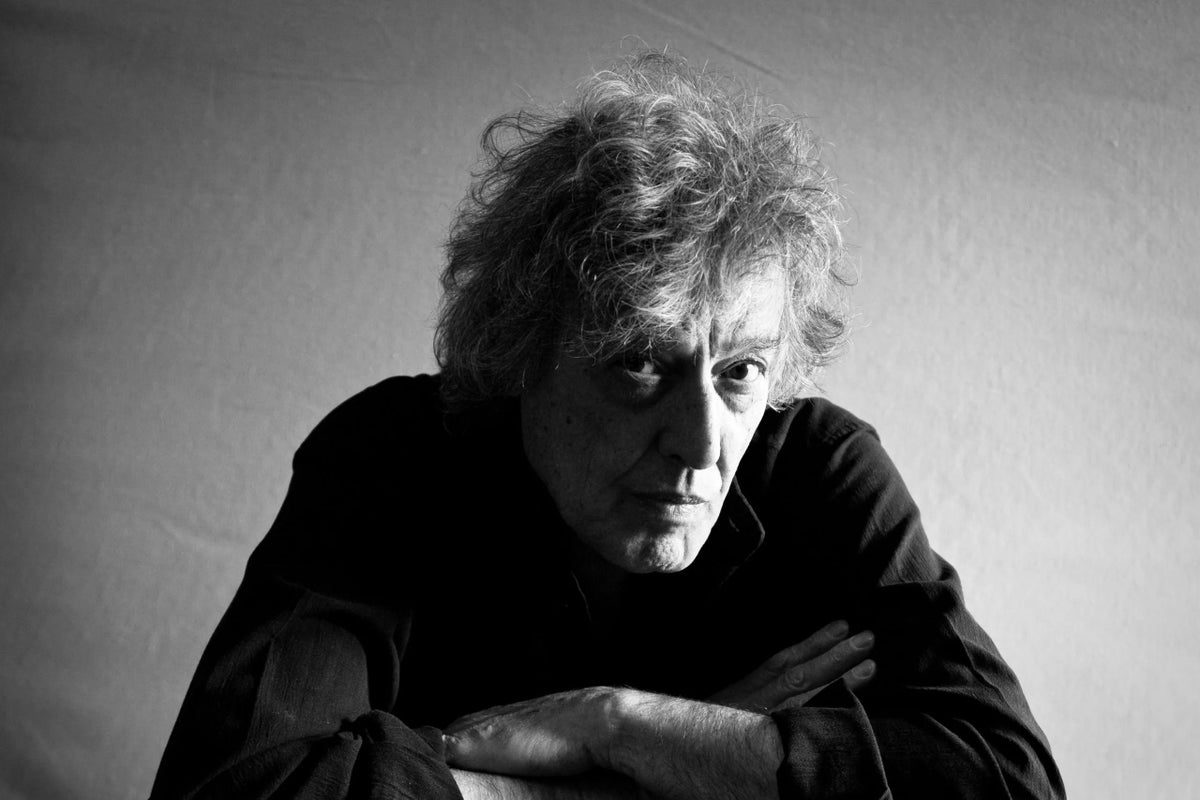
British playwright Tom Stoppard, known for "Shakespeare in Love" screenplay, dies at 88. Sir Tom Stoppard, the celebrated British playwright whose dazzling intellect, linguistic dexterity, and profound wit illuminated stages and screens for over six decades, passed away peacefully at his home in Dorset, southern England, surrounded by his loving family. He was 88. The news of his death was confirmed in a statement on Saturday by United Agents, his representatives, who lauded him as a titan of literature. "He will be remembered for his works, for their brilliance and humanity, and for his wit, his irreverence, his generosity of spirit and his profound love of the English language. It was an honour to work with Tom and to know him," the statement read, encapsulating the immense respect and affection he garnered throughout his illustrious career.
Born Tomáš Straussler in Zlín, Czechoslovakia, on July 3, 1937, Stoppard’s early life was marked by a dramatic and perilous journey that profoundly shaped his worldview, even if its direct impact on his work was not immediately apparent. His family, Jewish by heritage, fled their homeland in 1939 following the Nazi invasion, seeking refuge in Singapore. Their precarious peace was short-lived. In 1941, as Japanese forces advanced on Singapore, Stoppard, his brother, and their mother were evacuated to India. Tragically, his father, a doctor, remained behind and died during the Japanese occupation, an event that would haunt Stoppard much later in life. In 1946, his mother married Major Kenneth Stoppard, a British army officer, and the family relocated to England. The eight-year-old Tom readily embraced his new identity, famously stating he "put on Englishness like a coat," a transformation that saw him become a quintessential Englishman with a deep affection for cricket, Shakespeare, and the intricacies of the English language. This adoptive identity, layered over a traumatic Central European past, provided a unique lens through which he would explore themes of identity, memory, and history in his later works.
Stoppard’s professional journey began not in theatre but in journalism, working for the Western Daily Press in Bristol from 1954 to 1958, and later as a drama critic for the Bristol Evening World until 1960. This journalistic background honed his observational skills and an incisive clarity of thought, which he would masterfully apply to playwriting. He transitioned to full-time writing in the early 1960s, quickly establishing himself as a formidable new voice in British theatre. His breakthrough came in 1966 with "Rosencrantz and Guildenstern Are Dead," a dazzling existential tragicomedy that reimagined Shakespeare’s "Hamlet" from the perspective of two bewildered minor characters. The play, which premiered at the Edinburgh Fringe Festival before transferring to the National Theatre in London and then Broadway, captivated audiences and critics alike with its philosophical depth, ingenious wordplay, and innovative structure. It earned him his first Tony Award for Best Play in 1968, cementing his status as one of the most exciting playwrights of his generation.

Throughout his career, Stoppard was hailed as the greatest British playwright of his era, a master craftsman whose plays were renowned for their intellectual ambition, linguistic brilliance, and intricate plotting. His diverse range of subjects spanned across Shakespearean commentary, complex scientific theories, profound philosophical questions, and the harrowing historic tragedies of the 20th century. He had an unparalleled ability to weave together disparate ideas, historical figures, and literary references into cohesive, thought-provoking narratives that were both entertaining and intellectually stimulating. His work often challenged conventional notions of reality, truth, and identity, frequently employing meta-theatrical devices and a rapid-fire, witty dialogue that became his signature.
Stoppard’s extraordinary contributions to theatre were recognized with a remarkable five Tony Awards for Best Play. Following "Rosencrantz and Guildenstern Are Dead," he won for "Travesties" in 1976, a play that comically brought together historical figures like James Joyce, Tristan Tzara, and Vladimir Lenin in Zurich during World War I. "The Real Thing" earned him another Tony in 1984, a more emotionally charged exploration of love, fidelity, and the nature of artistic expression. "The Coast of Utopia," a sweeping trilogy about 19th-century Russian intellectuals, secured his fourth Tony in 2007, showcasing his enduring capacity for ambitious, large-scale narratives. His final Tony came in 2023 for "Leopoldstadt," a deeply personal and poignant work that delved into his own family’s history. Beyond these major accolades, his prolific output included numerous other acclaimed stage plays, such as "Jumpers" (1972), "Every Good Boy Deserves Favour" (1977), and "Arcadia" (1993), often cited as one of the greatest plays of the 20th century for its masterful blend of science, history, and romance.
His genius was not confined to the stage. Stoppard also penned a significant body of work for radio and television, demonstrating his versatility across different mediums. Early radio plays like "The Dissolution of Dominic Boot" (1964) and "Albert’s Bridge" (1967) foreshadowed his later theatrical successes. His television adaptation of "A Walk on the Water" in 1963 was an early foray into the visual medium. Decades later, he would adapt Ford Madox Ford’s "Parade’s End" for television in 2013, earning widespread critical praise. He also wrote a novel, "Lord Malquist & Mr Moon" (1966), further cementing his reputation as a polymath of letters.
However, it was his screenwriting career that brought him global recognition beyond the theatre world. Stoppard proved equally adept at crafting compelling narratives for the big screen, often imbuing commercial projects with his distinctive intellectual flair. He contributed to the screenplay for Terry Gilliam’s dystopian masterpiece "Brazil" (1985), bringing his unique blend of dark humor and philosophical inquiry to the film. He also worked on Steven Spielberg’s acclaimed war drama "Empire of the Sun" (1987), demonstrating his ability to adapt complex literary works. His most famous cinematic achievement came with "Shakespeare in Love" (1998), for which he and Marc Norman shared an Academy Award for Best Original Screenplay. This witty, anachronistic romantic comedy reimagined a young William Shakespeare’s struggle with writer’s block, finding inspiration in a forbidden love affair. The film was a critical and commercial triumph, winning multiple Oscars, including Best Picture, and showcasing Stoppard’s ability to infuse historical fiction with charm, intelligence, and a deep appreciation for the Bard. Other notable screenplays included the code-breaking thriller "Enigma" (2001) and the lavish adaptation of Leo Tolstoy’s "Anna Karenina" (2012).
Despite his often abstract and intellectual approach to his art, Stoppard was a steadfast champion of free speech and human rights. He actively collaborated with organizations such as PEN International and Index on Censorship, using his platform to advocate for writers and artists oppressed by totalitarian regimes. While famously stating in 1968, "I burn with no causes. I cannot say that I write with any social objective. One writes because one loves writing, really," his life’s work and advocacy often belied this claim. His plays, even when steeped in philosophical inquiry, frequently touched upon profound human issues, subtly challenging injustice and celebrating the freedom of thought.
This more overtly personal dimension of his work came to the fore late in his career with "Leopoldstadt." The play marked a significant departure for Stoppard, as it directly confronted his own family’s tragic past. He revealed that it was only after his mother’s death in 1996 that he fully uncovered the devastating truth: many members of his extended family, including all four of his grandparents, had perished in Nazi concentration camps. "Leopoldstadt," which premiered in London in early 2020 to universal acclaim, traced the fortunes of a Jewish Viennese family through the first half of the 20th century, culminating in the horrors of the Holocaust. The play, a moving and deeply personal exploration of identity, memory, and loss, was interrupted by the COVID-19 pandemic just weeks after its debut. However, it eventually made its way to Broadway in late 2022, where it garnered four Tony Awards, including Best Play, a testament to its powerful resonance and Stoppard’s unwavering artistic vitality even in his later years.
Stoppard’s immense contributions to literature were formally recognized when he was knighted by Queen Elizabeth II in 1997 for his services to literature, an honor that underscored his status as a national treasure. His passing leaves an irreplaceable void in the world of theatre and literature. He was a playwright who consistently pushed the boundaries of form and content, delighting audiences with his intricate plots, dazzling dialogue, and profound intellectual curiosity. His legacy is one of unparalleled brilliance, a testament to the power of language and thought to illuminate the human condition in all its complexity and wonder. Tom Stoppard will forever be remembered as a master wordsmith, a profound thinker, and a generous spirit whose love for the English language enriched countless lives and left an indelible mark on the cultural landscape.