Our Favorite Color E-Reader (2025): Kobo Libra Colour
The digital reading landscape has undergone a vibrant transformation, ushering in an era where e-paper devices burst with color, opening up an unprecedented array of color e-reader and digital notebook options. Gone are the days of monochrome screens limiting our imagination; now, a splash of color on the paper-like display offers an experience remarkably close to turning the pages of a physical book. This evolution brings a renewed sense of engagement, making digital reading more dynamic and visually appealing than ever before.
These new-generation color e-readers retain all the core functionalities of their grayscale predecessors, yet they elevate the experience significantly. Imagine seeing your favorite book covers in their full, intended glory, or immersing yourself in graphic novels where every panel pops with vivid hues. Beyond mere aesthetics, these devices empower readers to interact with their content in innovative ways. Users can now add colorful highlights to passages, annotate pages with a spectrum of colored notes, or even sketch and write in dedicated digital notebooks using various colors. This functionality is a game-changer for avid annotators, students, or anyone who appreciates the tactile joy of marking up a physical book but desires the convenience of digital. For those who, like me, often lose steam halfway through a meticulously annotated book, the digital format provides a seamless, organized, and endlessly revisable canvas for capturing thoughts and insights.
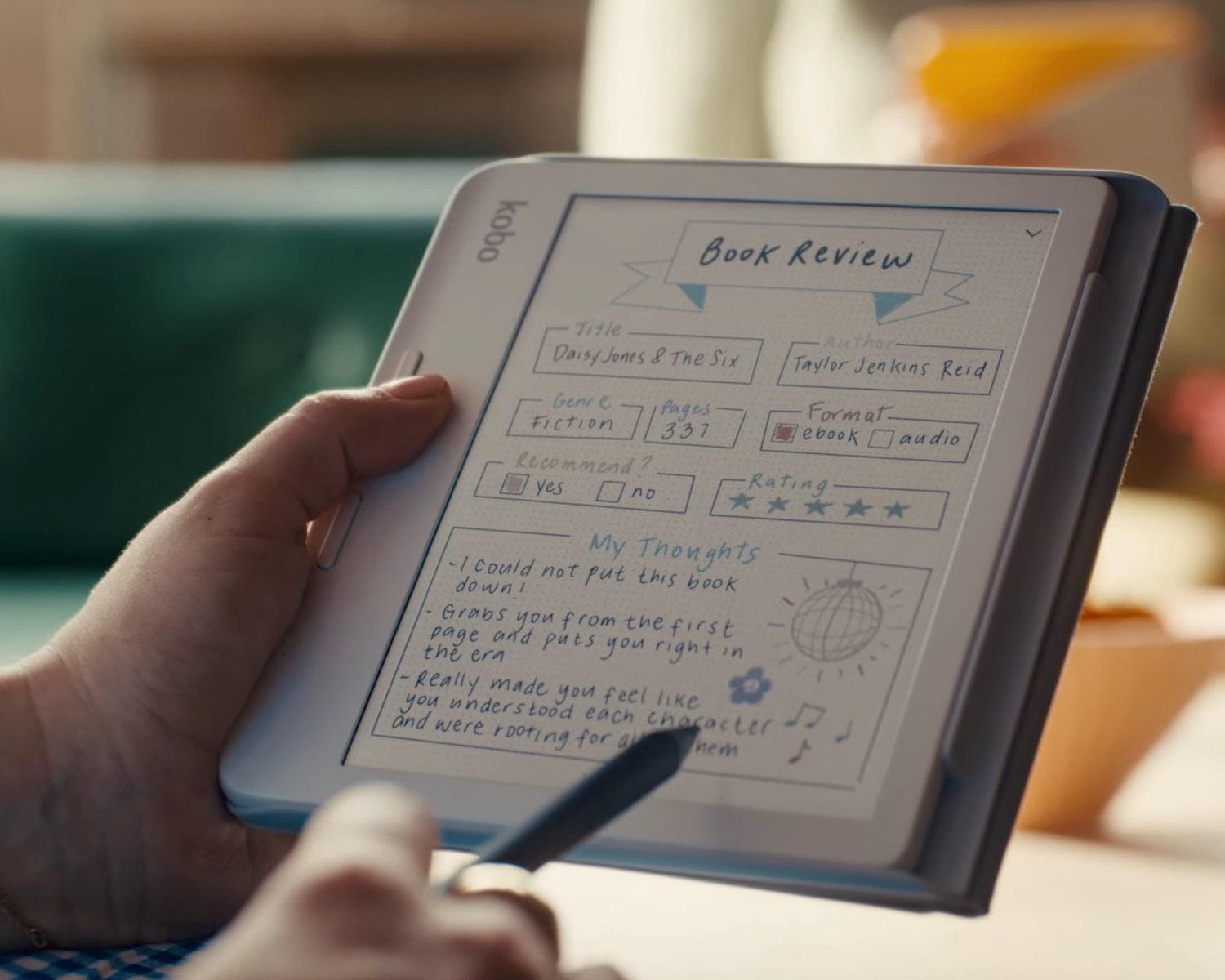
Having extensively tested a range of color e-readers and e-paper devices, evaluating their overall features and value, I consistently find myself returning to and being profoundly impressed by Kobo’s offerings. Their commitment to delivering high-quality, feature-rich color e-readers at competitive prices is evident across their lineup. Whether it’s the versatile Kobo Libra Colour, which has emerged as our top all-around choice for its ability to seamlessly transition between a superior e-reader and a functional digital notebook, or the more budget-friendly Kobo Clara Colour, Kobo’s colorful devices represent an excellent investment for any digital reader looking to embrace the future of e-paper technology.
How Do Color E-Readers Work?
At first glance, most color e-readers appear largely similar to their monochrome counterparts. However, the technology beneath their screens is a marvel of modern innovation. Typically, you’ll find a display resolution of around 150 pixels-per-inch (PPI) for color content and a sharper 300 PPI for black-and-white text. These specifications are standard across leading brands like Kobo and Kindle, striking a balance between color fidelity and text crispness.
Kobo’s two pioneering color e-readers, the Kobo Libra Colour and the Kobo Clara Colour, harness the power of E Ink Kaleido 3 technology to bring their vibrant screens to life. This advanced e-paper technology is capable of rendering 16 levels of grayscale and an impressive 4,096 distinct colors. This wide color gamut allows these devices to reproduce the subtle nuances and rich tones of book covers, illustrations, charts, and graphic novels with remarkable accuracy. The higher resolution for black-and-white text is intentional and crucial, as monochrome text remains the primary content for most e-readers. The lower-resolution color layer functions as an overlay, essentially adding a layer of color on top of the high-resolution grayscale display. This ingenious design ensures that while the color resolution might be numerically lower, the overall reading experience, particularly for text, remains sharp and clear, with the color acting as an enhancement rather than a compromise.
It’s important to manage expectations regarding color vibrancy. The colors displayed on e-ink screens, even with Kaleido 3 technology, are inherently more muted and less saturated than what you would typically see on a backlit smartphone or tablet LCD/OLED screen. This is a fundamental characteristic of e-paper, designed to mimic the reflective nature of real paper, which does not emit light. However, Kobo’s devices tend to offer a noticeably brighter and more saturated color experience compared to some competitors, such as the Kindle Colorsoft or even the Aura Ink digital frame, which also utilizes e-ink technology. Furthermore, Kobo prioritizes eye comfort with its ComfortLight PRO system, which intelligently reduces the emission of blue light, allowing for comfortable reading at any time of day or night without disrupting sleep patterns. This feature, combined with the paper-like display, significantly reduces eye strain, making long reading sessions more enjoyable and less fatiguing.
The underlying principle of E Ink Kaleido 3 involves a Color Filter Array (CFA) placed over a standard monochrome E Ink panel. When a color image is displayed, the CFA selectively filters the light reflected from the e-paper pixels, allowing specific wavelengths of light to pass through and create the perception of color. This reflective display technology means that the screen looks best in ambient light, much like a physical book, and doesn’t suffer from glare in bright sunlight—a distinct advantage over traditional tablets. The evolution of Kaleido technology continues to push the boundaries, and while 4,096 colors might seem modest compared to millions on other displays, for the specific use case of e-readers, it provides a perfectly adequate and immersive experience without the battery drain or eye strain of other screen types.
The Best Color E-Readers: Kobo Leads the Charge
In the burgeoning market of color e-readers, Kobo’s devices consistently stand out as favorites, not just for their advanced technology but also for their compelling price points. When juxtaposed with Amazon’s Kindle Colorsoft, which typically ranges from $250 to $280 depending on the model (including a kids version that at least bundles a cover), Kobo offers substantial savings without compromising on capability. The Kobo Clara Colour, for instance, is priced at an accessible $160, while the Kobo Libra Colour starts at $230. This strategic pricing means you can often acquire a Kobo color device with similar, if not superior, features for significantly less money.
Let’s delve deeper into why Kobo’s offerings are so compelling:
Kobo Libra Colour
The Kobo Libra Colour embodies the ideal balance of a dedicated e-reader and a versatile digital notebook. Its 7-inch E Ink Kaleido 3 display offers a generous canvas for both reading and writing, making it a truly multi-functional device.
Key Advantages:
- Vibrant Color Screen: The addition of color transforms the reading experience, making book covers, illustrations, and graphic novels come alive. This visual richness enhances engagement, especially for content where color is integral.
- Enhanced Annotation and Note-Taking: With the optional Kobo Stylus 2, the Libra Colour transcends a simple e-reader. It allows users to highlight text in various colors, scribble notes in the margins, and even create full-fledged digital notebooks. The ability to use different colors for notes and sketches brings a new dimension to digital annotation, mirroring the flexibility of traditional pen and paper.
- Physical Page-Turning Buttons: This seemingly minor detail is a major ergonomic advantage for many readers. The tactile feedback of physical buttons provides a more intuitive and comfortable page-turning experience, reducing the need to swipe the screen and making one-handed reading effortless. This is a feature notably absent on the Kindle Colorsoft, giving the Libra Colour a significant edge for traditionalists.
- Intuitive Interface: Kobo’s software design ensures seamless navigation between books and notebooks. Dedicated sections make organizing content straightforward, allowing users to quickly switch from reading their latest novel to reviewing their handwritten notes without interruption.
- Ergonomic Design: The Libra Colour boasts an asymmetrical design with a wider bezel on one side, making it comfortable to hold for extended periods, whether you’re right-handed or left-handed. Its lightweight construction further adds to its portability.
- Waterproofing: With IPX8 waterproofing, the Libra Colour can withstand immersion in up to 2 meters of water for 60 minutes, offering peace of mind for poolside or bathtub reading.
Considerations:
- Writing Experience Nuances: While the digital notebook functionality is excellent, the writing experience, though improved, might not be as buttery smooth or responsive as on high-end dedicated digital notepads or tablets due to the nature of e-ink technology. There’s a slight latency that dedicated scribes might notice.
- Screen Size for Extensive Writing: For truly extensive or complex note-taking and sketching, the 7-inch screen, while adequate for annotations, might feel a bit small for users accustomed to larger digital canvases.
- Stylus Charging: The Kobo Stylus 2 needs to be charged separately, which is a minor inconvenience compared to devices with integrated stylus charging solutions.
The Kobo Libra Colour, starting at $230 for the e-reader alone, offers incredible value. When bundled with the Kobo Stylus 2, the price rises to $300, still making it a more affordable and arguably more feature-rich option than the $400 Kindle Scribe, especially considering the Libra Colour’s physical page-turn buttons and superior color implementation for general reading.
Kobo Clara Colour
For those seeking an even more portable and budget-friendly entry into the world of color e-reading, the Kobo Clara Colour is an outstanding choice. Priced at just $160, it directly competes with the Kindle Paperwhite but comes with the added benefit of a color screen—a feature usually associated with a much higher price tag.
Key Advantages:
- Affordable Color: The Clara Colour democratizes color e-reading, offering a vibrant display at a price point that makes it accessible to a broader audience. It significantly undercuts the cheapest color Kindle by nearly $100 while delivering comparable, if not better, performance.
- Superior Dark Mode: One of Kobo’s standout features, particularly on the Clara Colour, is its improved dark mode. Unlike Kindle devices, which often limit dark mode to certain proprietary formats, Kobo’s dark mode extends to EPUB documents downloaded to the device. This is a crucial advantage for users who prefer reading in low light or at night, as it reduces eye strain and enhances comfort. For anyone who frequently reads independent EPUB writings, this feature alone makes Kobo a compelling choice.
- ComfortLight PRO and Auto-Adjusting Warm Light: The Clara Colour includes Kobo’s adaptive lighting technology, which automatically adjusts the screen’s warmth and brightness based on the ambient light, ensuring optimal viewing conditions and reducing blue light exposure.
- Lightweight and Portable: With its compact 6-inch screen, the Clara Colour is exceptionally lightweight and comfortable to hold for extended periods. Its small form factor makes it an ideal companion for commuting, travel, or simply slipping into a bag or a large-pocketed coat.
- Waterproof Design: Like its larger sibling, the Clara Colour is also waterproof, adding to its durability and versatility.
Considerations:
- Screen Size: The 6-inch screen, while excellent for portability, might feel small for readers who prefer a larger display, especially for content with intricate layouts or for those accustomed to the 7-inch screens of devices like the Colorsoft or Paperwhite.
- Battery Life: While respectable for a color e-reader, its stated 42 days of battery life is good but might require more frequent charging than some monochrome devices, depending on usage patterns and color content consumption.
Kobo vs. Kindle: A Value Proposition
The comparison between Kobo and Kindle color devices consistently highlights Kobo’s superior value proposition. Kobo not only offers competitive pricing but also often provides more features or better implementations of existing ones.
The Kobo Libra Colour, for instance, is cheaper than the Kindle Colorsoft yet includes physical page-turn buttons – a feature that many long-time e-reader users consider essential for comfortable reading. Moreover, when considering the digital notebook aspect, the Libra Colour with its stylus, at $300, is a full $100 less expensive than the Kindle Scribe ($400), while still delivering a robust note-taking experience and the added benefit of color.
Beyond hardware, Kobo’s software ecosystem offers distinct advantages. My personal favorite, and a significant differentiator, is Kobo’s vastly improved dark mode. While neither Kobo nor Kindle devices extend dark mode to their main menu screens (a feature often found in black-and-white-only devices), Kobo’s dark mode functionality seamlessly integrates with EPUB documents. This is a critical point for me, as I frequently read independent EPUB articles, manuscripts, or books recommended by friends. Kindle’s proprietary AZW3 format, on the other hand, often struggles to switch to dark mode, forcing a brighter reading experience that can be jarring in low-light conditions. This detail alone makes my Kobo the preferred device for my daily reading, always tucked into my bag, ready for my latest literary adventure.
In essence, Kobo’s strategy of combining cutting-edge E Ink Kaleido 3 technology with user-centric features, an open ecosystem supporting diverse file formats (like EPUB and OverDrive integration for library books), and aggressive pricing, positions them as the undeniable leader in the color e-reader market of 2025. They offer a richer, more versatile, and more economically sound choice for anyone looking to add a vibrant dimension to their digital reading experience. The Kobo Libra Colour, in particular, stands out as a triumph of design and functionality, making it our top pick for the best all-around color e-reader for the foreseeable future.