
Ruby Is Not a Serious Programming Language
My little theory posits that the profound psychological concept of “imprinting” is remarkably applicable to the world of programming. Just as a newly hatched gosling irrevocably adopts the first moving creature it encounters as its mother, embryonic programmers often form deep, almost ineradicable attachments to the foundational patterns, idiosyncratic quirks, and philosophical underpinnings of their very first formative language. This initial encounter shapes their perception of what programming should be, forging an indelible bond that often lasts a lifetime.
For a significant cohort of developers, that pivotal language was Ruby. It’s frequently lauded for making the abstract world of coding "click," transforming a daunting logical puzzle into an intuitive, almost poetic endeavor. Those who imprinted on Ruby often speak of it with a palpable sense of indebtedness, affection, and even nostalgia. I fully understand this sentiment. My own initial foray into programming involved writing my first "Hello World" in the rather cumbersome and often unforgiving landscape of Java. While Java introduced me to the mechanics, it wasn’t until I immersed myself in JavaScript (yes, I know, I know—it has its own notorious quirks but also immense flexibility) and later OCaml that programming truly began to feel intuitive, elegant, and deeply satisfying. These languages, with their distinct paradigms and expressive power, fundamentally shaped my tastes and expectations for what a robust and enjoyable programming experience should entail.
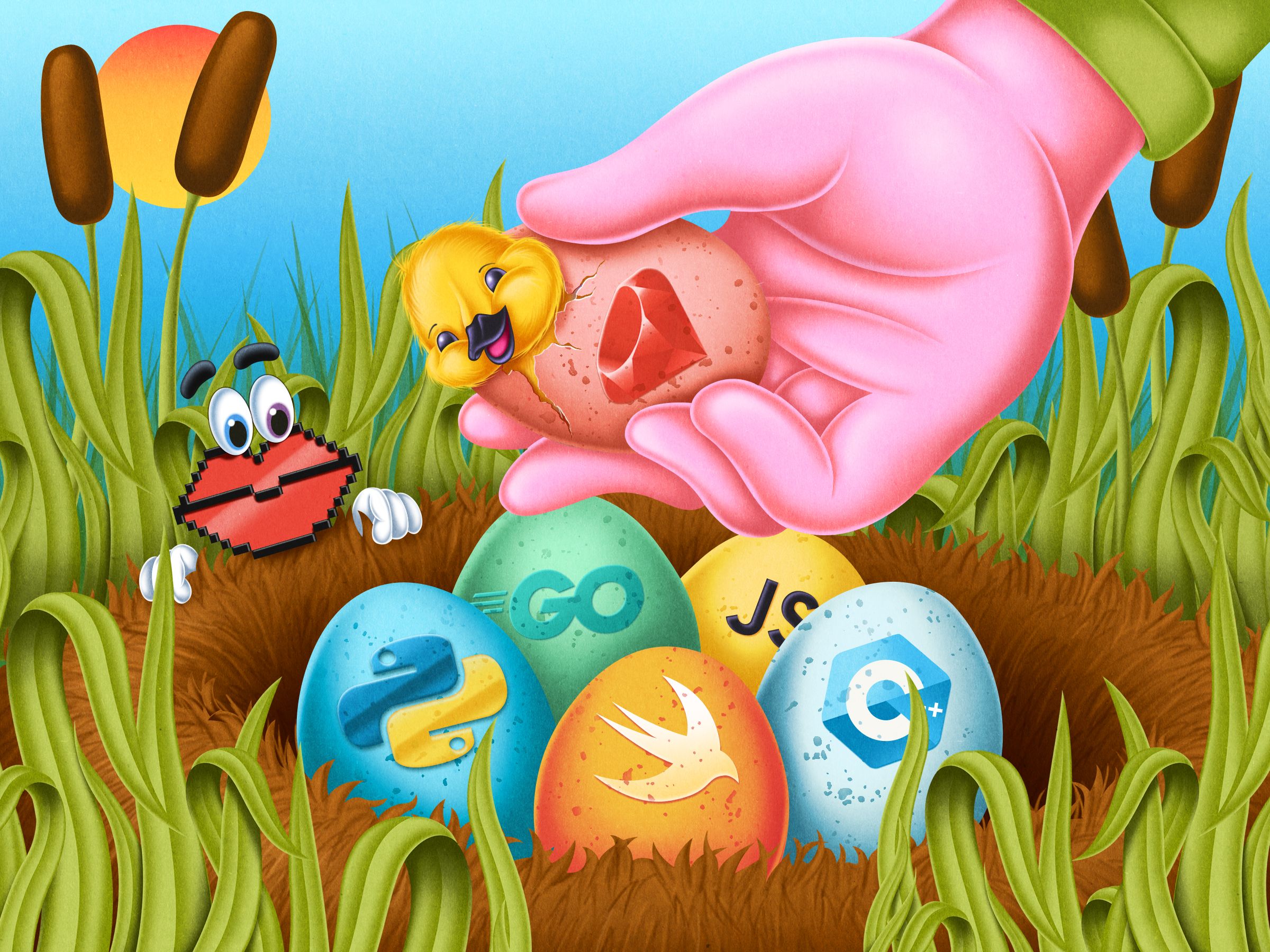
My introduction to Ruby, however, came somewhat late in my professional journey. It wasn’t until my fourth job, well into my career, that I found myself on a team that predominantly utilized Ruby. By then, I had absorbed countless glowing testimonials and effusive paeans to its purported elegance, its conciseness, and its developer-friendliness. My anticipation was high; I was genuinely ready to be charmed, eager to experience the kind of professional satori—that sudden flash of enlightenment—its most ardent adherents so vividly described. Yet, much to my surprise and immediate disappointment, my dislike for it was instantaneous and profound.
To encounter a programming language late in one’s career, after having been shaped by other, perhaps more rigorous, or certainly different, linguistic environments, is to see it with a stark clarity, unclouded by the forgiving haze of sentimentality that accompanies the imprinting process. There’s no fond willingness to overlook a glaring flaw, to rationalize a significant limitation as merely a charming quirk. What I perceived was not a meticulously crafted, bejeweled tool sparkling with innovative design. Instead, it struck me as a rather poor, somewhat naive construct that hadn’t quite grasped the fundamental truth that the world of programming, with its ever-accelerating demands and evolving best practices, had unequivocally moved on.
Ruby was brought into existence in 1995 by the brilliant Japanese programmer Yukihiro Matsumoto, universally and affectionately known as "Matz." Beyond the significant achievement of creating the only major programming language to have originated outside the traditionally Western-dominated tech landscape, this Osaka-born, practicing Mormon is also renowned for his exceptionally kind and gentle demeanor. His pervasive niceness became such a defining characteristic that the Ruby community, in a testament to his influence, adopted the motto MINASWAN, an acronym for "Matz Is Nice And So We Are Nice." This philosophy permeated the early Ruby ecosystem, fostering a welcoming and collaborative environment.
Befitting this gentle philosophy, and indeed its aesthetically pleasing name, Ruby presents an easy-on-the-eyes appearance. Its syntax is remarkably simple and uncluttered, famously eschewing the visual noise of semicolons at the end of every line or the ubiquitous curly brackets that delineate code blocks in many other languages. More so even than Python—a language already celebrated for its exceptional readability and clean syntax—Ruby often reads with an almost conversational flow, akin to plain English. This focus on developer happiness and natural expression was a cornerstone of Matz’s design philosophy.
However, beneath this inviting surface lie fundamental architectural choices that, in my view, hinder Ruby’s utility for serious, large-scale application development. Programming languages are generally categorized into two primary camps: statically typed and dynamically typed. A static-type system can be envisioned as a highly structured set of Legos where each piece is designed to interlock only with others of precisely the right shape and size. This inherent rigidity makes certain categories of mistakes—like trying to connect a square peg to a round hole—physically impossible at the compilation stage, before the program even runs. With dynamic typing, on the other hand, you possess the theoretical freedom to jam pieces together in almost any configuration you desire. While this offers immense flexibility and rapid prototyping capabilities on a small scale, that very freedom can spectacularly backfire when one attempts to construct large, complex, and robust structures. In dynamically typed languages, certain critical types of errors are only detected when the program is actively running, often in production. The moment you place weight on your hastily assembled Lego footbridge, to extend the analogy, it unceremoniously slumps into a useless, catastrophic heap.
Ruby, as you might have surmised, firmly belongs to the dynamically typed camp. Python and JavaScript also share this characteristic, and for years, their respective communities have invested heavily in developing increasingly sophisticated tools and methodologies to make them behave more responsibly and predictably. Python introduced type hints, and JavaScript evolved into TypeScript, a superset that brings static typing capabilities to the dynamic language. These innovations allow developers to catch a vast array of errors much earlier in the development cycle. Regrettably, none of Ruby’s current solutions for type safety, such as Sorbet, are on par with the maturity, adoption, or effectiveness of those found in Python or JavaScript. This inherent characteristic makes Ruby far too conducive to what programmers colloquially refer to as "footguns"—features or design patterns that, while offering flexibility, make it distressingly easy to inadvertently shoot oneself in the foot, introducing subtle bugs that only manifest at runtime.
Critically, and perhaps most damningly, Ruby’s performance profile consistently ranks near the absolute bottom—meaning it is among the slowest—when benchmarked against most other major programming languages. This performance bottleneck is not merely an academic concern; it has had real-world, high-profile consequences. You may recall Twitter’s infamous "fail whale," the iconic error screen depicting a whale being lifted by birds that frequently appeared whenever the service buckled under heavy load. Many would argue, and rightly so, that Ruby, or more accurately, its underlying interpreter, was largely to blame for these debilitating performance issues. Twitter’s dramatic collapse during the 2010 FIFA World Cup, when the platform struggled immensely to handle the surge in global traffic, served as a stark and painful wake-up call for the company. This critical incident spurred Twitter to embark on an ambitious and necessary migration of its backend infrastructure to Scala, a far more robust, performant, and statically typed language built on the Java Virtual Machine.
The strategic move to Scala demonstrably paid off. By the time of the 2014 World Cup, Twitter’s revitalized infrastructure effortlessly handled a record-breaking 32 million tweets during the final match, all without a single outage. Its new Scala-based backend was capable of processing data and requests up to an astonishing 100 times faster than its predecessor Ruby system. This success story was not an isolated incident. Throughout the 2010s, a significant wave of prominent tech companies, many of whom had initially embraced Ruby during the Web 2.0 boom, began systematically replacing large portions of their Ruby infrastructure. Even where legacy Ruby codebases remained, any new, performance-critical services were almost invariably written in higher-performance languages, marking a clear shift away from Ruby for demanding tasks.
What’s more, it has become increasingly apparent that virtually everything Ruby excels at, another language now accomplishes with greater efficiency, superior performance, or a more distinct advantage, thereby leaving Ruby without a clear and compelling niche. For rapid scripting, system automation, and general-purpose utility tasks, Python, JavaScript (particularly with Node.js), and even Perl (though its star has faded considerably) were and remain strong competitors. Python, while also a dynamically typed and generally slow language, ingeniously carved out an absolutely dominant niche in scientific computing, data analysis, and machine learning, effectively becoming the de facto language of Artificial Intelligence development. JavaScript, with its unique "run anywhere" capability thanks to Node.js and its native browser support, came to utterly dominate the web, both on the frontend and increasingly on the backend. And Perl, well, it is undeniably in decline, a fate I confess I don’t lament. Ruby, in this fiercely competitive landscape, now finds itself stranded in an awkward and increasingly untenable middle ground, lacking a standout feature or a dominant domain.
One might reasonably wonder why, given these substantial criticisms and the apparent decline, people are still actively using Ruby in 2025. The simple, yet profound, answer is that it survives primarily because of its almost parasitic, symbiotic relationship with Ruby on Rails. This revolutionary web framework, more than the language itself, was the catalyst that enabled Ruby’s widespread adoption in the early 2000s, and it continues to be the primary anchor for whatever relevance Ruby still possesses.
When the Danish developer David Heinemeier Hansson, famously known as DHH, released Rails in 2004, Ruby ceased to be merely the quiet province of nice Japanese programmers and their academic pursuits. DHH, in many ways, represents a kind of photographic negative of Matz: a handsome, charismatic firebrand with an equal measure of charisma and unyielding dogma. So much for MINASWAN, one might wryly observe, as DHH is famously known for engaging in public Twitter feuds and passionately racing cars in his spare time, embodying a much more confrontational and assertive persona.
In that prelapsarian era—the halcyon days between the meteoric rise of Web 2.0 and the transformative Facebook IPO—when Silicon Valley was awash in the effervescent jubilation of TechCrunch Disrupt and blissfully unaware of the impending techlash, Rails emerged as the undeniable framework of choice for a new generation of ambitious startups. The main codebases of now-household names like Airbnb, GitHub, Twitter (in its early days), Shopify, and Stripe were all famously built on its foundations.
In the early 2000s, when the process of building sophisticated web applications was often a cumbersome, piecemeal, and highly manual endeavor, Rails offered a breathtakingly elegant "one-stop shop" solution for developers. Instead of painstakingly wiring together disparate components—a database, a frontend, and a backend—Rails provided a fully packaged, opinionated solution that simply worked, right out of the box. It championed a philosophy of total integration, much like a compact Usonian house designed by Frank Lloyd Wright, where every single detail is meticulously crafted and designed to fit into a single, unified, and harmonious vision. This "convention over configuration" approach drastically accelerated development cycles, allowing startups to launch and iterate at unprecedented speeds.
Yet, this very era, marked by its rapid innovation, also profoundly underestimated the sheer, unimaginable scale the web would eventually achieve. The strength of Rails’ tight integration, its "Usonian house" philosophy, soon revealed its inherent limitations. Try to remodel the kitchen or add a second story to a Usonian house, and the unity that was once its greatest asset rapidly transforms into a crippling liability. The house, initially conceived and designed to comfortably host a few well-behaved dinner guests, was suddenly expected to function more like a sprawling convention center, accommodating millions of unruly, demanding visitors simultaneously. The tightly coupled nature of Rails, while perfect for rapid initial development, became a significant bottleneck for extreme scaling, microservices architectures, and the kind of granular flexibility demanded by truly massive, global applications.
I am certainly not alone in my bearish outlook on Ruby’s future. Data from Stack Overflow’s annual developer survey, a widely respected barometer of programming language popularity, reveals a consistent and concerning trend: Ruby has been steadily slipping in popularity for years. From being a top-10 technology in 2013, it has plummeted to 18th place this year—a position that puts it even behind Assembly, a language primarily used for extremely low-level hardware interaction and embedded systems. Among newer developers, those just entering the profession, Python and JavaScript rank significantly higher, reflecting where the industry’s future talent is gravitating. Ruby persists, for now, largely as a kind of professional comfort object, sustained by the sheer inertia of massive legacy codebases that are too expensive or risky to fully rewrite, and by the fierce loyalty of those developers who first imprinted upon it. But in an industry that relentlessly demands innovation, efficiency, and adaptability, nostalgia and a pretty name simply won’t cut it. The programming world has moved on, and Ruby, unfortunately, has been left behind.